 Photo: Courtesy of DEEP
A new underwater habitat for scientific research has been anchored to the seabed in U.S. waters about 4.5 miles off the Florida Keys.
Known as Vanguard, the habitat was installed in June at Tennessee Reef in the Florida Keys National Marine Sanctuary by DEEP, an international ocean engineering and technology company with facilities in the United Kingdom and the United States. Vanguard is roughly 60 feet below the surface, close to but not within the reef, and in proximity to an undersea slope so that scientists can also conduct research at greater depths, noted Scott Olson, DEEP’s U.S. program manager.
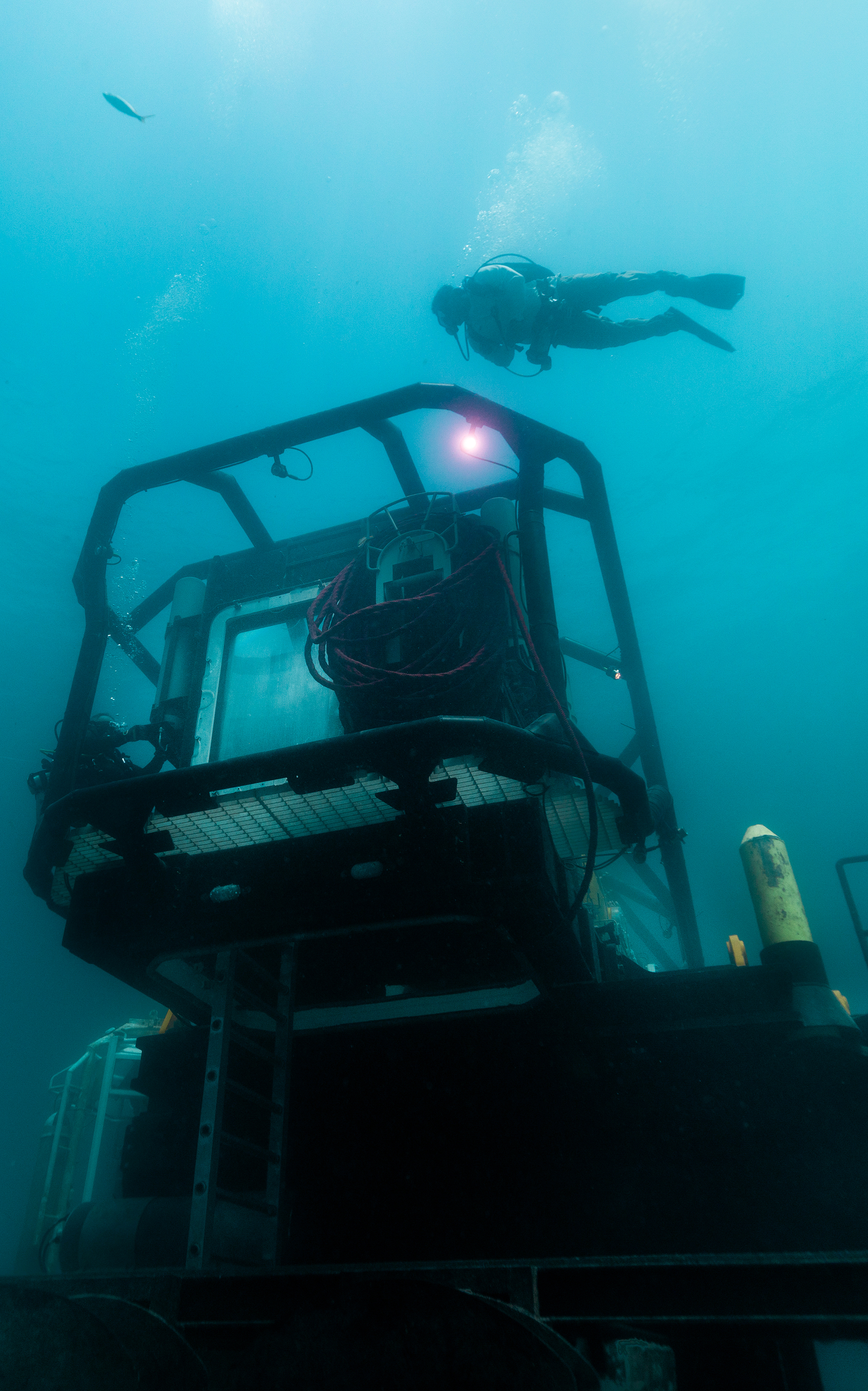 Photo: Courtesy of DEEP
It is the first underwater habitat in the region since the Aquarius Reef Base, which in the 1980s was initially installed near the U.S. Virgin Islands before being relocated to its current home in the Florida Keys. Key DEEP staff members have lived and worked at the Aquarius Reef Base, bringing their expertise to Vanguard, Olson added.
Starting with a cylinder
The four-person Vanguard habitat is intended to be a “pilot structure – a practice run for more ambitious underwater projects coming in the future,” Olson said. Although those future habitats are likely to be larger and modular, Vanguard was constructed primarily from an existing industrial structure that Olson called an “off-the-shelf decompression chamber.”
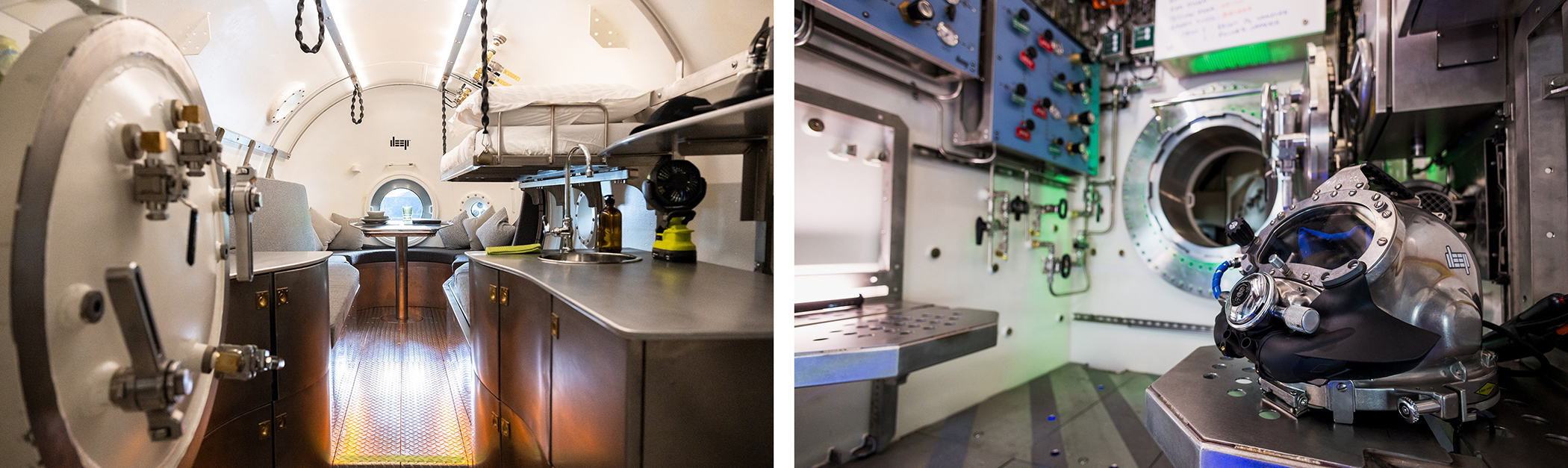
The main portion of Vanguard is a steel living chamber that features two compartments. One features bunks, a table, a galley, and personal storage space for crewmembers. The other is the work area, with science equipment as well as facilities such as a toilet. The living chamber also serves as a decompression chamber for divers who remain underwater for extended periods – known as saturation diving – before they return to the surface. Decompression usually takes around 16 hours and happens largely overnight, while the crew is asleep.
DEEP’s team bolted a third space to the science compartment end of the cylindrical portion. Known as the “wet porch,” the boxlike steel structure includes a moon pool that allows divers to easily enter and exit the habitat. The cylinder and wet porch are made from high-strength steel with a thickness of a quarter of an inch to three-quarters of an inch, with stiffeners in key locations, Olson said.
The key to working in a marine sanctuary
DEEP worked closely with the Florida Keys National Marine Sanctuary organization – part of the National Oceanic and Atmospheric Administration – to obtain all the necessary permits for Vanguard and to determine the ideal site for the habitat project. The team also hired several consultants to conduct various studies, including a bathymetric survey to map the contours of the seabed, a geotechnical survey to take core samples of the underlying soil, and a biological survey to ensure that there were no live corals or conchs in the area under consideration, Olson noted. The surveys were led by the subsea technology and engineering firm Unique Group.
Further reading:
- Underwater engineering offers the chance to harness ocean resources
- Solar panels built over California canals generate power, save water
- Agrivoltaics: How combining solar panels and farming delivers big benefits
These efforts ultimately located a sandy area large enough to accommodate the habitat’s overall footprint of roughly 46 feet by 39 feet.
Preparing for rough weather
Vanguard features an exterior frame of steel tubes, arranged in a sort of honeycomb pattern, that encases the main cylinder and wet porch. The habitat’s foundations consist of a large steel frame with four legs called the base plate.
Weighing about 220 tons, the base plate also features two heavy ballast weights – essentially large chunks of steel in the middle of the base plate. All this weight is needed to secure the habitat to the seabed and hold it in place even during a Category 5 hurricane, Olson explained.
 Photos: Courtesy of DEEP
The four-person habitat was constructed primarily from an existing decompression chamber structure and includes a work area with science equipment and a moon pool so divers can easily enter and exit the facility.
Although the base plate’s legs are embedded in the sand about 60 feet underwater, the top of the habitat is only about 36 feet below the surface. At that depth, the horizontal component of water flow during a Category 5 storm can be quite strong, Olson said. Unique Group researched 100 years’ worth of meteorological studies for the Vanguard site, examining the wind and wave energy generated during powerful storms. This research ultimately determined that Vanguard would have to withstand a possible flow rate of 6 meters per second.
As a result, DEEP added steel piles to the foundation design, sinking the piles to a depth of about 10 feet into the underlying limestone, Olson explained. Chains between the legs and piles provide some necessary slack but are designed to minimize side movement during storms, he added.
To prepare the site for Vanguard, divers first used dredging equipment to level out the sand; once the habitat was installed, the sand was blown back in to restore the site as much as possible to what it had been, Olson said.
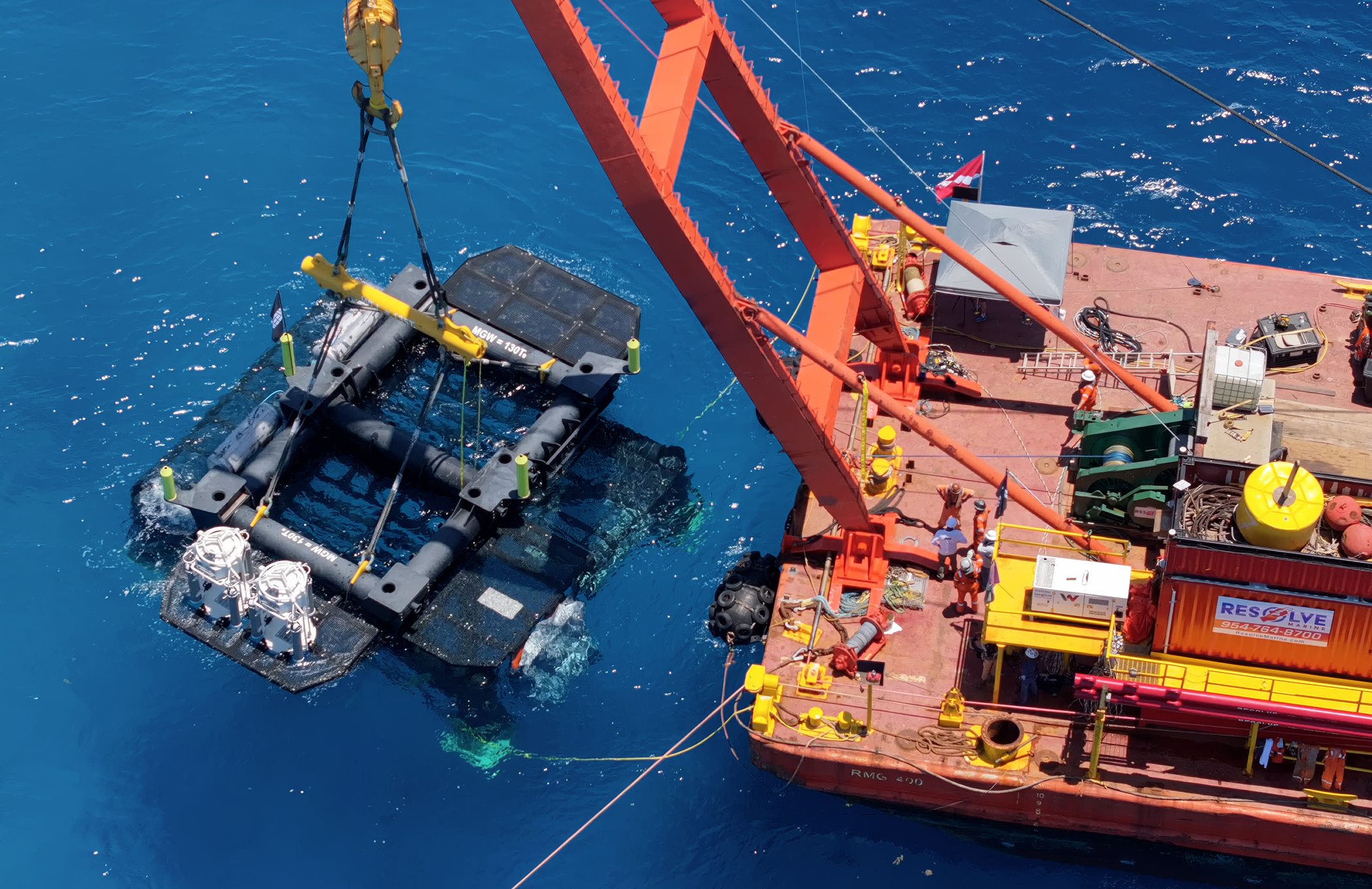
The steel piles were then installed, and the habitat was lowered into place via a heavy crane on a surface barge. The habitat was carefully maneuvered onto a pair of tall guide poles and secured with horizontal pins. The installation process took more than a month to complete, with the work dependent on wind and waves in the area, Olson noted.
Umbilical lines for power, oxygen, and communication connect the habitat to a support buoy at the surface. The buoy is held in place by four additional piles in the seabed, plus chains, mooring lines, and floats that keep the chains and lines from raking across the site and damaging the ecosystem, Olson explained.
Vanguard is undergoing commissioning by DNV, an international maritime certification organization, Olson said, and DEEP is training its own crews to operate the habitat. The habitat is expected to welcome its first “paying customers” – divers and researchers who will rent Vanguard for certain periods – in early 2027.
At least one member of the DEEP staff will be in the habitat at all times to assist the visiting scientists, and the site will be remotely monitored 24/7 from DEEP’s office in Marathon, he added.
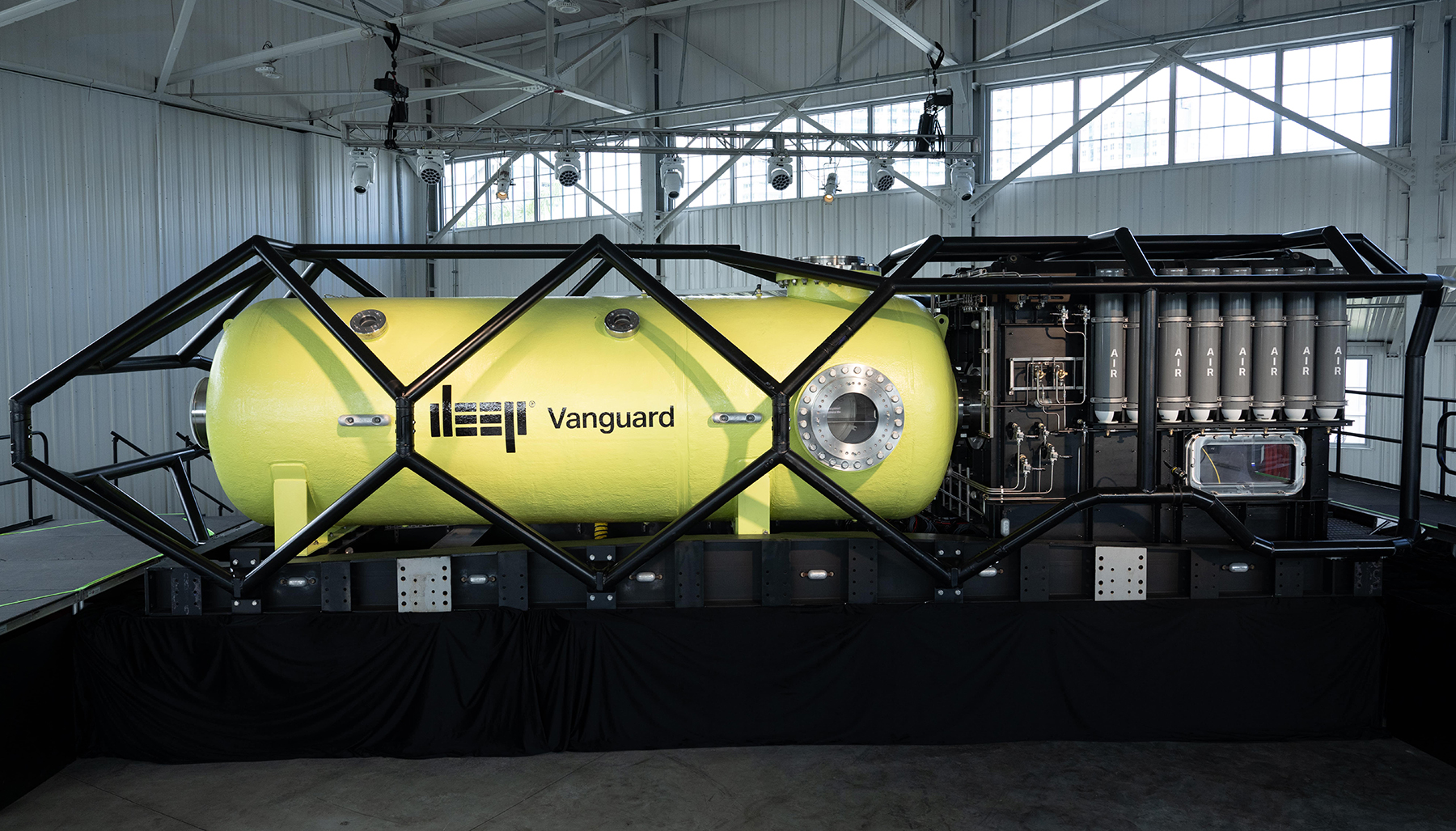 Photo: Courtesy of DEEP

Feed Your Brain
Did you enjoy reading about this out-of-the-box thinking? Then,ASCE2027: The Infrastructure and Engineering Experience, a first-of-its-kind event bringing together subject-matter experts from all across the infrastructure space, March 1-5, 2027, in Philadelphia, is the place for you. So, yes, we know you’re excited about the Philly cheesesteaks, but ASCE2027 also is the perfect place to satisfy your appetite for learning.
Technical deep dives. Infrastructure expertise. Registration is open. Come feast!
Learn more about ASCE2027: The Infrastructure and Engineering Experience.