
By Leah M. Hodge, P.E., and Carmen Drake
The city of Fort Worth, Texas, completed a sewer improvement project that bolsters its wastewater system and preserved an aquatic habitat.
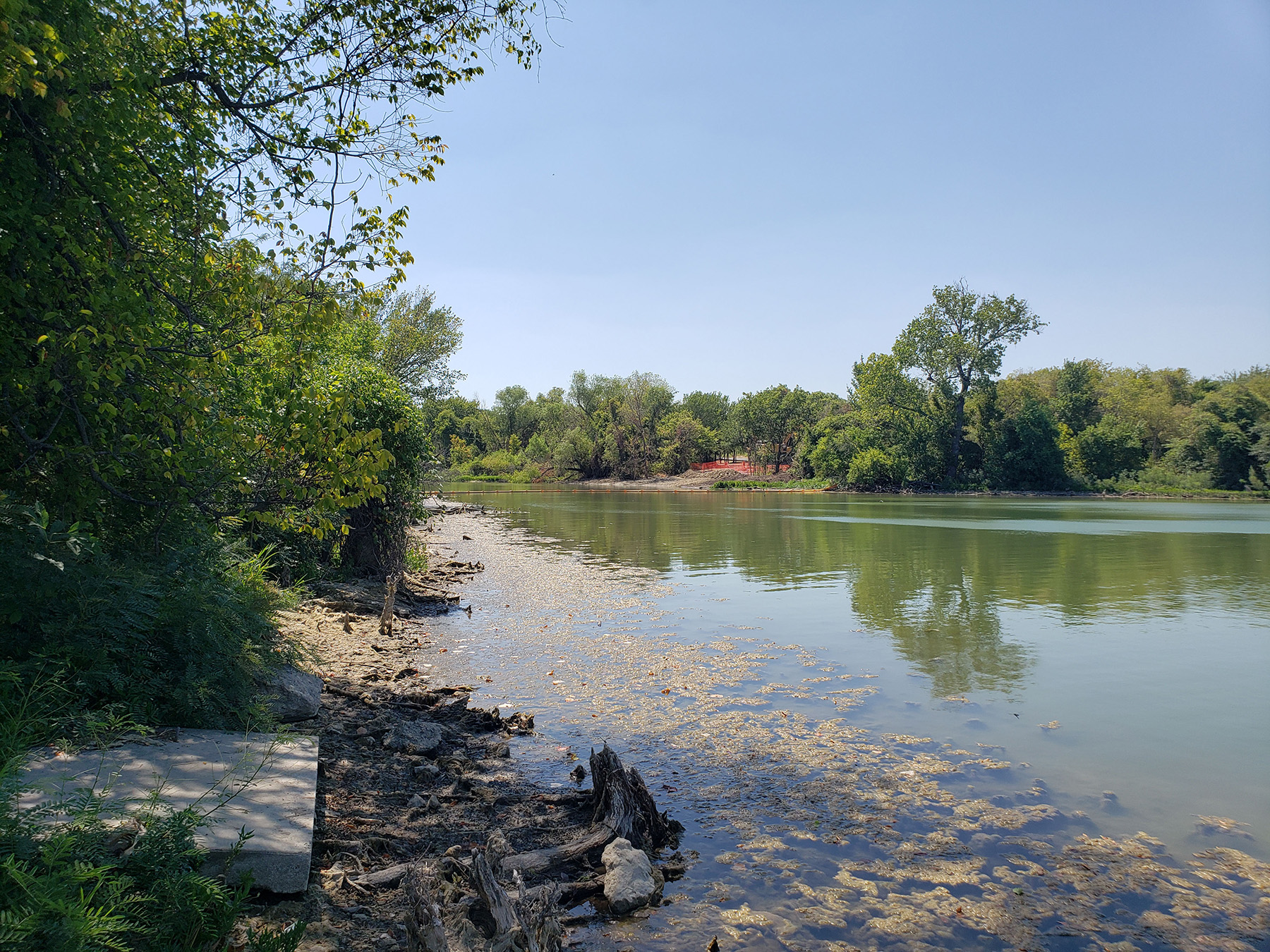
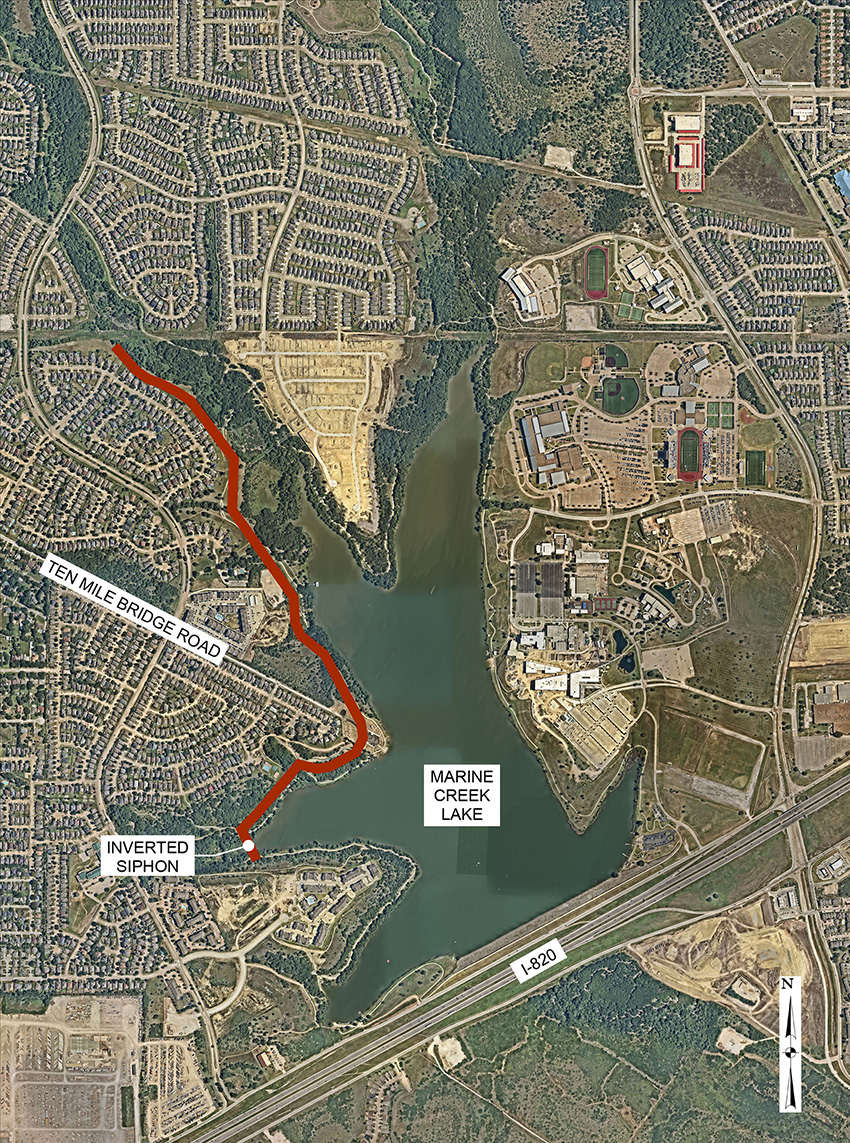
Just outside the Interstate 820 Loop in Fort Worth, Texas, is Marine Creek Lake, an urban recreation area used by local schools and neighboring communities. The city of Fort Worth contracted with Halff Associates Inc. to design a replacement interceptor for an aging, undersized sewer line along the west side of Marine Creek as well as the replacement of an inverted siphon.
Since permitting was likely to delay construction and installation of the south segment of the interceptor, the project was executed in two packages. The first part of the project delivered improvements to the interceptor north of Ten Mile Bridge Road, which runs along the bank of the lake. Part two delivered improvements south of the road, which allowed construction to proceed on the north segment while permits were acquired for the south segment.
This article focuses on the work, completed in 2024, south of Ten Mile Bridge Road and the corresponding design, public communication, agency coordination, permitting, and construction processes.
Complex design
Because the pipeline was replaced within the existing alignment, bypass pumping was required for the duration of construction. The design team visited the site to determine feasible routes for the flexible above-ground temporary piping to be laid outside of standing water and without impeding drainage to the lake. A bypass pumping plan was prepared to give the contractor, McKee Utility Contractors, as much information about the existing system as possible.
The bypass pumping plan included the diameter and slope of the existing interceptor so pre-project flows could be calculated. Locations where laterals enter the system were also shown. Since access to the lake’s boat ramp, park, and trail system could not be obstructed, the temporary pipe had to be buried in certain locations, which were also identified on the bypass plan.
McKee Utility was required to provide continuous on-site monitoring of the bypass pumping operations with either on-site personnel or portable supervisory control and data acquisition equipment. Pumping equipment was required to accommodate 100% of peak wet weather flow.
A major element of the project was replacing the single 30 in. inverted siphon that did not meet Texas Commission on Environmental Quality requirements as listed in Design Criteria for Domestic Wastewater Systems. The existing single-barrel inverted siphon needed to be replaced with two barrels, as determined by the design team, sized to maintain velocities of at least 3.0 ft per second at both initial and final design flows in order to prevent sedimentation and potential clogging. Flow monitoring using Flo-Dar meters measured the existing flow across the siphon.
Although for most systems peak flows occur during wet weather, this system also accommodates wastewater backwash flows from the city’s Eagle Mountain Water Treatment Plant. Peak flows occur when wastewater from the plant’s backwash operations enter the system, approximately 3 mi upstream of the inverted siphon. Future development in the drainage basin will also increase future peak flows. Given these variables, the city’s wastewater model was used to determine future peak wet weather flows.
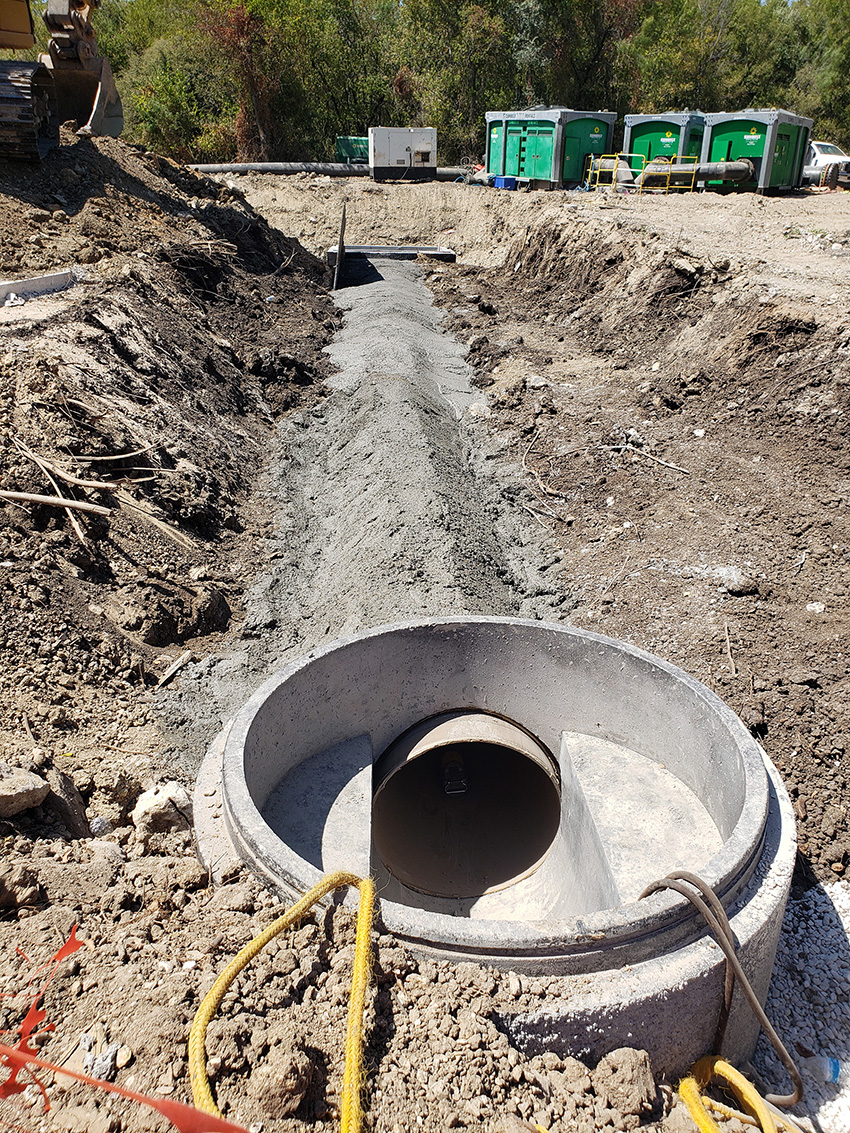
The first barrel was designed to convey the normal flow of 6.75 cfs. The design team chose an 18 in. pipe to minimize head loss while maintaining a velocity of 3.82 fps, above TCEQ’s required minimum velocity. The second barrel was designed to convey a future peak wet weather flow of 30.5 cfs. A 30 in. pipe will convey the remaining 23.7 cfs at a velocity of 4.83 fps.
A junction box upstream of the inverted siphon now splits the flow between the two barrels. The flowline of the 18 in. barrel matches the flowline of the system upstream. The flowline of the 30 in. barrel matches the soffit of the 18 in. barrel, so that lower flows are forced through the smaller barrel, maintaining a flushing velocity. The team designed the system so that once the 18 in. barrel is full, flows enter the 30 in. barrel. The junction box upstream contains inverts and benches that direct flows to the appropriate barrel, while a second junction box downstream of the siphon sits at the confluence of the two barrels. The inverts of both barrels match the invert of the system downstream. Additionally, the design allows flows to be diverted to a single barrel, giving maintenance crews access to the empty barrel via newly installed manholes.
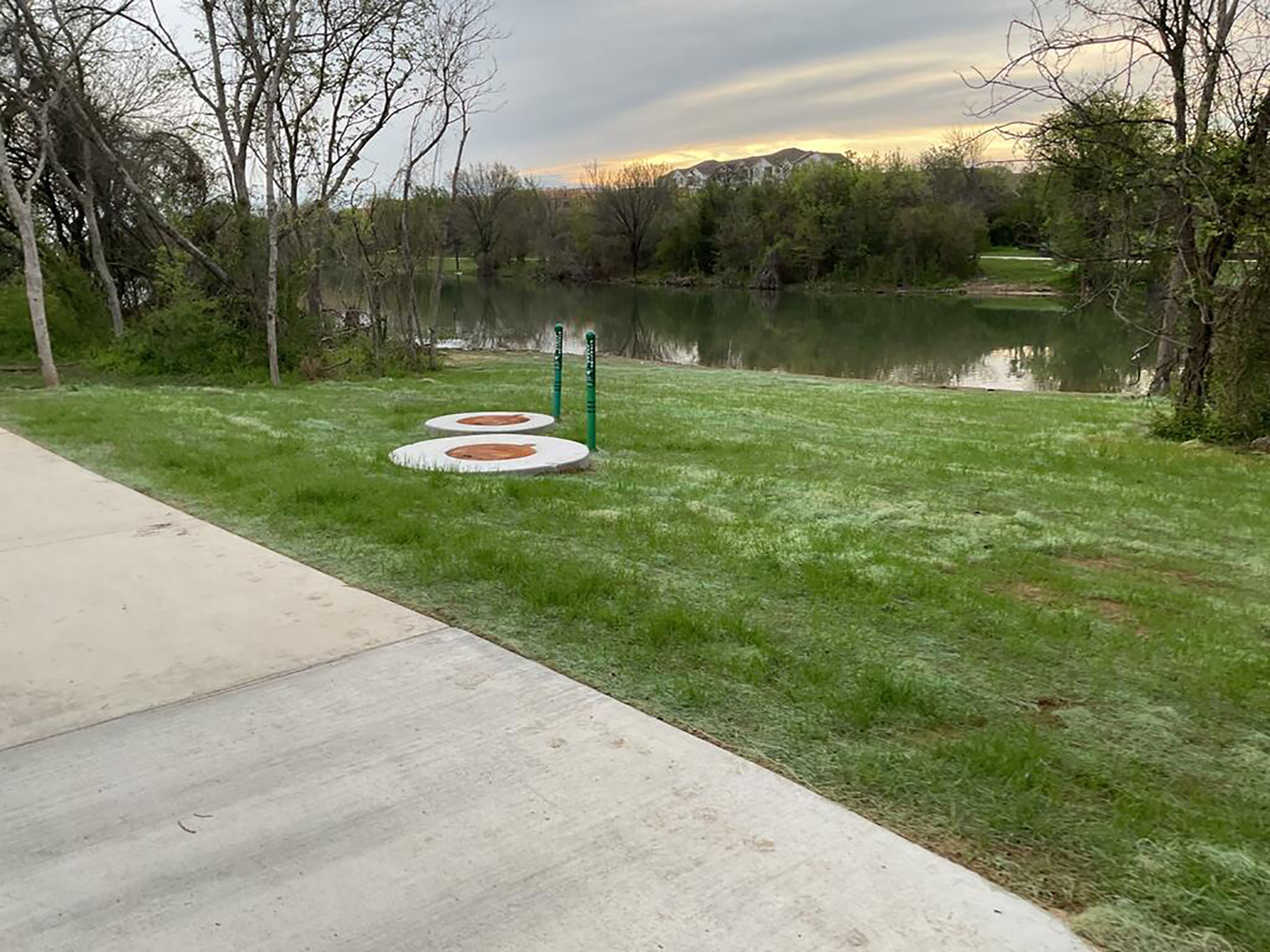
Vents with odor-control filters were also installed on each junction box. Furthermore, to prevent inflow during rain events, the vents are above the 100-year flood elevation and are protected by watertight manhole lids.
Environmental permitting
Tarrant Regional Water District owns and maintains Marine Creek Lake, the trailhead at the end of Ten Mile Bridge Road, and the trail system surrounding the lake. The water district implemented several protocols to protect the aquatic environment and public access to the lake. Prior to the start of construction, the contractor submitted a lake crossing sequence plan, a stormwater pollution prevention plan and permit, and a discharge monitoring plan for approval. During dewatering, the sediment removal process ensured the total suspended solids of the discharged water were less than that of the lake. Additionally, daily water samples were collected and tested to monitor dissolved oxygen and pH levels, which were appropriately maintained between 6.5 and 9.0 throughout the project.
Another layer to the environmental aspect was a parkland conversion, which was required where the interceptor crosses Marine Creek Lake Park. A parkland conversion is a requirement of the Texas Parks and Wildlife State Code Title 3, Chapter 26. This chapter protects public parkland from other uses unless there is no feasible alternative. It also requires harm to the land to be minimized and a public hearing to be held to discuss plans with the community. The design team prepared an application and exhibits identifying the existing pipeline, proposed pipeline, existing sewer easements, proposed permanent access easement, temporary work area, temporary access areas, trees to be removed, trees to be protected, and proposed revegetation.
The approval process was lengthy, involving administrative review by Park & Recreation Department staff, submittal to the Park Advisory Board, presentation at a PAB meeting, and approval and recommendation to the city council at a subsequent PAB meeting. The proposed conversion was advertised in the newspaper, posted at the park and city hall, shared with adjacent neighborhood associations and a representative council member, and posted to the city’s website. After the public notice period, the conversion plan was added to the city council agenda and approved. The city council meeting also served as a public hearing. Once the conversion was approved, work areas were staked in the field, inspected, and approved by Park & Recreation Department staff.
This project was also subject to the requirements of Section 404 of the Clean Water Act, regulated by the U.S. Army Corps of Engineers. The only special condition required by the Corps was preparation of an aquatic resource relocation plan prior to breaking ground. A permit compliance certification was submitted upon completion of the work.
Community coordination
Communication with the community in this highly visible project was multifaceted. The lake is a heavily populated recreation spot, so Halff notified numerous local entities early in project planning — homeowner associations, Tarrant County College Northwest Campus, and Eagle Mountain-Saginaw Independent School District’s Chisholm Trail High School and Marine Creek Middle School.
One public meeting was held after the 60% design submittal. The second meeting was held just prior to construction, once the project was awarded to McKee Utility. This allowed the contractor to address questions regarding schedule, sequencing, and means and methods of construction.
A 6 mi multiuse trail encircling the lake supports daily pedestrian and bicycle traffic. Two weeks prior to the start of construction, changeable message signs were placed along the trail, which needed to remain open to the public, notifying users of the upcoming project. Prior to a trail being removed for pipeline installation, shoofly trails were constructed. Once construction was complete, the concrete trails were replaced. Additional signage was installed to keep boaters away from the project area.
Dewatering and aquatic preservation
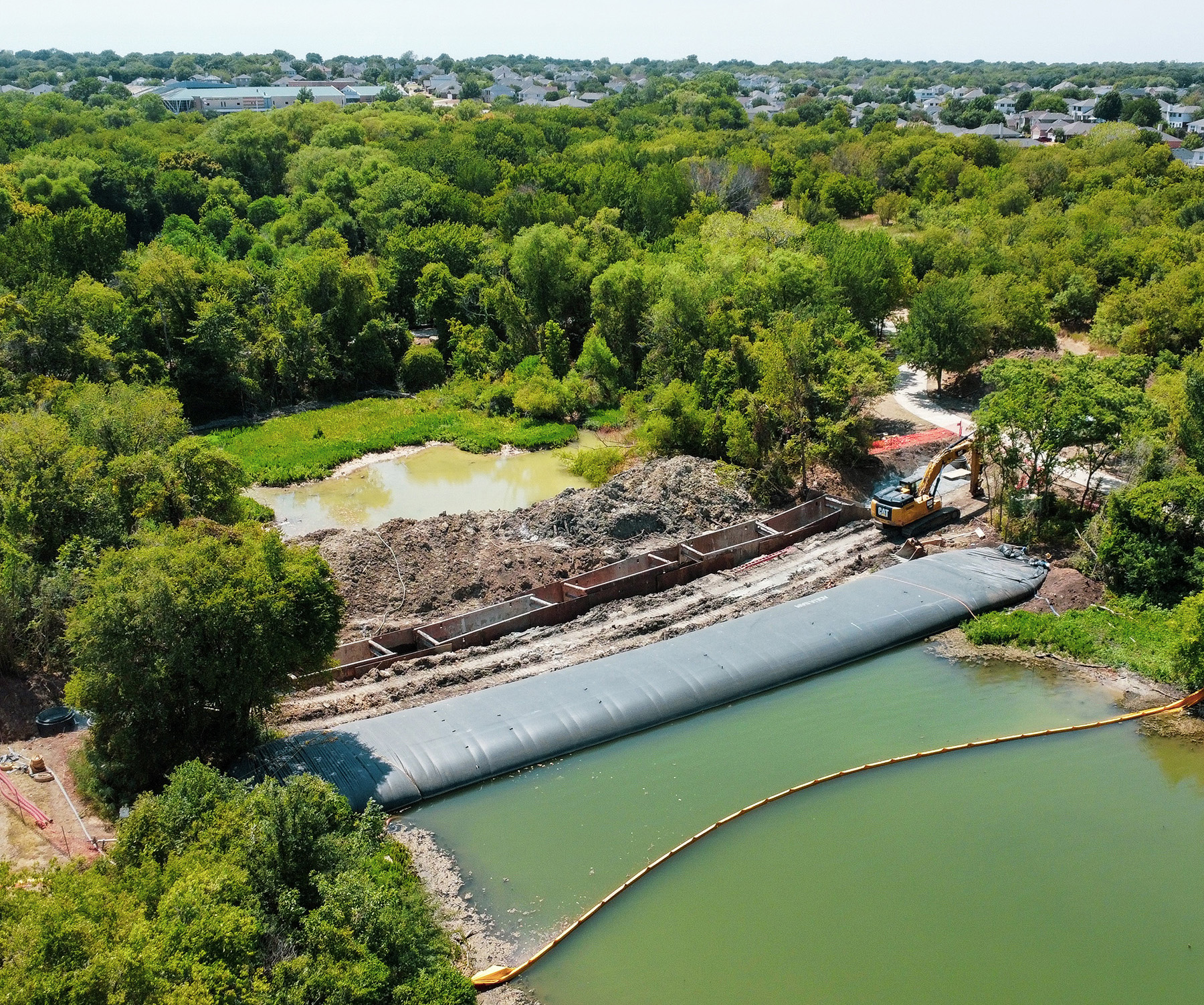
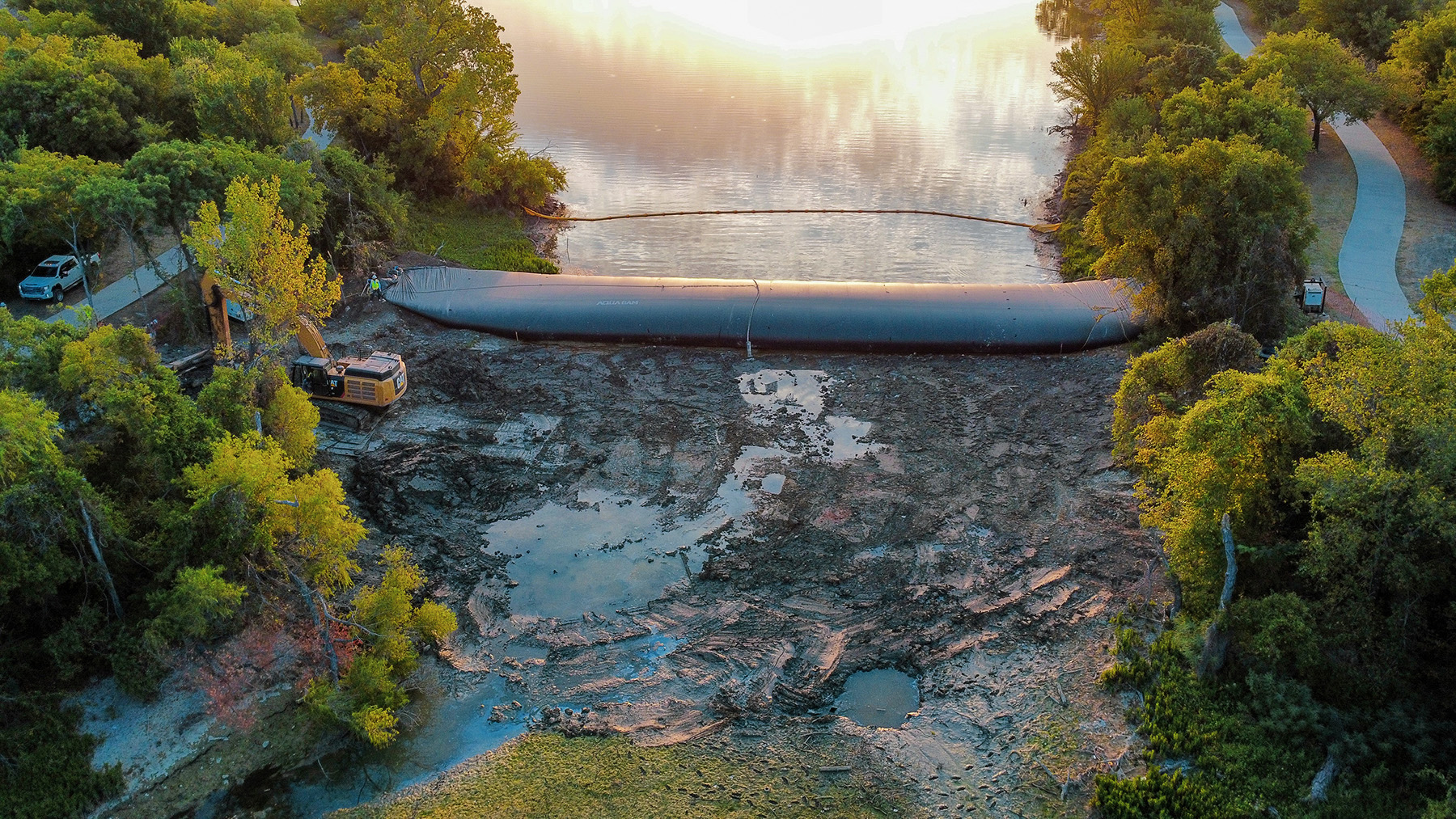
Before the inverted siphon could be placed below the lakebed, crews dewatered approximately 12,800 sq ft of the far west cove of Marine Creek Lake. The first step in the dewatering process was installing sediment control using a turbidity curtain. The curtain created a first line of defense against suspended sediment transport. The four-day installation involved assembly of floating frame elements, vertical anchoring into the lakebed substrate, placement of an impermeable curtain liner, and tying the anchorage with sandbags to prevent underflow.
The curtain also served as a perimeter containment system during subsequent cofferdam installation and dewatering. Step two of dewatering was installing a water-filled bladder dam system to achieve full hydraulic separation of the work zone. The third and final step was dewatering the work zone.
McKee Utility contracted with Magnolia Fisheries, a Texas-based Certified Fisheries Professional and Texas Parks and Wildlife Department-licensed exotic species permit holder, to complete fish relocation before dewatering began. The fish were captured and held in an aerated 50 gal. well on a boat; monitored for full recovery; and once stabilized, transported across the cofferdam and released back into the lake outside of the project area. All pump intakes were equipped with screens and suspended above the lakebed to prevent aquatic life from entering the pumps.
Construction procedures
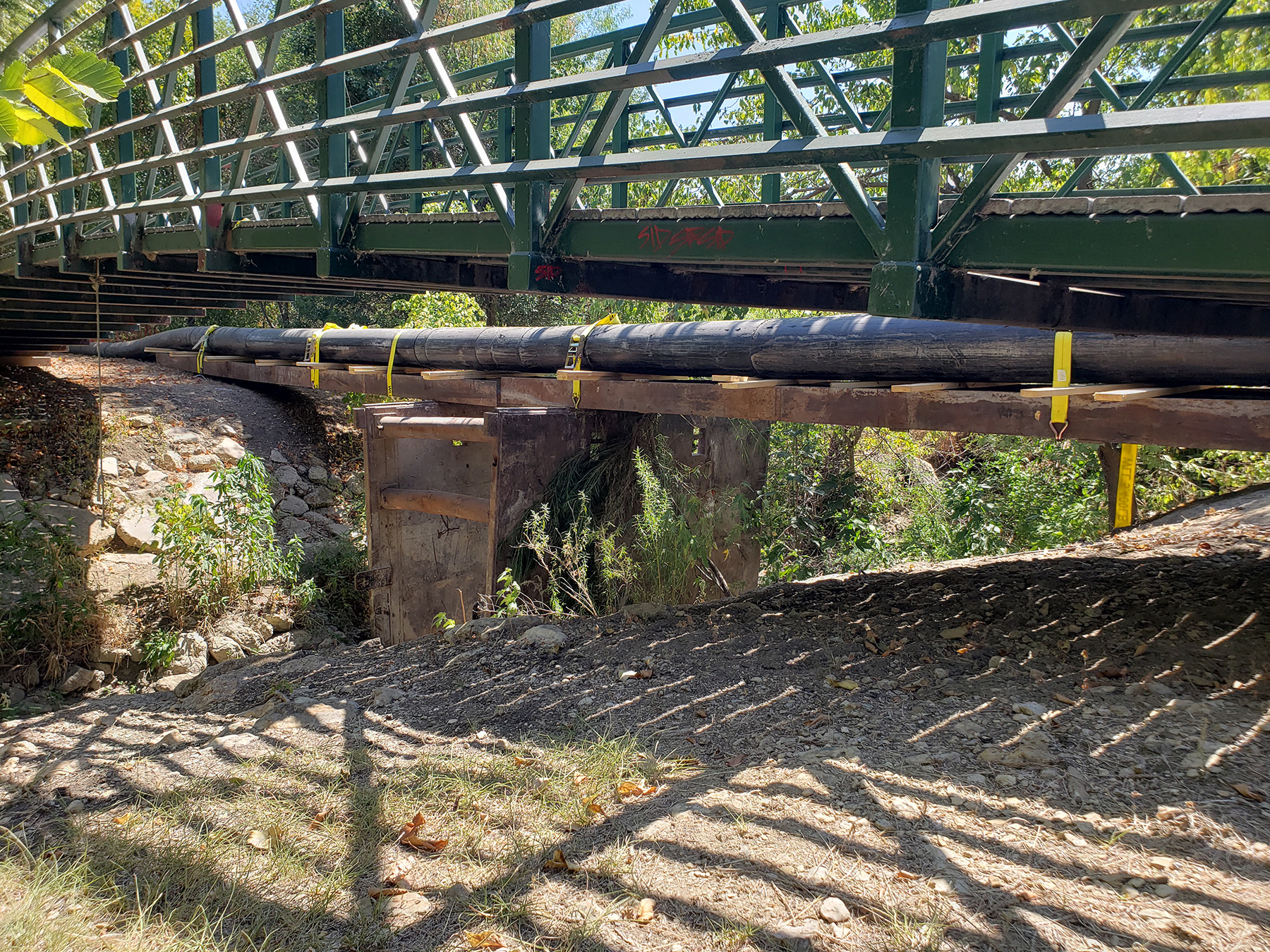
The contractor proposed and installed an alternate alignment for the temporary bypass pipelines. Instead of laying the pipe around standing water, crews built a temporary bridge, reducing the length of the bypass line by approximately 800 linear ft. The temporary bridge — wooden slats laid across metal beams and supported by a trench box — was placed adjacent to an existing pedestrian bridge. Crews secured the pipes to metal beams with tie-downs.
During installation, crews ensured trench stability to prevent sidewall sloughing of the lakebed soil. Additionally, they used concrete encasement to prevent pipe uplifting underwater and within the floodplain adjacent to the lake. Uplifting occurs when saturated soil sits above an empty pipe. Finally, the contractor proposed and executed an anchoring method to prevent piping from floating while the concrete encasement was placed.
After the concrete was cured and inspected, the contractor completed backfill operations, adapting to the saturated environment. Afterward, it removed the cofferdam in stages and controlled water reintroduction to protect the soil. During construction, the contractor also adjusted the horizontal alignment of the double-barrel inverted siphon, shifting it to align with the trench that was left after the existing pipe was removed. And because the barrels shared a trench, the design team proposed shifting the barrels closer together to reduce the amount of concrete required to fill space between them.
Coordination efforts
The permitting and public coordination efforts during design were key to the project’s success. Positive multiagency involvement ensured smoother processes and minimal delays. The contractor’s multifaceted sediment control measures protected water quality, and carefully planned aquatic relocation and protection prevented ecological harm. Crews addressed site-specific challenges during construction and implemented creative solutions that benefited the entire project.
As aging wastewater systems nationwide require expansion or rehabilitation, more projects will intersect with active reservoirs, wetlands, and recreational waterways. This project is proof that significant infrastructure improvements can be made in these environments with the integration of hydraulic engineering, environmental science, public communication, and construction management.
Leah M. Hodge, P.E., is a water and wastewater senior project manager at Halff Associates in Fort Worth, Texas.
Carmen Drake is senior inspector at the City of Fort Worth Water Department in Fort Worth, Texas.
Project credits
Owner
City of Fort Worth, Texas
Engineer of record
Halff Associates, Fort Worth, Texas
Contractor and dewatering
McKee Utility Contractors LLC, Prague, Oklahoma
Fish relocation
Magnolia Fisheries, Coppell, Texas
Bypass pumping
Sunbelt Rentals, Fort Worth, Texas
The authors will be presenting on this topic at the UESI Pipelines 2026 Conference August 1-5 in Detroit. For more details, visit www.pipelinesconferece.org.
This article first appeared in the July/August 2026 issue of Civil Engineering as “Building beneath the Surface.”

