
Technical Region Director Official Nominee
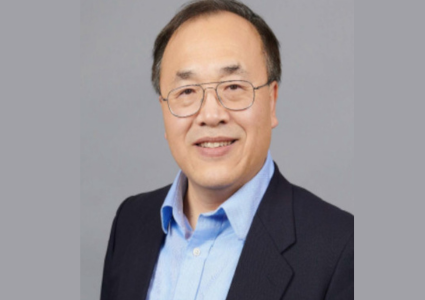
Vision statement
Civil engineering is entering a transformative era. Communities around the world are striving to address natural hazards, aging infrastructure, rapid urbanization, and accelerating technological disruption. I envision a future in which emerging technologies help create cleaner and more sustainable environments, greener and more energy-efficient infrastructure, and safer and more convenient mobility for all. This aligns closely with ASCE’s principle that engineered and natural systems must work in harmony for the benefit of humanity. Global initiatives in smart and sustainable communities are gaining momentum and offer great opportunities for civil engineers to shape the future development. While each ASCE institute excels within its specialized domain, even greater impact can be achieved through stronger collaboration and coordinated actions. If elected, I am willing to work closely with my TRBG colleagues to help ASCE in the following directions:
1. Advance Sustainability and Resiliency Through Global Perspectives
Sustainability and resiliency are not merely technical objectives—they are shared values that guide engineers worldwide. Having lived, studied, and worked across the US, Japan, and China, I have seen how each country has achieved remarkable progress through its own engineering traditions, practices, and innovations. Yet I have also learned that when we bring these international experiences together, we can develop more effective and forward-looking solutions than any single approach alone. I am committed to helping ASCE strengthen its leadership in uniting global insights and advancing sustainability, resiliency, and emerging technologies to guide the future of our profession.
2. Foster Collaboration Across Institutes to Drive Innovation
Our technical institutes form the intellectual foundation of ASCE. Yet the challenges we face— environmental resilience, sustainability, etc.—are increasingly cross-disciplinary. I will promote stronger partnerships among ASCE’s institutes, divisions, and committees; identify common areas for collaboration; support joint initiatives addressing cross-cutting challenges; and encourage the exchange of knowledge across domains. I am willing to help develop partnerships with related organizations such as IEEE and the Transportation Research Board. Strengthening collaboration will position ASCE to drive innovation more effectively. The upcoming ASCE 2027 provides an opportunity for institutes to highlight shared interests through joint sessions and workshops.
3. Accelerate Integration of Promising Emerging Technologies
My academic and professional journey spans civil engineering and computer science—two fields that are rapidly converging. With experience in AI, edge computing, smart sensing, and data science, I have seen how digital technologies are transforming infrastructure planning, design, construction, and operations.
These innovations are essential to realizing Future World Vision. As TRBG Director, I will help ensure that ASCE not only keeps pace with technological advances but also helps guide their responsible adoption. I believe expanded technical programming, standards development, and workforce training will empower civil engineers to confidently apply AI, robotics, smart infrastructure technologies, and other emerging tools.
4. Position TRBG as a Leader in Strategic Foresight and Workforce Development
Civil engineers must be prepared for a future where technological change is continuous and far-reaching.
I will work with ASCE leaders and TRBG members to establish procedures for identifying emerging technologies, assessing their implications, and sharing timely insights across ASCE’s technical communities. By combining global awareness, interdisciplinary expertise, and strategic foresight, TRBG can help ASCE stay ahead of new developments, guide the profession with clarity and confidence, and inspire the next generation to pursue careers in civil engineering and join ASCE.
In summary, I am ready to bring my experience, energy, and dedication to TRBG. I look forward to serving our members in my best capacity and helping ASCE advance toward a more sustainable, resilient, and technologically empowered future.
Biographical statement
Education
- MS in Computer Science, University of Washington (UW), WA, 2002
- Ph.D. in Transportation Engineering, University of Tokyo, Japan, 1998
- MSCE in Construction Engineering, Tsinghua University, China, 1991
- BSCE in Structural Engineering, Tsinghua University, China, 1989
Certification and licenses
- Professional Engineer (#56335) Registered in Washington Stat
Work experience
- Director, Pacific Northwest Transportation Consortium (PacTrans), USDOT University Transportation Center for Federal Region 10, Seattle, WA, 2012 -
- Professor, UW, Seattle, WA, 2011 -
- Associate Professor, UW, Seattle, WA, 2007 – 2011
- Assistant Professor, UW, Seattle, WA, 2002 – 2007
- Research Associate, UW, Seattle, WA, 1998 – 2002
- Research Assistant, University of Tokyo, Tokyo, Japan, 1995 – 1998
- Project Manager, Dalai Shopping Mall Development, China, 1992 – 1995
- Assistant Professor, Tsinghua University, China, 1991 – 1995
- Project Superintendent, Beijing New Century Hotel Decoration, Hong Kong Wahey Ltd, 1990 – 1991
ASCE involvement
Society level
- Member, Technical Region Board of Governors, 2018 – 2020 and 2023 - 2025
- Member, Committee on Torrens and Associate Editor Awards, 2025 -
- Member, Committee on Candidate Development, 2024 -
- Chair, Center for Technical Advancement (CTA), 2024 - 2025
- Chair, Paper Award Committee, 2023 - 2025
- Member, Future Conference Committee, 2022 – 2022
- President, Transportation & Development Institute (T&DI), 2019 - 2020
Local level
- Co-Chair for the 2018, 2020, and 2022 ASCE International Conferences on Transportation & Development (ICTD)
- Founding co-chair of the Connected and Automated Vehicle Impact Committee, 2017 – 2023
- Connected and Automated Transportation Special Section Editor for Journal of Transportation Engineering, Part A: Systems
Other Volunteer Activities
- President, Council of University Transportation Centers (CUTC), 2024 -
- Chair, AI and Advanced Computing Applications Committee (AED50) for TRB, 2020 – 2025
- Member, IEEE Intelligent Transportation Systems Society, 2011 - 2014
Awards
- 2025 IEEE Intelligent Transportation Systems Outstanding Research Award, IEEE Intelligent Transportation Systems Society, 2025.
- 2024 Asian American Engineer of the Year Award, Chinese Institute of Engineers, 2024.
- Member of Washington State Academy of Sciences, elected in 2023
- Distinguished Member, ASCE, 2023.
- Francis C. Turner, ASCE, 2023.
- Fellow, Institute of Electrical and Electronics Engineers (IEEE), 2023.
- Outstanding Faculty Award, College of Engineering, University of Washington, 2021.
- Best Paper Award, IEEE International Smart Cities Conference, 2020
- Transportation Education Council Innovations in Education Award, Institute of Transportation Engineers, 2018.
- Outstanding Leadership Award, Chinese Overseas Transportation Association (COTA), 2012.
- Best Paper Award for 2003, ASCE Journal of Transportation Engineering, 2004
- Excellent Presentation Award, 51st Annual Conference of Japan Society of Civil Engineers, Japan Society of Civil Engineers, 1996.
Publications
Awarded four patents. For example:
- Yegor Malinovskiy, Yinhai Wang, and Yao-Jan Wu. Travel Pattern Discovery Using Mobile Device Sensors, US 9,374,661 B2, received in 2016.
Published seven books. Examples are:
- Wang, Yinhai, Zhiyong Cui, and Ruimin Ke. Machine Learning for Transportation Research and Applications. Elsevier. 2023. ISBN: 9780323996808, 0323996809.
- Wei, Heng, Yinhai Wang, and Jianming Ma. Disruptive Emerging Transportation Technologies. ASCE Publication. April 2022.
Published over 430 papers. Examples are:
- Pu, Chenlu, Chenxi Liu, Lili Du, and Yinhai Wang. “Potentials and Challenges of AI-Empowered Solutions to Urban Transportation Infrastructure Systems: NSF AI-Transportation Workshop Phase I.” Journal of Transportation Engineering, Part A: Systems. Vol. 150, No. 9, 2024.
- Cui, Zhiyong, Kristian Henrickson, Ruimin Ke, and Yinhai Wang. “Traffic Graph Convolutional Recurrent Neural Network: A Deep Learning framework for Network-Scale Traffic Learning and Forecasting.” IEEE Transactions on Intelligent Transportation Systems. Vol. 21(11), 4883 - 4894. Nov. 2019.
- Ma, Xiaolei, Zhimin Tao, Yinhai Wang, Haiyang Yu, and Yunpeng Wang. “Long Short-term Memory Neural Network for Traffic Speed Prediction Using Remote Microwave Sensor Data.” Transportation Research Part C: Emerging Technologies. Vol. 54, 187-197, 2015.