
Qhapaq Ñan - The Inka Imperial Road
Completion Date
1000 BC to 1533 AD
Project Type
Roads & Railways
Location
Colombia, Ecuador, Peru, Bolivia, Argentina, Chile
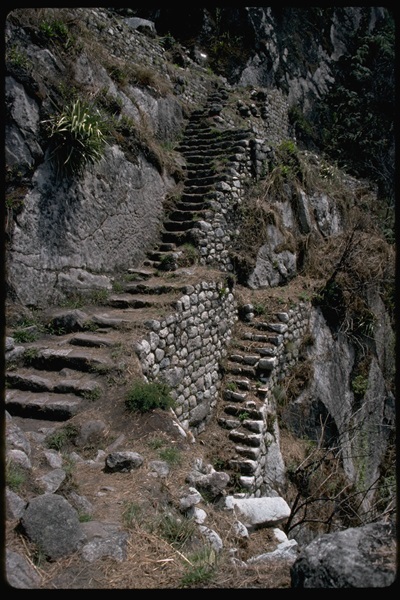
The Inka Imperial Road is a 24,000 mile network of roads that crossed high mountains, deserts, jungles and coastal areas throughout six countries in western South America representing a tremendous engineering achievement by five different cultures from 1000 B.C. through 1533 A.D.
The 24,000 mile Imperial Inka Road system, or Qhapaq Ñan, was developed using many preexisting structures from the Chavín culture of 1000 B.C. and the subsequent Tiwanaku, Wari and Chimú cultures through 1400 A.D. The very highly organized Inca Empire existing from 1493 to 1527 A.D under rulers Pachacuti, Tupac Inka Yupanqui and Huayna Capac, expanded the road and used it to integrate a wide range of people and resources stretching from southern Columbia to Santiago, Chile.
The Imperial Inka Road system is comparable to the Roman Road system (constructed 312 B.C. – 5th century A.D.) and the Silk Road (constructed 500 B.C. – 130 B.C.) It was constructed without the benefit of a written language or the use of wheels or iron implements.
Construction was lasting, with many parts of the original system still used into the 20th century. Small stations and some larger complexes were positioned at approximate 12-mile intervals for the use of long-distance travelers to spend the night. Steps were incorporated in steeper sections and culverts built to cross smaller drainages. Deep gorges and wide rivers were crossed by suspension bridges using braided cables of natural fibers. Some were still in use into the 20th century and at least one example survives today near Huinchiri, Peru.
The Imperial Inka Road serves today as an important lesson in the heritage of the civil engineering profession and serves as a point of pride to the continent of South America and to the living descendants of the Inka Empire.
Resources: ASCE International Historic Civil Engineering Landmark Nomination, June 2017.
The 24,000 mile Imperial Inka Road system, or Qhapaq Ñan, was developed using many preexisting structures from the Chavín culture of 1000 B.C. and the subsequent Tiwanaku, Wari and Chimú cultures through 1400 A.D. The very highly organized Inca Empire existing from 1493 to 1527 A.D under rulers Pachacuti, Tupac Inka Yupanqui and Huayna Capac, expanded the road and used it to integrate a wide range of people and resources stretching from southern Columbia to Santiago, Chile.
The Imperial Inka Road system is comparable to the Roman Road system (constructed 312 B.C. – 5th century A.D.) and the Silk Road (constructed 500 B.C. – 130 B.C.) It was constructed without the benefit of a written language or the use of wheels or iron implements.
Construction was lasting, with many parts of the original system still used into the 20th century. Small stations and some larger complexes were positioned at approximate 12-mile intervals for the use of long-distance travelers to spend the night. Steps were incorporated in steeper sections and culverts built to cross smaller drainages. Deep gorges and wide rivers were crossed by suspension bridges using braided cables of natural fibers. Some were still in use into the 20th century and at least one example survives today near Huinchiri, Peru.
The Imperial Inka Road serves today as an important lesson in the heritage of the civil engineering profession and serves as a point of pride to the continent of South America and to the living descendants of the Inka Empire.
Resources: ASCE International Historic Civil Engineering Landmark Nomination, June 2017.