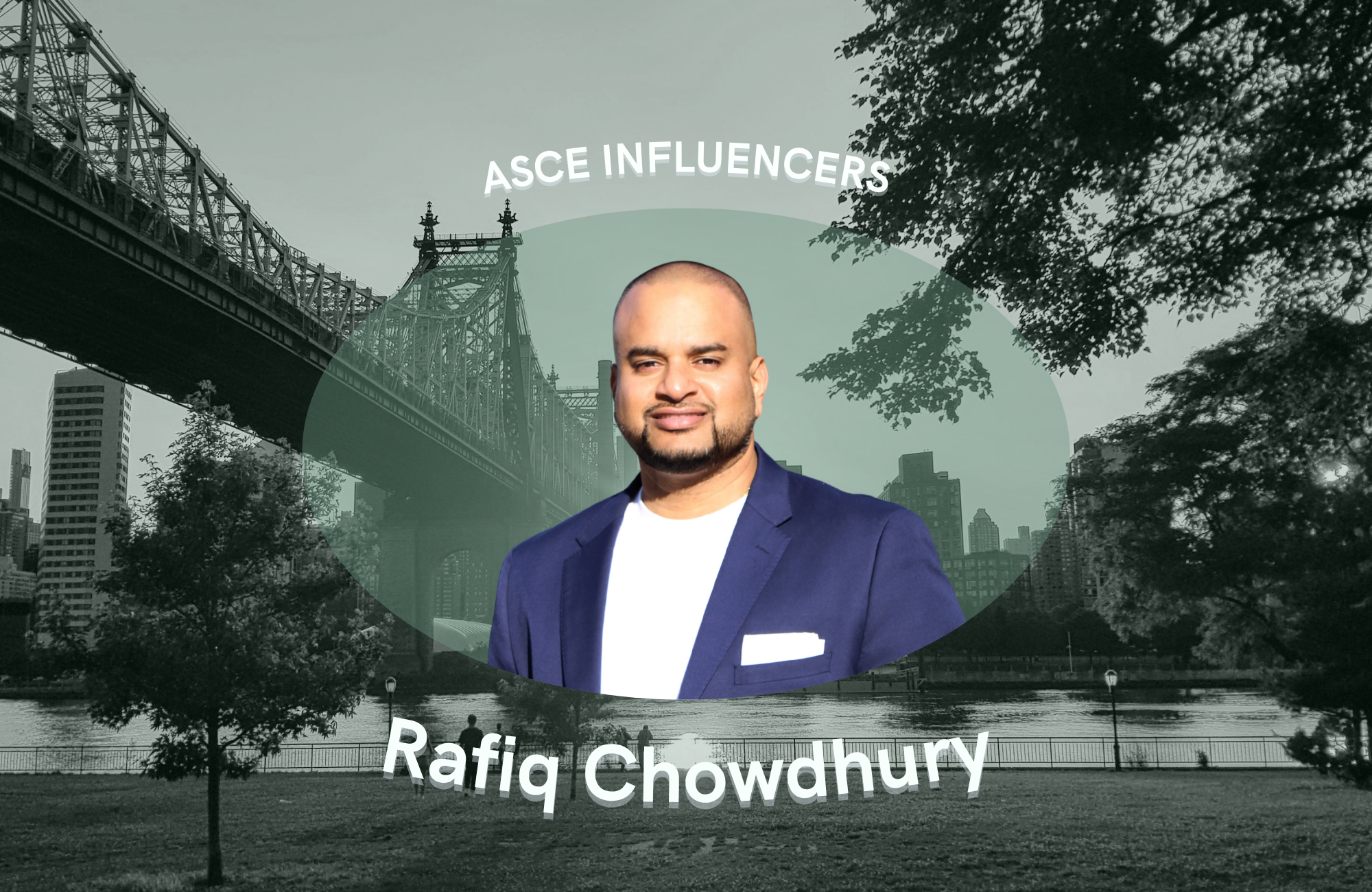
ASCE Influencers is a series highlighting civil engineers making unique contributions to the industry. Each edition of the series tells the story of an accomplished civil engineer using their skills and success to uplift others and influence the profession.
Rafiq Chowdhury fell in love with civil engineering as a student at the University of Central Florida.
Fascinated by the technical aspects of construction and tangible impacts of infrastructure, his college courses and internships solidified that this was the path he wanted to follow.
But going through school and his early career, Chowdhury realized he had a second passion: leadership.
And what came next was the realization that to reach his full potential as a leader, he needed to pursue entrepreneurship.
“When you think about your quintessential engineer and you think about a bit of an introverted person – absolutely nothing wrong with that,” said Chowdhury. “But if I was going to project myself in this field and this is my superpower, I thought entrepreneurship is the right direction to go toward. I felt like it was the truest expression of my drive.”
Chowdhury’s dedication has led him to leadership roles within the ASCE Long Island Branch and Metropolitan Section, founding Quadrant Engineering, creating an endowment at UCF, establishing himself as a philanthropist, and being selected as one of ENR’s 2026 National Top 20 Under 40.
A leader at his core
Chowdhury’s approach to leadership began in his school days and early career, throughout which he sought to connect with others at a very humanistic level.
“I truly did not think of [humanistic connection] as a skill whatsoever, but as I got into more leadership roles, whether that's ASCE Student Chapter president, whether that's a senator at UCF, or the internship at Walt Disney Imagineering, I started to realize, no, this is truly a skill,” he said.
“So that's what really kind of initiated the thought of starting my own company – that I have this ability that I feel would be wasted had I not taken it to the next level and created an organization that had its own culture, its own entity, its own standard of excellence,” he continued. “It's something that I could call not my own but our own, meaning the team behind it.”
And in 2019, Quadrant Engineering was born.
The company, where Chowdhury now serves as president, takes a community-oriented approach to civil engineering. It has six core values: be innovative, be honest, be reliable, be philanthropic, be result-oriented, and be enjoyable, demonstrating a focus on the “people” aspect of projects.
“I mean, I started looking at engineering – especially civil engineering – the way public infrastructure is truly the backbone of communities, so the people who are building the infrastructure are the direct architects of what a community can be.
“Once I saw and really realized that, I was like, ‘Okay, this is the route I want to go, but I need to do it my own way, with like-minded people building a team.’ We're going to build Quadrant Engineering and go from there,” Chowdhury said.
But even when something comes from such a natural place, that doesn’t eliminate challenges.
Fighting imposter syndrome
Chowdhury was only 33 years old when he founded Quadrant, and, in New York City – far from his home state of Florida – he saw people with ambition and drive, and everything “going at 100 miles an hour.”
“You tell yourself, these are established players, and you constantly ask yourself, “Should I be at this table? Did I earn the right to be at this table?” he said.
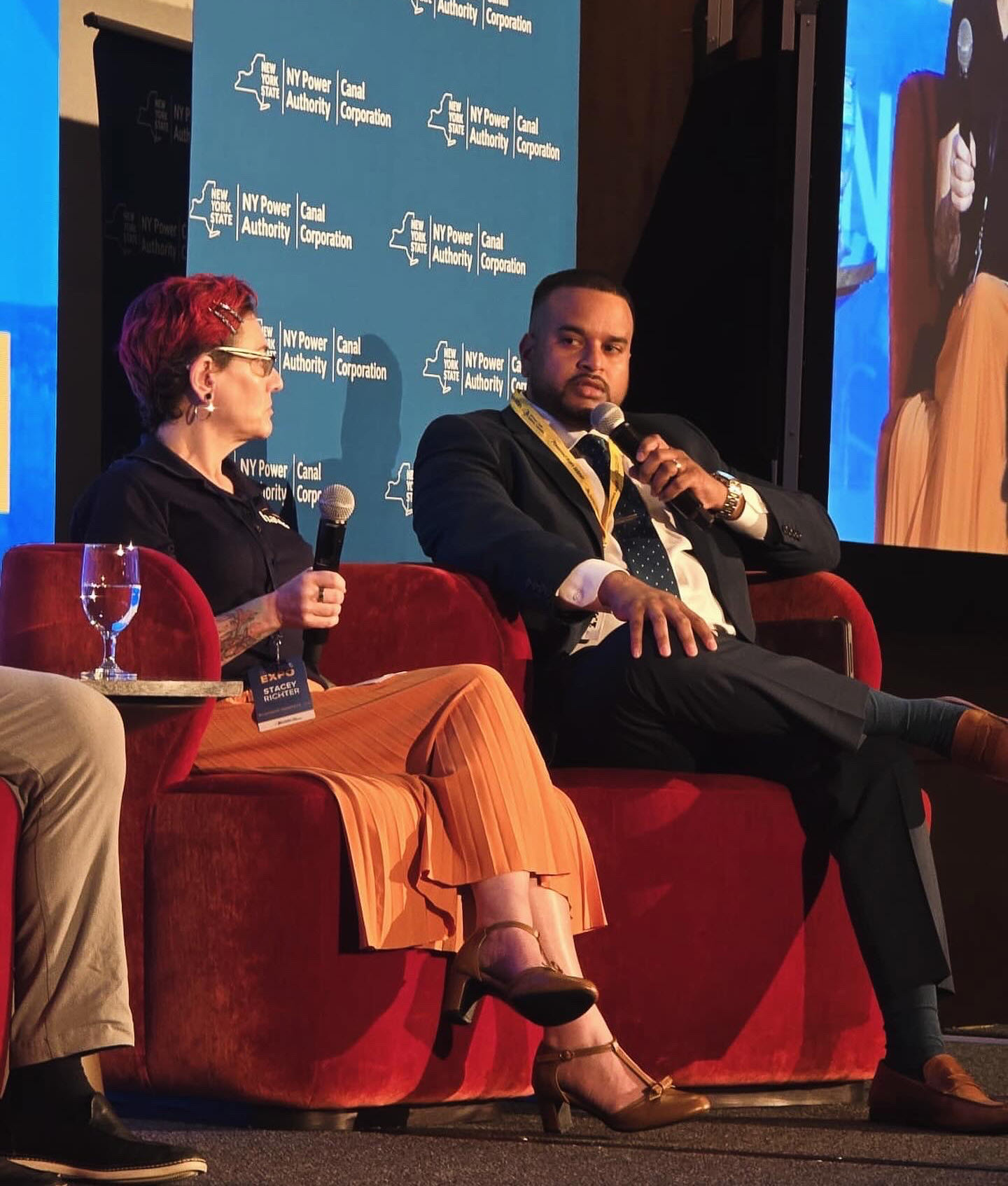
What helped Chowdhury overcome these doubts wasn’t one grand moment, but rather the process of continuously spending time with more established professionals while moving through the leadership ranks of the ASCE Long Island Branch and Metropolitan Section.
“You're meeting a lot of people, you're meeting entrepreneurs, you're meeting leaders in massive companies, and it just solidifies,” he said. “It clicks that these people are impressive, these people are diligent, these individuals work extremely hard. But these aren't foreign tactics to what you are as yourself.”
And seeing his own traits in other leaders made him realize that the only thing stopping him from achieving more were his limiting thoughts.
What pushed him even further was the process of getting clients at Quadrant. Chowdhury was able to build a client base using a simple but personal approach: answering calls and emails and simply giving them the time of day. Effectively, just being extremely good at the fundamentals.
“Then, clients turned into retained clients, retained clients turned into referred clients,” he said. “Then it kind of trickles that way naturally. So over time, the results spoke to me louder than the self-doubt I had.”
A philanthropic drive
Chowdhury’s people-focused approach extends beyond clients and into the broader community as a volunteer.
“I've had volunteerism in me my whole life,” he said. “It's part of my DNA, and anybody who knows me knows that this is not something I started in my business. This is not something I started in college. This is something I remember from when I was a kid.”
In his childhood, Chowdhury observed his parents packing toys and other items to take to children on a trip to Bangladesh.
“They would take suitcases, multiple suitcases of just toys and trinkets and tools and school supplies and all these things,” he said.
Intrigued by the sheer number of items, Chowdhury asked his parents why.
“And I think that was the first moment where it clicked that [some] people are less fortunate,” he said.
“That connected the fact that, ‘Oh, there are kids with less, there are people with less,’” he said. “That stuck in my head for life, that you can't take these things for granted no matter what they are. You can't turn on your faucet and take that for granted.”
And that mindset is also part of why Chowdhury pursued civil engineering in the first place.
“I mean, the word civil is in the title; it embraces humanity,” he said.
And the culture Chowdhury built at Quadrant reflects his commitment to service.
“When it comes to Quadrant, there was no way I was going to start a company that did not have a philanthropic sector of the business,” he said.
Quadrant’s Construct a Dream Initiative, known as CADi, is how Chowdhury’s aspirations took form. This initiative, which focuses primarily on Queens, NYC, was “part of its DNA from the very beginning.”
“I wanted to have the freedom to be able to do that, and the vehicle to that is entrepreneurship,” he said.
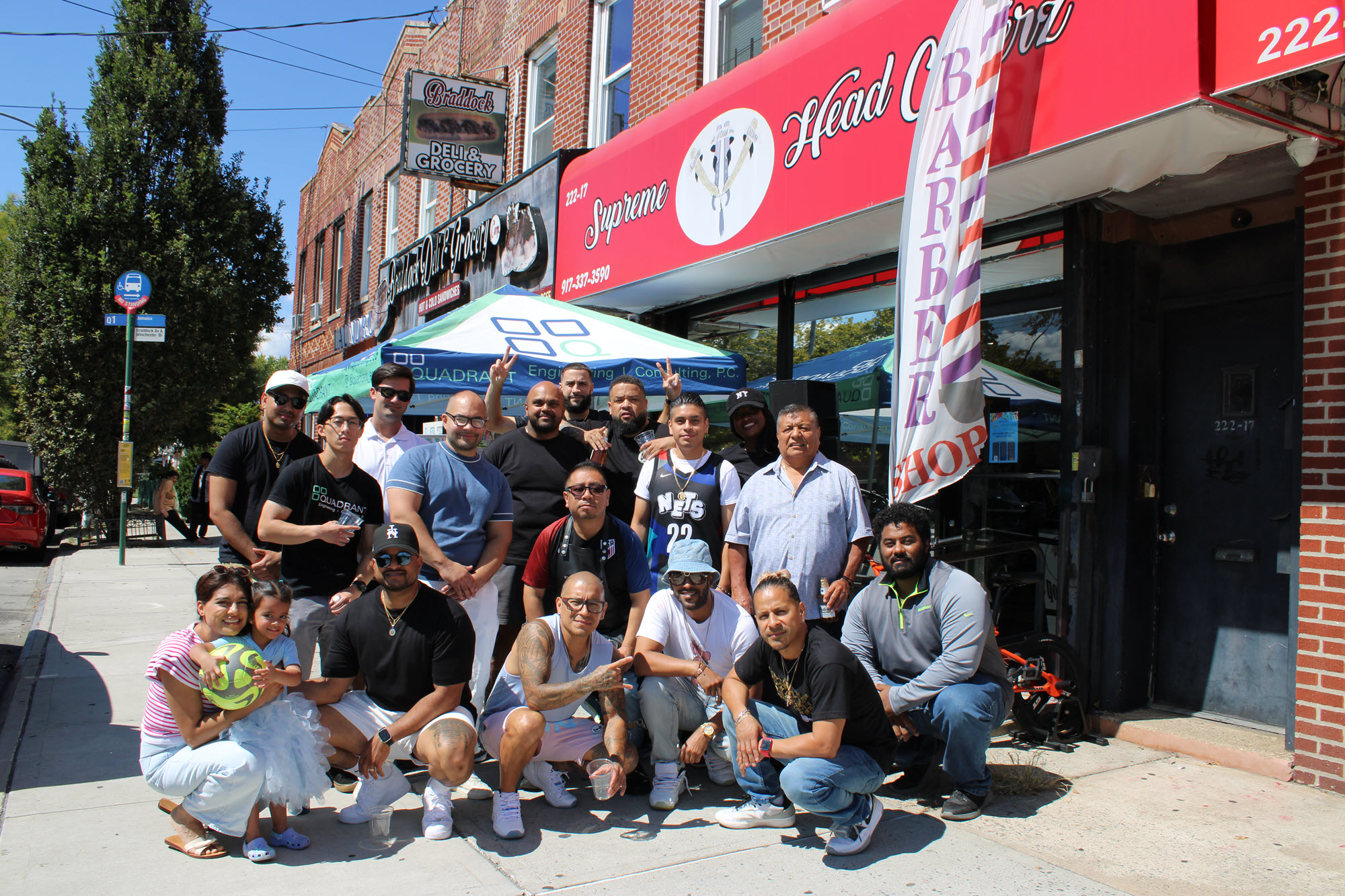
One successful CADi project, now in its fourth year, is the annual back-to-school drive. Done in partnership with Supreme Headcutterz, a local barbershop in Queens Village, the event provides free haircuts to children, who also receive bags full of school supplies. And it all started with a conversation between Chowdhury and his barber, Steven Oropeza.
“One day I was getting a haircut, and I remember talking to my barber,” he said. “I see kids coming in sometimes, and they can't pay for it all.
“I said, ‘Why don't we do a back-to-school drive? Let me use your shop. I will fund it. Quadrant will fund it. CADi will fund it.’”
And the shop was on board.
Last year, the event provided 94 bookbags and 32 haircuts. And those haircuts offer something that school supplies alone can’t.
“When you get that fresh haircut, especially as a young kid, your sense of confidence going into school and the way you feel about yourself is tremendous; it's astronomical what it does to you. It's magic of itself,” said Chowdhury.
Through CADi, Quadrant also partnered for the first time with the Astoria Food Pantry to give Thanksgiving meals to local families last year.
Chowdhury believes that volunteering is a symbiotic relationship.
“What that does selfishly is it gives my team purpose, too,” he said.
And he doesn’t see that as a bonus, but as a requirement.
“My belief is simple. I think every company has an obligation to serve the community that pours so much into them,” he said. “You know, we're not separate from our communities. I think we are products of our communities, us being businesses, and more of us have to look at it that way.”
Chowdhury doesn’t see CADi stopping there. In the future, he hopes to take on long-term projects, those lasting around six months to a year, in and outside the U.S.
Using his connection with UCF, Chowdhury also established the Quadrant Engineering – Chowdhury Family Future Leaders Endowed Scholarship in 2024.
“When it comes to the scholarship, I always knew that it was something that I wanted to do to give back,” he said. “I have a very soft spot for UCF; it’s where I found a lot of my identity. I didn't know what civil engineering was until I went to UCF.
“And the mentorship, the camaraderie, and the lifelong friendships that I've made along the way connect me back to UCF,” he continued. “So, I always knew I wanted to give back in a manner that I took advantage of when I was a student, that being through private scholarships.”
What Chowdhury wants younger civil engineers to know is that with hard work, anyone can be successful in their career.
“There is no secret. There's no hidden rulebook or roadmap somewhere for a certain group of people with certain criteria,” he said. “… You can find something that you're passionate about, that you love, and you can stick with it, because your true definition is when the challenges come.”