

 Bentley Systems
In Turkey, engineers working on a geothermal reservoir used AI to compress a five-year development timeline into just one, cutting costs by more than 76%. In California, an engineering firm used AI to automatically check precise 3D models of a major utility’s existing power structures for code compliance, structural integrity, and real-world loading conditions —cutting modeling time by up to 75% while avoiding unnecessary pole replacements.
The engineers working on these projects aren’t alone in seeing the benefits of an AI co-worker.
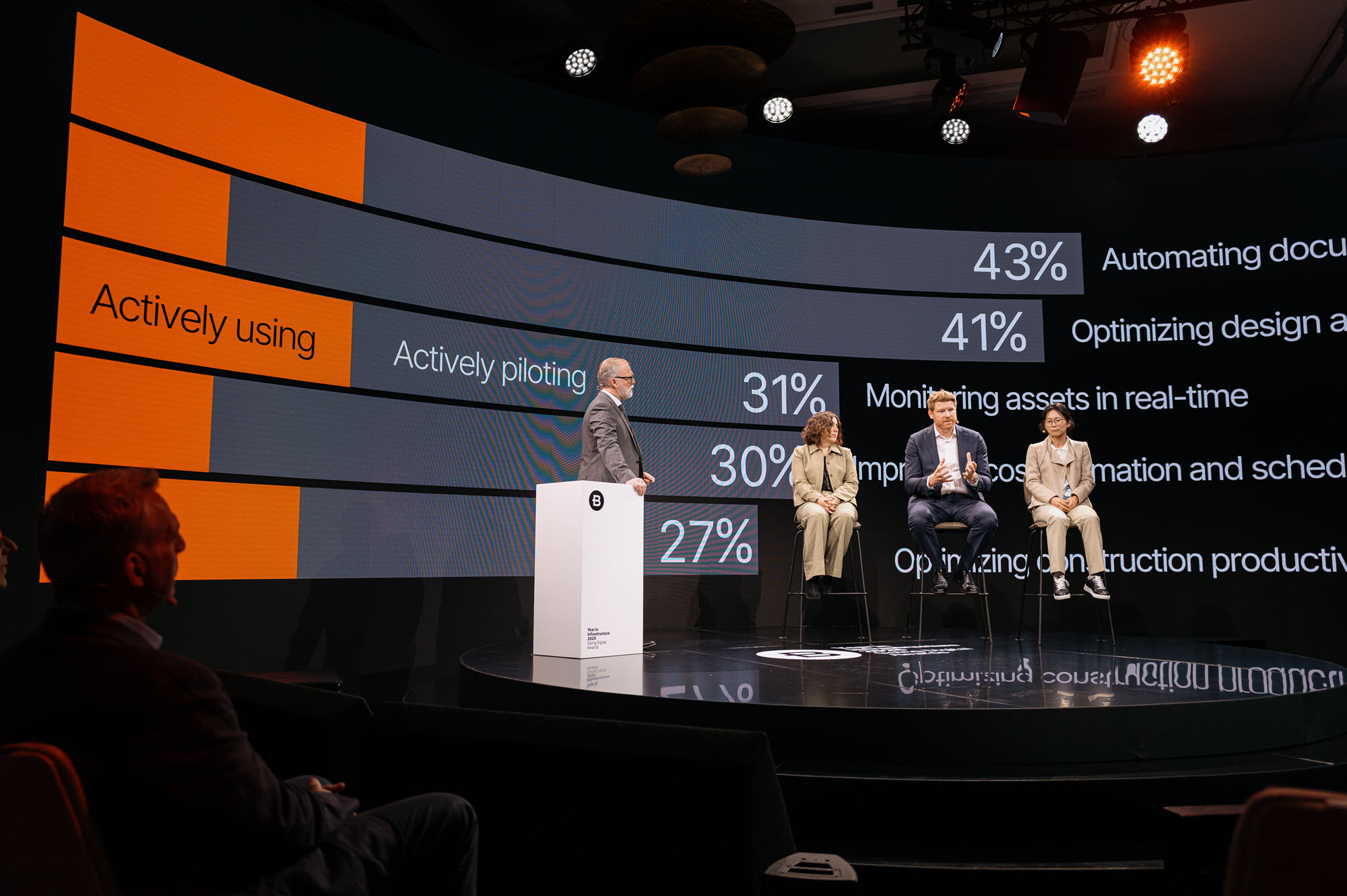
Nearly all respondents in a recent survey of the infrastructure sector said they were either trying out or had adopted AI applications for some of their operations – including to improve design and engineering productivity. AI use in the sector is expected to increase, with around a third of the surveyed organizations predicting it would be used in more than half of their design, engineering, and construction projects in three years.
Those are among the main findings of a survey by Bentley Systems, law firm Pinsent Masons, and engineering consultancies Mott MacDonald and Turner & Townsend. The survey was published ahead of Bentley's Year in Infrastructure event in October in Amsterdam.
The survey, titled The Impact of Artificial Intelligence on the Built Environment, polled 130 leading infrastructure and building professionals across the globe on their firms' readiness for AI, as well as the potential risks and returns they see from its use.
Mind the Gap
The study was conducted to help further discussion on how infrastructure professionals can best leverage AI. Combined with robust construction spending and lagging productivity, AI presents a “pivotal opportunity for innovation,” the report suggests.
Construction spending is projected to hit $10 trillion worldwide in 2025, while industry productivity has remained stagnant for decades, according to Mark Coates, vice president of infrastructure policy advancement at Bentley, and Ian Laing, Pinsent Masons' global sector head of infrastructure.
“AI provides robust tools to close this gap by automating intricate tasks, improving decision-making, and facilitating data-driven workflows throughout asset lifecycles,” Coates and Laing write in the report. “It is incumbent upon all of us participating in the sector to determine how best to effectively leverage AI's potential while addressing its associated risks.”
AI Use Is Under Way—And Set to Grow
Firms are now mainly using or experimenting with AI to automate document-related processes and to improve the productivity of design and engineering processes. About 35% said they expected more than half of their projects would leverage AI in design and engineering in three years' time. That percentage dips slightly, to just under 30%, for using AI in construction works.
One challenge hindering AI adoption is data sharing, the survey found. About one fifth of firms cited risks related to data, such as intellectual property, privacy, cybersecurity, and commercial information. Another 15% noted a lack of AI skills at their organization.
On the risk side, a wide majority of respondents said they expected AI to affect their current workflows, with nearly a quarter taking active steps to adapt. But the survey also found that more than one third of firms have limited or no project controls to manage risk where AI is used for design and construction.
Still, the report found that many firms anticipated major benefits from adopting AI, citing expected significant improvements in such areas as productivity of design and engineering processes; cost estimation and forecasting; scheduling; and construction process productivity.
Firms said that over the next three years, they plan investments to boost the use of AI, ploughing money primarily into technical capabilities, standardized data and processes, and AI leadership and management.
Read the full report.
Infrastructure is too big to fail, so you need AI you can trust. Bentley Systems, the partner of choice for engineering firms and owner-operators worldwide, is delivering infrastructure-ready AI across design, construction, and operations.
