Emily Dickinson isn’t necessarily a typical touchpoint for most civil engineers.
Then again, Anna Lisonbee isn’t your typical civil engineer.
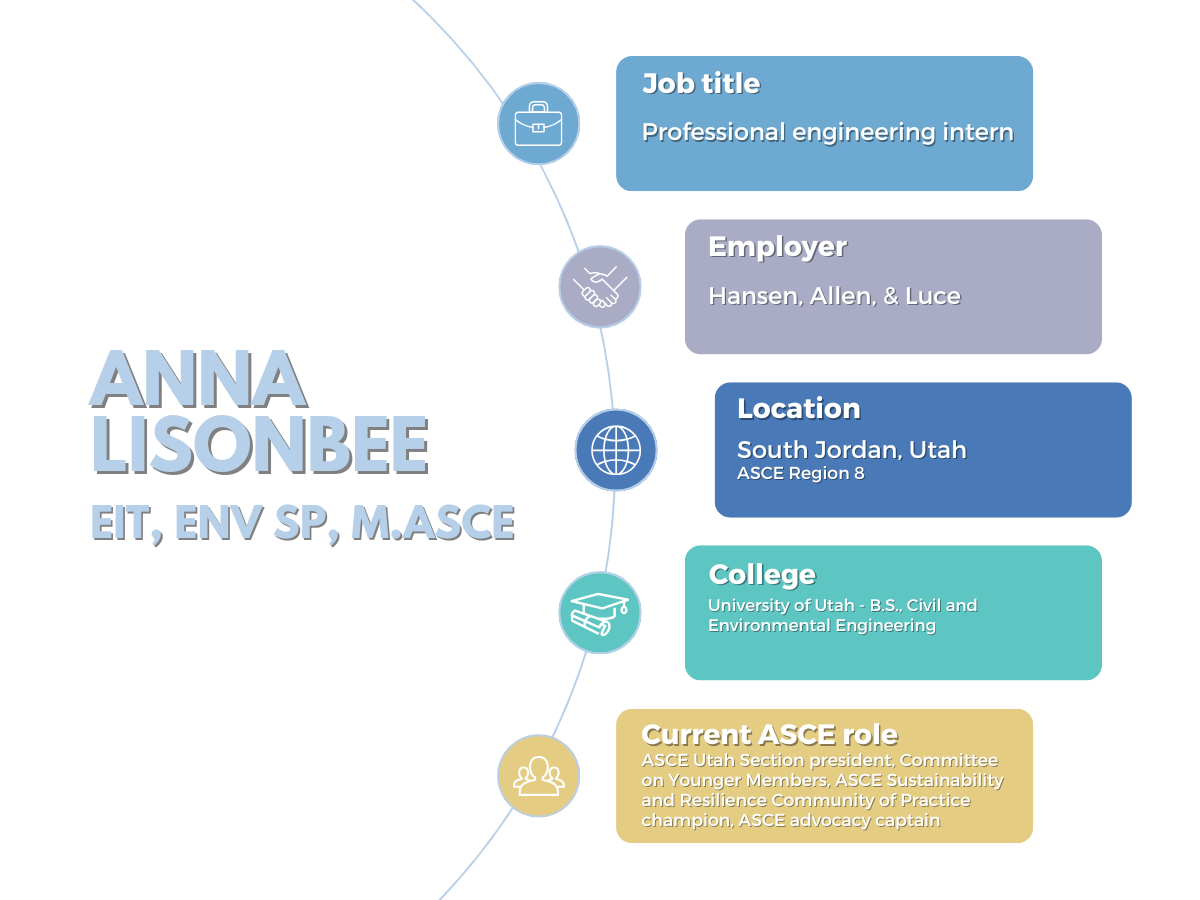
Lisonbee, a project engineer at Hansen, Allen & Luce outside Salt Lake City, grew up among the mountains of Utah, and, yes, among her many interests was a love for poetry.
“A lot of Emily Dickinson,” Lisonbee said, “who is famous for those quotidian observations, right? Those small things that, when you start to pay attention to them, you find a lot of beauty in them.”
This Dickinsonian appreciation of beauty in the world is a constant through Lisonbee’s life and a connection – possibly surprising to some, but totally logical when you think about it –to her engineering career.
“There is a sense of beauty that you find in discovery, and I think that’s something a lot of engineers relate to,” Lisonbee said. “And it’s very natural for a lot of us to find beauty in nature and to want to protect, support, and preserve it.”
Technically, it was her husband, Rich Lisonbee, then a fellow student at the University of Utah, who suggested that Anna consider pursuing civil engineering as a major. And since then, Anna has combined her unique blend of talents to grow into something truly original: a math whiz with the eye of a poet.
“I find purpose in being able to protect that beauty, but also to add to it by improving the resilience of our creeks and rivers, and connecting communities,” Lisonbee said.
“I think being able to influence those everyday environments that people interact with, creating beauty in both the natural and manmade elements that comprise our sense of place is so important.”
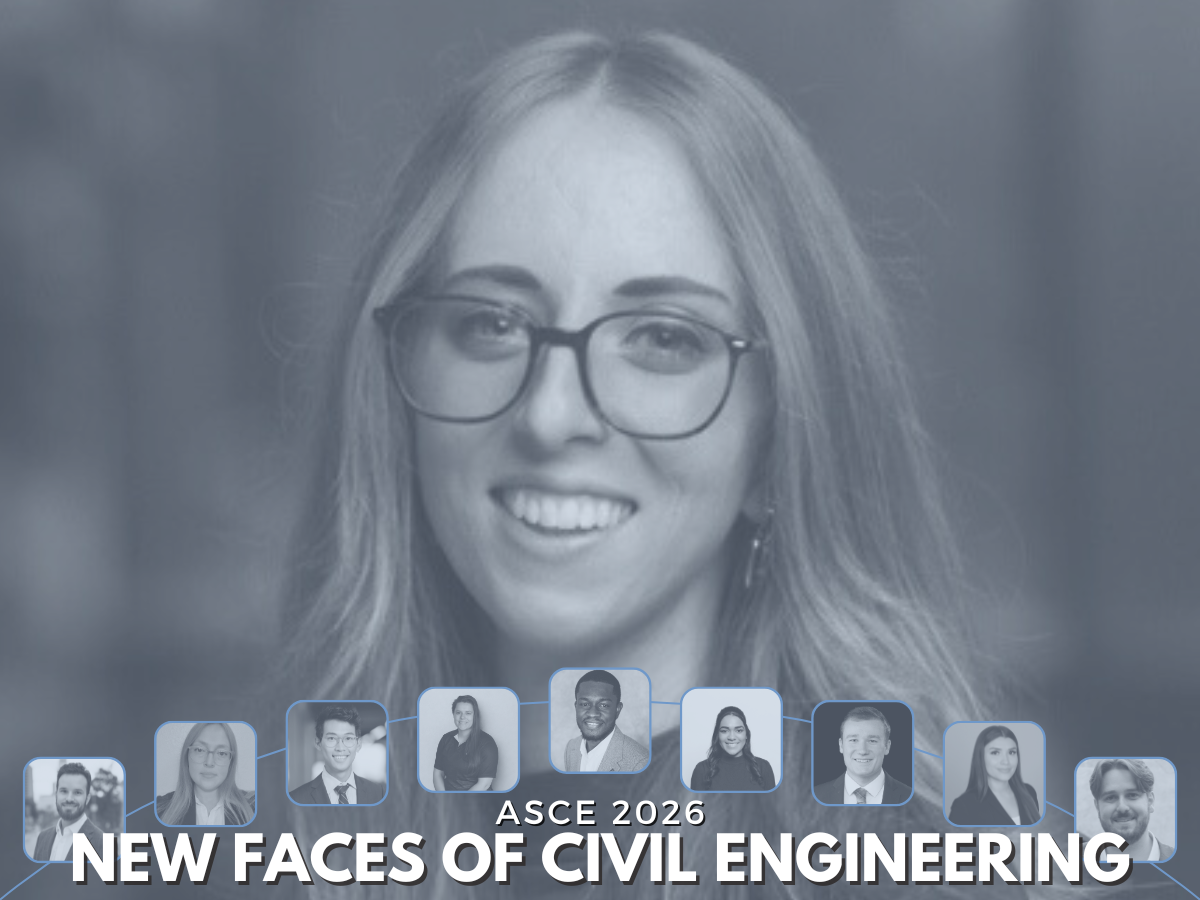
It’s a purpose that has driven Lisonbee to tremendous career success at an early age, and ASCE has honored her as a 2026 New Face of Civil Engineering.
In addition to her work as a water resources professional, Lisonbee has devoted countless hours to volunteering. She serves on the ASCE Committee on Younger Members and is president of the ASCE Utah Section, where she played a key role in the state’s infrastructure report card last year.
“Part of me feels like ASCE is a little bit addictive because of just how fulfilling it is,” Lisonbee said. “When you start getting into something, others you meet start supporting you, you learn more, and you become more passionate about it. Then it all gets reinvested in itself again, like a positive feedback loop.”
Lisonbee recently spoke with Civil Engineering Source about her career.
Civil Engineering Source: What accomplishment are you most proud of?
Anna Lisonbee: Although there are specific projects and technical things that come to mind, I think the accomplishments I’m most proud of are the conversations I create as a member of the design team. I’ve had opportunities to lead discussions about sustainability and resilience using my ISI Envision Sustainability Professional credential. I’ve also contributed to the civil engineering culture in my state and worked really hard to deliver realistic messages of innovation to students. The thread tying all these experiences together is consensus seeking, purpose driven conversations. That’s what fuels me the most.
I had a mentor at my first job, Robert Elder, who emphasized that civil engineering is a community industry and a people focused profession. He showed me how invaluable it is to have relationships with everyone on the design team where you can talk about any ideas. Specifically, he taught me how to bring up connectivity and walkable cities in the site development world.
And I think the reason it’s so fueling for me is because I’ve seen those times when we had really good flow between the team – when we’ve had the landscape architect jumping in after we mention incorporating water-wise landscaping and saying, “I want to expand that, let’s make it even bigger,” and then pitching that fusion to the developer and understanding what their goals are and how our ideas fit with those goals.
It’s just really cool to see something that was an intern’s idea get into the blueprints and improve a project because of the culture from my mentor that everyone’s ideas are valuable. Having those conversations makes the ideas so much better and so much more valuable for the product itself.
Source: So how do you influence those conversations with your team?
Lisonbee: I think the most important thing is making sure that there is an environment of psychological safety and encouraged vulnerability on the team, so that everybody feels like they can pitch ideas. And then, as I am working on my technical expertise and having ideas for nature-based solutions or for resilience, I always start by examining what the values are for the people and the project that I’m working on. I look at where those values and my own values overlap in that Venn diagram of purpose.
Then I try to pitch those ideas with that purpose as the foundation and discuss: OK, what fits in this project? What doesn’t fit? Is there anything that you think doesn’t work about this idea, and how can we make it better?
Those types of conversations are generally where I find the most opportunity to apply things that are a little different than the standard “copy, paste, and go to the next” approach.
Source: Is it challenging as somebody who is so passionate about sustainability and resilience concepts, to hold strong to those ideas but also be open to conversation?
Lisonbee: Yes and no. I think something that has really helped me reconcile those priorities with the priorities of the team is to remember that everyone is trying to make the best project.
When people are hesitant about these buzzwords like nature-based solutions and sustainability, they’re probably nervous about risk and the economic impact on the project, especially where the return on investment is narrow. I understand their hesitancy, and I want to make sure that I support their goal of getting the best economic output as well.
If you only see it as “we have to do the greenest option,” you’re going to be disappointed. But if you look for consensus and for ways that your goals also support their goals, there are plenty of sustainable solutions that lower costs and improve the life-cycle performance of the project.
I think it is actually very possible to reconcile those priorities, knowing that everybody on the team is showing up to make the best product possible. It’s important to trust that and keep it in mind when you have those conversations.
Source: From a technical standpoint, how have you grown?
Lisonbee: Right now, I’m doing hydraulics and hydrology – a lot of water resources, stormwater master planning, and flood control. It’s sometimes an overlooked part of our state’s infrastructure. A lot of people think of Utah as dry and desert-like, but flooding is actually the No. 1 state emergency. It’s been really fulfilling for me in my new role at Hansen, Allen & Luce to learn more about flood prevention and how that supports the broader goals of water conservation and resilient infrastructure.
Source: What’s the project in your career you’re most proud of, just talking again about the technical side of things?
Lisonbee: I have worked on a lot of projects that I love at my new job. But in my previous role at Ensign Engineering, I worked on a project called Olympia Hills. Our role included design of more than 300 acres, and it’s being built right now in Herriman, Utah.
My responsibility was to help design one of the phases and pitch overall ideas for sustainability. The project had different sub-phases named after various national parks, and the goal was to balance this higher-density area with the identity of those national parks.
My project manager came to me and said, “Hey, I know you have this ISI Envision sustainability training. I’d like you to come up with some cost-effective ideas on how we can include some national park concepts in this project.”
I wrote down things I thought we could implement: rain gardens, habitats for local bees built out of scraps of wood from construction, and mile markers to encourage activity on the multi-use trails we were putting into the site. I also pitched water-wise landscaping using wildflowers to offset some of the vegetation we were taking over for native insects. He was really excited and said, “Let’s take it to them; let’s start these conversations.”
So we proposed little things in every phase that echoed parts of the national parks. Some got into the final plans, and some did not, but even just being part of that process was exciting. Now as it’s being built, I’m excited to see how much of that has been brought to reality.
Source: What do you want your legacy to be? Is that something you think about?
Lisonbee: Yes, definitely. I’ll refer back to my past mentor, Robert, again. He had this wonderful habit of taking interns into his corner office as the CEO and having us talk about what our legacy is going to be. So this is something I’ve thought about for a very long time.
I have two major goals for my legacy.
First, a broad goal of mine is to encourage our industry to be more holistic; to think broadly about how our projects connect to each other, to the community, and to the environment. I would love it if we could involve more biologists, landscape architects, sociologists, and city planners – working across disciplines and being more collaborative. As our challenges become more intense with increased urbanization and climate change, the really successful civil engineers are going to be those who know more than just their equations, the engineers who are able to think about how everything connects together.
The second goal is much more targeted: I really want to help Utah navigate its uncertain water future. Our demand is set to outpace our supply under our current consumption rates in the next five years. We’re seeing more frequent high-intensity storms that have meant a lot more statewide emergencies for flooding. We have this unique challenge where we need to plan for high highs and low lows, and that’s a challenge I really want to help solve.
Source: Utah is a huge piece of your story, isn’t it?
Lisonbee: Utah is very special to me. It’s not just a beautiful state; a lot of people know us for the national parks and the “greatest snow on Earth,” as we like to tout. But also, everyone here is just so kind, absolutely so kind. It’s also an increasingly diverse place, which I’m excited to embrace.
Everybody is formed by the environment they grow up in, right?
I think so much of this focus I have on community is because of growing up here in Utah. I think all of us here have this strong sense of wanting to take care of the people we love, our neighbors, and strangers. It’s something I really love about the state.
I grew up here, specifically in South Jordan, and I have lived here for 25 years. We spent a couple of years in Washington [state] when I was really little, which was also wonderful – I think that’s where a lot of the sustainability love got instilled deeply in me – but other than that, I’ve lived in Utah my whole life, and I plan to stay in the state as long as I possibly can.
Utah has some big challenges ahead to make sure we handle our growth responsibly while still supporting the beautiful nature we enjoy here. But I’m here for the fight. I’m locked in, for sure.