 Cédric Dhaenens via Unsplash
 As the Hoover Dam turns 90, this is the first in a multipart series looking at the status of dams in the U.S.
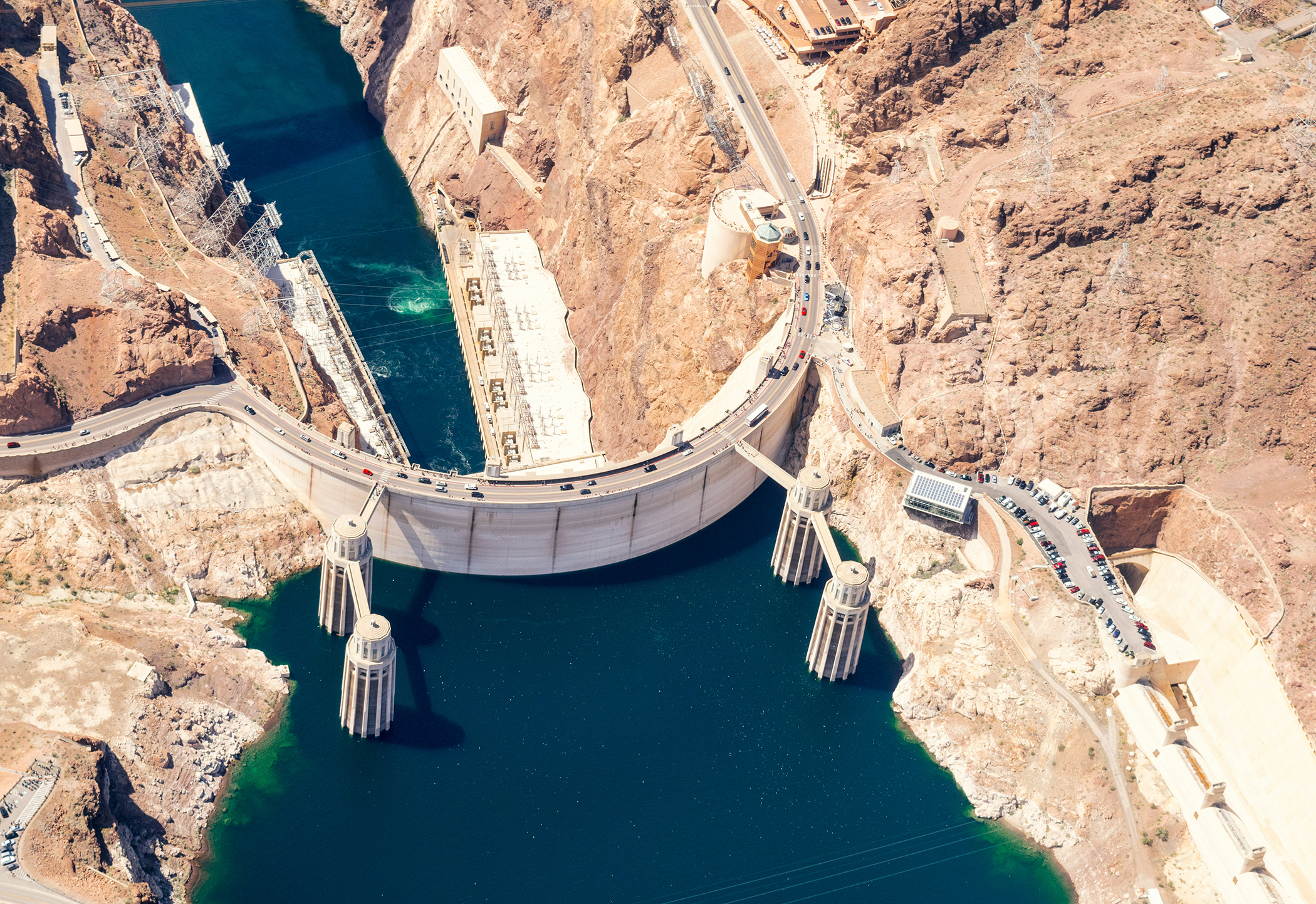
Ninety years ago, the most recognized dam in the U.S. and one of the defining engineering achievements of the 20th century opened: the Hoover Dam.
Completed in 1936 with a March 1 opening, its construction required about 4.4 million cubic yards of concrete, 45 million pounds of reinforcing steel, and a workforce of more than 21,000. Rising 726 feet and stretching more than 1,200 feet across the Black Canyon, the arch-gravity dam became an instant American icon, drawing about 7 million visitors a year and making countless appearances in movies, TV shows, books, and every other variety of pop culture.
Further reading:
- Benefits flow quickly as historic dam removal restores Klamath River
- Engineers and historians share their thoughts on their favorite structures
- Giant Ethiopian dam promises greater flood control and water management
Despite Hoover Dam’s enduring popularity and usefulness – it generates hydroelectric power, reduces flood risk, and stores water for irrigation and municipal use – Brian Graber, senior director of dam removal strategy at American Rivers, says the industry mindset has changed markedly over the past 25 years.
 American Rivers
 In the decades following the Great Depression, dam building ramped up significantly, driven in part by post-World War II economic growth and westward expansion. For its part, the Hoover Dam, which impounds Lake Mead – the nation’s largest reservoir by volume – secured water and power supplies that supported decades of growth across the Southwest.
While the dam remains among the most celebrated pieces of U.S. infrastructure, data from the National Inventory of Dams, maintained by the U.S. Army Corps of Engineers, supports Graber’s assertion.
New dam construction peaked between 1950 and 1979. Roughly half of the more than 92,000 dams meeting Corps requirements to be listed in the inventory were built during that period. By the 1980s, however, new dam construction began to slow, and since around 2000, more dams have been removed in the U.S. than built. That shift raises an important question: Have dams fallen out of favor?
“Back in the late 1990s, when I first became involved in this field, the tone at dam conferences was to question whether removal was ever a good idea,” Graber said. “But over the next decade or so, it gradually became more accepted. Now, the focus is on how to remove obsolete or uneconomical dams at scale.”
More evidence of this change is the fact that today American Rivers works in partnership with the National Hydropower Association, a collaboration that would have been unlikely in the past.
“Decades ago, we were antagonists,” Graber said. “Now we support their legislation, and they support our policy actions. They’ve recognized that they have members who view some of the dams they own to be liabilities.”
Mounting risks, declining value
One reason dams are increasingly viewed as liabilities is safety. Citing data from the Association of State Dam Safety Officials, Graber noted that 1,323 dam failures or emergency interventions to prevent imminent failure have been recorded in the U.S., with roughly 80% occurring in the past 20 years. Dams received a D+ in ASCE’s 2025 Report Card for America’s Infrastructure.
Between 1994 and 2003, there were an average of three such incidents per year, but from 2014 to 2023, that average surged to 76 per year – an increase Graber attributed to aging infrastructure and more intense storm events. The data underscores the growing maintenance and risk burden facing many dam owners.
“With changing climate stresses, the design assumptions for many dams no longer match the potential consequences,” said John Roche, ASDSO president and chief of the Dam Safety Permits Division with the Maryland Department of the Environment. “In Maryland, over a 10-year span, we reclassified approximately 50 dams from low to high or significant hazard purely because of this phenomenon.”
In addition, many dams have become underperforming assets, no longer serving the purpose they were originally built for, Graber said.
“This is especially true in parts of the eastern U.S., where numerous dams were constructed to power mills,” he said. “Hydropower just isn’t used like that very much anymore – it’s fed into the grid.”
As an example of this trend, Graber pointed to Michigan-based Consumers Energy, which is selling its portfolio of 13 hydroelectric dams. “They’re getting out of the dam ownership business altogether because it’s no longer a profitable way for them to produce power,” he said.
The Klamath River dam removal project, which removed four hydroelectric dams in 2024, offers the ultimate example. The electricity those dams generated had become so limited that utilities in Oregon and California determined it was more cost-effective to remove them and ultimately contributed $200 million to the project.
Growing removals
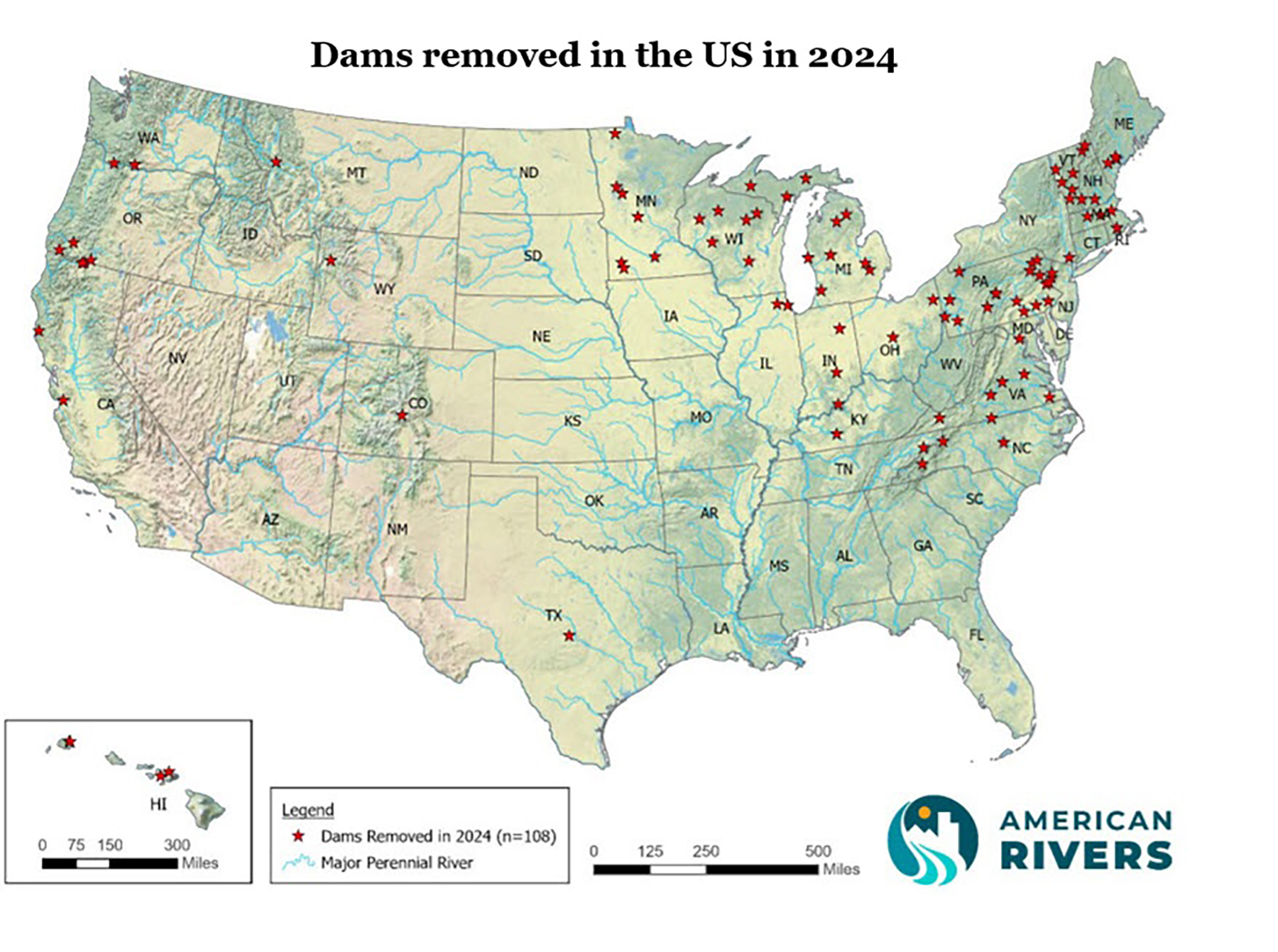
American Rivers maintains a national database of dam removal projects. The organization reports that more than 2,200 dams were removed in the U.S. between 1912 and 2024, with the vast majority occurring since 2000. And the pace of removals has accelerated in recent years.
In both 2019 and 2024, a record 108 dams were removed nationwide, with 2018 close behind at 107. In 2024, according to American Rivers, safety risks, liability concerns, or economic considerations were reasons given for more than 43% of dam removals.
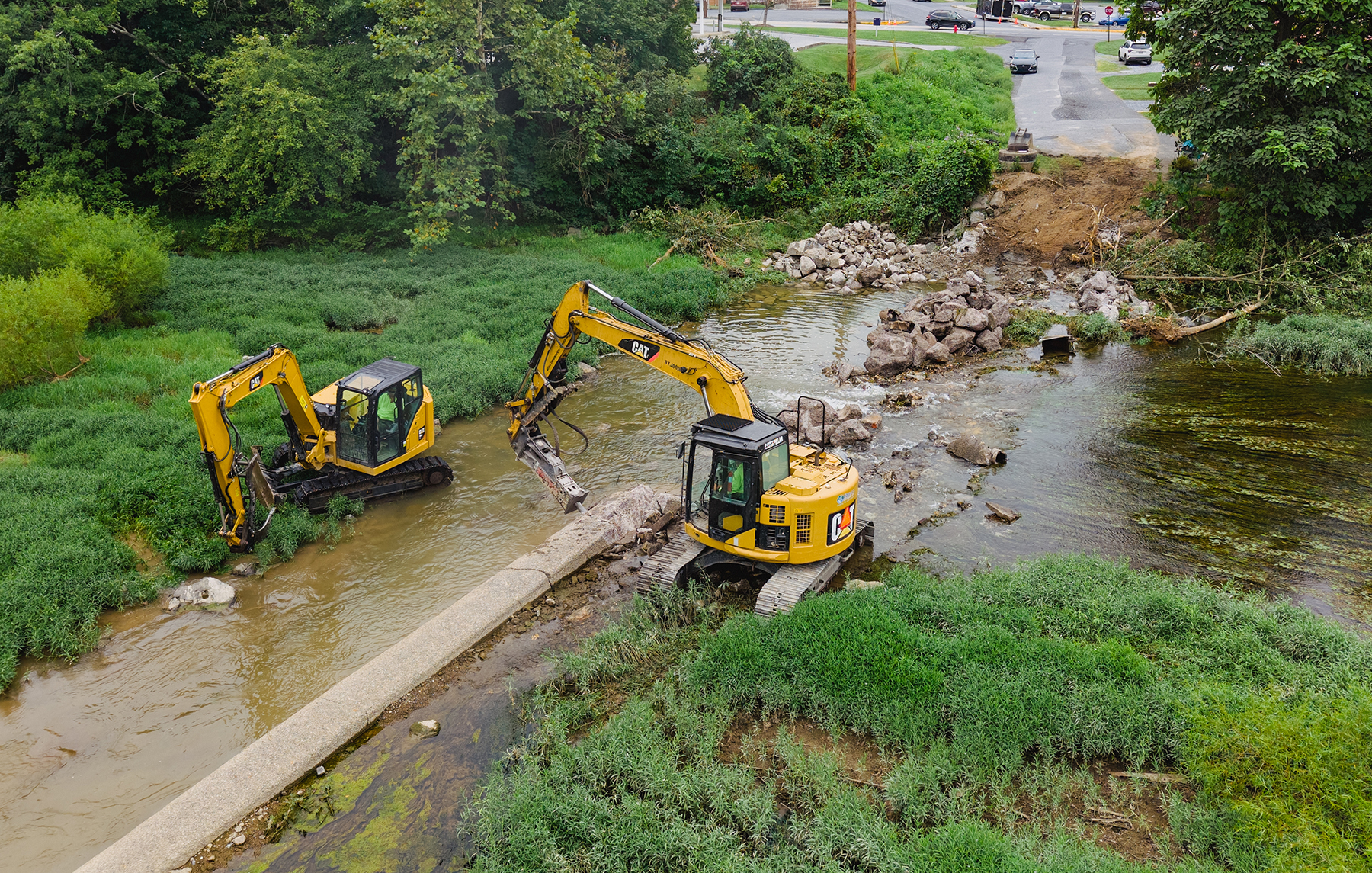
“To date, my team has been involved in more than 400 dam removal projects,” Graber said. “There is a field of engineering professionals who specialize in this work, but more traditional engineering firms are also getting involved as a greater number of dam owners explore removal.”
 American Rivers
 Ecological restoration is another major driver. Removing dams can restore fish passage, reconnect habitat, and improve water quality. Because of these benefits, dam removal funding is available through programs such as the Restoration Center and the U.S. Fish and Wildlife Service’s National Fish Passage Program.
“There is also an important human dimension to dam removal,” Graber said. “Many tribes have relied on these rivers for thousands of years as a food source, and rivers are integrated into their cultural traditions, including ceremonies centered on salmon and other native species. That connection is an essential part of the conversation about dam removal.”

Get ready for ASCE2027
Maybe you have big ideas about dams or other infrastructure. Maybe you are looking for the right venue to share those big ideas. Maybe you want to get your big ideas in front of leading big thinkers from across the infrastructure space.
Maybe you should share your big ideas at ASCE2027: The Infrastructure and Engineering Experience – a first-of-its-kind event bringing together big thinkers from all across the infrastructure space, March 1-5, 2027, in Philadelphia.
The call for content is open now through March 4. Don’t wait. Get started today!