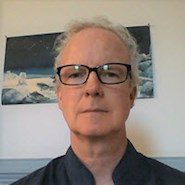
Pedro J.J. Alvarez, Ph.D., P.E., NAE, Dist.M.ASCE, the George Brown professor and director of the Walter Institute at Rice University, has been honored with inclusion by ASCE in its 2026 class of distinguished members. He was selected for his significant and long-lasting contributions to research and practice in environmental engineering, education of students, and professional leadership around the world.
ASCE will honor Alvarez and the 2026 distinguished members at the 2026 OPAL Gala, Thursday, Oct. 15 in Reston, Virginia.
Alvarez is renowned for advancing the understanding and application of environmental nanotechnology and bioremediation. His career of over 32 years is exemplary both in academia and environmental engineering.
Although his research topics are diverse – involving molecular microbial ecology, biogeochemistry, hydrogeology, nanotechnology, photochemistry, and water resources management – there are two common threads connecting his work. The first is a multidisciplinary commitment to sustainability and public health protection. Second is a propensity to work on the leading edge of discovery rather than on the side of refinement, and to exercise scientific and technical rigor with societal relevance.
Alvarez has been cross appointed to multiple departments at Rice, including Civil and Environmental; Chemistry; Chemical and Biomolecular; and Materials Science and Nanoengineering, attesting to his breadth and depth of expertise. His pioneering work on environmental implications and applications of nanotech has opened new frontiers in environmental remediation. Investigations into bioremediation, fate and transport of toxic chemicals, water treatment and reuse, and antibiotic resistance control have yielded groundbreaking insights that have reshaped principles and practices.
In recognition of his powerful contributions to nanotechnology and bioremediation, Alvarez was not only elected to both the National Academy of Engineering and the American Academy of Arts and Sciences but also received the Benjamin Franklin Medal and the Clarke Prize for Outstanding Achievement in Water Science and Technology. Examples of his impactful innovations include developing novel approaches for greener disinfection and control of antibiotic-resistant bacteria and enhancing the selectivity and efficiency of photocatalytic and electrocatalytic degradation of emerging pollutants.
He also discerned the water footprint of U.S. biofuel policies at regional scales under the influence of climate change and pioneered fate-and-transport models and field research on the groundwater quality impacts of ethanol-blended fuel releases, which provided guidelines to various states and the EPA on the remediation of groundwater impacted by ethanol blends.
Alvarez has created clever approaches to isolate phages with broad host range to target antibiotic-resistant bacteria in activated sludge wastewater treatment systems and, separately, to kill cattle pathogens to minimize the excessive use of antibiotics that exert selective pressure for the development and dissemination of antibiotic resistance. This eco-friendly approach is of great importance in protecting global health given that the spread of such resistance is one of the greatest unresolved challenges of the 21st century.
He has served as associate editor of ASCE’s Journal of Environmental Engineering and chaired four Leading Edge Technology Conferences of the International Water Association. Alvarez is also a top 1% cited researcher and in 2021 received the ASCE Simon Freese Environmental Engineering Prize.
Nominations for the 2027 class are due Dec. 15. Email [email protected] for more information.