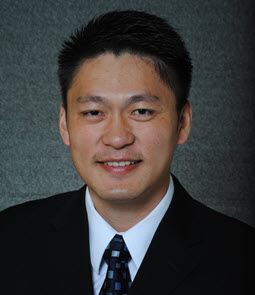
Zhi (George) Zhou, Ph.D., P.E., BCEE, ENV SP, F.ASCE, an associate professor at the Lyles School of Civil and Construction Engineering and the School of Sustainability Engineering and Environmental Engineering at Purdue University, has been named a fellow by the ASCE Board of Direction.
Zhou’s career spans over 19 years across academia (Purdue, National University of Singapore) and professional practice (Carollo Engineers). After earning his doctorate from the University of Illinois at Urbana-Champaign, he established himself as a leading global researcher and practitioner in water quality, water treatment, and biofuels. His leadership is underscored by an exceptional publication record – ranking him in the top 0.5% of scholars worldwide in the field of antibiotics – and the procurement of 28 funded research grants ($4 million-plus to his laboratory; $14.5 million-plus in total project budgets).
His interdisciplinary research provides critical solutions to three of the world’s most urgent environmental and public health crises: antimicrobial resistance, waterborne disease, and the energy transition. To combat the antibiotic resistance crisis, which claims over one million lives annually, Zhou developed pioneering software and molecular microbiology tools that quantify resistance markers with an 80% reduction in analysis time. His insights into “superbug” transmission in urban and agricultural waste provide a vital diagnostic framework to protect health-care systems by identifying the long-term health impacts of land-applied animal waste.
Addressing the global water crisis, which costs the U.S. health-care system $3.33 billion annually, Zhou revolutionized purification by engineering graphene and carbon nanotube electrochemical filters. This system removes emerging contaminants with significantly improved efficiency and lower energy consumption, offering a defense against the 7.15 million waterborne illnesses reported annually. Furthermore, Zhou has bridged the gap between environmental remediation and the biofuel market. By developing the first genome-scale metabolic models and patenting a nature-inspired lipid extraction method, he utilized unsupervised machine learning to reduce extraction energy by 91.7% and increase lipid content by 165.2%.
Zhou has received numerous accolades for his contributions, including the AAEES Excellence in Environmental Engineering and Science (E3S) Award, the Outstanding Achievement Award from the Indiana Water Resources Association, and the Most Impactful Faculty Inventor Award at Purdue. A four-time recipient of the Outstanding Engineering Teacher award, his career is defined by academic excellence and mentorship. He has mentored 5 postdocs, 15 Ph.D. students, 12 M.S. students, and 74 undergraduate researchers, with 11 lab alumni now serving as professors in five countries. He also serves as the faculty advisor for Aqua-E, the joint student chapter of ASCE and AWWA at Purdue University.
He has further influenced the field through extensive professional service, including serving as an editor for the ASCE Journal of Environmental Engineering, performing technical reviews for 13 funding agencies in 8 countries, and delivering 43 invited presentations globally on wastewater treatment and water quality improvement.