
By Marta Rossi, Federica Joe Gardella, Mariapia Mammino, Elif Kirmiziyeşil, Ebru Nur Yavuz, and Valentina Sumini, Ph.D.
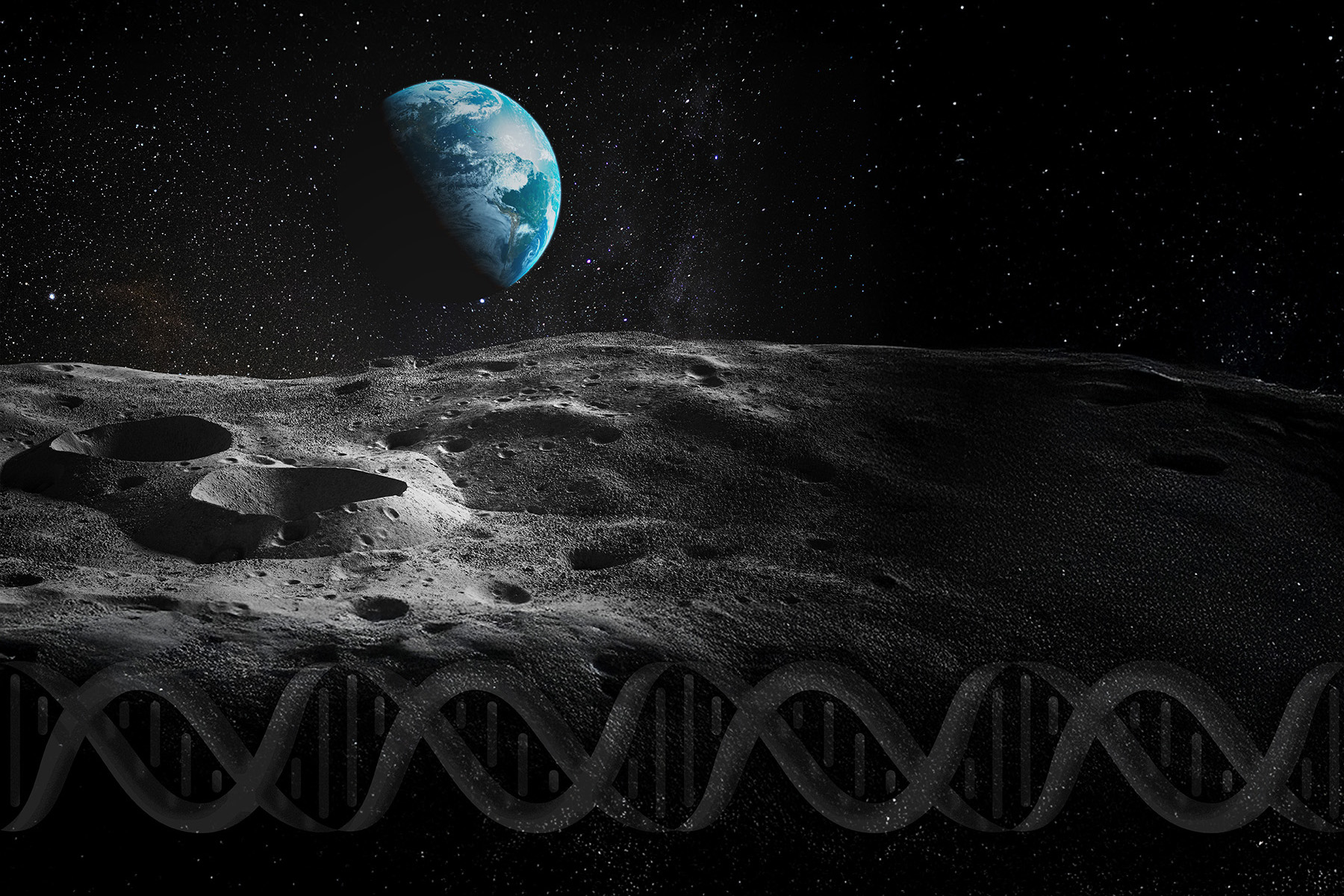
A design for the first permanent habitat on the moon is based on the aesthetics of the human genetic code, featuring intertwined structures that extend deep below the lunar surface.
The design and construction of the moon’s first permanent settlement will be a historic moment. This design could transcend mere engineering functionality and even be developed as an iconic work of art, paying homage to humanity’s unwavering quest to explore and understand the unknown.
Grounded in these principles of exploration and discovery, our research at the Polytechnic University of Turin and the Polytechnic University of Milan draws inspiration from the most fundamental essence of human life: DNA. Aesthetically, the architectural form of the proposed lunar settlement will mirror the intertwined double helix of the human genome. Structurally, it will mimic the first human settlements — cave dwellings — by being embedded within a hollow underground tunnel, or lava tube, to leverage the natural protection of lunar soil.
Designing a lunar habitat presents numerous technical challenges. For one, space is an inhospitable environment that cannot sustain human life. Leading the list of potential hazards are the freezing and fluctuating temperatures, lack of air and pressure, and deadly levels of radiation. With the lunar station DNA project, we hope to address these technical challenges while also establishing a strong and meaningful concept, enriching the project with symbolic connotations.
Key elements of the project include the site selection and operations as well as the architectural, interior, and computational design.
Life beneath Lacus Mortis
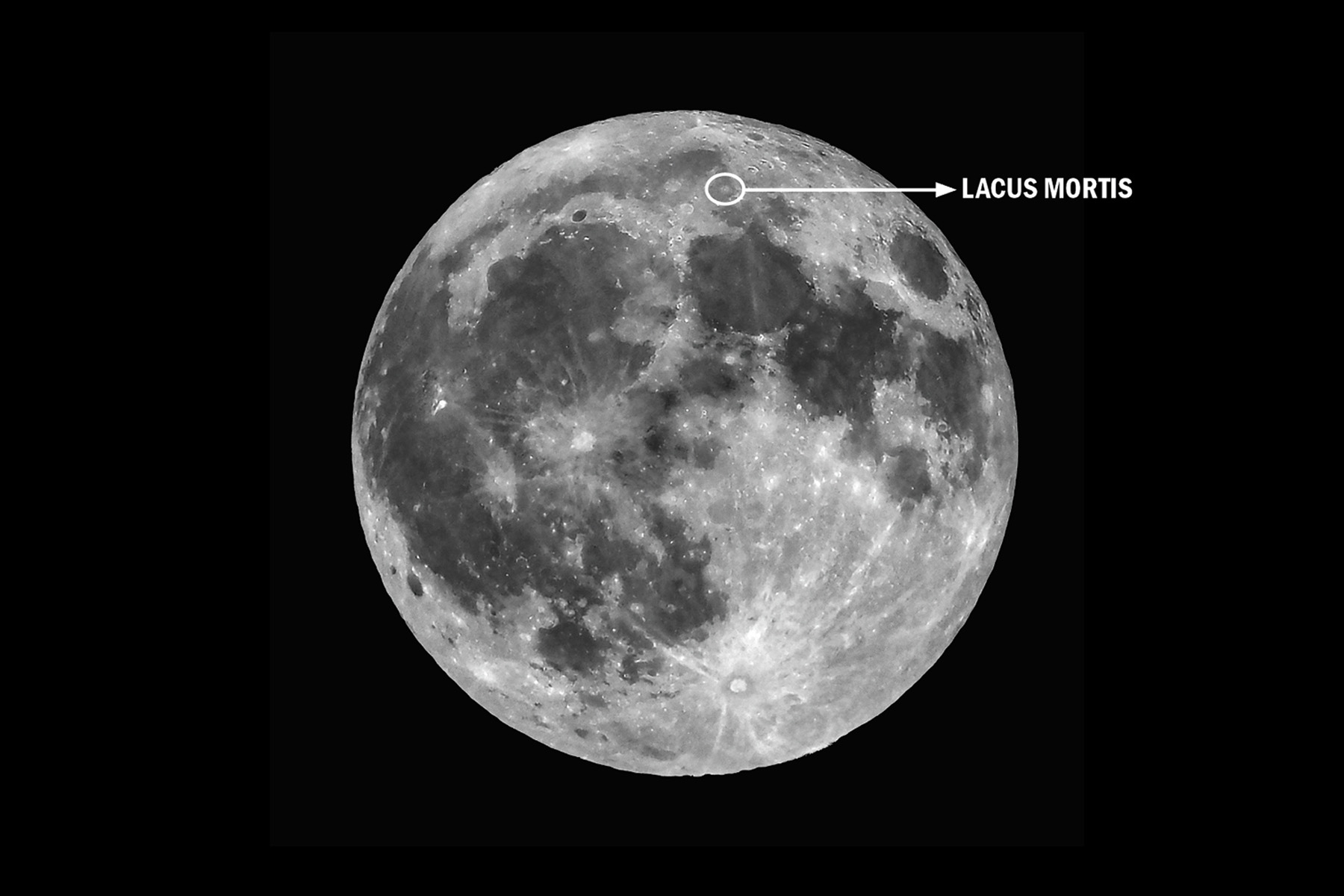
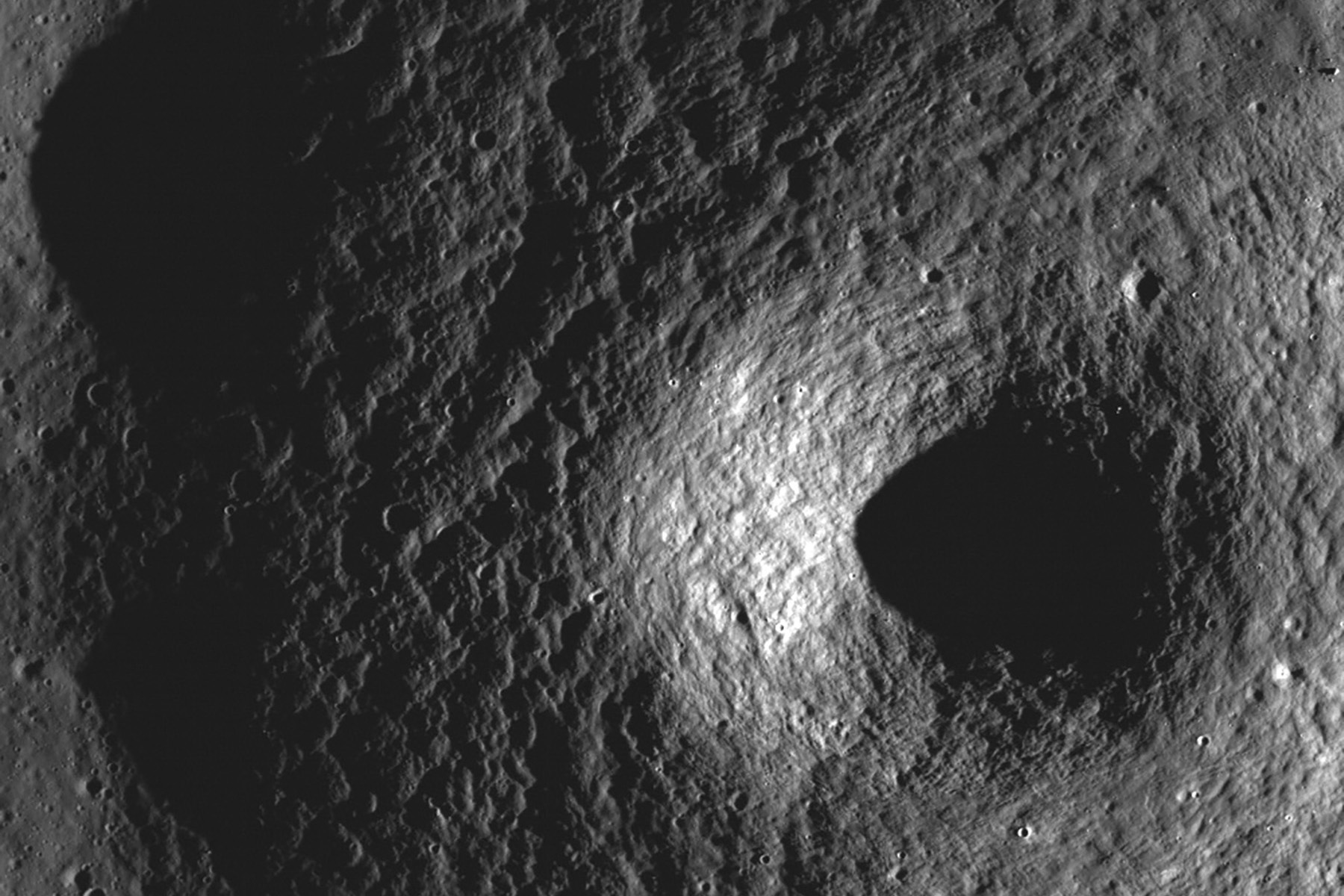
The site selected for this proposed project is the Lacus Mortis pit crater and its accompanying lava tube, situated within Lacus Mortis. This pit and others like it are a result of collapses, and they offer a natural incline, providing easy access to the subterranean tunnels. The site, which is extremely interesting to explore from a planning point of view, is in the northeast of the moon’s near face (the side always facing Earth). The site’s name means “lake of death,” but the lava tube provides various advantages for the people who might settle there.
In addition to high radiation and temperature variations, the lunar environment is also subject to micrometeoroid bombardments that can threaten human health and the structural integrity of lunar habitats. Research, however, demonstrates that lava tubes can provide protection against micrometeoroids and shielding against radiation. Large temperature variations can also be reduced by sealing the tunnels to enhance heat conservation.
Moreover, the large size of the Lacus Mortis lava tube — which is about 500 m long and 90 m wide at the entrance — provides space for enlarging a lunar settlement over time. Having a settlement within the lava tube would also facilitate the mapping and study of the lunar subsurface, promoting scientific advancement. Details of the lava tube are based on a preexisting 3D model of the site.
The Lacus Mortis pit itself is an elliptical shape. Its major axis runs east-west, and it is about 100 m deep. The west wall of the pit is almost vertical, while the east wall slopes gradually from the rim down to the bowl-shaped floor. This morphology creates a kind of ramp that could facilitate access to the base of the pit to reach the lava tube.
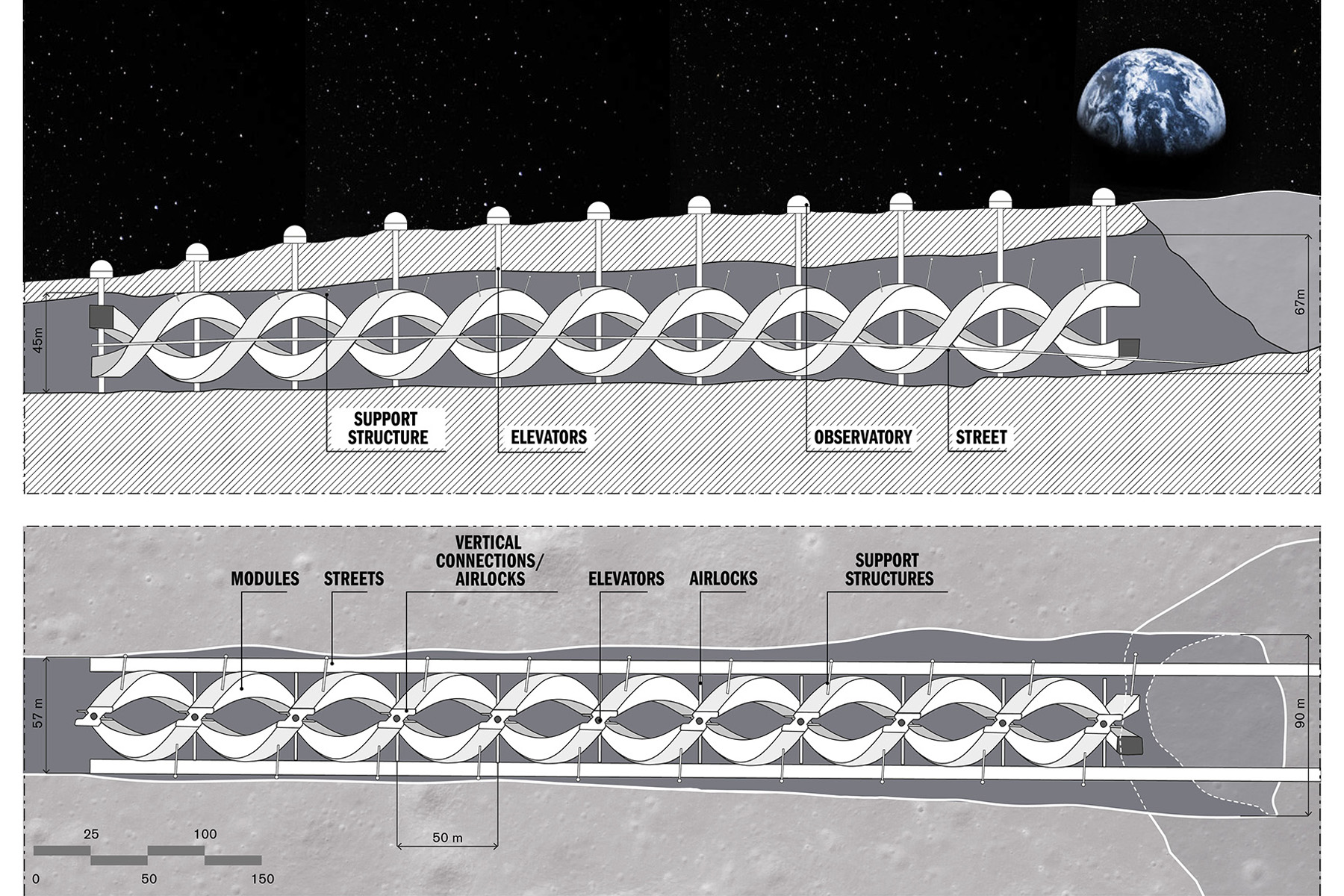
The tube itself is roughly cylindrical in shape, with flattened dimensions reaching 90 m wide and 70 m high and gradually narrowing to about 60 m wide and 45 m high toward the back of the tunnel. The internal slope of the tunnel is also relatively slight, making it suitable for a habitat and eliminating the need for excessive ground modification.
Modular homestead
The planned settlement features a modular system, with prefabricated inflatable units constructed on Earth, packed, and then shipped to the moon. The mission will involve several launches from Earth, each of which will bring specific equipment to the lunar surface. The first launch will include the equipment for the astronaut construction crew to build landing pads, roads, and energy production facilities. Robotic systems, operated autonomously or teleoperated, will also be the likely means for constructing the lunar facilities.
This initial phase is a crucial step in preparing the site for later work. During this part of the mission, temporary accommodation for the astronauts will be required, which could involve rovers that can double as living quarters. Subsequent launches will transport the modules and other essential items, including a series of elevators to connect the surface with the underground portions. Once the modules arrive, they will be taken inside the lava tunnel, connected to each other, and secured to the tunnel using stretched metal cables.
Master planning
The advantages that the Lacus Mortis site can provide will play a significant role in shaping the design solution. The project’s master plan features different zones, each designated for specific functions. For example, the observation zones will enable residents to visually explore the surrounding moonscape and the lunar sky above the settlement. The energy production zones will be crucial for sustainable lunar operations, while the in situ resource production zones will be vital for on-site construction. The landing zones will facilitate arrivals and departures, while the habitation zones will provide lunar pioneers with a safe, comfortable home.
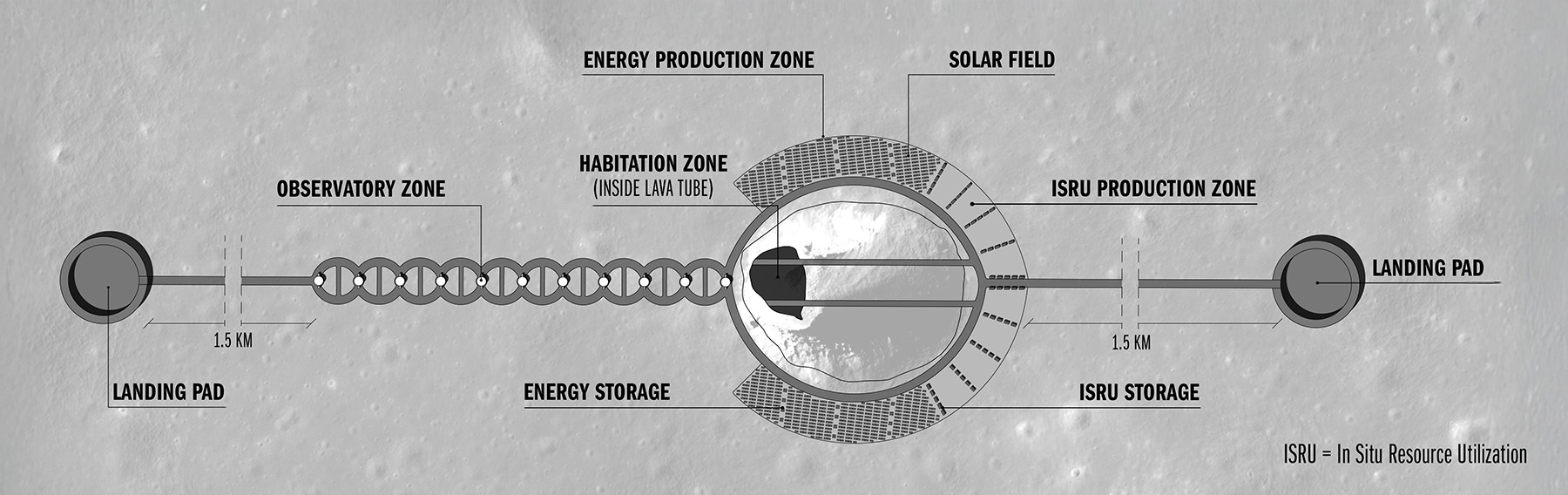
Because the lunar settlement represents a completely new environment for humans, we felt it was essential to design a project that embodies the underlying essence of human growth and evolution. And since this project will effectively bring human DNA to the moon, in both an architectural and social sense, the imagery of DNA guided our design. Furthermore, the double helix structure of DNA is well-suited for a settlement inside a lava tube because of the horizontal configuration of the elements. In this way, symbolism will align with functional requirements.
The self-contained modules of the lunar station will provide the initial residents with immediate shelter while offering the potential for expansion by installing additional modules horizontally throughout the rest of the tunnel. Assembled into twin helical structures, the modules will be connected by strategically placed airlocks, which will not only provide airtight seals but also enable circulation within the overall habitat.
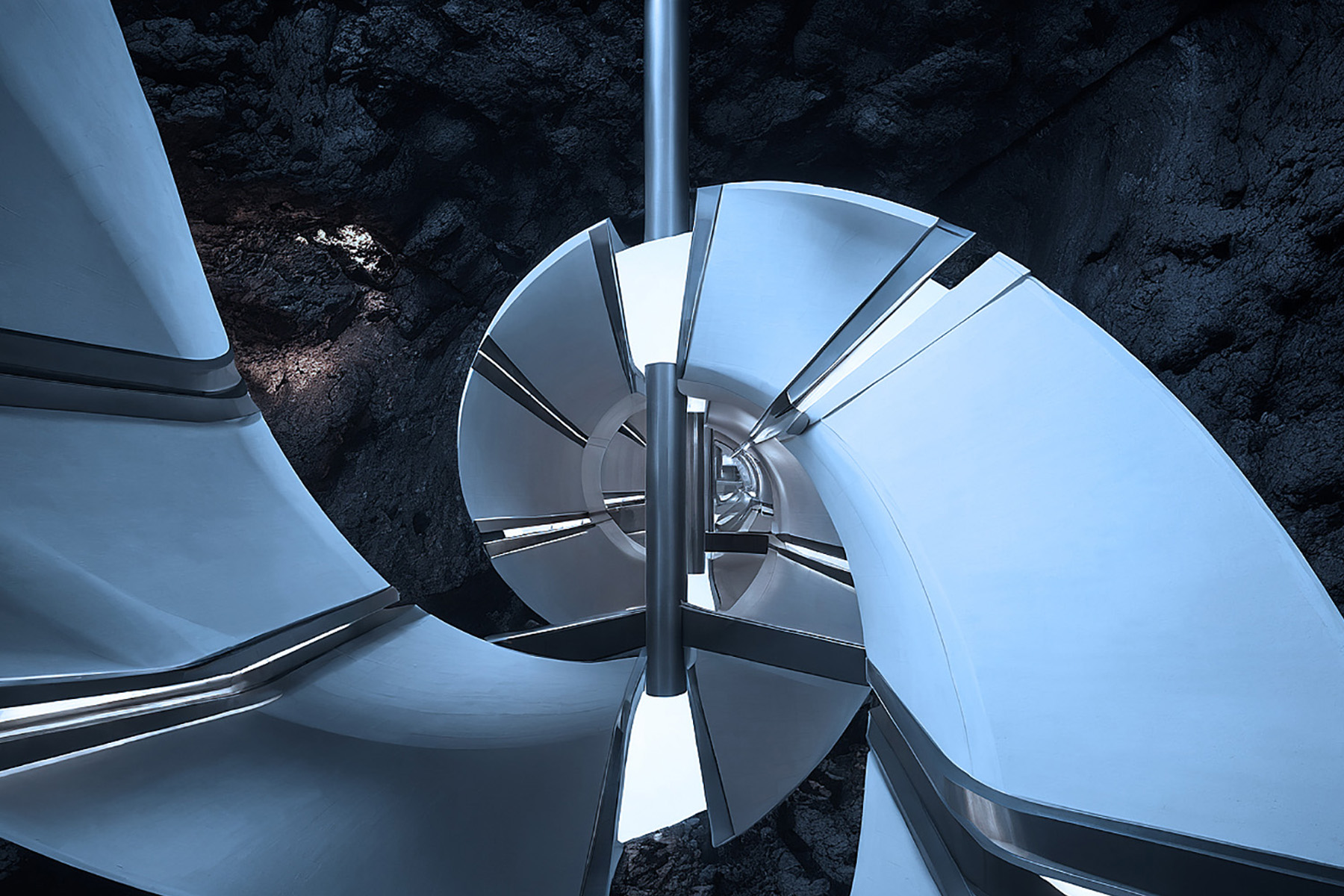
Access from the lunar surface will be provided through a network of vertical metal shafts and elevators positioned to traverse both helices at 50 m intervals. The surface entrances of the elevators will be designed not only for practicality but also to serve as the observatory spaces. Two distinct pathways outside the habitats will be integrated within the lava tube, each following the contours of the spiral structure. These pathways will enable exploration and easy access to the vertical circulation areas within the habitat. In this way, every element of the habitat is carefully engineered to maximize its functionality.
Inflatable spirals
The two spirals will be composed of a series of inflatable modules, each with multiple levels to accommodate a range of specialized functions. The inflatable modules could be made of lightweight materials such as Kevlar, and the interior partitions could be made of lightweight materials such as carbon fiber. Within the modules, the spatial organization will be carefully planned to maximize efficiency — integrating multifunctional spaces, optimizing the use of resources, and making efficient use of the limited living space.
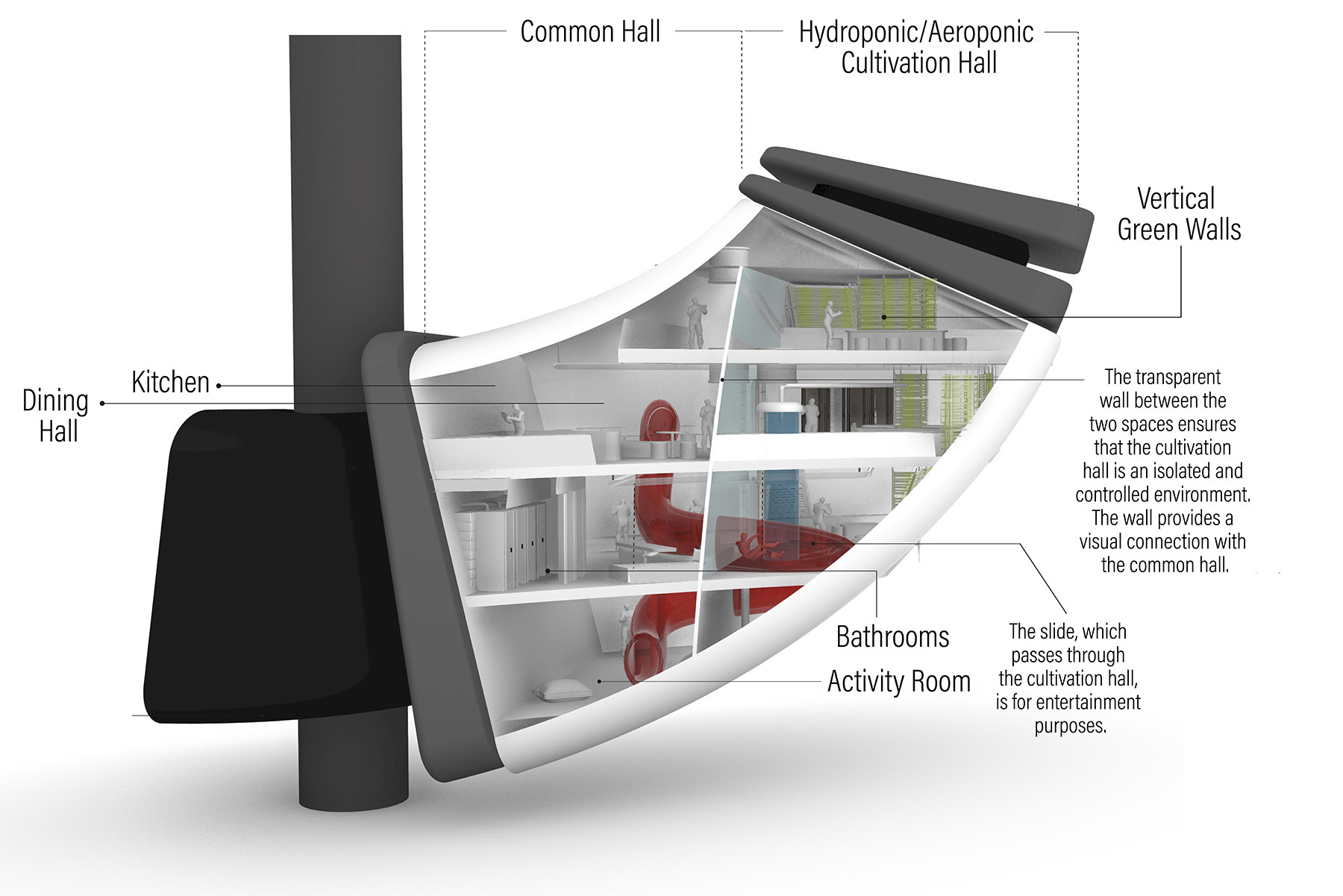
Key areas within the lunar settlement will include 70 sq m of accommodations for the settlement’s permanent staff, emphasizing simplicity and comfort. A 42 sq m space will provide room for visiting astronauts. At full capacity, the settlement should accommodate 176 people. The 40 sq m control room will house essential life support equipment. The 150 sq m common hall will function as a dining area as well as a hub for social interaction between staff and guests. The 80 sq m hydroponic/aeroponic cultivation hall will ensure the habitat has on-site, cost-effective food production.
A 60 sq m gym will help the astronauts combat the health challenges associated with long-term exposure to the reduced gravity of the lunar environment. The 30 sq m infirmary will be equipped for various medical emergencies and strategically located for quick access. Lastly, 130 sq m of laboratory space, positioned near entry and exit areas, will support data processing and scientific research and analysis while optimizing the transportation of research material, such as lunar soil samples, within the station.
Common spaces will play a crucial role in fostering a sense of community and connection among the inhabitants. For example, a transparent partition will separate the common hall from the cultivation hall, providing a visual link to the greenery as well as a connection with nature to enhance the psychological well-being of the inhabitants. The common area will also feature a recreational slide that passes through the cultivation hall. Capitalizing on the moon’s reduced gravity, the slide will encourage shared recreational experiences that contribute to the residents’ physical and mental health.
Computer aided
Computational design played a vital role in the DNA project’s development, with a 3D model created using Grasshopper — a graphical algorithm editor integrated within the Rhinoceros 3D modeling software. The DNA model was built using a 3D representation of the lava tube as the foundation, which established the geometric constraints for the project.
The initial step in creating the parametric model involved defining the geometric parameters, encompassing the length, width, and height of the structure. Because the two helices are identical, the modeling approach involved designing the first spiral and subsequently duplicating and rotating it to create the second. Initially, however, a baseline for the first spiral was established, specifying the distance between the loops. The baseline was then offset to create a surface in Grasshopper by smoothly stretching a skin over a set of input curves.
At this stage, the spiral comprised a single large module. But a massive structure was not practical, so the spiral was divided into smaller, more manageable modules, connected by the airlocks. The resulting geometry was then duplicated for the second spiral, as noted earlier.
The next step in the modeling process involved establishing the vertical connections of the elevators between the two structures, positioned at the locations of the airlocks between the modules. To do this, we identified the midpoint of each airlock and implemented a pattern to remove unnecessary data. This enabled the creation of connections between these points and allowed for surface extrusions, facilitating the generation of the connecting elements.
The lateral pathways outside the habitat as well as the horizontal connections between the modules and the pathways were also constructed using the same approach. These connections act as airlocks but are separate from the interlocking elements between the modules. The placement of the pathways was determined by the width of the entire double-helix structure, while the horizontal elements intersected with the elevators, aligning their placement with the axis of these elements.
This modeling strategy enabled the project to be adjusted throughout its development. Each element was interconnected, so that when we modified one or multiple parameters, the model responded to these changes in every part and recalculated the entire design.
Having a parametric model that can be rapidly modified by adjusting a couple of parameters, together with the modularity of the DNA design, offers significant advantages for potential project expansion, enabling growth of the lunar settlement to accommodate a more substantial human presence on the moon. Since the relationships between the habitat’s elements are already established, it becomes easy to add or remove modules and recalculate the settlement’s configuration. For example, the DNA model can be rapidly enhanced in terms of module quantity by increasing the length of the spiral.
Other aspects, such as the subdivisions of the modules, the placement of airlocks, and the number of elevators, will automatically adjust to the new parameters and expand to meet the updated requirements. Our research also enables possible future work to develop and delve into more technical details, including material selection, deployment of inflatables and elevators, and structural analysis and optimization.
Adaptable future
The DNA project represents an imprint of human presence in the challenging lunar environment. The first astronauts will reside inside a structure shaped to symbolize human life itself. The role of computational design was crucial in demonstrating how the design concept could be translated into something that is adaptable while still honoring the underlying philosophical principles.
The analysis of the morphological features of the location and the development of the architectural and interior design focused on human needs while also accommodating the technical requirements dictated by the location’s unique features. The strategy for constructing the DNA concept model allows for easy adaptability and use in various applications, not only in other space settings, such as in orbit or on Mars, but also here on Earth.
Resources
Akos, G., & Parsons, R. (2015). Foundations: The Grasshopper Primer (3rd ed.). https://github.com/modelab/grasshopper-primer/blob/master/_downloads/GrasshopperPrimer_V3-3_EN_low.pdf (Oct. 11, 2023).
De Angelis, G., Wilson, J. W., Clowdsley, M. S., Nealy, J. E., Humes, D., & Clem, J.M. (2002). A radiation safety analysis for lunar lava tubes. In Proceedings of the 33rd Lunar and Planetary Science Conference. Lunar and Planetary Institute, Universities Space Research Association, Houston.
Giguere, T. A., Boyce, J. M., Gillis-Davis, J. J., & Stopar, J. D. (2022). Lacus Mortis: Age, composition, and origins. In Proceedings of the 53rd Lunar and Planetary Science Conference. Lunar and Planetary Institute, USRA, Houston. https://www.hou.usra.edu/meetings/lpsc2022/pdf/lpsc2022_program.htm#sess638 (Oct. 11, 2023).
Häuplik-Meusburger, S., & Bannova, O. (2016). Space Architecture Education for Engineers and Architects: Designing and Planning Beyond Earth. Springer, San Francisco, CA.
Hong, I., Yi, Y., Yu, J., & Haruyama, J. (2015). 3D modeling of Lacus Mortis pit crater with presumed interior tube structure. Journal of Astronomy and Space Sciences, 32(2), 113-120.
Jabi, W. (2013). Parametric Design for Architecture. Laurence King Publishing.
Keane, A. J., & Nair, P. B. (2005). Computational Approaches for Aerospace Design: The Pursuit of Excellence. John Wiley & Sons, Ltd.,
ISBN: 0-470-85540-1.
NASA/GSFC/Arizona State University. Lacus Mortis pit. LRCO: Pits Atlas. September 19, 2023. http://lroc.sese.asu.edu/pits/8 (Oct. 11, 2023).
Pedley, M. D., & Mayeaux, B. (2001). TransHab selection material. In: Griffin, D.E., & Stanley, D.C. (eds.) Proceedings of the 4th Conference on Aerospace Materials, Processes, and Environmental Technology.
Piker, D. (2013). Kangaroo: Form finding with computational physics. Architectural Design, 83(2), 136-137. https://doi.org/10.1002/ad.1569
Preisinger, C. (2013). Linking structure and parametric geometry. Architectural Design, 83(2), 110-113. DOI: 10.1002/ad.1564.
Suto, K., Noma, Y., Tanimichi, K., Narumi, K., & Tachi, T. (2023). Crane: An integrated computational design platform for functional, foldable, and fabricable origami products. ACM Transactions on Computer-Human Interaction, 30(4), Article 52, 1-29. https://doi.org/10.1145/3576856 (August 2023).
Wagner, R. V., & Robinson, M. S. (2022). Lunar pit morphology: Implications for exploration. Journal of Geophysical Research: Planets,
127(8), e2022JE007328.
Marta Rossi and Federica Joe Gardella are Ph.D. students in the Department of Architecture and Design at the Polytechnic University of Turin. During the research for the DNA project, Rossi was a teaching assistant at the Polytechnic University of Milan. Mariapia Mammino is an architect at PlaC — Plateau Collaboratif, in Turin, Elif Kirmiziyeşil is a computational designer and BIM coordinator at Simplex-d, in Milan, and Ebru Nur Yavuz is the founder and lead architect of EBY Studio, in Istanbul. During the DNA project, they were all students at the Polytechnic University of Turin.
This article first appeared in the March/April 2026 issue of Civil Engineering as “Lunar Lava Living.”


