
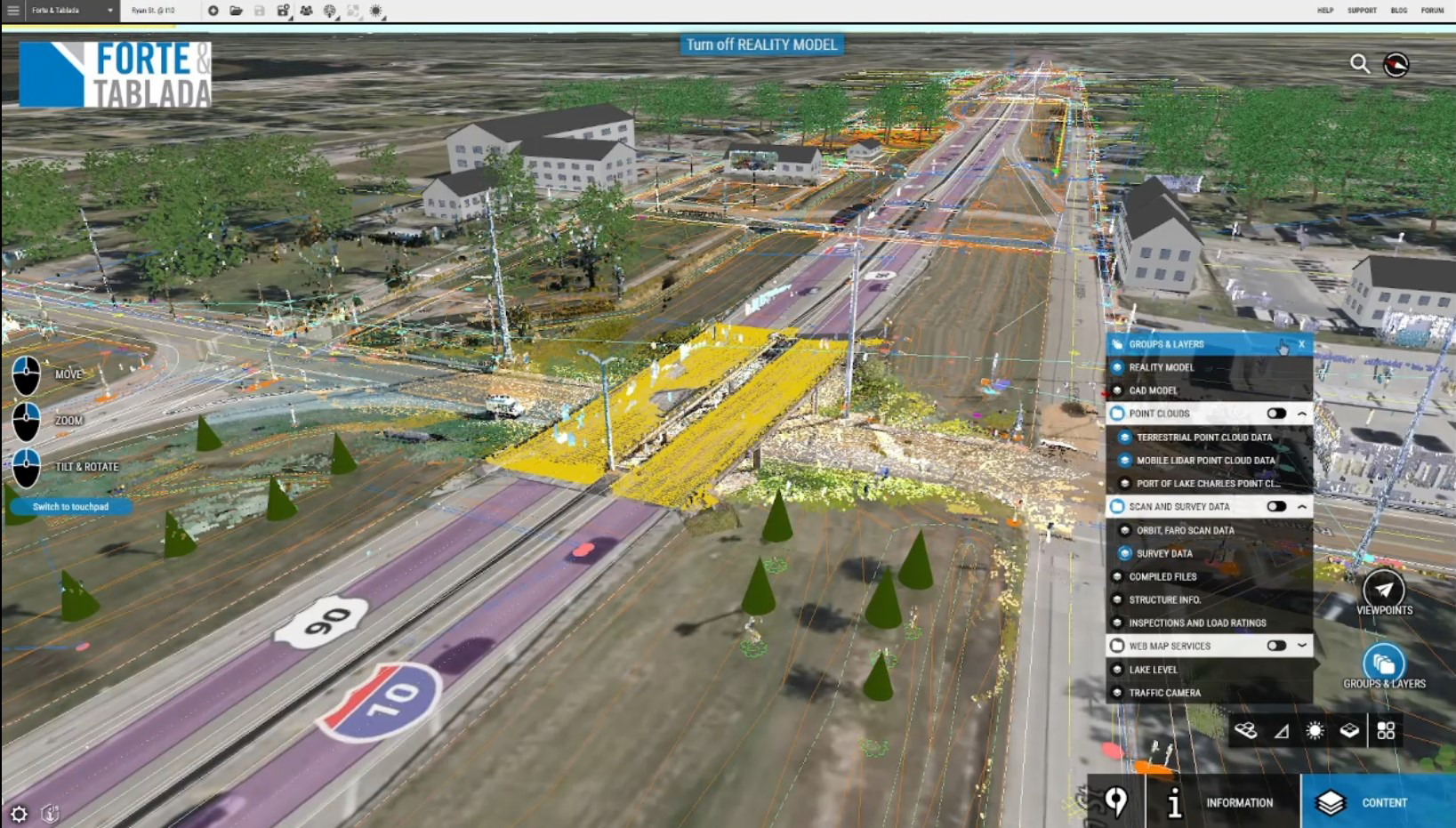
 Forte and Tablada
Digital twin expertise has become essential for today’s civil engineers.
This virtual tool is a critical bridge that spans every facet of a project, from design and construction to operation and maintenance. It also has the unique ability to coordinate decision-making among all stakeholders.
For these reasons, this knowledge can no longer be the realm of a few trained individuals.
Further reading:
- Digital twins show great promise in civil engineering. But what’s next?
- Digital twin technology bolsters electric utility engineering
- What technology is changing the civil engineering game?
Engineers need strong foundations in the data and software aspects of digital twins, irrespective of their career stages. In addition to technical prowess, they need a firm grasp on the business practicalities important to clients. This means having aptitude in legal, governance, and data security considerations.
To help upskill the profession, Louisiana State University’s College of Engineering has launched an online program called the Digital Twin Design and Production Certificate. It is a collaboration with Digi Twin Global, which supports hands-on learning with real-world software and projects, and engineering software firm Bentley Systems.
Civil Engineering Source conducted a deep dive into digital twin relevance with Digi Twin Global’s leadership: Joey Coco, P.E., who is CEO and president; Scott Fargason, co-founder and chief financial officer; and Malay Ghose Hajra, Ph.D., P.E., ENV SP, BC.GE, F.ASCE, vice president of digital twin design and implementation.
Source: How do digital twins benefit engineering projects?
Coco: A digital twin manifests all the data we interact with into a virtual replica of the physical world. It requires a diverse set of skills and teams to properly construct, making it inherently multidisciplinary. But that cross-sectionality ultimately goes back to the roots of civil engineering. We have all of these specialized disciplines – structural, geotechnical, coastal, water resources – yet digital twins are relevant to each and every area.
Fargason: As someone who’s newer to this technology, what strikes me is that the model is active, not stagnant. You are perpetually gathering data and filtering it into digestible information, allowing you to manage by exception in real time. The ability to make more accurate, timely decisions about your strategic plan then reduces cost and drives revenue, creating a positive impact on the financial statements.
Coco: This business orientation requires civil engineers to shift into a platform setting that not only cuts across different stakeholders but the entire infrastructure life cycle. Digital twins aren’t just a project – they are a way of life.
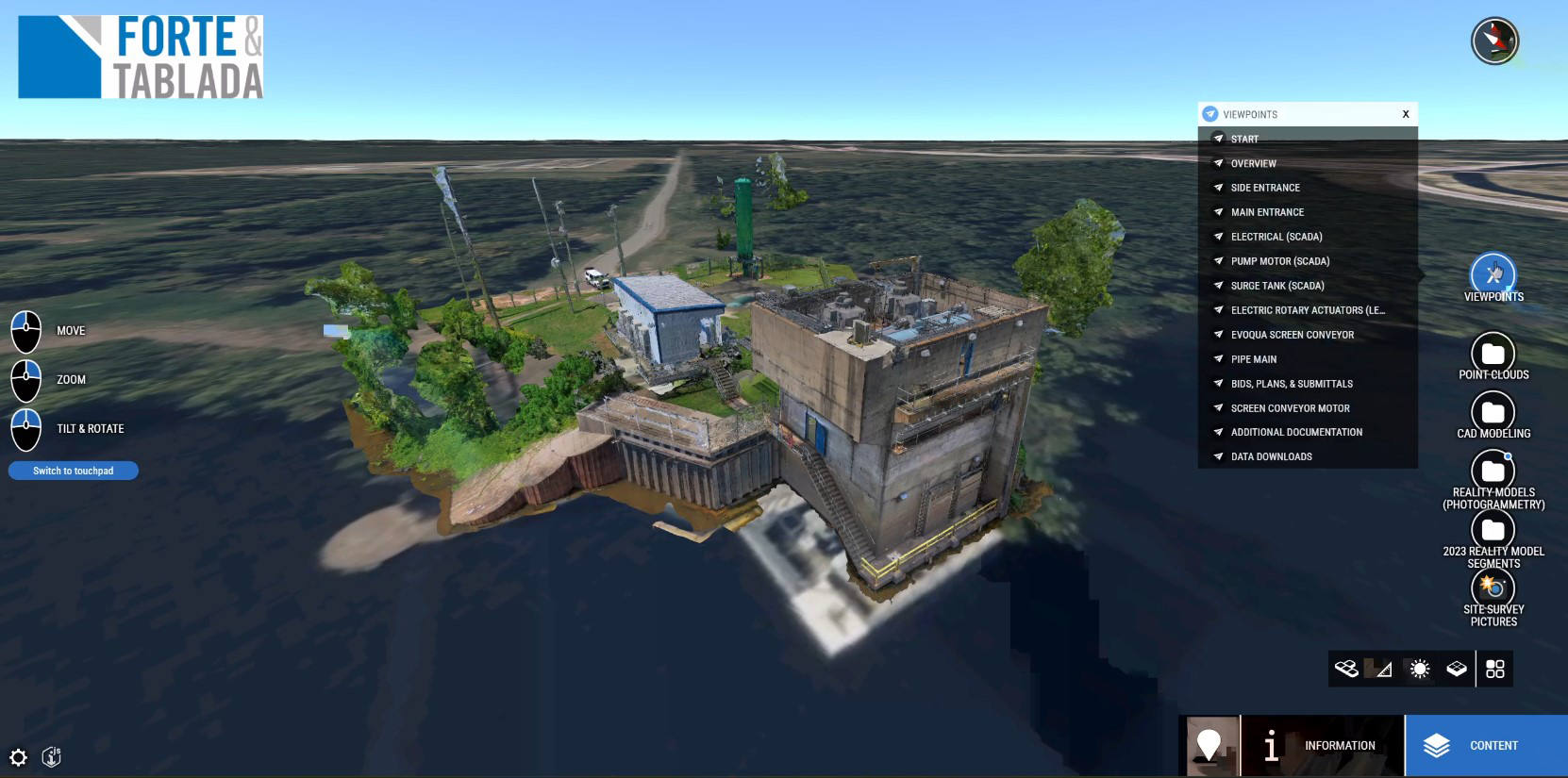
Hajra: Here’s what that looks like in practice. When I was the chief engineer for Southeast Louisiana Flood Protection Authority-East, we created a digital twin for one of the pump stations. This is critical infrastructure that combines mechanical, electrical, and civil engineering. If a hurricane is coming, everyone is on deck looking for data to make informed decisions: when to start the pump, when to close the gates, when to evacuate. Rather than relying on paper plans, they now have an intelligent twin with the latest information.
Coco: This flood fighting system protects 600,000 people living below sea level – the digital twin is a life safety asset. Some of the casualties during Hurricane Katrina (which struck Louisiana in 2005) were from information disparity, where the left hand didn’t know what the right hand was doing. A digital twin eliminates a portion of that risk.
Source: How are digital twins changing the civil engineering profession?
Coco: Our involvement traditionally stopped after construction, but digital twins open the door to participate in the operations and maintenance of a project. To become the long-term stewards of infrastructure is a huge evolution.
Fargason: Relatedly, it’s become an excellent tool for worker training because it can retain intellectual capital. That one person who’s worked in the space for 35 years who knows everything? You can capture their knowledge and integrate it into the model so it’s now accessible to everyone.
 Forte and Tablada
Coco: Because digital twins allow us to embed these details at the element level, that expertise won’t be lost to staff turnover. It can then be used to train others more efficiently and thoroughly. For example, the FPA-East’s digital twin contains operator details like how to start up a pump or how to change the crank case lubricant.
Source: What roles within civil engineering need digital twin acumen?
Hajra: It’s applicable to a whole spectrum of positions, from new graduates to industry veterans. It’s relevant to leadership roles as well, especially for firms that need to move into this space for the first time.
Coco: The advantage of LSU’s certificate is that it replaces the current state of ad hoc learning. At my other firm, Forte and Tablada, it’s often a multiyear process to get staff familiar with digital twins. Without hands-on experience, they simply have not been exposed to higher-level concepts like the intellectual property concerns of adjusting someone else’s data or the framework of model as a legal document. They may not know how to question if data is proper to ingest based on why and how it was collected or anticipate if data has a future design use.
Hajra: That’s why civil engineers have to go beyond planning and designing the architecture of a digital twin but also be involved in data security, including where it’s stored and who owns it. Because a digital twin is only as good as how correct, current, and reliable its data is.
Coco: Everyone also has to broaden their thinking to understand the stakeholders’ need for return on investment so we can effectively communicate the value they are getting from these systems. That even connects to why this program involves digital arts and media because the model needs to look believable to the consumer audience. Capturing reality is one thing, but in order for it to be trustworthy, it has to look inviting to all users.
Hajra: Digital twins truly are a culmination of arts, science, engineering, and technology. Educating engineers is key so the whole digital twin industry can be more productive as a group. A rising tide lifts everyone.
Feed Your Brain
Want to keep up with emerging technology such as digital twins? ASCE2027: The Infrastructure and Engineering Experience is a first-of-its-kind event bringing together subject-matter experts from all across the infrastructure space, March 1-5, 2027, in Philadelphia. So, yes, we know you’re excited about the Philly cheesesteaks, but ASCE2027 also is the perfect place to satisfy your appetite for learning.
Technical deep dives. Infrastructure expertise. Come feast!
Learn more about ASCE2027: The Infrastructure and Engineering Experience.
