
By Rebecca Ruitto Hall, P.E., PTOE, RSP2I, PMP, and Lisa Sherman, P.E., PTOE, RSP2I, PMP
A pair of roadway infrastructure projects in New England balanced safety improvements and historical conservation.
A central theme has emerged in transportation infrastructure involving the balance between modern safety needs and historical conservancy. This delicate equilibrium is evident in two New England roadway projects led by CDM Smith: the transformation of Union Street in New Bedford,
Massachusetts, and the roundabout installations along Hebron Avenue in Glastonbury, Connecticut.
While each project was distinct in its context, geography, and scope, they shared a unifying mission to create so-called “complete corridors.” More than just roads, these corridors serve as multimodal public spaces that respect the cultural and architectural heritage of the communities they traverse.
Similar challenges
Union Street is New Bedford’s version of the quintessential small-town main street — the central commercial corridor within a downtown that serves as the cultural, economic, and political heart of the region. Beginning on the working waterfront at New Bedford State Pier, Union Street extends through a historical neighborhood alongside the New Bedford Whaling National Historical Park into the heart of the city, to the grand mansions of the titans of the whaling industry on County Street. From there, it proceeds through several more historical neighborhoods, terminating at Buttonwood Park, which is home to “one of the finest small zoos in the United States,” according to the Association of Zoos and Aquariums.
Union Street businesses attract tourists who stop over during their passage from New York, Connecticut, and Rhode Island on their way to Massachusetts’ Cape Cod, Martha’s Vineyard, and Nantucket.
Union Street runs east to west and carries one travel lane in each direction, as well as on-street parking on both sides, a boutique hotel, and small local retail businesses and restaurants. Prior to its transformation, this stretch of roadway faced various challenges, including accessibility issues, drainage difficulties, and outdated infrastructure that did not serve today’s urban living demands.
Because the existing stormwater system was combined with the sewer system, overflows struck periodically during rain events. In addition, the existing water mains along the corridor were 60 to 100 years old. Damaged sidewalks and only minimal accommodations under the Americans with Disabilities Act regularly interfered with pedestrian movement and the preservation of the area’s history. For example, various sidewalk areas were constructed using bluestone pieces rather than cement. The bluestones needed to be preserved for history, but they also needed to be ADA compliant, so special accommodations had to be made by the contractor to level the stones appropriately.
Meanwhile, the more suburban situation in Glastonbury presented another challenge: significant traffic congestion and an intersection with one of the highest crash rates in town. Hebron Avenue, the main artery of Glastonbury’s central business district, carries one travel lane in each direction, with restaurants, shops, and offices on both sides of the street. To deal with the increasing traffic, the city installed a channelization island that prohibits left turns at the unsignalized intersection at House Street.
Despite the differing environments, the projects shared common goals: to improve traffic safety and enhance mobility for all users without compromising the distinct character of each community. The projects also have a commitment to sustainability and forward-thinking infrastructure that could adapt to changing transportation needs.
New Bedford infrastructure
Over the past decade, New Bedford has prioritized a revitalization of its downtown, investing heavily in its social infrastructure, which includes the public spaces, institutions, and activities that draw people to the area. The city’s Department of Public Infrastructure led the endeavor — supported by the Planning Department — to thoroughly reconstruct Union Street from the ground up.
The engineers, in collaboration with the city and key stakeholders — including New Bedford’s Historical Commission — undertook the complex and sensitive task of redesigning Union Street. This was especially daunting because the city had strict mandates for preserving historical elements, from granite curbing to streetlight styles, while transforming the corridor into a modern and accessible street.
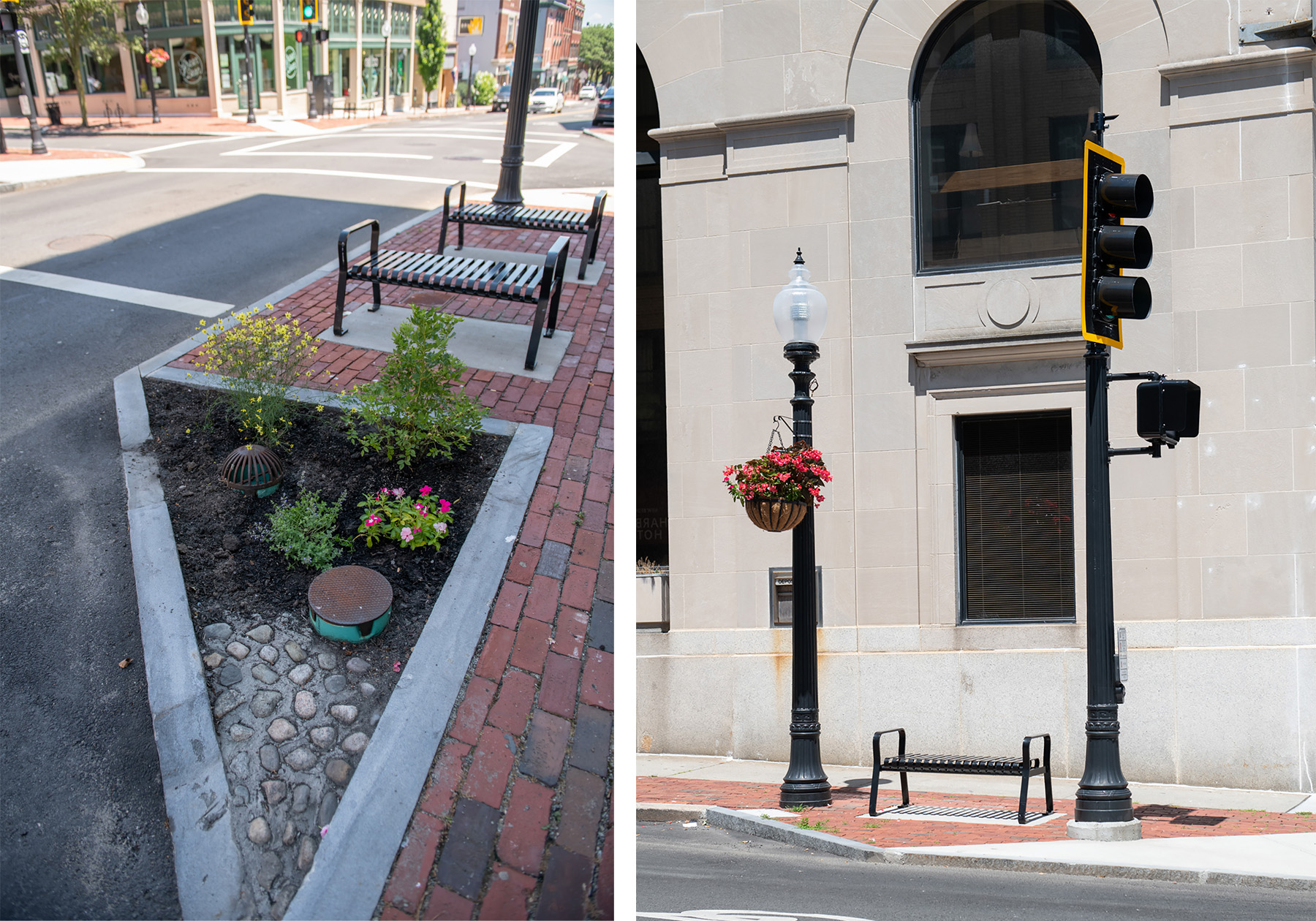
CDM Smith engineers developed an extensive underground utility design, including new water mains. The underground changes included new street lighting conduits and a new underground fiber-optic corridor. Above ground, the engineers also designed streetscape improvements including benches, bicycle racks, ornamental trash receptacles, rain gardens, and areas for plants. These improvements followed the city’s design standards, developed by Boston-based Utile Architecture and Planning.

Given Union Street’s narrow right-of-ways, historical features, and active business frontage, the project demanded a carefully staged construction process, with constant resident and stakeholder engagement.
Prior to reconstructing the existing sidewalk areas, each basement along the corridor was examined — with the property owner’s permission — to assess whether any portion extended beneath the surface.
The investigation uncovered supporting bolts for an existing streetlight foundation in the ceiling of one basement. In this area, which was not deemed historical, engineers installed vertical walls and added backfill to provide suitable support for reconstructing the sidewalk.
Because accessibility was critical, new sidewalks, curb extensions, and disability access-compliant curb ramps were meticulously integrated into the historical street’s aesthetic.
Furthermore, the design team added a brick amenity ribbon along both sides of the corridor to accommodate bicycle racks, benches, refuse receptacles, and streetlights, thereby providing a clear separation between the pedestrian and vehicular spaces.
The final design incorporated modern materials that emulated historical materials, such as the aforementioned bluestone, color-conditioned sidewalk concrete, and replication of historical amenity strips composed of a variety of treatments, from cobblestones to smaller pebbles embedded in mortar.
Historical integration
Improvements along Union Street also include a fully separated drainage system to reduce overflows and a rain garden to reduce runoff and protect nearby historical structures from water damage. A significant challenge was the integration of modern infrastructure with century-old utilities. Excavation frequently revealed unmapped infrastructure — such as old trolley tracks, clay sewer lines, and existing conduits — that complicated utility coordination and often required changes in the field. The project team established a robust field-coordination protocol, including daily contractor-engineer check-ins, to quickly and efficiently address unforeseen conditions.
Weather-related delays and storm events further complicated the timeline, requiring the team to remain flexible and adjust the construction schedule while maintaining the quality and integrity of the work.
Another key to the Union Street project’s success was a well-executed engagement strategy. The engineers worked closely with city officials to hold regular public meetings, distribute construction updates, and establish dedicated points of contact for affected residents and businesses. Doing so helped foster transparency and goodwill throughout the project’s duration. Historical groups and business coalitions were also involved in feedback loops, ensuring that design and construction decisions remained sensitive to the historical district’s needs.
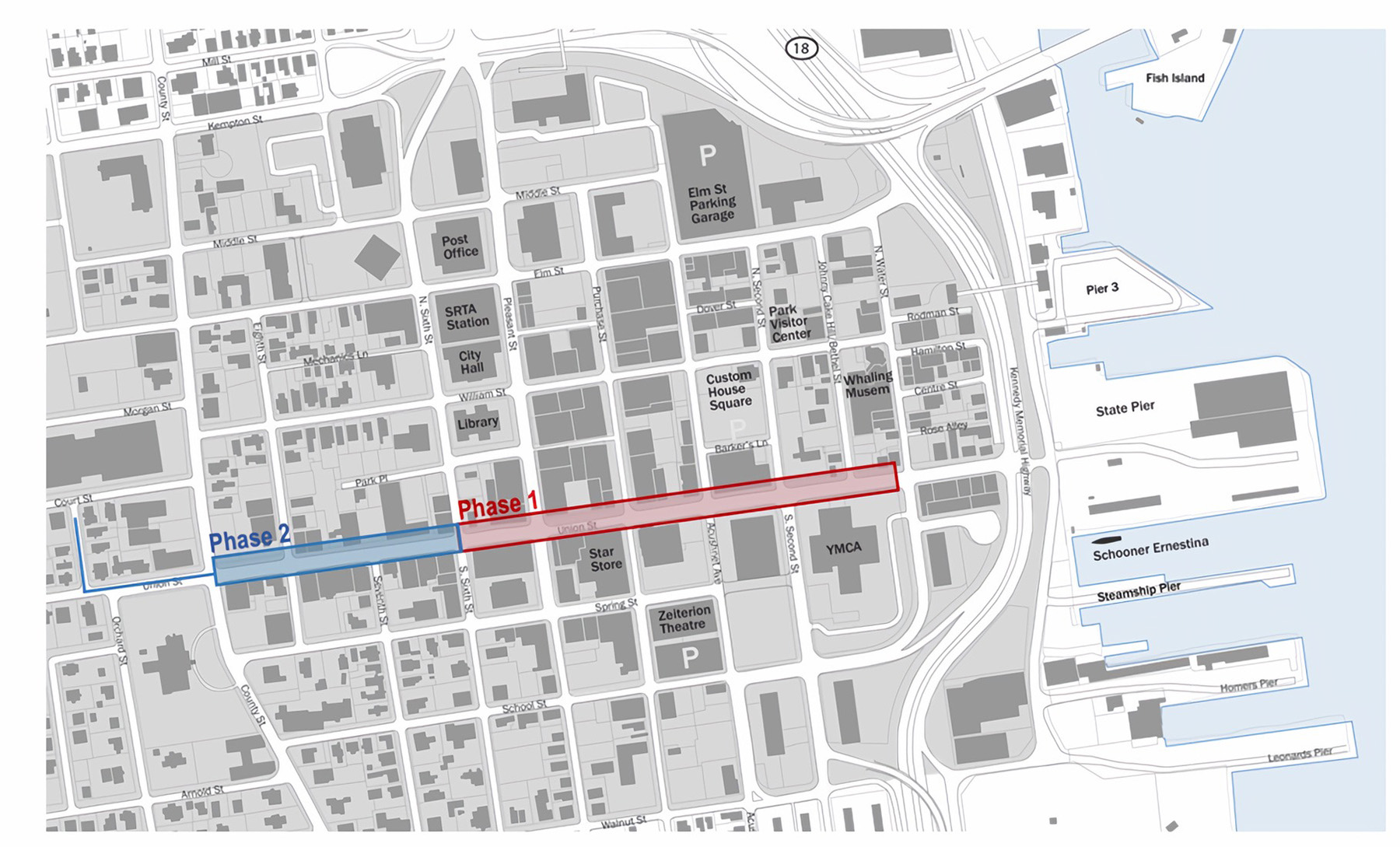
CDM Smith also worked closely with the city on funding strategies. The Union Street project was completed in two phases — from Water Street to North Sixth Street and from North Sixth Street to County Street. Local and state agencies funded the project: The underground utility upgrades were sourced from a state program that offered principal forgiveness and low-interest loans, while the surface improvements were seeded through a MassWorks Infrastructure Program grant.
Completed in 2023, the Union Street project has emerged as the model of a complete corridor that honors the past and the present. The improvements include enhanced lighting, signage, curb extensions for safer pedestrian crossings, and green infrastructure elements.
The aesthetic upgrades have helped boost tourism and have created a more attractive environment for events and small business activities.
According to New Bedford, this public investment has elevated the quality and appearance of the streetscape, enhanced ongoing maintenance, supported public art and cultural programming, and bolstered businesses and key civic and cultural institutions. These efforts have made the downtown area a more connected, welcoming, and active place for residents, workers, and visitors.
In turn, private investment has followed: A vibrant restaurant scene has grown, a new hotel has opened, and storefront vacancies have declined.
What’s more, today the downtown area is experiencing its most significant wave of housing development in decades, reshaping Union Street into a more lively, people-centered corridor. These developments include rehabilitation of historic buildings into multi-unit residential properties supported by ground-floor retail and commercial space. The influx of more than 200 residential units helps to combat the state’s affordable housing crisis.
Glastonbury improvements
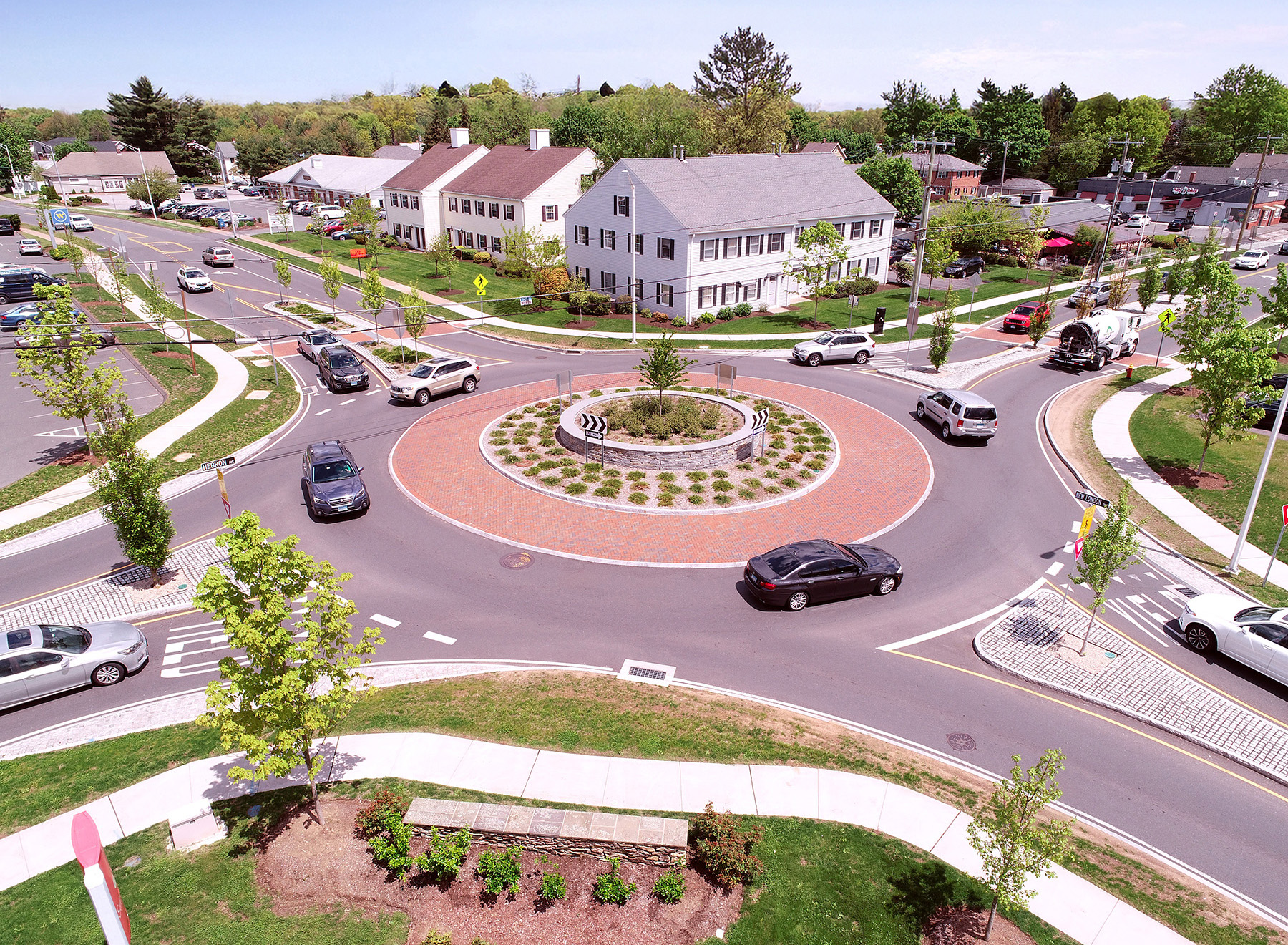
In contrast to the constrained footprints within the historical quarters of New Bedford, the Glastonbury project unfolded along a wide suburban avenue in need of improvements to traffic operations and safety enhancements. Here, CDM Smith and Tighe & Bond, a subconsultant, designed and implemented the town’s first roundabouts: an innovative traffic control solution that was initially met with skepticism.
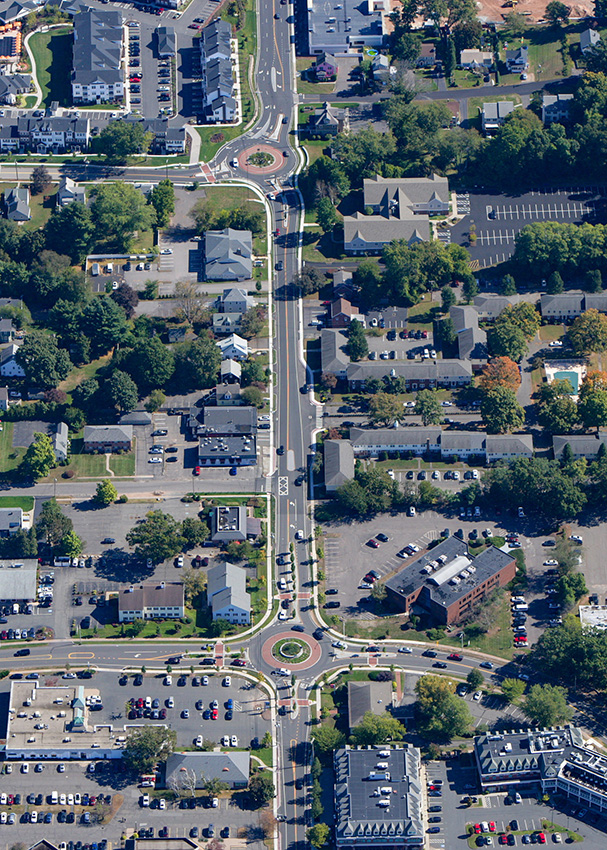
The project targeted two intersections along Hebron Avenue — an existing stop sign-controlled intersection at House Street and an existing signalized intersection at New London Turnpike. The House Street intersection, with its high crash rate and lack of safe pedestrian access, was the first to undergo alternative analysis. Engineers considered adding a traffic signal but dismissed the idea owing to potential queuing impacts on nearby Route 2. Instead, the team proposed a roundabout as a more feasible solution. Because of the proximity of the two intersections and the potential for queuing between intersections, a second roundabout was built for the New London Turnpike intersection.
The design team engaged extensively with the public and town officials to build consensus around the proposed changes. To gain public trust, CDM Smith and Tighe & Bond employed PTV Vissim traffic-simulation software to analyze capacity issues. These visuals became vital tools during town council presentations and public outreach. Additionally, before-and-after visualizations developed by the team helped residents see the long-term benefits of the design.
Purposeful plan
Design features emphasized function and aesthetics. The roundabouts include elements that harmonize with Glastonbury’s architectural identity: granite and brick islands, sitting walls with stone from local quarries, decorative lighting, and landscaped medians with irrigation systems.
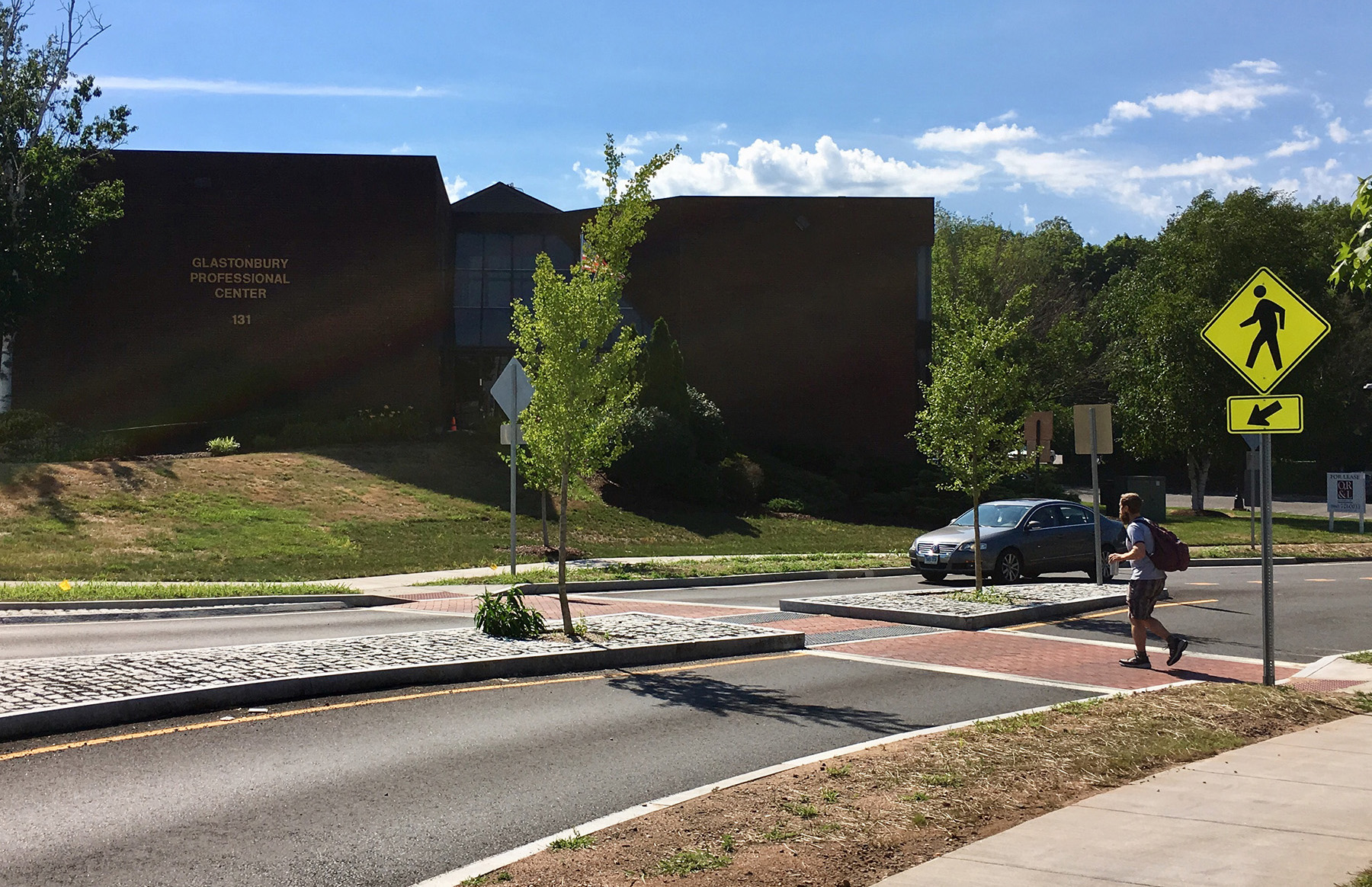
The design considered all users. For example, splitter islands reduce the length of crosswalks; truck aprons accommodate delivery vehicles; bike ramps allow cyclists to ride with traffic or dismount and walk their bikes; and the traffic-calming roundabouts keep speeds low while moving cars efficiently.
These design elements contribute to a more walkable, human-scaled environment, enhancing community cohesion. New drainage systems also address stormwater management, mitigating runoff and protecting nearby residential and commercial properties.
Construction for the entire corridor was carefully staged to maintain access to local businesses and limit detours. Communication was key. Local business owners were kept informed through regular updates, and their feedback helped shape construction phasing. The team developed a maintenance and protection-of-traffic plan to ensure uninterrupted access for drivers to the central business district, while events in town were scheduled with proactive planning to accommodate the community and the construction schedules. Temporary signage, public notices, and real-time construction status updates — announced via the town’s website and social media — helped to minimize disruption.
The roundabout project and a repaving of Hebron Avenue between Main Street and Route 2 were funded through the Connecticut Department of Transportation’s Local Transportation Capital Improvement Program and Local Road Accident Reduction Program, along with municipal funding. The combined effort created a complete corridor along Hebron Avenue, reducing the need for future construction and impact to the local residents and business owners.
Opened in 2017 and 2018, respectively, the New London Turnpike and House Street roundabouts have since been embraced by the community. The Hartford-based Center for Latino Progress conducted a bike walk audit at the New London Turnpike roundabout, where they noted: “Overall a great design and application of a modern roundabout. The roundabout slows traffic but provides for smoother flow than a signalized intersection. The car speeds make it much ... easier for a pedestrian and bicycle rider to get through the intersection safely and comfortably.”
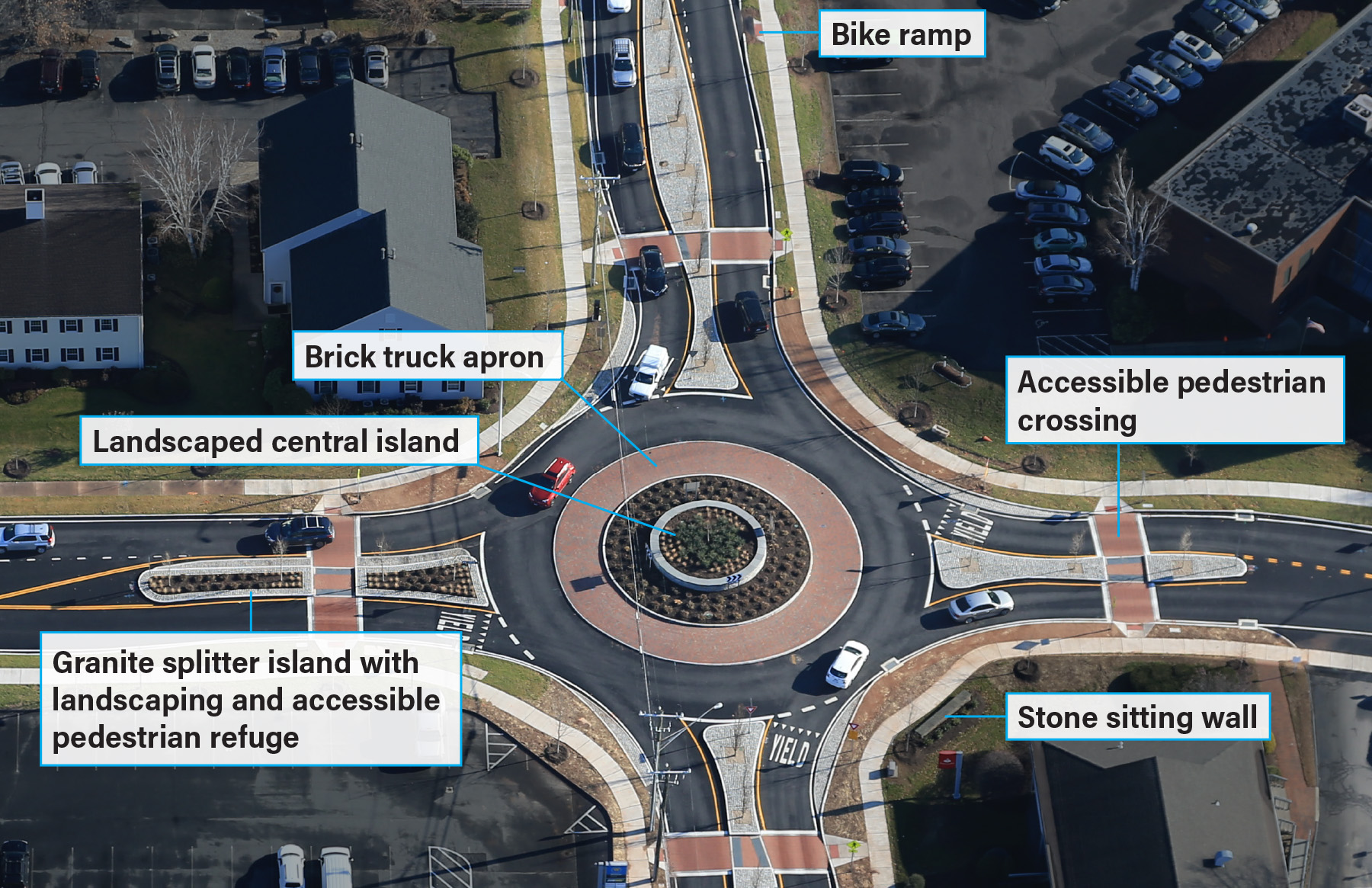
An aerial photograph of the roundabouts is displayed inside the entrance to the town hall, and the town has highlighted the success of the project on its social media pages, noting: “The pavement rehab and roundabouts are a true makeover, and traveling on this road is much safer and more efficient with these traffic calming solutions in place.” In addition, the town reports that the roundabouts are reducing collisions by 60% and improving safety and accommodations for all users.
Residents have also noted improved travel times and fewer delays, while economic development has flourished with new retail and commercial businesses.
Lessons learned
Both New England efforts demonstrate how infrastructure improvements can respect a community’s past while investing in its future. In New Bedford, historical integrity guided the details of a downtown revival. In Glastonbury, innovation and public engagement redefined how a town manages traffic and pedestrian safety.
Technologically, both projects leaned on modern tools — from simulation software to advanced GIS mapping — that were used to generate preliminary designs. Topographic surveys also helped keep the projects on schedule. But success ultimately stemmed from old-fashioned communication, community engagement, and collaborative design.
Some takeaways that traffic engineers might consider on their future projects include:
- Early and consistent stakeholder involvement is the key to a successful roadway project.
- Multidisciplinary coordination between all facets of design — below and above ground — is critical to shortening the length of construction schedules.
- Design flexibility and adaptability are necessary when unforeseen underground obstacles are encountered.
- Integrated funding strategies help offset the costs of larger project.
- Public education and outreach help explain projects to the public and garner support.
- Cultural and aesthetic sensitivities maintain the character of a community, even when equipped with a modern solution.
Together, these projects affirm that complete corridors are not just about moving vehicles, they are about creating safe, inclusive, and beautiful public spaces that honor the identity of a community while also preparing it for long-term resilience. These efforts demonstrate how thoughtful design, meaningful stakeholder engagement, and flexible implementation strategies can bring transformative results, not only in terms of transportation performance, but also in community pride and sustainability.
Rebecca Ruitto Hall, P.E., PTOE, RSP2I, PMP, is a senior project manager at CDM Smith.
Lisa Sherman, P.E., PTOE, RSP2I, PMP, is a traffic and safety discipline leader at CDM Smith.
Project credits
Clients
City of New Bedford, Massachusetts, and the Town of Glastonbury, Connecticut
Engineering consultants
CDM Smith, Boston (New Bedford and Glastonbury)
Tighe & Bond, Westfield, Massachusetts (Glastonbury)
Architects/landscape architects
Utile Architecture and Planning, Boston (New Bedford)
Freeman Companies LLC, Hartford, Connecticut (Glastonbury)
Drainage
CDM Smith, Boston (New Bedford)
GM2 Associates Inc., Glastonbury, Connecticut (Glastonbury)
General contractors (New Bedford)
P. Gioioso & Sons Inc., Boston; C. Naughton Corp., Bridgewater, Massachusetts; and P.A. Landers, Hanover, Massachusetts
General contractors (Glastonbury)
Morais Concrete Service Inc., Springfield, Massachusetts, and Colossale Siteworks, Berlin, Connecticut
This article first appeared in the May/June 2026 issue of Civil Engineering as “Complete Corridors.”

