
By Josh Starling, P.E., M.ASCE, Marco Carlomusto Orlando, EIT, M.ASCE, Antonia Kopp, EIT, M.ASCE, Alia Johnson, P.E., and Arjen Bootsma, P.E.
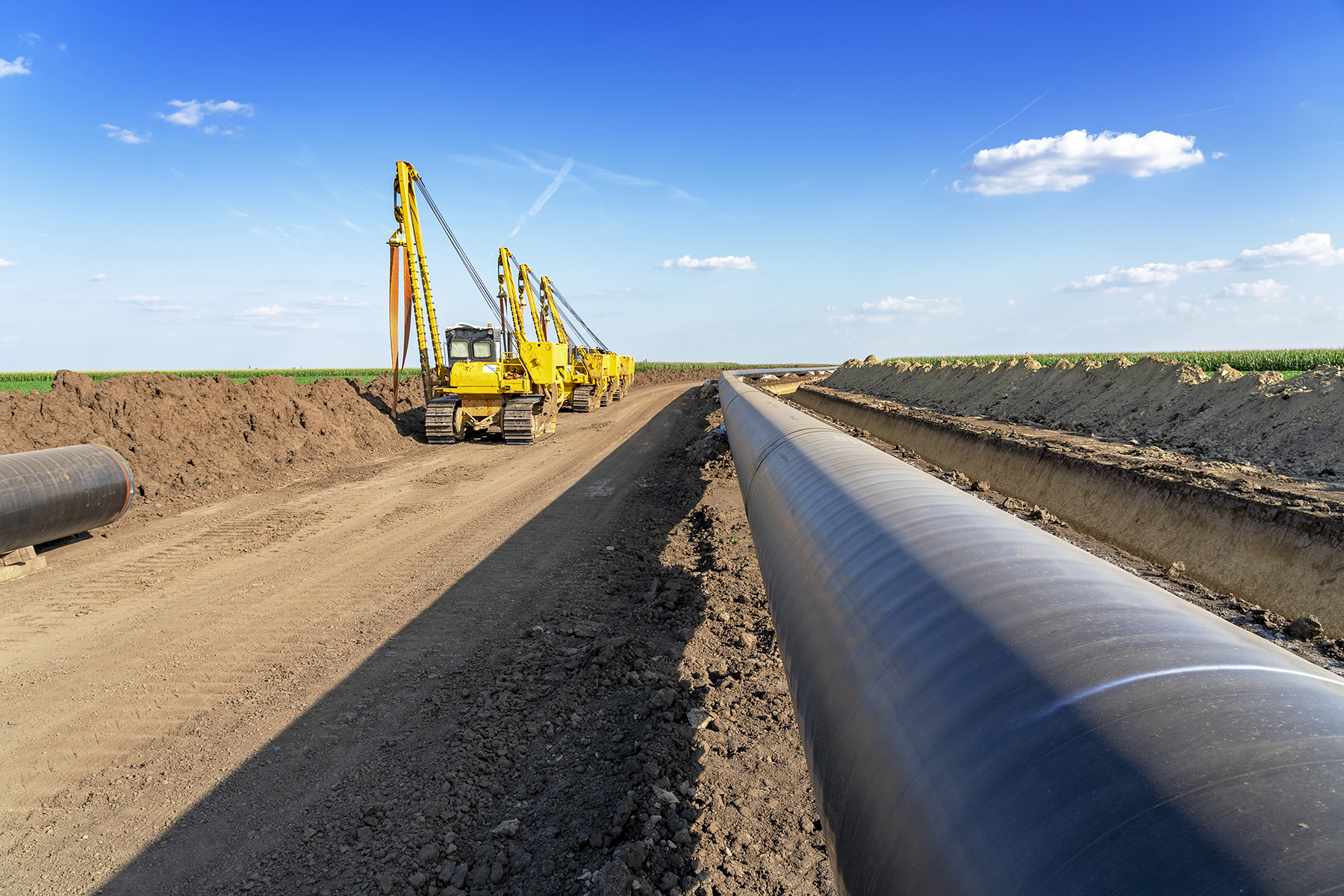
Plans are underway for a new 25 mi transmission line through Metro Atlanta that will enhance system reliability, operational flexibility, and service capacity.
DeKalb County, Georgia, serves a rapidly growing population of nearly 765,000 residents, making its Department of Watershed Management a critical water and wastewater utility in the metro Atlanta region. DWM was established in 1942, currently services more than 5,000 mi of water and wastewater pipes, and operates one drinking water treatment facility and two wastewater treatment facilities. As the county’s service area has expanded and demands on its infrastructure have intensified, the need for a resilient, high-capacity water transmission system has become increasingly urgent.
The DeKalb County Department of Watershed Management Water and Wastewater Master Plan (2020-2050) identifies the lack of transmission capacity as “the most significant challenge facing the County regarding the distribution system,” additionally cautioning against the current lack of resilience in the transmission network.
To address these challenges, DWM has launched the $4.2 billion Water and Sewer Capital Improvement Program, or CIP, that includes the planning, design, and construction of new and upgraded water and wastewater assets. Central to this effort is the creation of an approximately 50 mi long 60 in. diameter transmission main loop — a critical infrastructure backbone intended to improve long-term system reliability, operational flexibility, and service capacity. The loop is being implemented in multiple phases, with Phase A and Phase B (current scope) representing the first two of four phases (Figure 1).
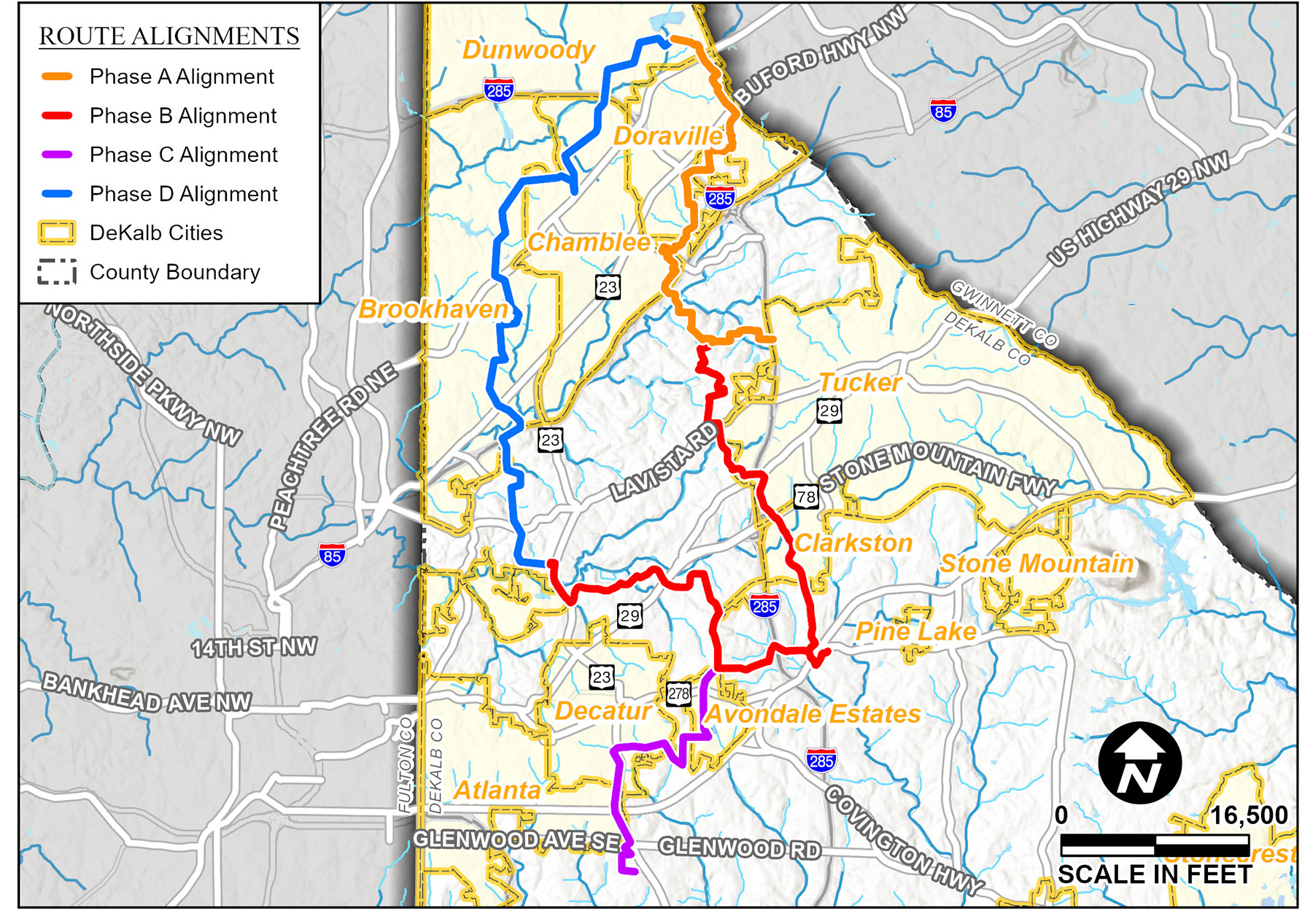
Phase A of the main loop begins at DWM’s Scott Candler Water Treatment Plant near the Gwinnett County border and extends south about 9.5 mi, connecting to existing mains before terminating in Tucker, Georgia, in north-central DeKalb County.
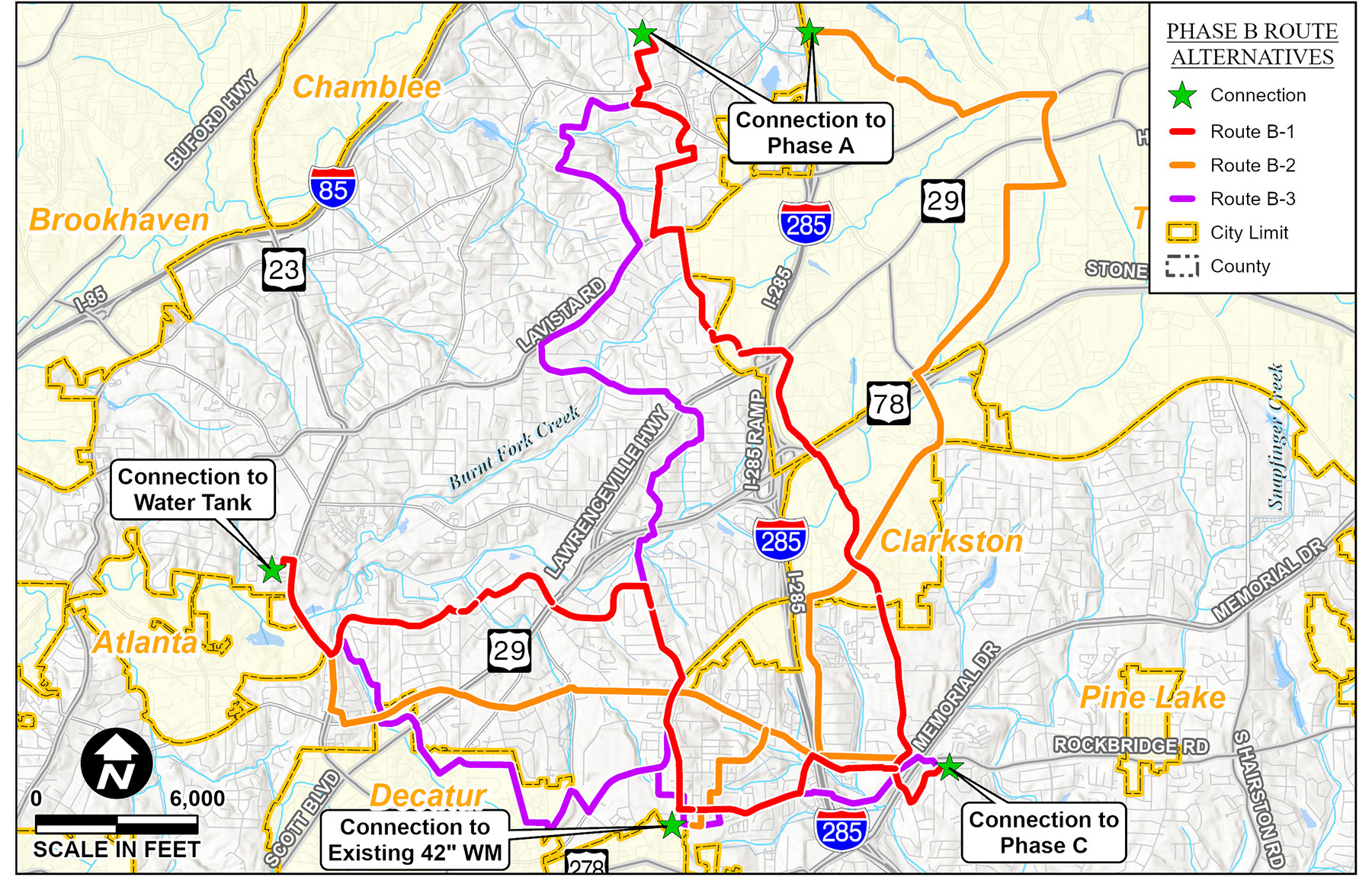
Phase B continues the loop southward in a sideways T shape, with east-west arms reaching an existing system connection and DWM’s Clairmont elevated storage tank, totaling roughly 15 mi. These projects aim to enhance system capacity, resilience, and redundancy. Phases C and D will complete the loop by 2050 per the county’s water master plan.
In 2023 and 2025, DWM engaged a joint venture between engineering firms Freese and Nichols Inc. and Graham & Associates Inc. for routing studies for Phases A and B, evaluating up to three alignments per phase. Using a consistent methodology, FNG JV gathered data from geographic information system resources, aerial imagery, and the county’s water master plan, analyzing pipe and valve alternatives based on pressures, constructability, cost, and maintenance.
The basis of design report for each phase summarizes the recommended alignment, selection methodology, material choices, cost estimates, environmental and permitting considerations, major crossings, and key system connections.
The evaluation process for Phases A and B was guided by a set of technical parameters and systematic analyses to ensure optimal design and long-term system performance. Following are the details of the hydraulic modeling, material selection, valve strategy, and route development methodologies that informed the final recommendations.
Pipeline pressure analysis
A comprehensive hydraulic analysis determined that the 60 in. transmission main will experience a maximum current working pressure of approximately 185 psi at the lowest profile elevations, with future pressures expected to decrease to 157 psi as system improvements are completed. Surge pressures were conservatively estimated using the Joukowsky equation (assuming instantaneous valve closure and high initial velocities) and range from 250 psi to 280 psi depending on pipe material.
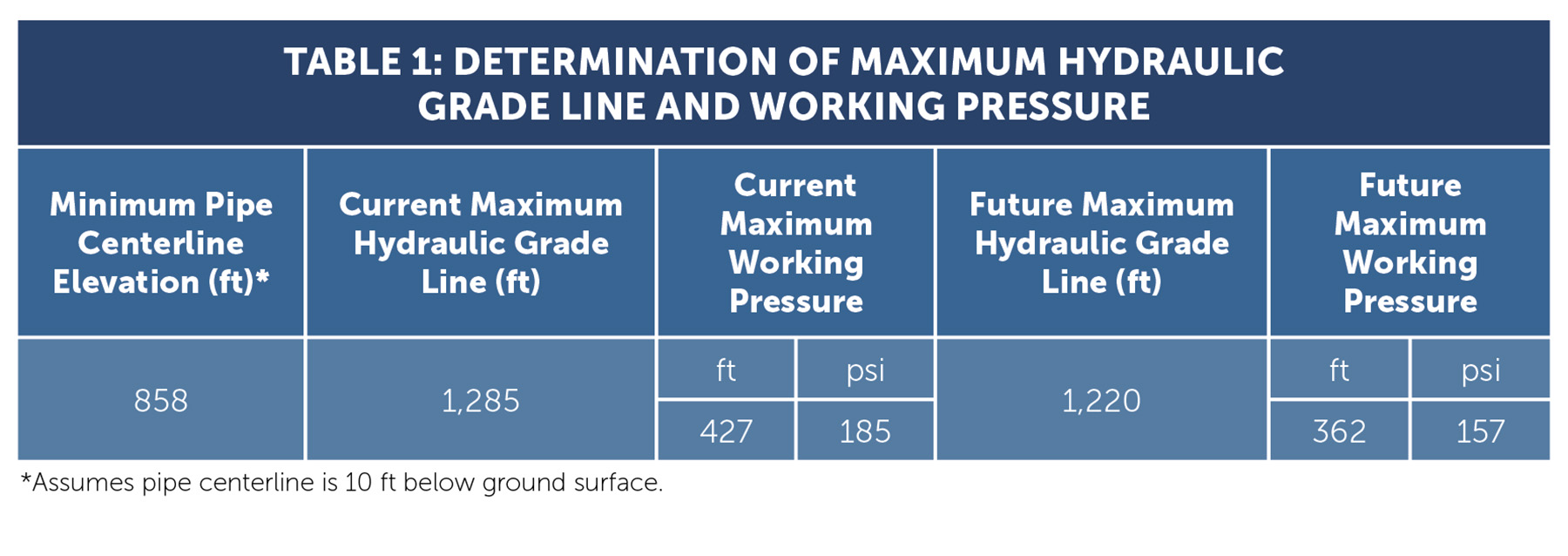
These values are intentionally conservative and will be refined using DWM’s calibrated system model during detailed design. Table 1 above summarizes the results of the hydraulic analysis.
Pipeline materials evaluation
Pipe materials were evaluated based on pressure capacity, hydraulic performance, constructability, corrosion resistance, and cost. The decision to use a single 60 in. transmission main was driven by its superior hydraulic performance and operational simplicity. Alternatives involving multiple parallel pipes were found to increase head loss, add additional valves, increase construction costs, and introduce operational risks, and therefore were not recommended.
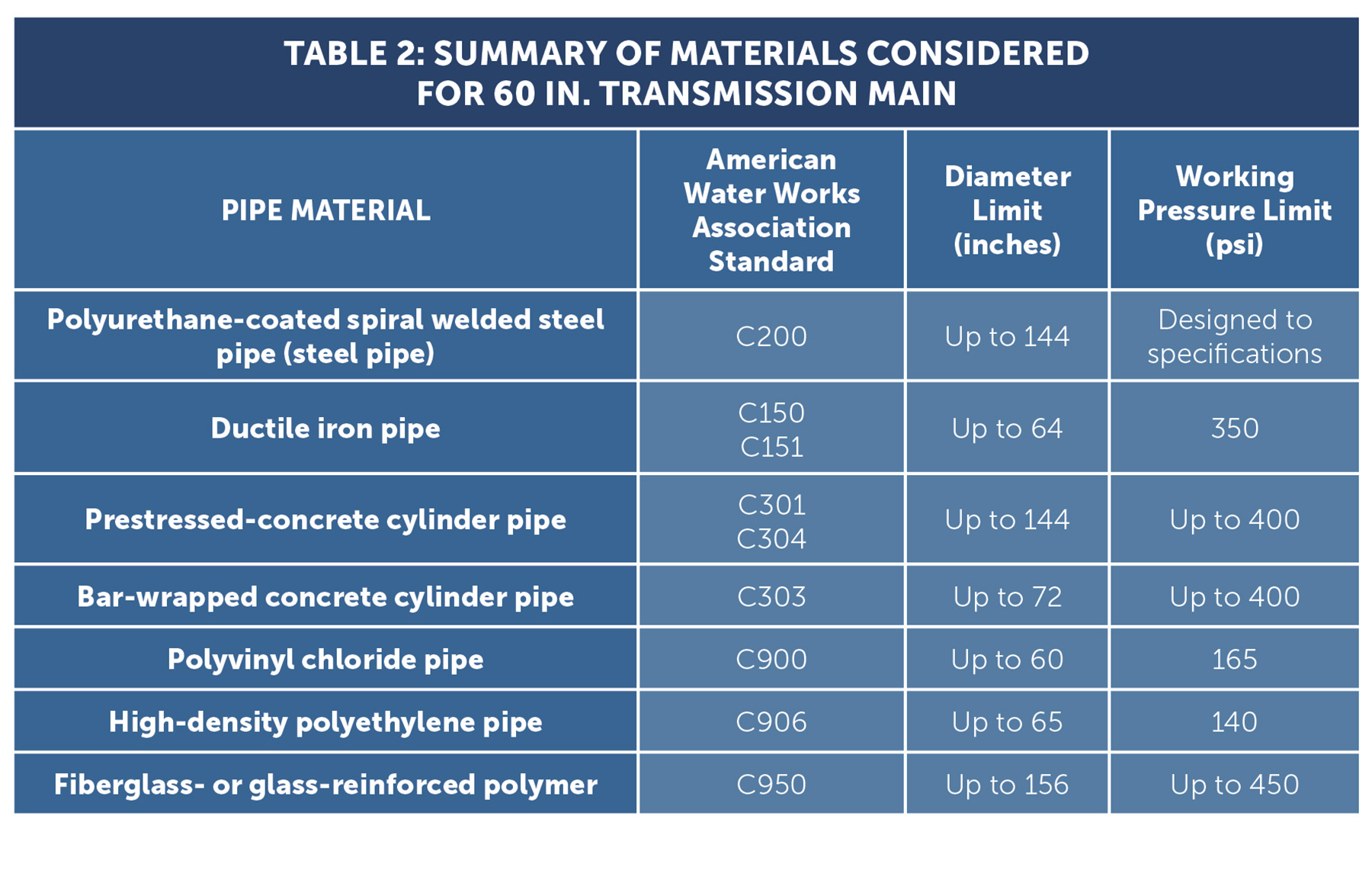
Materials such as polyvinyl chloride pipe, high-density polyethylene pipe, and fiberglass- or glass-reinforced polymer were excluded due to inadequate pressure ratings and restrained joint limitations. Prestressed-concrete cylinder pipe was eliminated due to concerns over wire corrosion and previous PCCP failures in the existing DWM system. Table 2 summarizes the diameter and working pressure limits of the pipe materials considered for the 60 in. diameter transmission main loop.
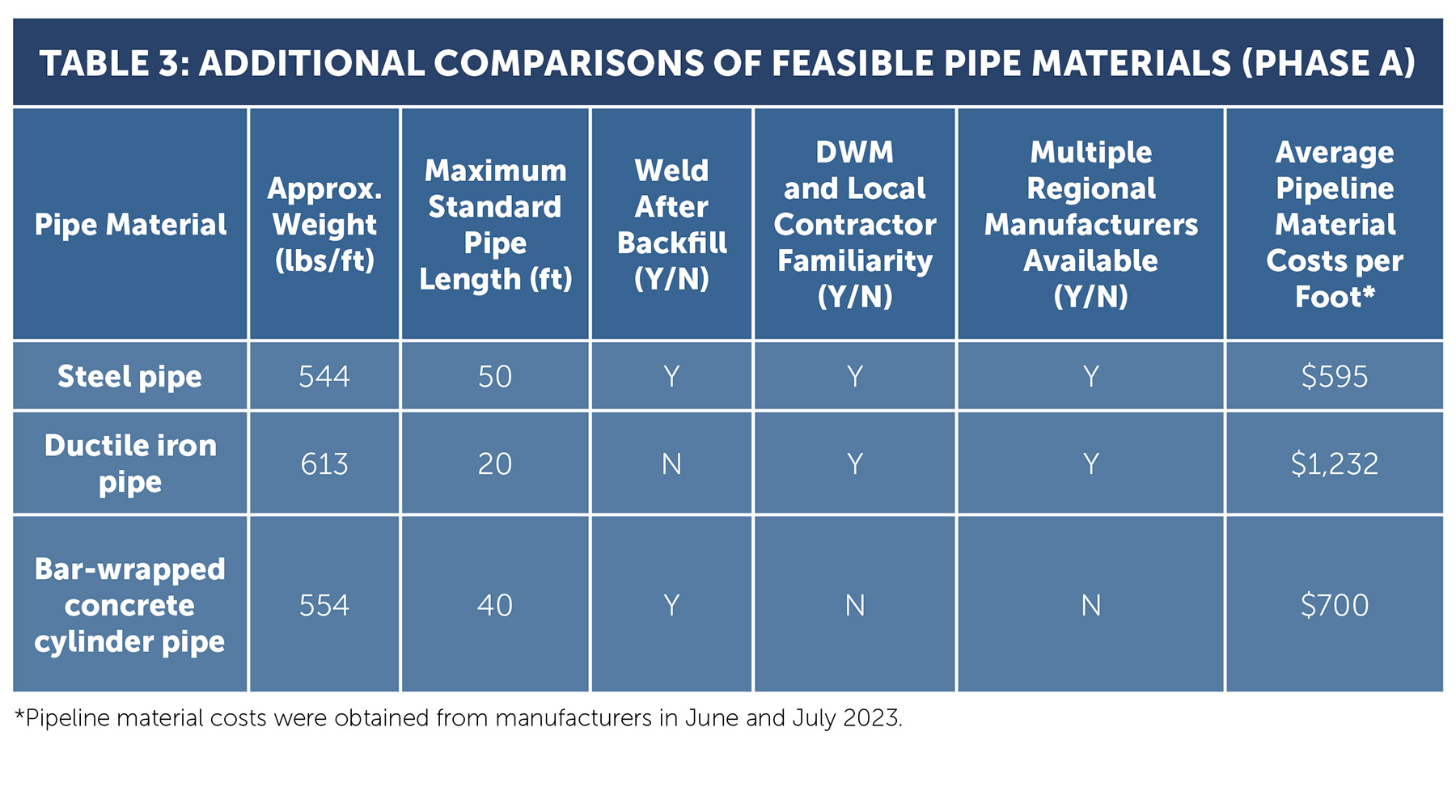
The final candidates — steel pipe, ductile iron pipe, and bar-wrapped concrete cylinder pipe — were compared in terms of cost, installation, and performance. Ductile iron pipe was ultimately dismissed due to higher material costs (approximately double that of steel), heavier weight, and slower installation rates. Table 3 summarizes these additional considerations and comparisons for the final pipe material contenders.
Corrosion protection was a key consideration in material selection. Steel pipe benefits from factory-applied polyurethane coatings, which provide dielectric protection and compatibility with galvanic and impressed current cathodic protection systems. Bar-wrapped concrete cylinder pipe relies on mortar coatings to create a passivating alkaline environment but remains susceptible to corrosion in aggressive soil or water conditions. For all metallic pipe options, it is recommended to implement electrical continuity, joint bonding, test stations, and a comprehensive corrosion and soil resistivity study to support long-term asset protection and future cathodic protection.
Steel pipe was selected as the preferred material for its customizable wall thickness, surge resistance, longer pipe lengths (reducing joints), lowest cost, and post-backfill welding capability. Bar-wrapped concrete cylinder pipe was included as an alternative to promote competitive bidding, though it is less familiar regionally and has limited manufacturer availability.
Valves, spacing, and access port considerations
Valve selection and spacing were evaluated in accordance with American Water Works Association standards, DWM standards, and manufacturer availability. While DWM typically requires gate valves for all water transmission mains, most manufacturers limit production of gate valves to 54 in., so the availability of valves that meet specifications is limited.
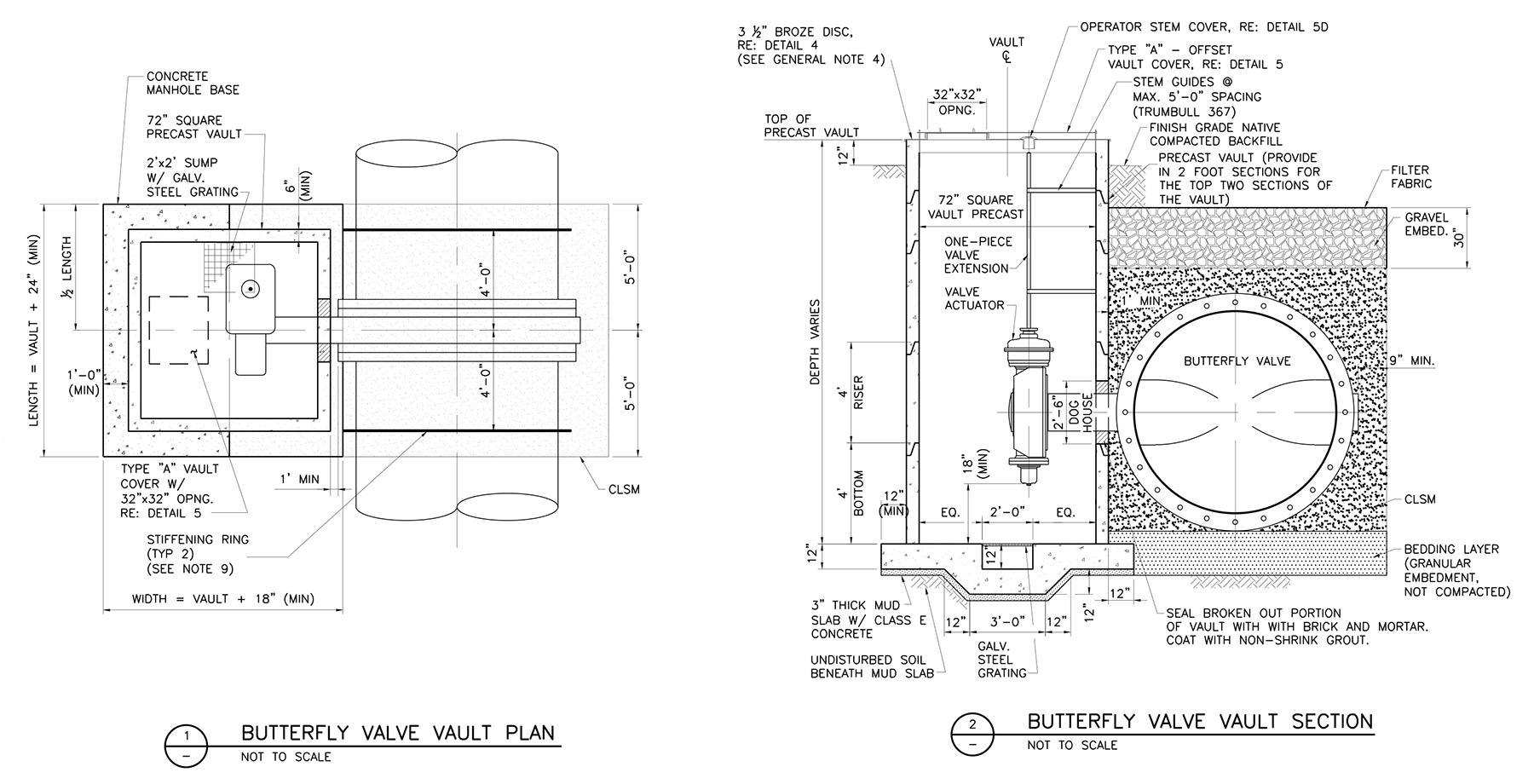
Single- and double-offset butterfly valves were evaluated as potential alternatives, as they offer equivalent isolation, reduced footprint, lower cost, and reliable long-term performance. Butterfly valves may be installed horizontally in vaults or manholes or as direct-bury installations to further minimize construction impacts. Figure 2 visualizes the vault and space required for installation.
Standard DWM practice calls for gate or isolation valves every 1,000 ft; however, this would result in excessive valves with limited operational benefit for a transmission main not serving distribution customers directly. Instead, valve spacing was tailored to system needs and external constraints, with isolation valves strategically located at transmission main interconnections and placed upstream/downstream of major Georgia Department of Transportation roadways, railroads, and MARTA crossings. (MARTA is the name of the area’s transit system.) This approach maintains system reliability and risk control while significantly reducing capital cost, construction duration, and right-of-way impacts.
Material costs of single- and double-offset butterfly valves were 2.5x-3.5x less than gate valves of similar size. As such, FNG JV recommended using direct-bury double-offset butterfly valves with valve actuators within a manhole or vault to maximize DWM capital, reduce the number of easements required, and shorten construction durations. FNG JV also recommended incorporating inspection and access ports every 1,000 linear ft of the water main, as well as upstream and downstream of each valve. This would enable welders to enter the pipe to do interior welding with their equipment and 500 linear ft of leads, and it would allow future routine maintenance, pigging, or simple inspection.
Route development process
To begin the route development process, DWM provided FNG JV with a baseline route for each phase and tasked the team with developing two additional alternatives that would satisfy all project criteria and constraints. The objective was to evaluate three distinct route alternatives per phase, each connecting the same set of critical system nodes.
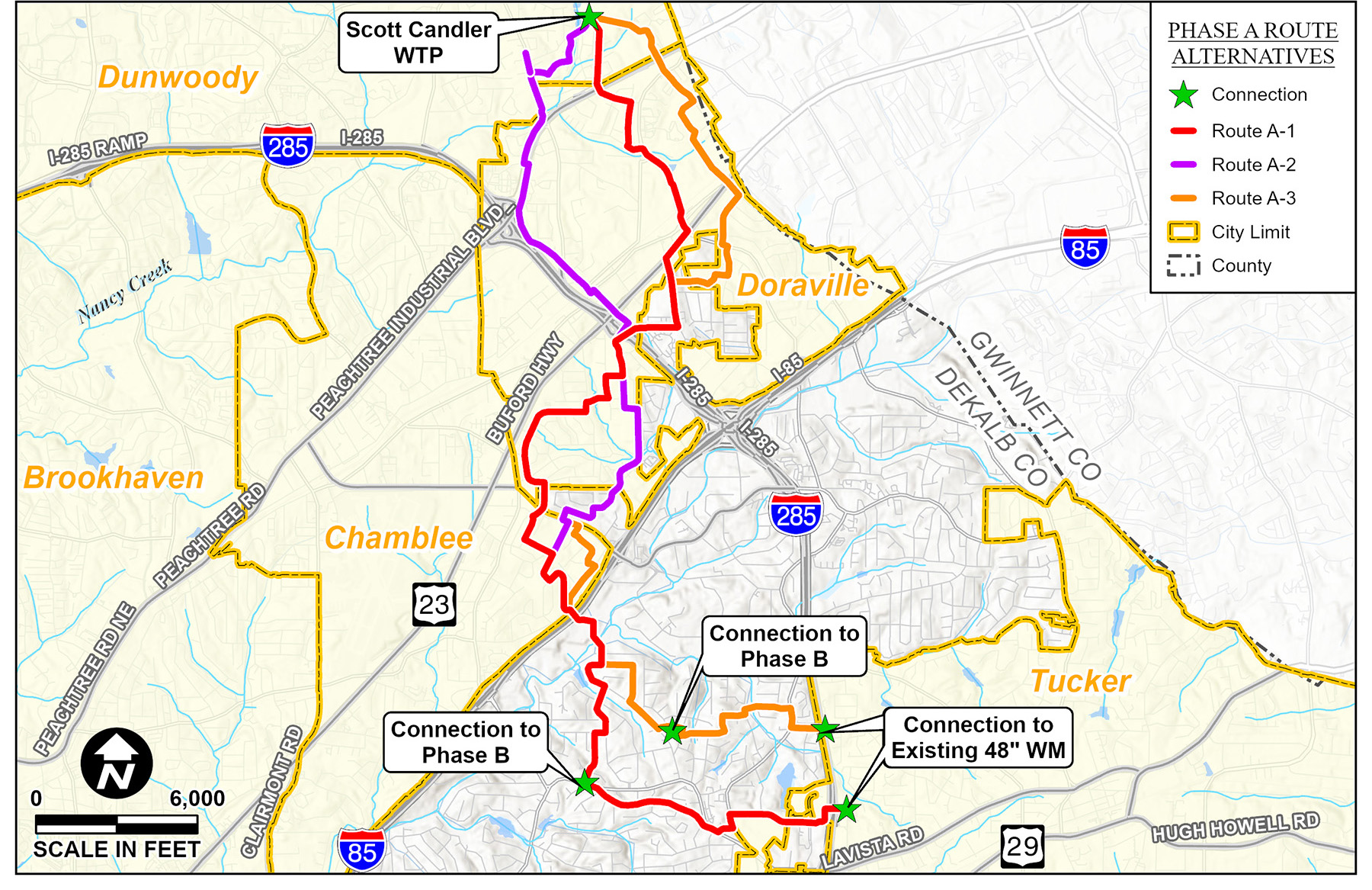
For Phase A, the major connection points included the Scott Candler Water Treatment Plant, the proposed Phase B stub-out, and the existing 48 in. main near the Northlake Mall area. In Phase B, the critical connections were the Phase A loop, the existing 42 in. line near the city of Avondale Estates, proposed connections for Phase C, and the Clairmont elevated storage tank. During the preliminary phase, the team generated and screened numerous potential alignments, ultimately identifying the three most promising alternatives for each phase. Figures 3 and 4 show the route alternatives and critical connection locations of Phases A and B, respectively.
FNG JV conducted thorough site visits along all proposed alignments, with the selected route receiving comprehensive environmental assessment to identify sensitive features, utility conflicts, and constructability challenges. FNG JV developed a mobile ArcMap application to track these challenges observed in the field by using photos and notes that were geopinned to each alignment. The team also coordinated with key external stakeholders through the routing study process, including local and state municipalities, Atlanta Gas Light, railroad lines Norfolk Southern and CSX, GDOT, and MARTA.
Several major design constraints shaped the route selection process. Real estate limitations, such as the need to secure easements through key parcels, were a significant factor. For example, in Phase A, all three evaluated alignments traversed a single critical parcel, which was identified early in the process. The team coordinated closely with DeKalb County’s Real Estate Division to initiate negotiations and ensure proper acquisition protocols, as direct engagement with the property developer was not feasible.
Additionally, the team considered jurisdictional boundaries and evaluated the potential for interjurisdictional agreements with neighboring Gwinnett County for a short segment in Phase A, though DeKalb County ultimately expressed a preference to avoid crossing into different pressure zones due to operational complexities.
Routing studies and route selection process
A robust, criteria-driven evaluation framework formed the foundation of the routing studies and route selection for both phases. The process began with the development of a comprehensive set of evaluation criteria, which were refined and expanded between phases to reflect lessons learned and evolving technical and community priorities.
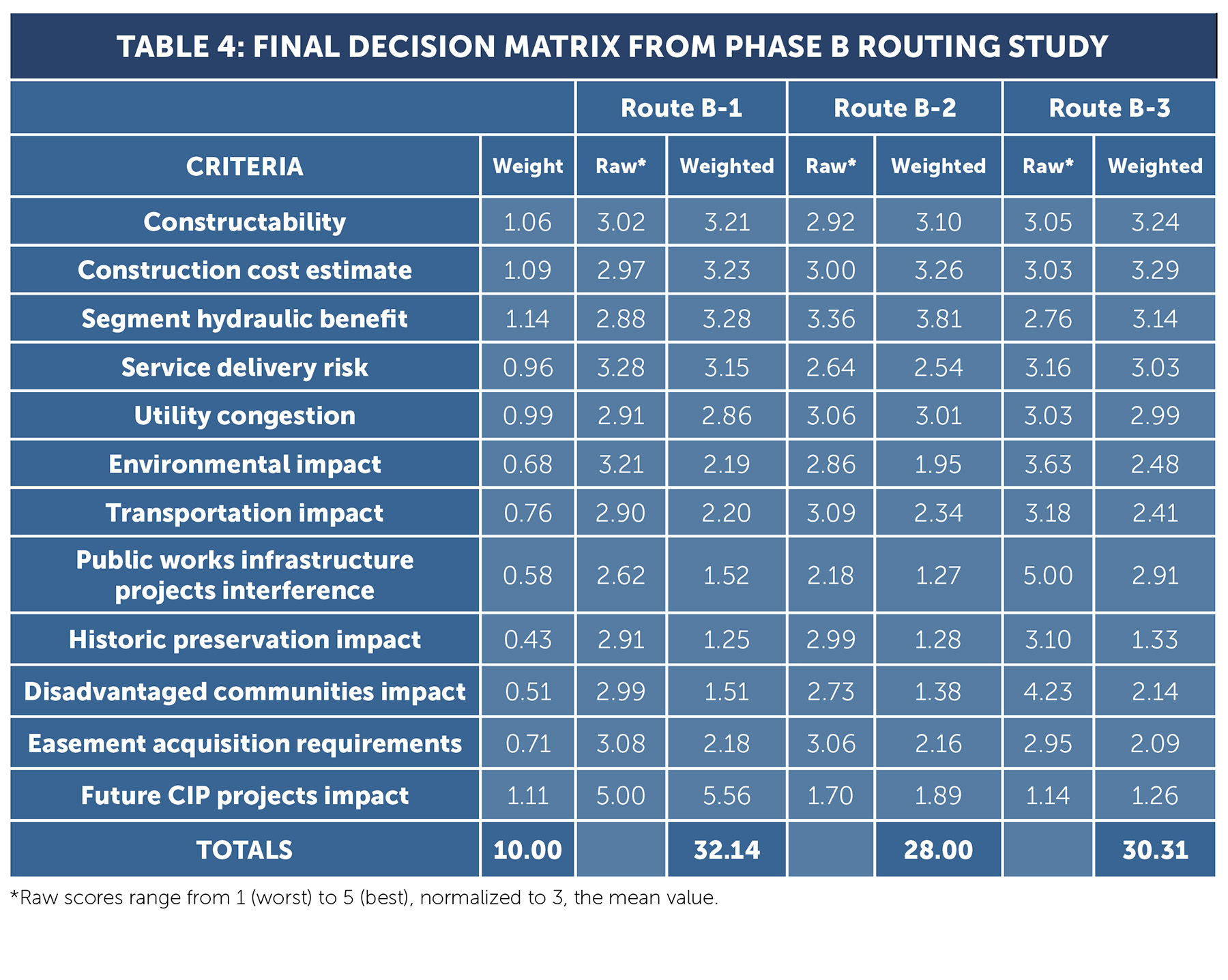
The evaluation process incorporated a pairwise analysis to assign relative weights to each criterion. This systematic approach involved comparing the importance of each criterion against all others, with final weights reflecting the collective judgment of DWM, the CIP project management team, and FNG JV. Normalized scores for each route alternative were multiplied by these weights and totaled in a decision matrix, providing a quantitative and repeatable basis for comparing alternatives and identifying the preferred alignment.
The list below contains a brief definition of each criterion developed over the course of the Phase A and Phase B routing studies:
- Constructability: How practical it is to build the project.
- Construction cost estimate: The anticipated cost to construct the project.
- Segment hydraulic benefit: The potential for the project to improve water flow and pressure.
- Service delivery risk: The extent to which this project may introduce the possibility of widespread water service outages.
- Utility congestion: The possibility that construction could interact with other essential services (like gas, electricity, or internet).
- Environmental impact: The ways in which the project could affect local natural resources, such as streams, wetlands, wildlife, and below-ground archaeological sites.
- Transportation impact: The potential for construction to affect roads, traffic, or public transit.
- Public works infrastructure projects interference: The chance that this project could overlap with other public works projects.
- Historic preservation impact: The potential for the project to be located near above-ground historic or culturally significant sites.
- Disadvantaged communities impact: Consideration of how the project may affect neighborhoods identified as disadvantaged.
- Easement acquisition requirements: The number of properties that may need to be accessed permanently or temporarily for construction.
- Future CIP projects impact: The degree to which this project may support or align with future planned improvements.
Table 4 shows the final decision matrix scores for the Phase B route alternatives, after multiplying the raw scores from the criteria analysis and weights from the pairwise analysis.
Technology innovations
A key innovation in this project was adopting 4M Analytics’ artificial intelligence-powered utility mapping platform during Phase B. Traditionally, subsurface utility engineering at the planning stage relied on Quality Level D investigations, which were time-intensive and often incomplete. Phase A used conventional QL-D methods, but Phase B leveraged 4M Analytics’ platform, which aggregates, validates, and visualizes underground utility data from diverse sources using AI algorithms. This provided a comprehensive depiction of utility congestion and conflicts, saving an estimated $140,000 and reducing the schedule by more than eight weeks.
Another strategy was early identification of critical easements common to all route alternatives. Using GIS analysis and field reconnaissance, the team pinpointed parcels, including a movie theater property at a major Phase A crossing, that would require easements regardless of which alignment was selected. This allowed DeKalb County to begin acquisition early, minimizing schedule delays and legal risks.
After alignment selection, adjacent distribution mains were evaluated for replacement. Bundling these upgrades with the transmission main construction enables contractors to mobilize once, complete both projects while the trench is open, and reduce disruption and costs. Advanced tunneling solutions were also incorporated where open-cut construction was impractical. Recommendations included trenchless technologies such as horizontal auger boring and microtunneling for interstate, railroad, creek, and wetland crossings. These methods will minimize surface disturbance and the need for traffic control and restoration as well as support environmental stewardship and community impact mitigation.
All route alternatives were aligned with DWM’s broader CIP and long-term strategy. Coordination with parallel and planned projects reduces redundant construction and conflicts. For example, the Phase B alignment parallels 21,700 linear ft of aging 30 in. cast steel/cast iron and PCCP transmission mains, allowing their decommissioning and replacement. This approach is estimated to save $42 million in future costs and reduce public disruption by consolidating construction activities.
Final insights
The Phase A and Phase B routing studies for DWM’s 60 in. transmission main loop highlight key best practices for large-diameter mains in dense urban environments. A structured, data-driven approach is essential: Early identification of constraints, such as major crossings, utilities, and sensitive areas, improves constructability and cost control. Weighted decision matrices and thorough field reconnaissance ensure that route alternatives balance hydraulic performance, environmental stewardship, and public impact.
Technology integration, including GIS and AI-driven platforms like 4M Analytics, supports informed decisions. These tools accelerate planning, improve risk identification, and optimize resources. Additional priorities include early right-of-way evaluation, realistic utility relocation assumptions, and proactive environmental reviews. Planning for transmission mains as long-term assets ensures resilience, maintenance access, and compatibility with future improvements.
The routing studies established a sound basis of design, promoting cost savings, schedule efficiency, and alignment with DWM’s CIP objectives. Implementing the recommended alignments will strengthen DeKalb County’s water system to meet future demand. The practices discussed in this article offer valuable guidance for similar large-scale projects in complex urban settings.
Josh Starling, P.E., M.ASCE, is an associate project manager, Marco Carlomusto Orlando, EIT, M.ASCE, is an assistant project manager, and Antonia Kopp, EIT, M.ASCE, is a project engineer for Freese and Nichols. Alia Johnson, P.E., is the engineering manager and Arjen Bootsma, P.E., is a principal engineer and project manager for the DeKalb County Department of Watershed Management.
Interested in learning more? Join the authors at the UESI Pipelines 2026 Conference August 1-5 in Detroit. Visit www.pipelinesconference.org.
This article first appeared in the July/August 2026 issue of Civil Engineering as “Water Main Mania.”


