
Technical Region Director Official Nominee
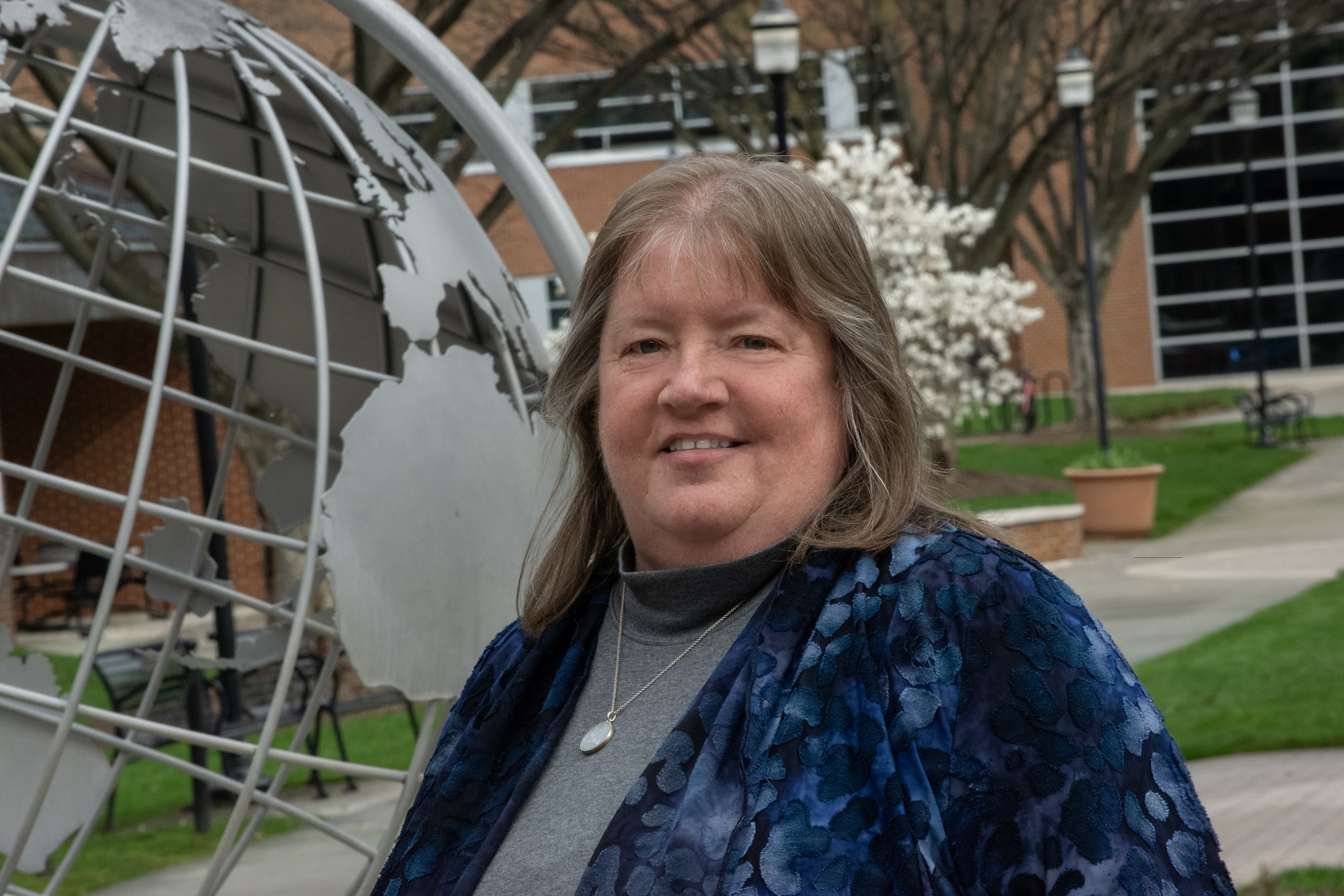
Vision statement
ASCE and the profession are facing many headwinds, including not graduating enough engineers to meet needs and a leaky career pipeline. We are seen as “not sexy”, yet we are THE profession that designs, builds, and operates the infrastructure that forms the basis for a modern society and protects the public health, safety and welfare. ASCE’s headwinds include seismic changes in technology with AI, less support by some firms for ASCE membership and volunteer activities, and a volunteer structure that can result in both long product-generation times and less coordinated action and investment in responding to pressing societal needs.
I would bring a unique background from inside and outside ASCE to TRBG and the Board of Direction. My education is multidisciplinary, and I have applied it to highlight how solving our wicked problems is not just a civil engineering problem. My current leadership position provides insight into the challenges of the current engineering education and why faculty and students do not stay involved in ASCE.
I understand the technical side of ASCE since I started on a committee, rising up through a council, an ExCom, to Institute leadership. I serve or recently have served on two Board strategic committees, plus the ASCE-NOAA Task Force that links ASCE to our federal partners. In parallel, I rose up through the elected ranks of a geographic section. This gives me a unique view of the relationship between the institutes and the geographic sections.
Looking forward, and especially as we increase cross-institute collaborations to solve the wicked problems of the 21st century, we have an opportunity to reinvent ASCE while respecting our successful history. Future engineering disruptors include the rapid advances of AI, climate change and resilience, inconsistent funding and public support for infrastructure, etc. TRBG, with its broad technical expertise and its ability to tap into the Institutes and CTA, must be at the forefront of identifying the experts to address these wicked challenges. TRBG needs to be prominent in the 2027, 2028, and 2029 ASCE Conventions planning because it is this technical group that thinks at the highest-level and is cross-disciplinary, while also connecting to the individual Institutes to create linked deep-dive sessions. These dives are part of the Institutes’ historic identity and the reason why many people attended the individual Congresses.
The next TRBG director, however, cannot have an Institute-only perspective. Institutes develop professional guidance and standards, but if we cannot get that guidance easily out to the practicing engineers through the geographic regions, then its adoption is delayed. A director that understands the geographic operations is vital. We also need to convert more students to members and increase the membership of faculty. The next Board member should understand the professional pipeline and its weak points. I bring that expertise.
The next TRBG director also must think about the future from the Society perspective. CIT, of which I am a member, is looking for those disruptors that will affect the ability of ASCE members to do their jobs and the ability of ASCE to thrive. These disruptors will no longer occur every few decades, but potentially every few years. This will drive a historic reorganization of how the Society functions to decrease barriers to collaboration. This will require a Board member that understands strategic investments to meet the needs of profession, even ones that most members have not anticipated yet.
My service in CIT, on the ASCE-NOAA Task Force, and in multiple cross-institute spaces, allows me to bring that forward-thinking focus to the Board.
Biographical statement
Education
- PhD, Environmental Health Engineering, University of Alabama at Birmingham, 2000
- MS, Civil Engineering, University of Alabama at Birmingham, 1996
- BS, Chemical Engineering, Washington University in St. Louis, 1987
Work experience
- Acting Director, School of Science, Engineering, and Technology, Penn State Harrisburg, 2023 - Present
- Chair, Civil, Construction, and Environmental Engineering, Penn State Harrisburg, 2022 - Present
- Professor, Associate Professor, and Assistant Professor, Penn State Harrisburg, 2003 - Present
- Assistant Professor, Civil Engineering, University of Alabama at Birmingham, 2001 – 2003
- Post-Doctoral Research Engineer, US EPA Urban Watershed Management Branch, 2000 – 2001
- Asbestos Operations Manager, Environmental Support Services, Inc., Oxford, MA, 1990 – 1992
- Senior Industrial Hygienist, Barnes and Jarnis, Inc., Boston, MA, 1988 – 1990
ASCE involvement
Society level
- Member, Collaborative Innovation Team, Board Strategic Advisory Committee, 2025 - Present
- Member, Task Committee on Transforming Our Workforce, Board Strategic Advisory Committee, 2024 – 2025
- Chair, Rethinking the ABET Criteria Subcommittee of the Task Force on Transforming Our Workforce, 2024 - 2025
- Member, Rethinking Licensure Requirements Subcommittee of the Task Force on Transforming Our Workforce, 2024 - 2025
- Member, NOAA Industry Proving Ground Architecture and Engineering Working Group, 2024 – Present (One of ASCE’s Representatives)
- Member, ASCE Nature-Based Solutions Task Force, 2024 – Present
- Member, ASCE-NOAA Task Force, 2023 – Present
- Environment and Water Resources Institute: Past President (2024 – 2025), President (2023 – 2024), President-Elect (2022 – 2023), Vice President (2021 – 2022), Governing Board, Member (2019 – 2025)
- EWRI Technical Activities Coordination Executive Committee: Past Chair (2021 – Present), Chair (2019 – 2021), Vice Chair/Secretary (2017 – 2019), Council Liaison (2009 – 2017).
- EWRI Urban Water Resources Research Council: Past-Chair (2016 – 2018), Chair (2014 – 2016), Vice Chair (2012 – 2014), Secretary (2010 – 2012), Technical Activities Executive Committee Liaison (2009 – Present) and Control Group Member (2005 – 2018) (Current Status: Member)
- Member, Management Practices for Control of Erosion and Sediment, ANSI/ASCE/EWRI 66-17 Standard, 2005 – Present (Secretary, 2005 – 2009)
- Chair, Stormwater Strategy Development Summit, October 14 – 16, 2016, Dallas, Texas.
- Track Chair, 14th Urban Watershed Management Symposium. Held in conjunction with the World Environmental and Water Resources Congress, May 22 – 26, 2017, Sacramento, California.
- Track Chair, 13th Urban Watershed Management Symposium. Held in conjunction with the World Environmental and Water Resources Congress, May 22 – 26, 2016, West Palm Beach, Florida.
- Track Chair, 12th Urban Watershed Management Symposium. Held in conjunction with the World Environmental and Water Resources Congress, May 17 – 21, 2015, Austin, Texas.
Local level
- Central Pennsylvania Section of ASCE: President (May 2025 – April 2026); President-Elect (May 2024 – April 2025); President-Elect (May 2023 – April 2024)
Other Volunteer Activities
- Member, Chesapeake Bay Scientific and Technical Advisory Committee (STAC), 2021 – 2026. Pennsylvania Gubernatorial Appointment
- Member, Pennsylvania Water Resources Advisory Committee, Pennsylvania Department of Environmental Protection, April 2018 – December 2025
- Member, Improving the Next-Generation EPA Multi-Sector General Permit for Industrial Stormwater Discharges Committee, Water Science and Technology Board, National Academy of Sciences, November 2017 – 2019.
- Member, Board of Directors, Chesapeake Stormwater Network, 2008 – 2019.
- Member, Expert Panel, Recommendations of the Expert Panel to Define Removal Rates for Erosion and Sediment Control Practices, Chesapeake Bay Science and Technology Advisory Committee (STAC), US EPA Chesapeake Bay Program. 2012 – 2014.
- Member, Middletown Historical Restoration Commission, 2019 – Present
Awards
- 2025 Women in Tech Moxie Award, Technology Council of Central Pennsylvania, 2025
- Service to the Institute Award, American Society of Civil Engineers’ Environment and Water Resources Institute, 2021
- Urban Water Resources Research Council Outstanding Service Award, Urban Water Resources Research Council, ASCE-EWRI, 2021
- 45 Engineers Making a Difference, School of Engineering, University of Alabama at Birmingham, Awarded February 27, 2016
