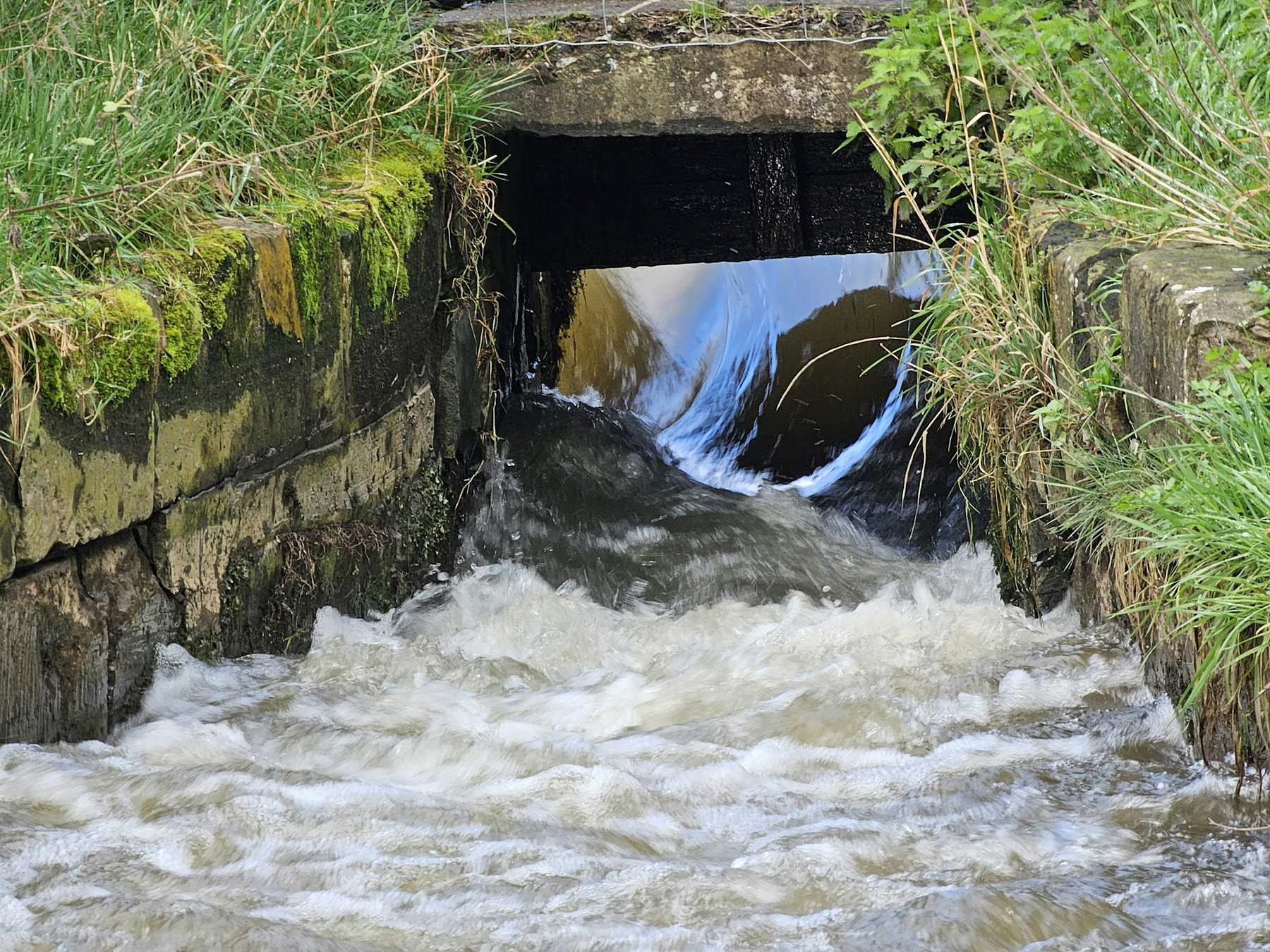
 Debbie May via Unsplash
There’s no question that functioning roads and bridges remain on city and municipal leaders’ minds.
Despite a recent National League of Cities report finding that American mayors no longer list infrastructure as their top (or even No. 2) priority for the future, the organization’s more recent publication, Municipal Infrastructure Conditions 2025, highlights a different – and more sobering – point of view. Municipal leaders across the country strongly desire to invest in new projects and retrofits yet lack the adequate resources to do so.
Further reading:
- Water infrastructure engineers confront an uncertain, changing climate
- Infrastructure drops on mayors’ priority list, according to survey
- 5 key takeaways from the ‘2025 Report Card for America’s Infrastructure’
The new report, based on NLC’s third annual survey of municipal infrastructure conditions, shares the results of the organization’s annual survey of more than 200 municipal leaders representing different-sized communities across the country.
Farhad Omeyr, Ph.D., director of research and data for NLC, said this year’s findings were strikingly similar to those from 2022, the inaugural year of the survey: Leaders are greatly concerned about the condition of their infrastructure systems, particularly those related to water and roads.
What are the priorities?
A little over 71% of leaders said water, wastewater, and/or stormwater systems were not only their highest priority but also their most advanced local infrastructure projects. Roads and bridges came in second place, with approximately 63% of respondents stating they were a pressing priority where they were making progress.
“This confirms, for me, that water systems, as well as roads and bridges, remain a huge issue for these municipalities,” Omeyr said. “And, more importantly, we see over three years, the needle hasn’t moved all that far since we started this survey.”
Shirley Clark, Ph.D., P.E., BC.WRE, F.EWRI, F.ASCE, a professor of environmental engineering at Penn State Harrisburg who specializes in water infrastructure, said the results were not a surprise to her.
She noted that water infrastructure has often been one of the lower-rated groups on ASCE’s Report Card for America’s Infrastructure, which is issued every four years. Indeed, the grades for stormwater (D) and wastewater (D+) were on the low end among all categories in the 2025 report card.
Unfortunately, Clark said, it is difficult for many outside the infrastructure community to understand how dire the need for updates is.
“Water runs underground. Typically, people outside infrastructure experts don’t see it, and they don’t think about it until something goes wrong,” she said. “That’s changing somewhat; now you see flooding and issues with stormwater systems in the headlines. But I don’t think enough people realize just how much water infrastructure we have underground that is hitting (the end of) its lifespan.”
Even with such an understanding in place, the next challenge stressed in the NLC report is funding. Even with the Infrastructure Investment and Jobs Act promising more than $1 trillion for infrastructure projects around the country, the vast majority of municipal leaders surveyed reported rising costs (89.9%), insufficient capital budgets (84.2%), and inadequate grant or loan availability (65.2%) as major obstacles to making infrastructure improvements.
Omeyr said this result highlights the increasing need for more investment, especially in smaller cities and towns.
“While I expected rising costs to be the No. 1 financial issue, thanks to inflation, especially among the smaller municipalities who took part in my survey, the fact that insufficient capital budgets and grant and loan availability are still so high on this list illustrates the enormous challenge that these municipalities are facing,” he said. “It tells you that the infrastructure needs are so deep that even with the extra money that flowed into these cities and towns from the IIJA, it isn’t enough.”
That need is also exacerbated, Clark said, by the nonfinancial problems that these communities face. The top two problems unrelated to money on the list were regulatory compliance and permitting issues (45.5%) and staffing shortages or lack of skilled labor (42.7%).
“Despite the fact we saw what seemed like a huge investment in infrastructure to the average person, we concurrently saw supply chain problems and a lack of skilled workers to do the jobs,” Clark explained. “That means costs went up higher than anticipated and those federal dollars haven’t gone as far as many had hoped they would.”
With many smaller municipalities having extremely small staffs – Omeyr cited some having staffs of five, with one person being the mayor and two acting as city council members – these kinds of staffing shortages are enormous roadblocks to progress.
“In so many communities the water and sewer systems are old and just haven’t been managed well,” Omeyr said. “And we need to address these issues before we experience another crisis like we saw in Flint, Michigan.”
Need only growing larger
With more people moving away from small towns to more populated areas, as well as increases in storm strength because of climate change, the strain on water systems will become even greater, Clark said. Considering these consistent findings, she hopes that younger high school students interested in engineering will look at civil engineering and infrastructure work. Clark said they will not lack work.
“There is a lot we need to do, and we need to find innovative ways to do it,” she said. “There are lots of opportunities in civil engineering for students to grow and problem-solve. We need people who will think long term about how to fix these expensive issues and make new systems that are adaptable and resilient.”
Those same people, she added, are also needed on the policy side. These individuals must have enough infrastructure knowledge to help municipalities of all sizes and know how and where to invest limited resources to “rehabilitate, replace, and build” water systems and other necessary infrastructure.
“When we have people with the right knowledge and skills, we can brainstorm new ways to do things or learn from interesting solutions done in other places to build strong hard infrastructure and save some money in the process,” she said. “That’s what it will take to overcome these challenges and achieve the public health protection goals we want.”