Lauren Kilgore was an elementary school student when she crossed an orange construction barrier for the first time. And that was when it clicked.
In grade school, math and science stood out to Kilgore. But that trip to a construction site with a family friend in the field showed her how she could really make an impact with her skills.
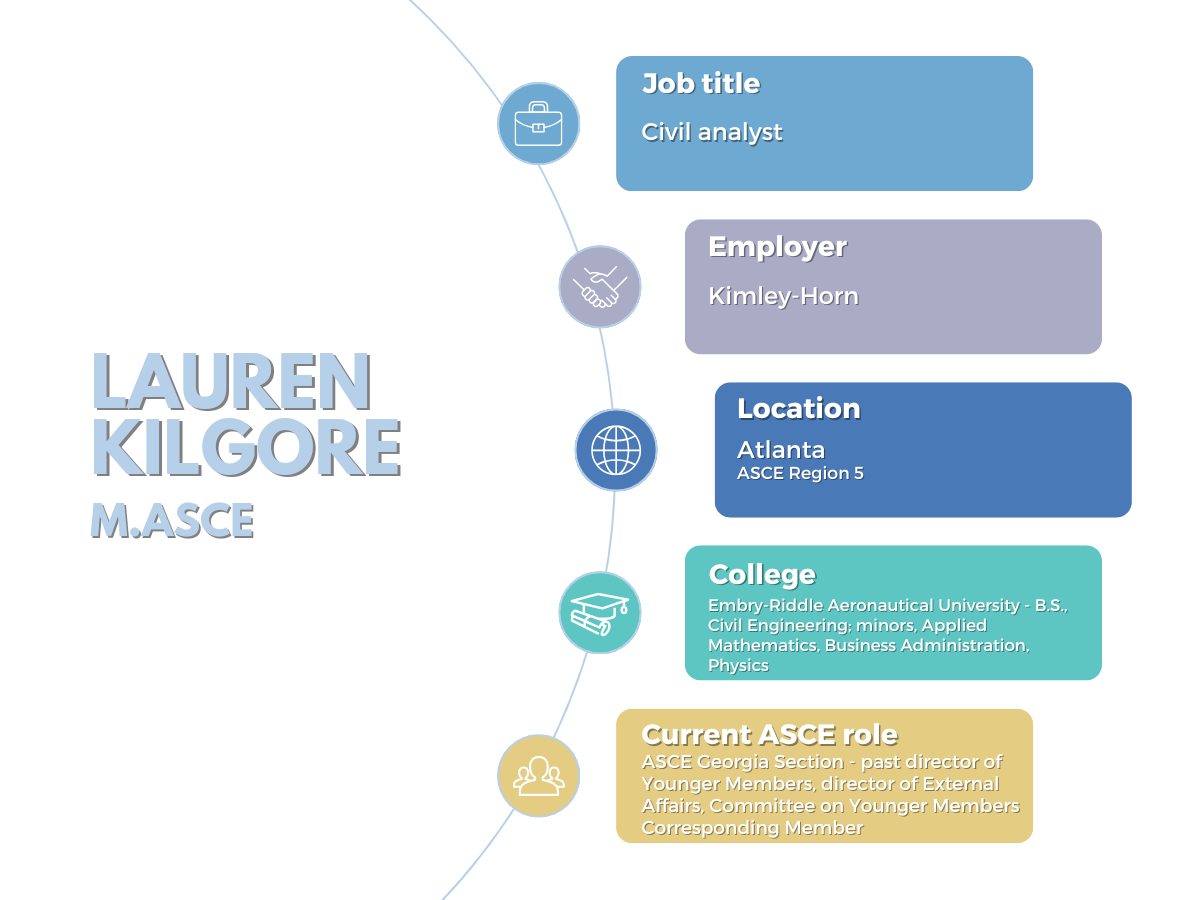
“It was the perfect storm,” said Kilgore, now a civil engineering analyst at Kimley-Horn and director of the ASCE Georgia Section Younger Member Group. “In high school, I went on to do an engineering pathway, and that solidified everything for me.”
Growing up in a single-parent household, Kilgore wanted to make sure she wasn’t putting any extra responsibilities on her mother’s plate. So, despite knowing what she wanted to do, navigating school and the early stages of her career was something she went through on her own.
“That helped me build those problem-solving skills that you need have as an engineer because I was always thinking on the fly,” she said. “If my mom wasn’t there, I'd have to tell myself to go ahead and start my homework. So, I'm always thinking very efficiently, and I’m able to take that to my role.”
Kilgore was able to pull it all off and takes pride in her path. And she wants to make it possible for other civil engineers who might not know exactly where they fit into the profession to thrive.
In her office, Kilgore leans into her warm spirit and networking skills to help others connect with both people and career opportunities. But she didn’t learn these skills from nowhere. They came from years of supporting her two younger brothers and helping them with their math and science homework.
Breaking down lessons from her brothers’ classes challenged Kilgore to look at this material and the way she approaches it from a different perspective. And she believes that it all happened for a reason.
“I was learning how to lead, problem solve, and serve others,” she said. “And those lessons continue to guide me in my career today because I'm using the same concepts, just different applications.”
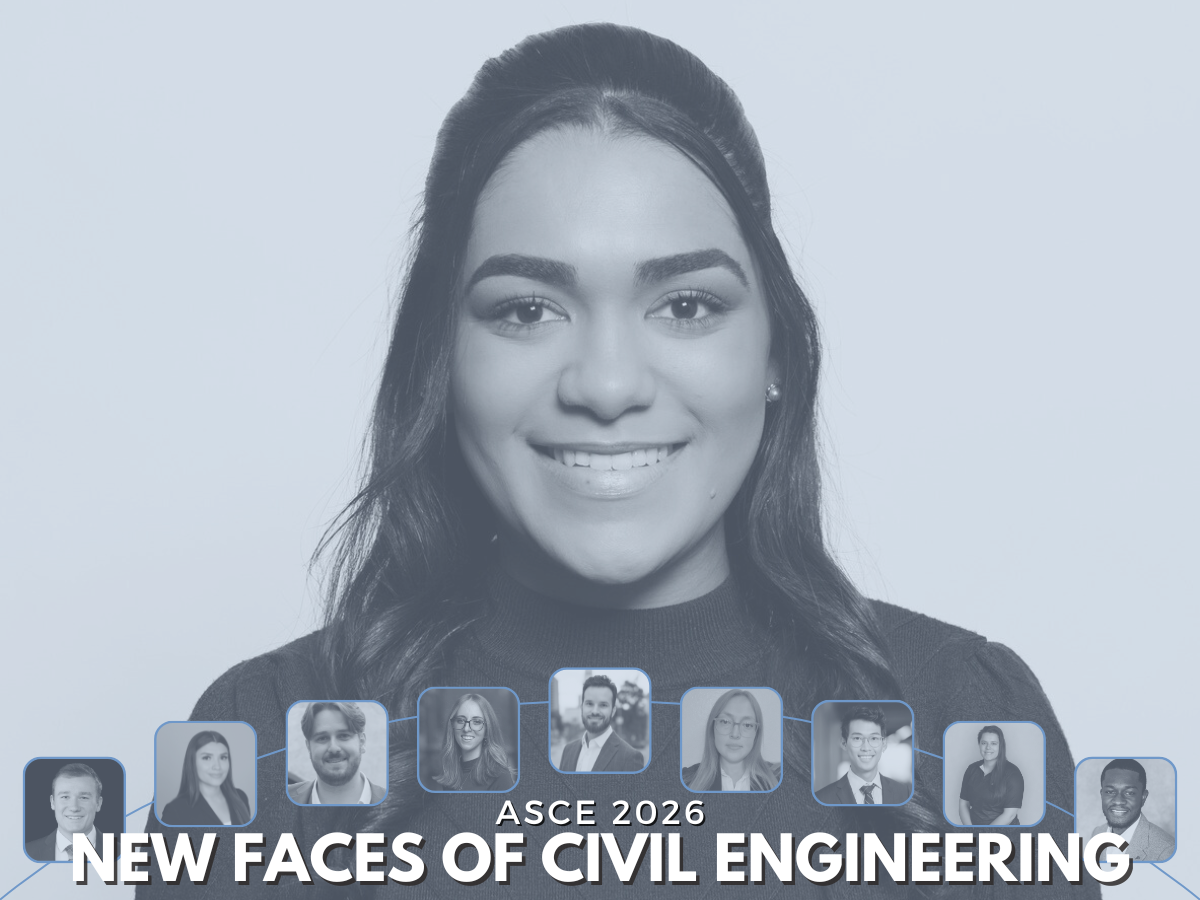
Kilgore has been honored by ASCE as a 2026 New Face of Civil Engineering.
She discussed her story with Civil Engineering Source.
Civil Engineering Source: What is the accomplishment or aspect of your career that you're most proud of so far?
Lauren Kilgore: The biggest thing I’m proud of is simply sticking with it. I’ve wanted to be an engineer since I was six or seven years old, so getting to 27 and actually living out the career I pictured is really meaningful.
I’ve built a career centered on purpose and people. I work on roadway safety projects in the same communities I drive through every day, and it’s rewarding to know the plans I produce will make daily life easier and safer for someone else. Civil engineering is unique in that the work lasts for decades. You get to physically see the impact of what you do.
I also take a lot of pride in the path it took to get here. I came from a very small program and a single-parent household, and I had to figure out much of the process on my own. I had a strong support system behind me, but I still had to navigate it — and I did. Now I try to help others reach that same point of confidence and belonging in the profession.
A lot of my work involves roundabouts in rural Georgia communities. We’ll hear concerns from residents about a dangerous left turn or limited sight distance, and then translate that into plans that ultimately solve the problem. My role is primarily focused on design and coordination, so getting opportunities to meet the people affected by the project is especially meaningful and reminds me why the work matters.
Source: What kind of impact do you hope to make on the profession?
Kilgore: I hope that my lasting impact on the profession is that I've helped shape the industry to be more accessible, more inclusive, and a little bit more human.
I think as engineers, we can get put into a box or a stereotype. And then you meet me at a networking event, and I have an extroverted, loud, huge personality. So, I just want people to know that you don't have necessarily fit the stereotype. There are multiple different personalities out here and we're all like working together toward the same thing.
That being said, sometimes early in my career, I was the only woman going into some of these rooms, but I never let that discourage me because I was going into the room being Lauren – and it's taken me so far.
I’m grateful to be in a position where I can help set the path for the next generation and show them they don’t have to have everything figured out yet – they just have to keep learning what feels right and what doesn’t.
I'm very big about building community and connecting people to each other. I just want to make sure that everybody feels like they belong and that they don't have to fit into a mold because we all bring something valuable to the table.
If even one person feels that I've helped them open doors or get a position, that's the most rewarding piece for me. And that's definitely the personality that I have here in the office.
I would just say that you don't have to fit into a mold and to be your authentic self. You never know where that'll take you.
Source: What are your strategies for building community and inclusivity in your career?
Kilgore: My strategy is always being willing to have a conversation. In the beginning I was very shy, which is probably shocking to anyone who knows me now. You’re going to have awkward interactions, and you’ll probably leave thinking, “Man, I should have gotten that business card,” or “I should have asked about their hobbies.”
But you have to be willing to break the ice. You might feel a little uncomfortable doing it, but you just have to go in and own the room. If I start a conversation with someone, I try to invite another person into it too. I’m really intentional about that.
Source: Can you talk about what it was like taking on a “tutor, planner, and problem-solver role” in your household? How did helping your younger brothers with their schoolwork influence the way you approach your civil engineering career?
Kilgore: I have two younger brothers who mean the world to me and shaped who I am. My 21-year-old brother is a junior in mechanical engineering at Mercer University, and my 14-year-old brother is in eighth grade, so we’re all in very different stages of life.
Going through school myself, I had to figure out a lot of things on my own – navigating school systems, checking my own math work, and making connections without much guidance. Naturally, I became that support system for my brothers too, and I still am. I get FaceTime calls about fluid dynamics, and I help my younger brother with algebra. I’ll review his exams to make sure I’m explaining things in a way that makes sense since the strategies they use now are different from what I learned.
Even after long days at the office, we’ll sit down after his football practice and go over homework. Math really is a language, and no one can take that away from you. It taught me problem-solving, communication, and patience. Sometimes it takes a while to get concepts across, but that experience helped me learn how to meet people where they are.
Now when interns or newer analysts start, I approach them the same way. I break down the task, explain the “why,” and make sure they feel comfortable asking questions. That approach naturally translates into leadership. I take ownership of my role and make sure I truly understand something before passing it along to others. And I was doing that in middle school and high school, helping out wherever just to take anything off of my mom's plate that I could.
Source: Were there any specific moments helping your younger brothers that stick out as very impactful?
Kilgore: My youngest brother is in honors algebra, and he normally doesn’t speak up when he needs help. A few months ago I asked how school went, and I could tell something was off. He had just taken his first exam and didn’t do well. I told him, “If you felt unsure, you could have called me.”
We sat down and really worked through it. I built lessons around what his teacher gave him, and every day we went through the exam together. I had him explain his thought process step by step, then we corrected it and reinforced the concepts. When he turned in his test corrections, he earned the points back and started moving confidently through the next unit.
Later I asked why I hadn’t heard any questions from him, and he said, “No, Lauren, you broke it down and explained it to me. I got it.” He aced the next exam.
That one-on-one, judgment-free time was a breakthrough for both of us. It showed him he was capable, and it showed me how important it is to understand the problem first and explain it in a way that meets someone where they are. I still think about what would have happened if I hadn’t asked him about his day. That moment sticks with me.