Civil engineering is amid a workforce crisis driven by a variety of factors, from the boomer generation retiring, to increasing maintenance needs, to demand for a wide range of new projects from bridges to data centers, renewable energy to water and wastewater needs.
What will help are the promising university students now studying civil engineering, about to enter the professional pipeline, including the 10 honored by ASCE as the 2026 New Faces of Civil Engineering – College.
Get to know each, and what inspires and motivates them to be leaders.
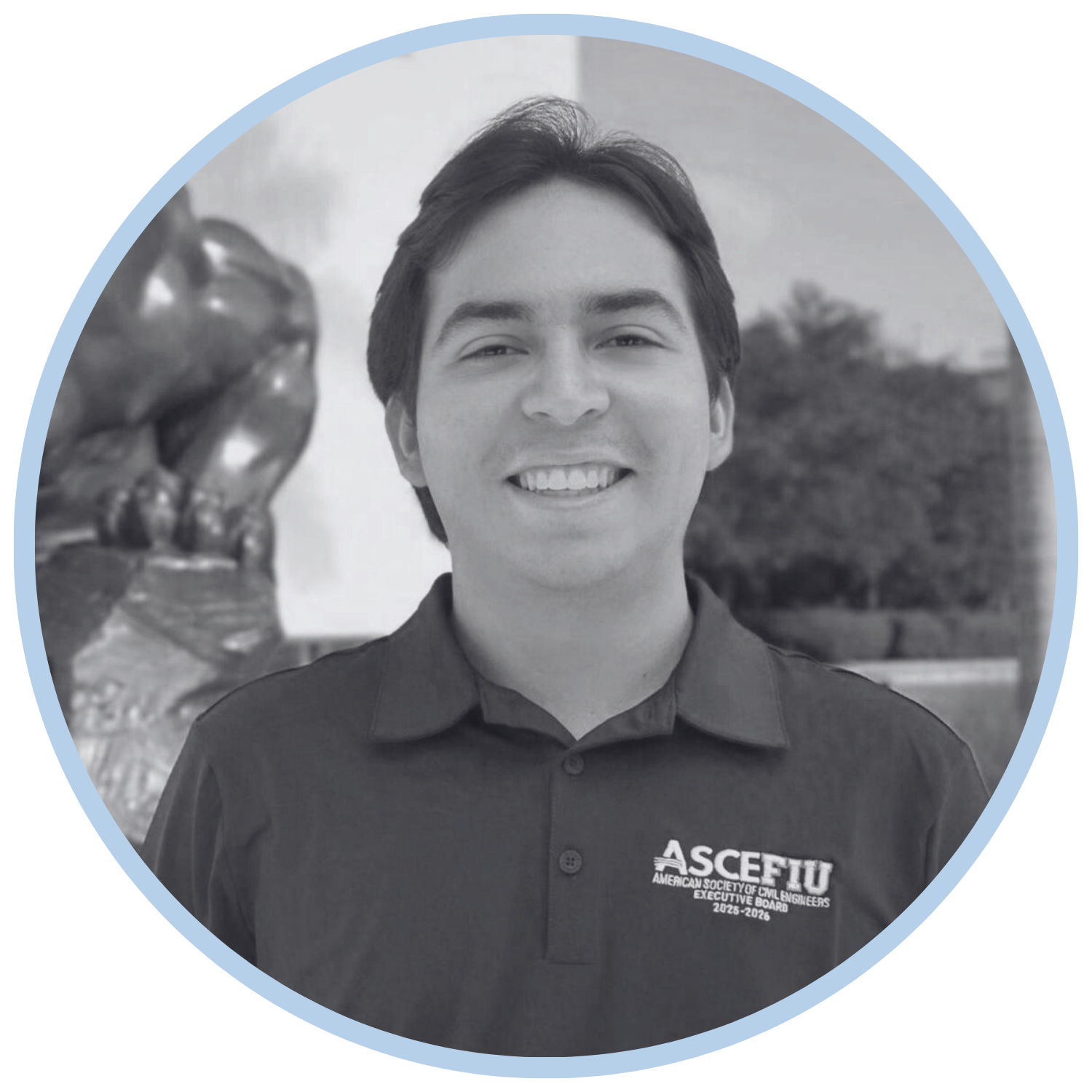
Emilio Castellanos
4th year, Florida International University
“What drives me is knowing how transformative ASCE can be, not just for students, but for the profession itself,” said Emilio Castellanos, a structural engineering major at Florida International University. “My drive and passion convert the weight of responsibility into fuel, and I intend to use it to inspire others to grow.”
Castellanos said he was transformed by ASCE from his first week at FIU, when he met enthusiastic student chapter members at a campus activities open house. He signed on and plunged into a commitment that saw him rise to become student chapter president in his junior year.
Castellanos credited his ASCE involvement with cementing his desire for a career in structural engineering focused on bridges. He’s working as an intern at a Florida firm where he’s currently overseeing the design of a pedestrian bridge in Opa-locka, coordinating with roadway and geotechnical engineers and navigating the approval process.
Civil engineering inspiration came from marveling at the world around him, growing up in San Pedro Sula, Honduras. “I was fascinated by the few tall structures around me, like the 20-story buildings downtown and other symbols of progress. Seeing how infrastructure shaped communities made me want to be part of that impact.”
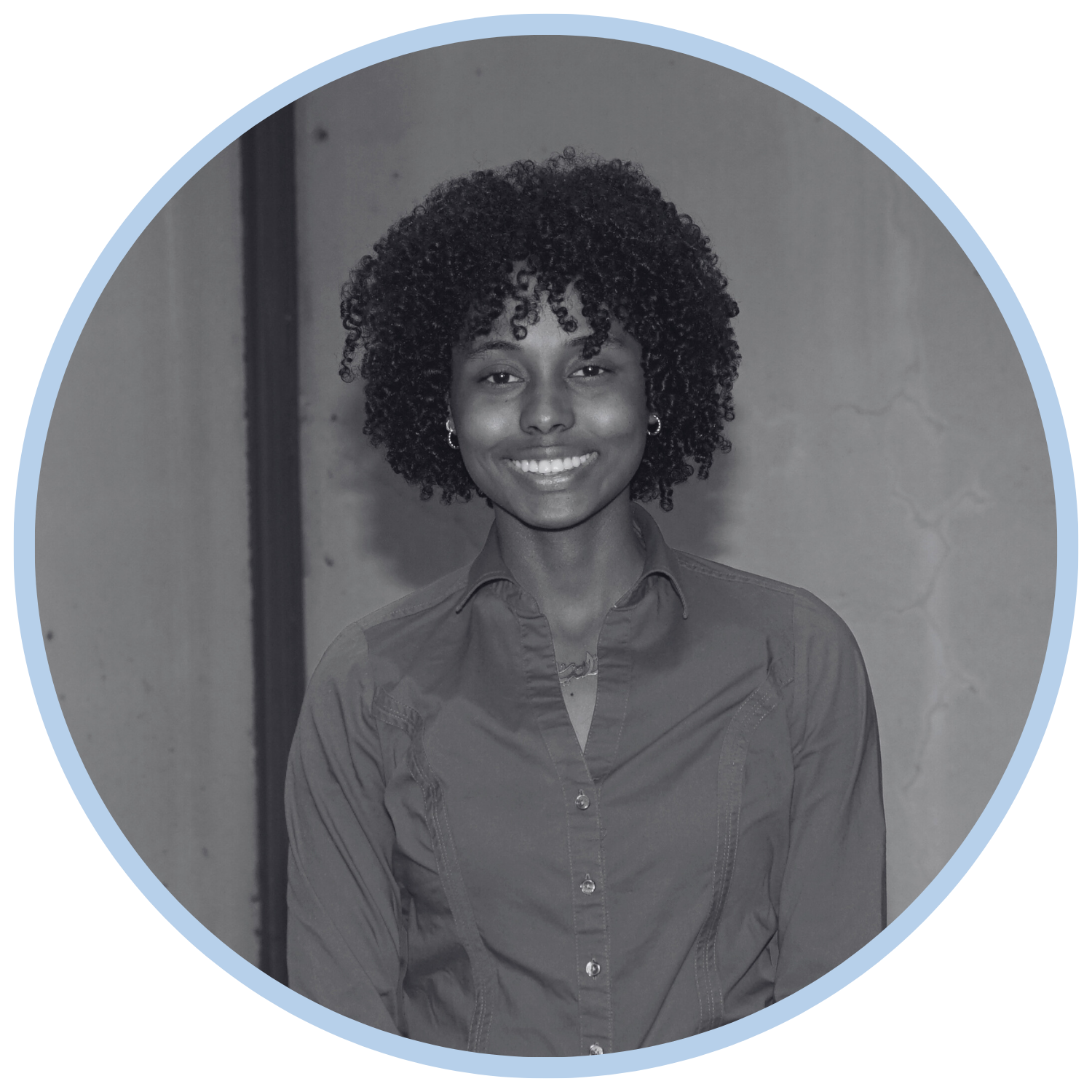
Rania Gomaa-Mersal
5th year, University of California, Los Angeles
A lifelong Los Angeleno, Rania Gomaa-Mersal is on her way to applying her civil engineering skills to serving her hometown. She’s a student worker at the Los Angeles County Department of Public Works while she completes her degree at UCLA.
Gomaa-Mersal is a community college transfer who credited joining a welcoming ASCE student chapter as her springboard to success. As a transfer student, she worried she lacked the time for extracurricular activities.
“I didn’t even know what ASCE was, but that decision ended up being one of the best I’ve made,” she said. “I quickly became deeply involved, and now serve as our surveying team’s project director,” where, among other duties, she manages an Instagram account, @uclasurveying.
The connections made through student chapter activities led to valuable experience as a student engineer at the Port of Los Angeles’s transportation division, which opened the door to her transitional position with the county public works department. “Everyone wants to see LA thrive, so I am excited to be a part of the work to make that goal a reality,” Gomaa-Mersal said.
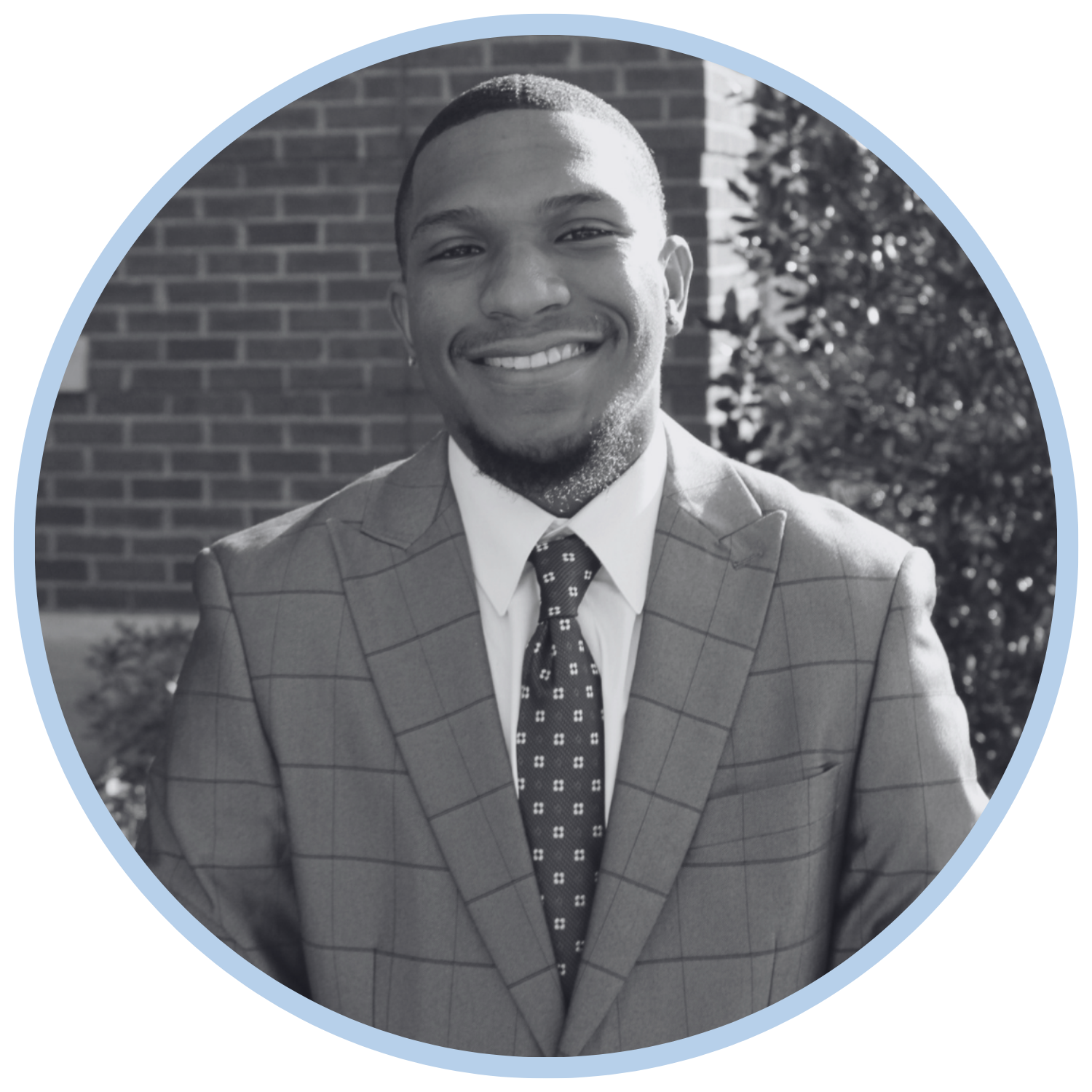
Kelvin Hutchinson
4th year, University of Alabama
Kelvin Hutchinson is grateful to his mother for his career choice. “In elementary school, I took part in STEM-related competitions. I loved building K’nex rollercoasters, playing Minecraft and Roblox, and drawing. It was my mom who noticed these talents and interests and told me she could see me being a civil engineer,” he told ASCE.
That experience left him with a desire to also inspire kids into careers in engineering. Hutchinson serves as president of the University of Alabama’s Ambassadors of the College of Engineering, a group of more than 40 students that organizes and hosts tours for prospective students and their families. “Under my leadership, ACE has expanded outreach across Alabama, visiting high schools in six cities and hosting outreach events where students can explore robotics, snap circuits, and engineering.”
Hutchinson is on a path toward specializing in oil and gas engineering, with two summer internships at the same Houston firm and a third this summer.
Want to get Hutchinson going? Ask him about concrete. “I get excited talking about the innovative technologies surrounding concrete. From 3D concrete printers to pervious concrete – I find them all extremely exciting.”
Iaya Kamber
5th year, Lipscomb University
Did you ever see Prison Break? Not too many TV series have featured a civil engineer as a main character, but that long-running crime drama did – and it served as one inspiration for Iaya Kamber, who’s on her way to a career in water systems and hydraulics.
“The main character, Michael Scofield, was a structural engineer who used his knowledge of design and problem-solving in creative and life-changing ways,” Kamber told ASCE. “That was the first time I saw engineering as something powerful, imaginative, and impactful.”
More serious inspiration came from growing up in the Middle East, hearing her parents recollect times they were displaced by war and had to rebuild. “I saw firsthand how critical infrastructure is to the stability and recovery of communities. Those experiences gave me a deep appreciation for the role engineers play in creating safety, opportunity, and hope.”
Kamber took such inspiration and ran with it. The pursuit of her degree has taken her to places as varied as Guatemala and Iraq, where she has applied her newly earned skills to improve water systems and infrastructure. “Those moments reminded me why I chose civil engineering: to give back.”
Her role as president of Lipscomb’s ASCE student chapter also helps her give back. “As a Muslim woman of color, I am passionate about representation in engineering and dedicated to inspiring the next generation of civil engineers.”

Farooq Azam Khanzada
5th year, University of Louisiana at Lafayette
A passion and conviction for roadway safety motivated Farooq Azam Khanzada’s pursuit of a doctorate in transportation systems at the University of Louisiana at Lafayette.
“I view civil engineering as a platform for societal transformation, one that demands empathy as much as technical skill,” Khanzada told ASCE. “With more than 40,000 people dying on U.S. roadways every year, I believe we, as engineers, carry a moral responsibility to work toward Vision Zero, a future with no traffic fatalities.” His graduate research crunches data to identify high-risk crash patterns, recommend countermeasures, and guide policy interventions.
Khanzada’s background as one of the few Pakistanis on campus led him to take action. “When I arrived at UL Lafayette in 2022, there were only three to five Pakistani students,” so he founded the Pakistan Student Association, and serves now as PSA president.
“I helped create a supportive community that assists new students with cultural adjustment, housing, and academic success,” Khanzada said. This academic year, 40 Pakistani students are PSA members, including the ASCE UL Lafayette student chapter’s vice president. “Watching this community flourish, academically, socially, and professionally, has been one of the most meaningful outcomes of my leadership journey.”
Khanzada is active in the ASCE student chapter as a fundraiser and competed in last year’s ASCE Gulf Coast Symposium.
Suvekshya Niroula
3rd year, Texas State University
For Suvekshya Niroula, the tragedy of a massive earthquake that struck Nepal in 2015 inspired her to be a civil engineer. “In a matter of seconds, centuries of history and infrastructure turned to dust. Roads cracked, buildings collapsed, and thousands of lives were lost, not only because of the earthquake itself, but because much of our infrastructure wasn’t built to withstand it,” she told ASCE.
“It also opened my eyes to the importance of sustainable and resilient engineering, the kind that doesn’t just build for today, but for the future.”
Niroula credited her journey as a junior civil engineering major at Texas State University to the difficult journey her parents took from village to city in Nepal to give their family better opportunities. Today she channels that gratitude into a desire to use civil engineering to help others advance.
Spending the past few years on a campus in south central Texas has given Niroula a unique perspective on transportation and roadway design projects, she said. “I stand as a bridge between the two worlds, one where infrastructure has opened doors to opportunity, and another where the roads are unpaved but lead to the most beautiful views of the Himalayas. My goal as a civil engineer is to help reduce that gap, one project and one journey at a time.
Currently vice president of ASCE’s Texas State student chapter, Niroula is helping to lead teams to compete in upcoming Concrete Canoe and technical paper competitions.

Garret Phipps
4th year, University of Pittsburgh
Raised in a family that’s made its home in an Ohio community of fewer than 1,000 people for several generations, Garret Phipps learned how important mobility is to establishing and reinforcing social bonds. “This seemingly barren patch of Northeast Ohio, however rural, is the town that has breathed life into my soul, energy into my work, and laid the foundation of my future as an engineer,” Phipps told ASCE.
While that might have made his adjustment to a big-city university a bit harder than for most, Phipps wasn’t daunted. On the contrary, he marveled at the urban world of Pittsburgh and his potential to shape such settings through civil engineering and architecture. He’s positioning himself to be a bit of both, plus the construction element.
“Considering myself half-engineer and half-architect – half-artist and half-scientist – I see the value in an architect understanding structural design, a structural engineer fluent in construction methods, and a contractor that values architectural expression,” he said. “Being all three, I hope to not only make strides in my vocation, but also as a community-builder within ASCE.”
Joining Pitt’s ASCE student chapter opened Phipps’ eyes and opened the doors for three transformative internships, including two to Honolulu where he contributed to a $500 million wastewater treatment project. He credited ASCE’s involvement with building his confidence; this year, he’s the chapter president.
Growing up in a rural setting didn’t limit Phipps’ ability to embrace technology and innovation – talents that have only grown at Pitt, in part through research into improved energy sustainability in building information modeling. He's developed tools that will improve risk management and sustainability.

Sarah Saadeh
3rd year, University of California, Berkeley
Regular, spontaneous visits to Disneyland are more than just a great time for Sarah Saadeh; they capture and reinforce her inspirations to be a civil engineer. “My bimonthly visits exploring the world of Disney allow me to witness the application and merging of all my hobbies,” she told ASCE. “One underlying passion is interwoven through them all: civil engineering.”
Taking that Disney spirit with her to the University of California, Berkeley, Saadeh said she’s learned “effective engineering does not just require precision; it demands foresight, coordination, and empathy for the people and processes it affects.”
To Saadeh, that empathy element can be overlooked but is critical. Reinforced by internships in transportation and in construction oversight, “these experiences taught me that the best engineering is not only about solving problems when they occur, but about designing systems where technology, data, and human insight work to prevent them altogether.”
Currently a junior, Saadeh is the ASCE Berkeley student chapter vice president and is in her third year on the concrete canoe team. She credits chapter involvement with her growth as a leader. “ASCE showed me the impact of teamwork, communication, and shared responsibility.” She’s also served the Chi Epsilon chapter as marketing director.
Post-graduation, Saadeh intends to pursue a master’s degree in construction systems and management, with an eye toward a career that encourages innovation and inspires peers to “design systems that don’t just stand, but think, evolve, and belong to the world they serve.”
Robert Serrano
5th year, Arizona State University
When it comes to resilience, Robert Serrano is personal proof. He’s on the verge of a full-time job after graduating with the firm he had a terrific internship with. Not that long ago, he earned a General Equivalency Diploma.
As far back as fifth grade, Serrano knew he wanted to go to college – the problem was the homeschooling style wasn’t for him. After he didn’t earn a high school diploma, Serrano thought college would remain a dream. Then he received the encouragement it took to earn his GED. That led to a community college scholarship and transferring to Arizona State.
“Despite a rocky start in the earlier half of my life, I got it back on track with the help of friends and loved ones,” Serrano told ASCE. “It took a while, but I finally started believing in myself again and embraced the idea that a kid who started with a GED could actually be an engineer.”
At ASU, Serrano gravitated to civil engineering as “it became clear that civil engineering was the ‘social’ engineering. People were always plugged in, wanting to collaborate, and open to helping people.”
Adjusting to his workload was a challenge that kept Serrano from joining the ASCE student chapter until his second year, but once he did, he said it proved to be another springboard, one that prompted a change to his current specialty.
“I got my last internship thanks to the student chapter and fell in love with the work. I had a lot of people try to dissuade me from making the [specialty] change for a multitude of reasons. However, I’m glad I did,” as it has since resulted in a full-time offer, he said.

Athena Zapantis
3rd year, Johns Hopkins University
From her arrival at Johns Hopkins her freshman year, Athena Zapantis wasn’t one to shirk from a challenge. She was eager to connect with students who also enjoyed exploring the cutting edge of academic research, but the civil engineering department lacked anything organized.
That first year, Zapantis launched the Civil and Systems Engineering Reading Group and continues to lead regular meetings to read and discuss research in energy systems, transportation planning, and engineering ethics. “I have brought in my mentor from ASCE Mentor Match as a speaker, as well as faculty members from various departments to speak on their own research.”
Grateful for the benefits of mentoring from professional engineers and upper-level students, Zapantis herself now offers support to younger students through the JHU student chapter, including tutoring in lower-level classes and supporting new students on the sustainable solutions and steel bridge teams. “Mentoring young students has touched my life in a very meaningful way,” she said.
An internship mentor helped Zapantis believe in herself. She “was an engineer-in-training who looks like me. As a brown mixed woman in engineering, I know that I am not the first image that comes to mind for people when they think of an engineer. But seeing her expertise be celebrated made me confident that I, too, can be a valued, problem-solving team member.”
Zapantis is looking ahead to working in transportation engineering after a successful internship with AECOM in support of the Bay Area Rapid Transit District. “I made original design comments that caught mistakes in structural engineering design and caught drafting errors that would have affected constructability.”
Get to know ASCE’s 10 New Faces of Civil Engineering – Professional for 2026.