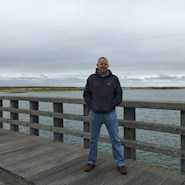
My friend, Seth, participated in an extreme triathlon in Utah. This competitive, three-part race featured a swim, a bike ride, and a concluding foot race. It was like a regular triathlon, except extreme. It began with a 2.4-mile swim in the dark, in a cold mountain reservoir. Next, the 100-mile bike ride was along beautiful mountain roads, but there was more than 10,000 feet of elevation pedaling up. If you made it that far, there was a marathon-length 26.2-mile run up and down steep slopes.
It was definitely an extreme athletic event, and it would be difficult to complete such a race without good encouragement. Fortunately, there were some nice bridges along the way.
The official name of the race was the “Starvation Xtreme Triathlon,” and it was held last August 2. That interesting name provides a hint about the challenges posed to competitors.
Before sunrise, Seth suited up and entered the 40-degree-plus waters of Jordanelle Reservoir at 5 a.m. Because the water was so cold, Seth had to swim for the first 10 minutes with his face out of the water, resulting in some awkward strokes. He felt panic-stricken, not a great start. Fortunately, he was able to use some breathing techniques to help calm down and eventually swim with more consistency. Leaving Jordanelle Reservoir hours later, he was relieved to see his friends Matt and Zack cheering from the dock. When he climbed out of the water, there was a purplish haze still in the air from the sunrise.
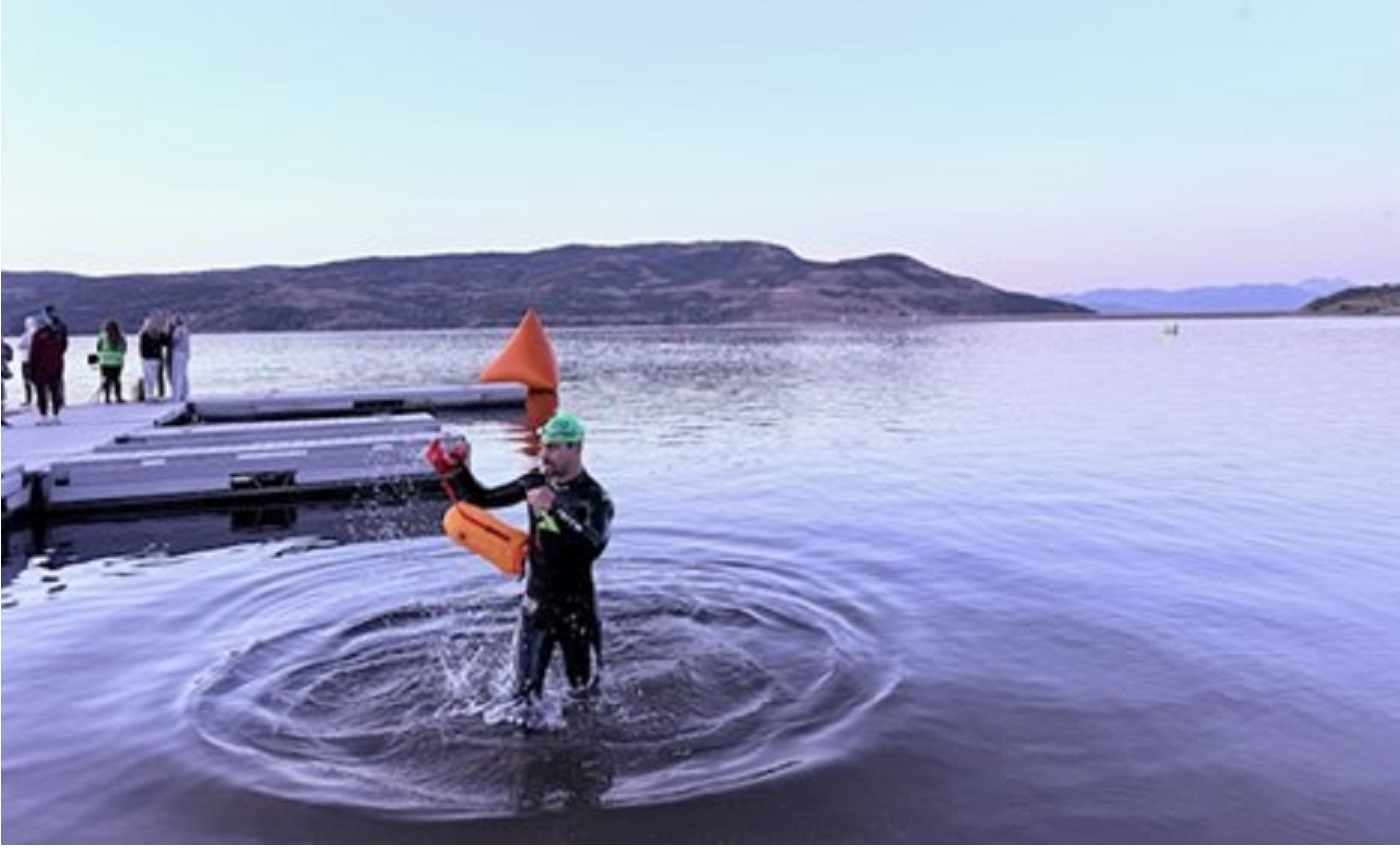 Seth Fineman
Next up, the bike ride. To prepare, Matt helped pull off Seth’s wetsuit as he was on his back. To save transition time, Seth wore a triathlon suit underneath for the bike ride and later run.
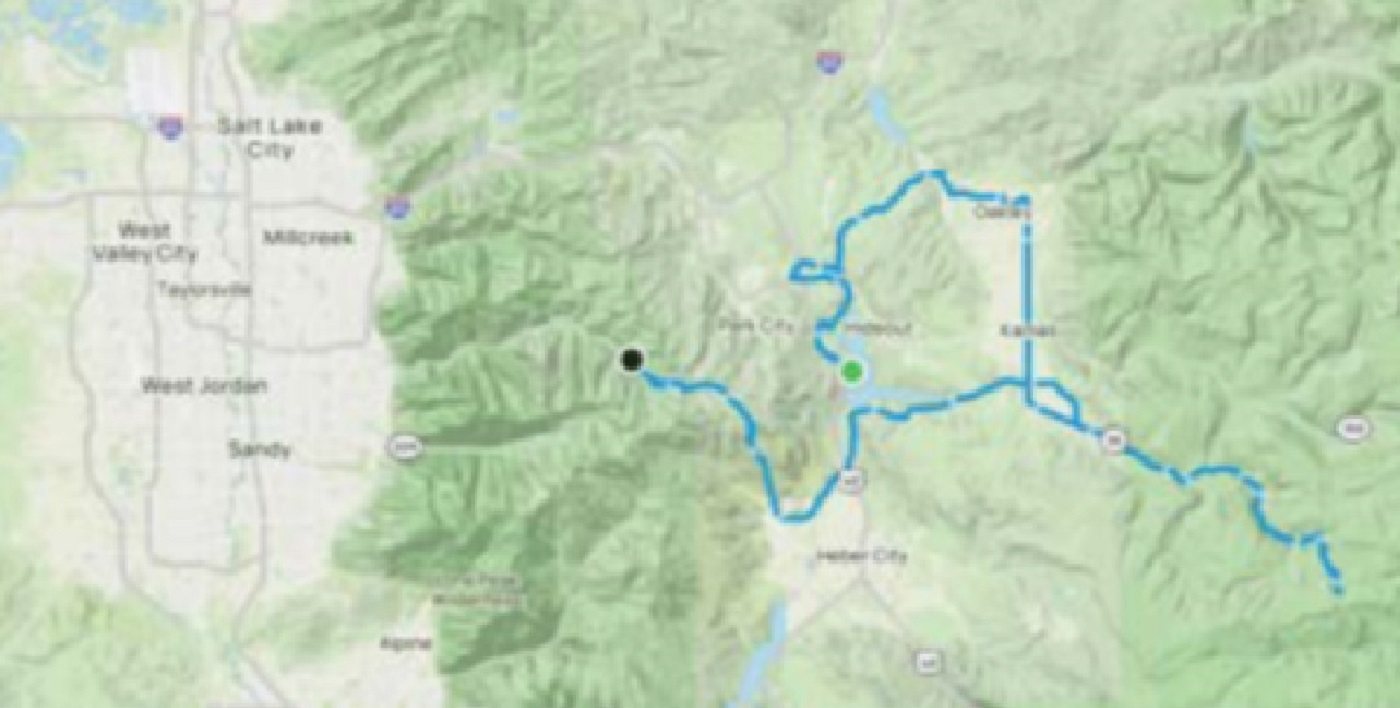 Starvation: An Extreme Triathlon Race Manual
Up on his bike, fortunately, there was a climb straight out of the gates to help him warm up and break the chill. Unfortunately, even with this climb, Seth was still shivering for the first 30 minutes of biking. But that would change. In Utah, in August, air temperatures would rise to the mid-90s.
It has been said (by me) that it helps to compete in an Ironman triathlon when there are nice and encouraging bridges along the route. This is especially true for extreme triathlons.
The bike route from the lake connected to Richardson Flats Road. Early in the ride, Seth encountered his first bridges: U.S. Highway 189 over Richardson Flats Road, in Park City. The twin pair of bridges featured prestressed concrete bulb-T structures spanning about 100 feet. The bridges provided some nice shade in the increasing heat of the day, and Seth undoubtedly admired how UDOT designed slanted abutments, providing a more attractive crossing elevation than the standard vertical walls. It has been said (also by me) that seeing aesthetic bridge details tends to improve overall triathlon performance.
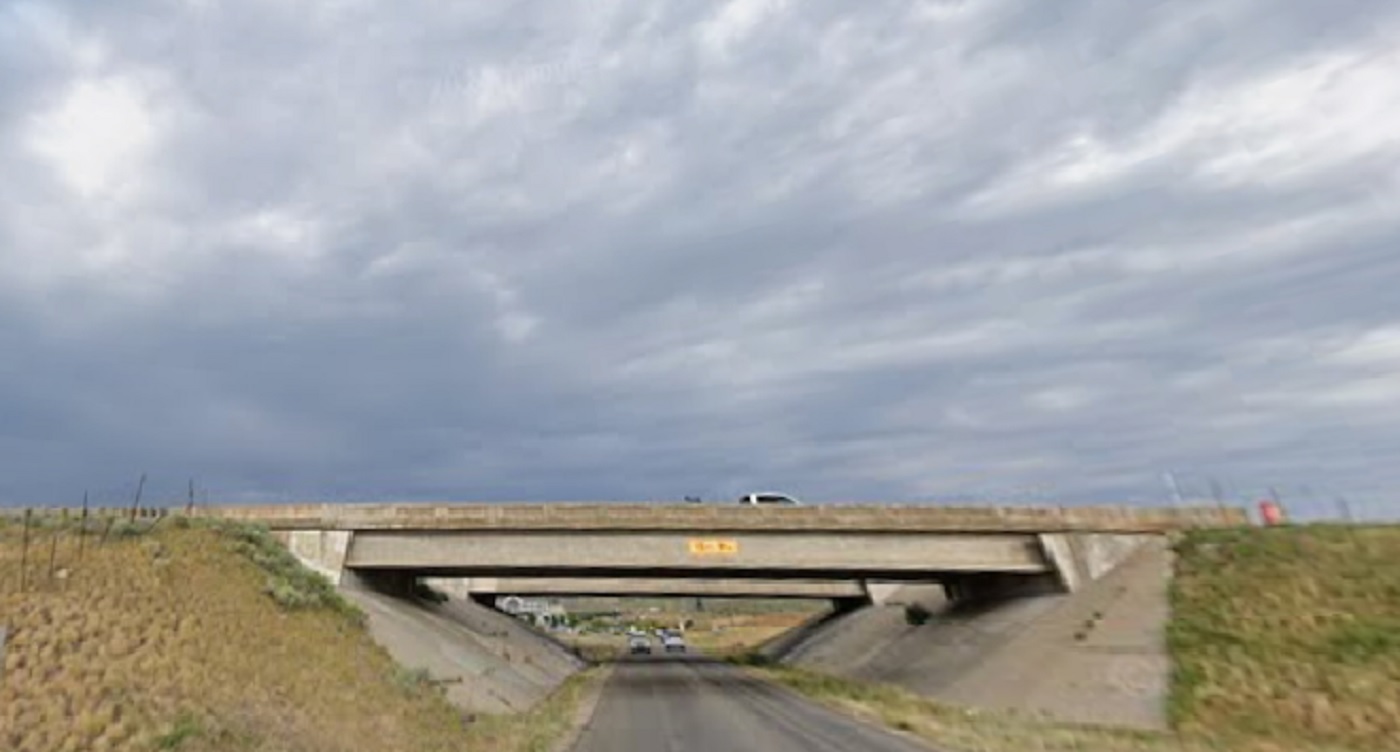 Google Maps
Next up was a turn onto Utah Route 248 and a long and gradual climb up the north side of the reservoir. The ride featured some spectacular roads and views. Route 248 rose up to a bluff, and bikers were treated to views of the reservoir and the dry canyonlands and mountains beyond.
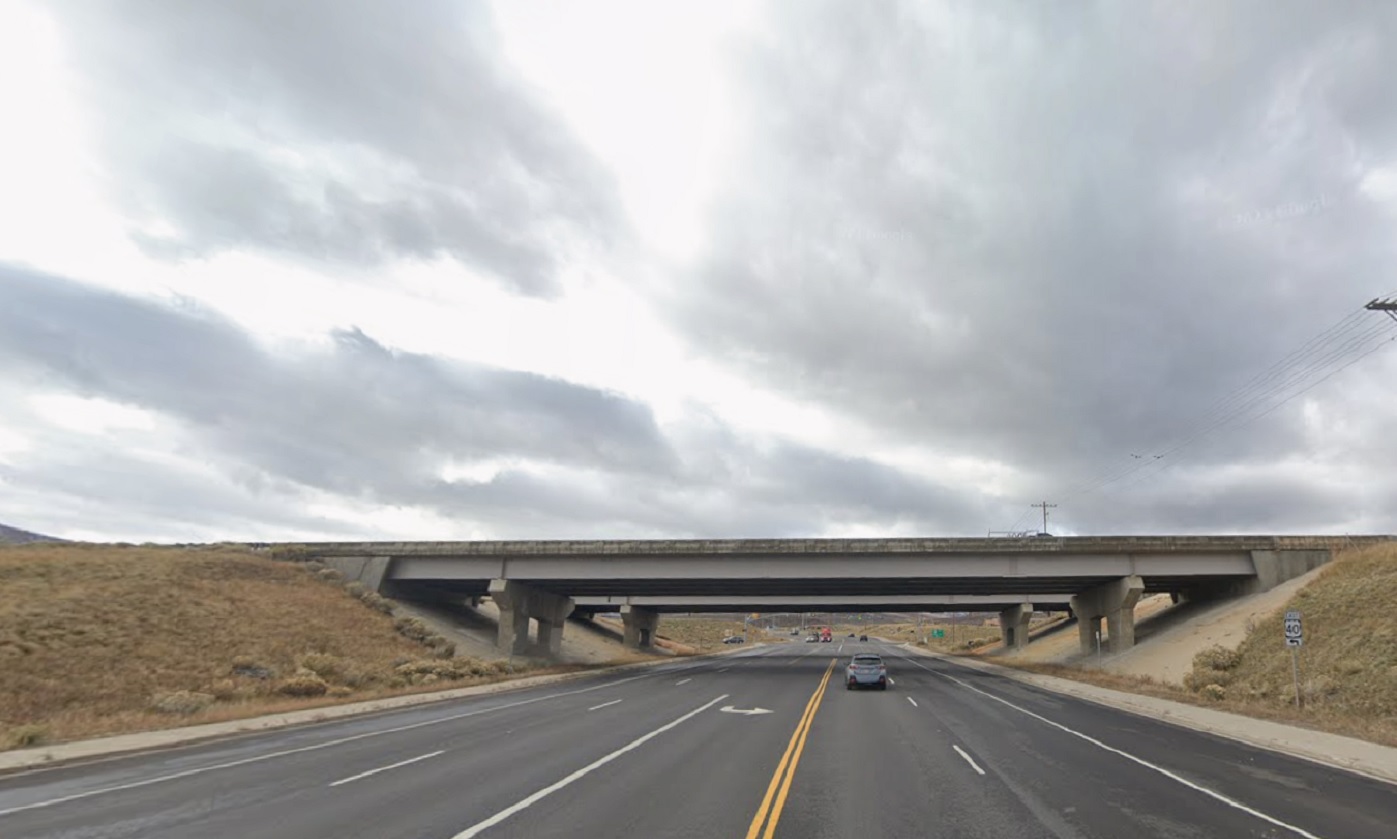
To get to the rise, Seth was treated to a pleasant ride under U.S. Highway 189 over Route 248. This crossing featured a pair of three-span steel composite concrete girder bridges. Seth probably admired the sleek detailing of the bridges and how the colors fit nicely in the dry landscape. Although he may have been curious about how the back spans seemed to be a bit short and maybe a bit out of proportion to the main span. It was not clear from the view (and he was whizzing by at 25 mph anyway) that the back abutments possibly were not on simple bearings but maybe were connected to integral abutments to help resist uplift forces.
 Google Maps
With a long rise up the north side of the reservoir, the bike race and Seth started to heat up. Seth pedaled hard past vacation homes with views of the reservoir and dry ridges.
At one point when he looked back, he did a double take and almost swerved off his bike. He saw a motorcade of over 200 motorcycles and classic cars with a full police escort. As they approached, the roar of their engines grew louder. He pumped and accelerated as much as he could as he was swallowed by the sound of sirens melded with the roar of chrome mufflers.
 Google Maps
Every second counts in an Ironman race, and maintaining a dynamic riding posture and steady pace is key to biking success. Seth crested the hill just as the last of the gas-powered Harleys left him in the dust. He greatly appreciated the relative quiet, but it was a momentary reprieve. On the other side of the hill, a stiff wind buffeted him. He did his best to maintain a tucked dynamic riding posture, but the crosswinds coming off the reservoir nearly sent him flying, and not in a good way. Fortunately, he had spent enough time training on his tri-bike to have a good feel for its performance and how to remain stable in adverse conditions. He stayed upright and did not lose any time.
In the middle of the bike course, riders crossed different parts of Park City. This section of the course was relatively flat. It must have been a relief after the thousands of feet of uphill mountain riding and the tough winds of the dry lands. In urban terrain, passing by smoothie joints and snack shops may have been a diversion. But at this point, Seth was riding in the zone, and the only thing that mattered (and that he could see) was the road ahead.
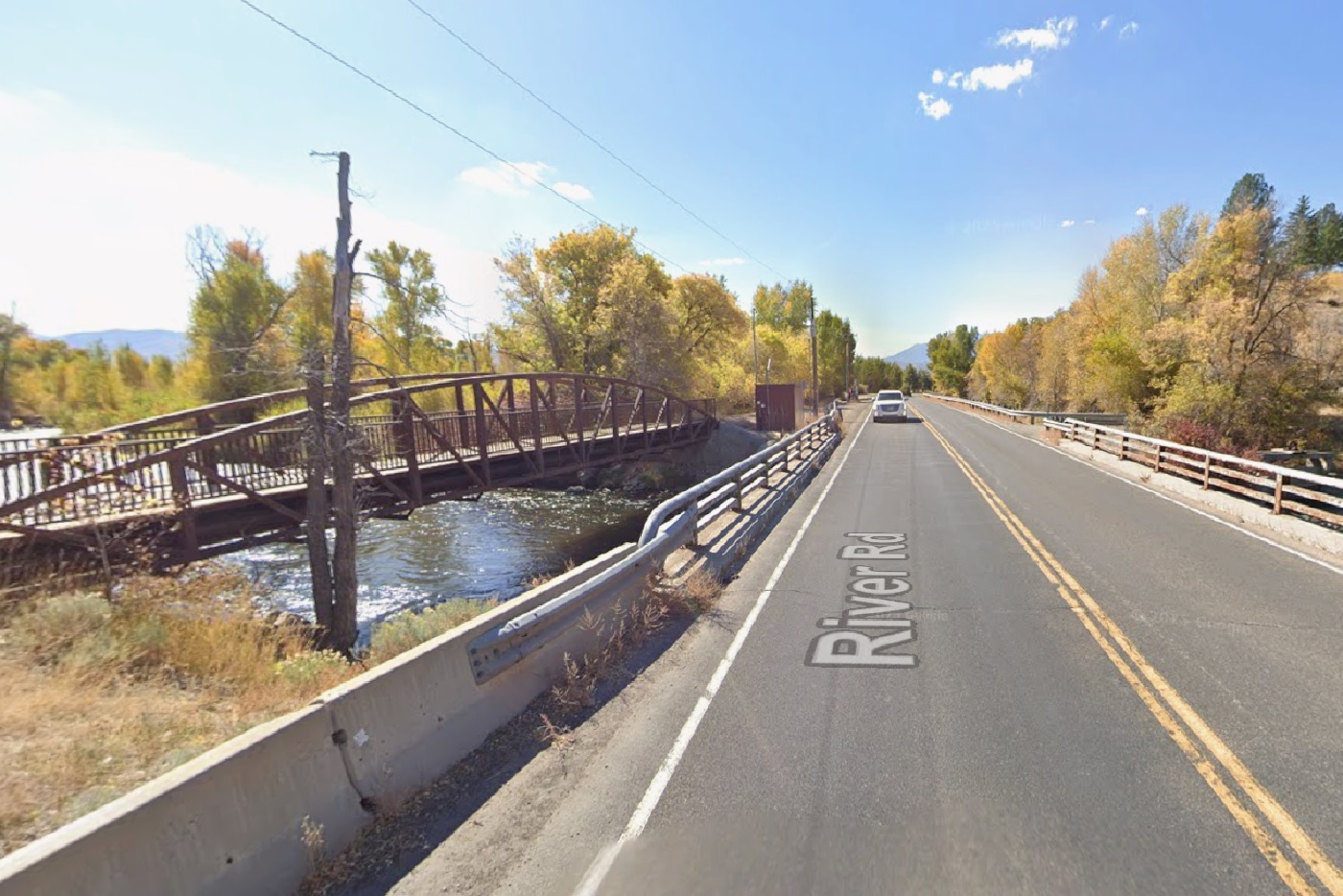
By then, the sun was high, and temperatures soared into the 90s. A race that had started hours ago, swimming in an icy cold reservoir, had changed to an overheated bike ride on searing blacktop roads. The earlier cold now seemed like a distant dream.But there was some good news ahead: another nice bridge! At one point, River Road in Park City crossed the Provo River. An adjacent pedestrian path crossed the river on a prefabricated bowstring truss. Seth found it interesting that in Utah, prefabricated truss bridges were used for pedestrian crossings. This was like the approach used for bike and pedestrian trails around New England.
 Google Maps
After the brief respite in Park City, the last nine miles of the bike course featured another 4,000 feet of climbing. This rise, with an average grade of 8.5% and some sections as ridiculously steep as 22%, went up and over Guardsman Pass. That was challenging.
The ride up was tough, but what was really challenging was the descent. Seth topped out at 55 miles an hour on the backside of the Pass. He was also fortunate to have a support crew that cleared a herd of cattle out of the road before he zoomed by.
After 7 hours and 18 minutes of biking, shivering the first 30 minutes, sweating the rest, climbing tall mountains and zooming down the other sides, Seth was finally finished. He had completed the course! He was done and could relax. There was nothing left to do.
Except for the 26.2-mile run, which was next.
Postscript/Notes
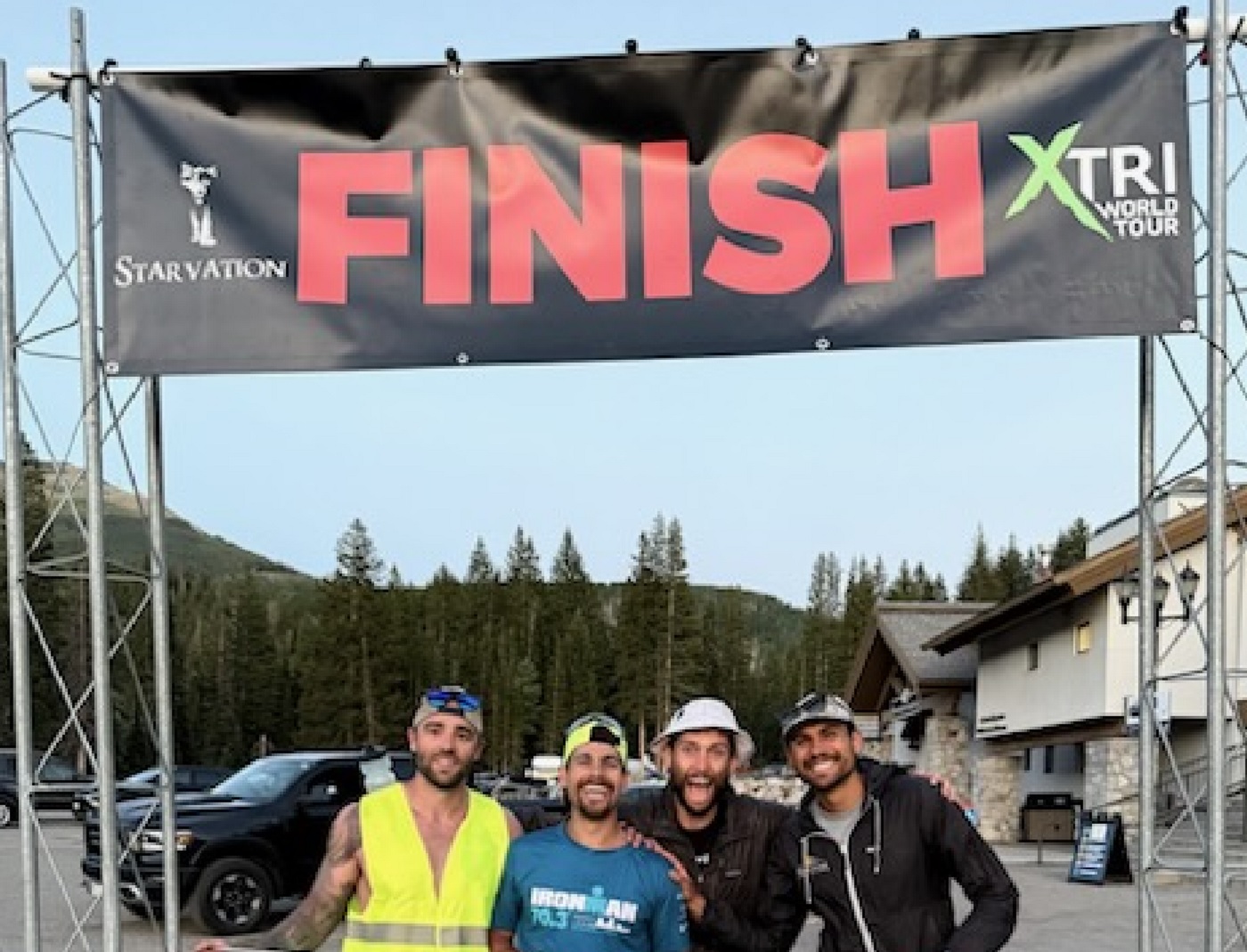
Seth placed 10th overall, a great accomplishment. His friend and coach, Lance, came in first. After the race, he and his friends had Indian food for dinner. Maybe this was not the best selection for food after a day-long extreme triathlon.
It is possible that Seth, who is not an engineer, did not appreciate the bridges along the way as much as I did. Therefore, some of the descriptions above expressing his bridge appreciation may have been a slight projection on my part, and not necessarily reflective of Seth’s experience while riding.
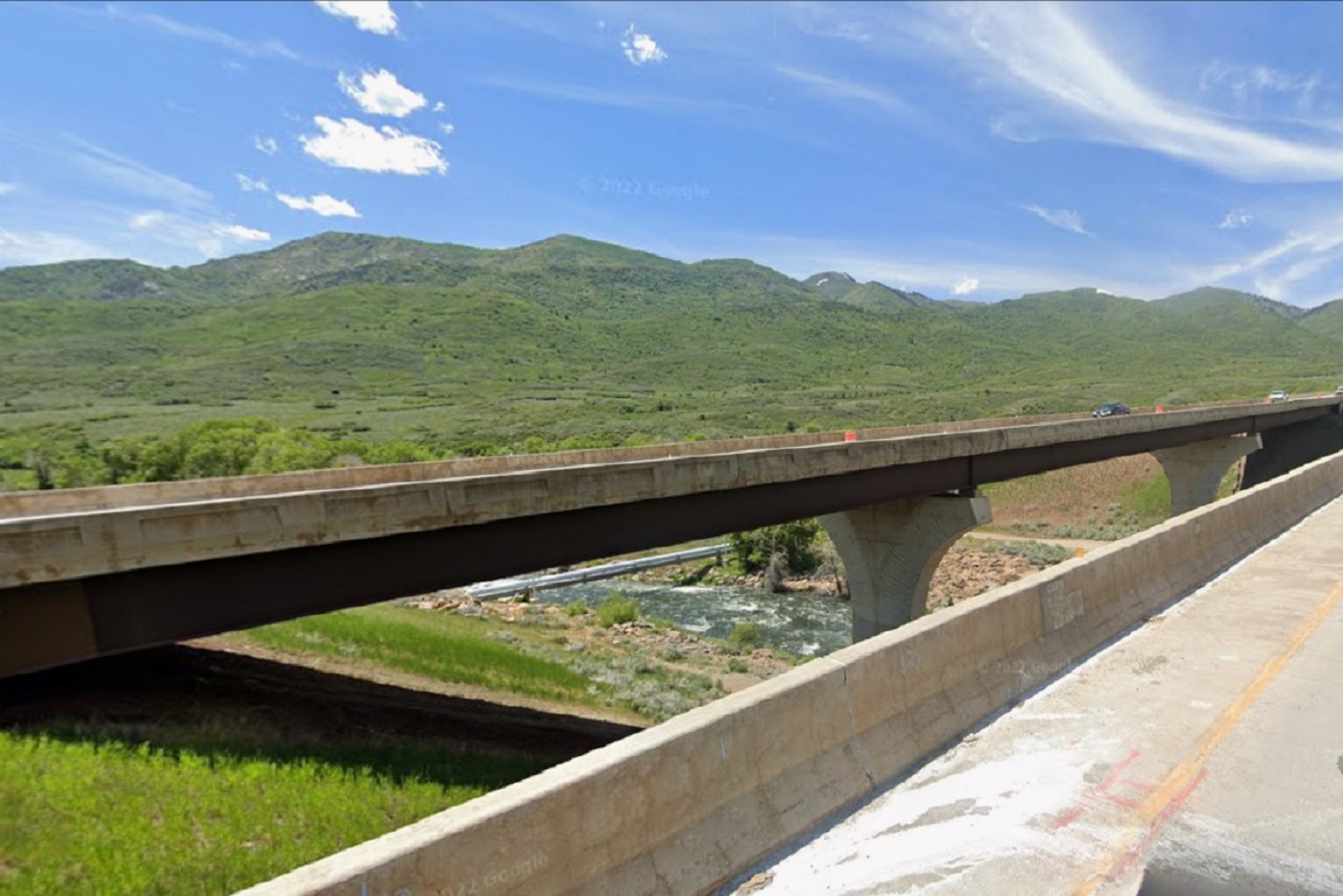
Interestingly, the best bridge in the area was not directly on the route but about four miles off it. It is U.S. Route 189 over the Provo River. This crossing features a sleek pair of three-span steel-composite concrete stringer bridges with nicely shaped, fluted hammerhead piers.
 Google Maps
 Seth Fineman