
Safety First is a regular series for the Civil Engineering Source, written by members of the Construction Institute Safety Committee to highlight safety topics of critical importance to practicing engineers.
When considering safety, design engineers primarily focus on the factor of safety used in calculations to account for the risk associated with a given material and limit state. For example, the factor of safety for steel yielding is 1.67, and 2.00 for rupture. These values are derived from studies relating to the type of failure (ductile vs. brittle) and the probability of them occurring.
In simplest terms, the ultimate load capacity of rupturing of a steel member is at least twice as much as the allowable load.
The responsibility of jobsite safety is typically delegated by the owner through the design team and to the contractor and their subcontractors. Here, safety is less a defined amount used in calculations and rather an attitude that can have a profound effect on the success or failure of the entire operation. How safety is perceived and valued throughout the project is determined by leadership and the environment they foster. How, therefore, can design engineers reshape their objective understanding of safety to better support the culture on site? Using a systems-thinking approach helps to reconcile these two different approaches, better integrating safety into practice.
Working from the outside in to understand complex systems, the environmental factors that determine the function or dysfunction of the collective parts can now be identified. Examining one part by itself does not tell the observer anything about its place in the total system.
An example from history
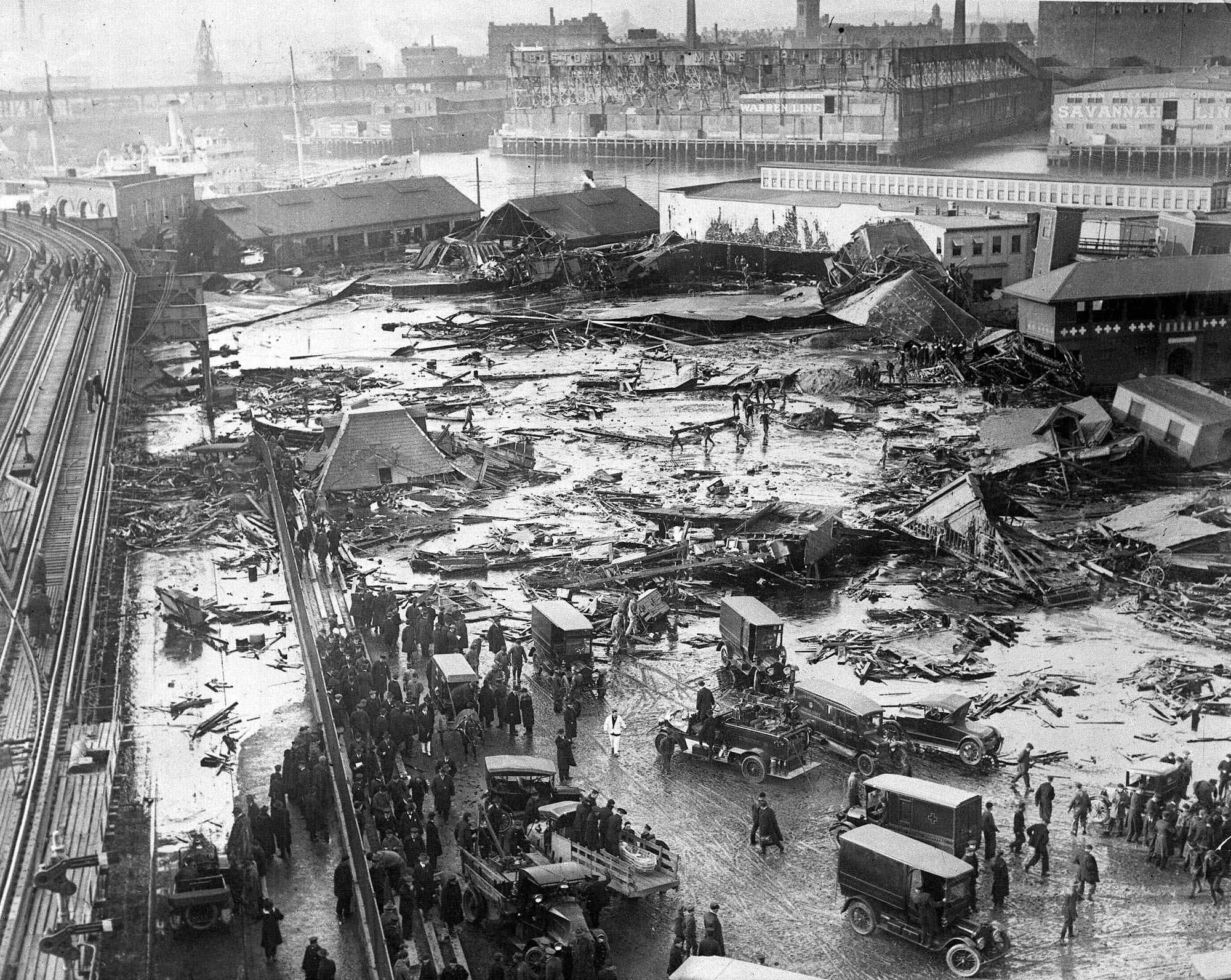
One historic case of note that demonstrates what can go wrong due to systematic failure is the great Boston molasses flood of 1919. On Jan. 15 of that year, a molasses tank collapsed, flooding the surrounding neighborhood and drowning 21 people, including two children. How did so much of the sticky substance end up there anyway?
Early in the 20th century, Boston was still a major hub for sugar processing. In 1915, the need for a massive tank to store molasses prior to processing was driven by the demand for alcohol-based munitions leading up to World War I. By 1919, there was the last rush to distill rum before Prohibition took effect. The tank was built in the North End, a community of primarily Italian immigrants. It was 50 feet tall and 90 feet in diameter and intended to hold 2.3 million gallons of molasses.
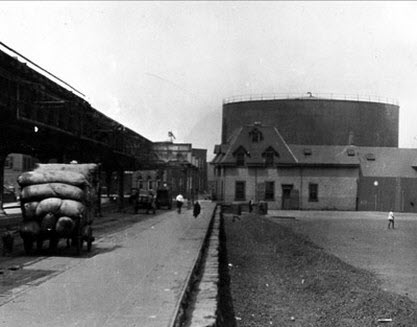
Construction of the tank was rushed to keep up with the schedule of expected shipments. One fatality during construction caused a half-day shutdown and caused workers who had witnessed it to slow their progress, much to the dismay of ownership. The tank leaked and creaked throughout its three years of use. Again and again, the concerns of facility workers and the neighborhood about the safety of the tank were dismissed by the owner. Repairs were slapdash and the tank was painted brown to conceal the leaks. The environment perpetuated by ownership was one of fear. The owner feared missing deadlines. The workers feared retribution for expressing their worries.
The owner did specify a factor of safety of 3 for the design of the tank. However, demand for steel during the war resulted in the fabricator using thinner plate than was specified. After the disaster, it was determined that the actual safety factor was about 1.8.
At no point during or after construction did the owners engage an architect, engineer, or inspector to evaluate the as-built condition of the tank. The argument from the fabricator was made that the thickness of the material was within tolerance. Metal fatigue – as the tank was filled and emptied over the years – was one contributing cause of the collapse. But the probable immediate catalyst was truly environmental. The weather in Boston had been relatively mild the day prior, followed by a quick temperature drop below freezing. The tank had just been topped off with molasses still warm from its journey from the Caribbean. The resulting mix likely released gases due to fermentation within the tank. The causes of the disaster were thoroughly examined in the courtroom proceedings that followed, setting many legal precedents that remain to this day.
Was it the thickness of the steel used to build the tank that resulted in the failure? Looking at the physical component alone will not tell the whole story. Only within the broader context does it become apparent that political and economic climate played a major role in the tank’s demise.
In an ideal world, the factor of safety would have been 4 and tolerance would have been minimized. Indeed, our modern computer models reflect an ideal condition for our structures, where everything is square and fits within a sixteenth of an inch. The public may ask, How safe is this structure? Why can’t we provide an answer to the thousandths place?
The shared building information modeling approach allows designers from multiple disciplines to work in the same virtual space to resolve clashes. Using this model for structural design can be problematic as it needs to be simplified for meaningful results. Deflections and stresses need to be calculated as realistic, yet justified by a conservative approach. Hence, supports are either designated as pins, rollers, or fixed. Contractors need to account for tolerance in their shop and field work. This often appears in the form of slotted holes or pieces cut short to ensure fit-up.
An idealized structure, robust in design and static in performance, is not likely to be constructible. It is the flexing of the materials and the accommodations made by the builder that help structures get erected. In reality, it is the imperfections of the materials and workmanship and the tolerance that accounts for them that aids construction and improves performance throughout the lifetime of the structure. Perfect fit-up would likely result in catastrophic failure as thermal expansion and contraction tear components apart. The factor of safety can be alternately defined as a threshold of acceptable risk due to cumulative tolerances, or, put another way, how much slop in the system is too much.
Creating a culture of safety
The economic and political pressures faced by ownership are real. The challenge is balancing those interests with safety. Designers, as an intermediary between builders and owners, are in a unique position to advocate that safety remains a primary interest to stakeholders. To do so, engineers are encouraged to think and ask about the overall goals of the project. How can engineers anticipate construction challenges and remain open to feedback from contractors? What will it take for everyone within and around the site to remain safe each day?
A culture of safety throughout the engineering practice will demonstrate its value to owners. Safe construction is fast, because it considers the needs of the workers, who won’t be spending their time worrying about the next hazard. Prevention through design is applicable throughout the lifetime of the structure, often making it easier to maintain and dismantle. Job sites are typically surrounded by people going about their day. It is with this broader perspective that engineers should view their responsibility for understanding the application of factors of safety and incorporating features that promote a safe environment.
Going a step further, it is critical to understand that systems can be both physical and social and that the tolerance discussed here is the mechanism that makes each aspect function. Gears with no tolerance will seize and cannot turn. Gears with too much tolerance will fly off uncontrollably. In this respect, engineers should be confident in stepping into leadership roles knowing that their understanding of physical structures can help them navigate social ones.
Chad T. Morrison, P.E., F.ASCE, serves as managing engineer for Pare Corporation within the civil division and has more than 24 years of structural engineering experience. Starting early in his career as a miscellaneous steel detailer and quickly shifting to engineering, he earned his master's degree in civil and environmental engineering from the University of Rhode Island. For most of his career, Morrison has practiced as a delegated designer for miscellaneous steel and structural steel connections. Beyond standard shear or moment connections, Morrison has been involved with furnishing creative solutions for historic retrofits, where the design criteria can be very constrained. He is recognized among peers for designs that consider not only the safety of the public, but also the workers building the structure. Readers can email Chad at [email protected].
