 Johns Hopkins University
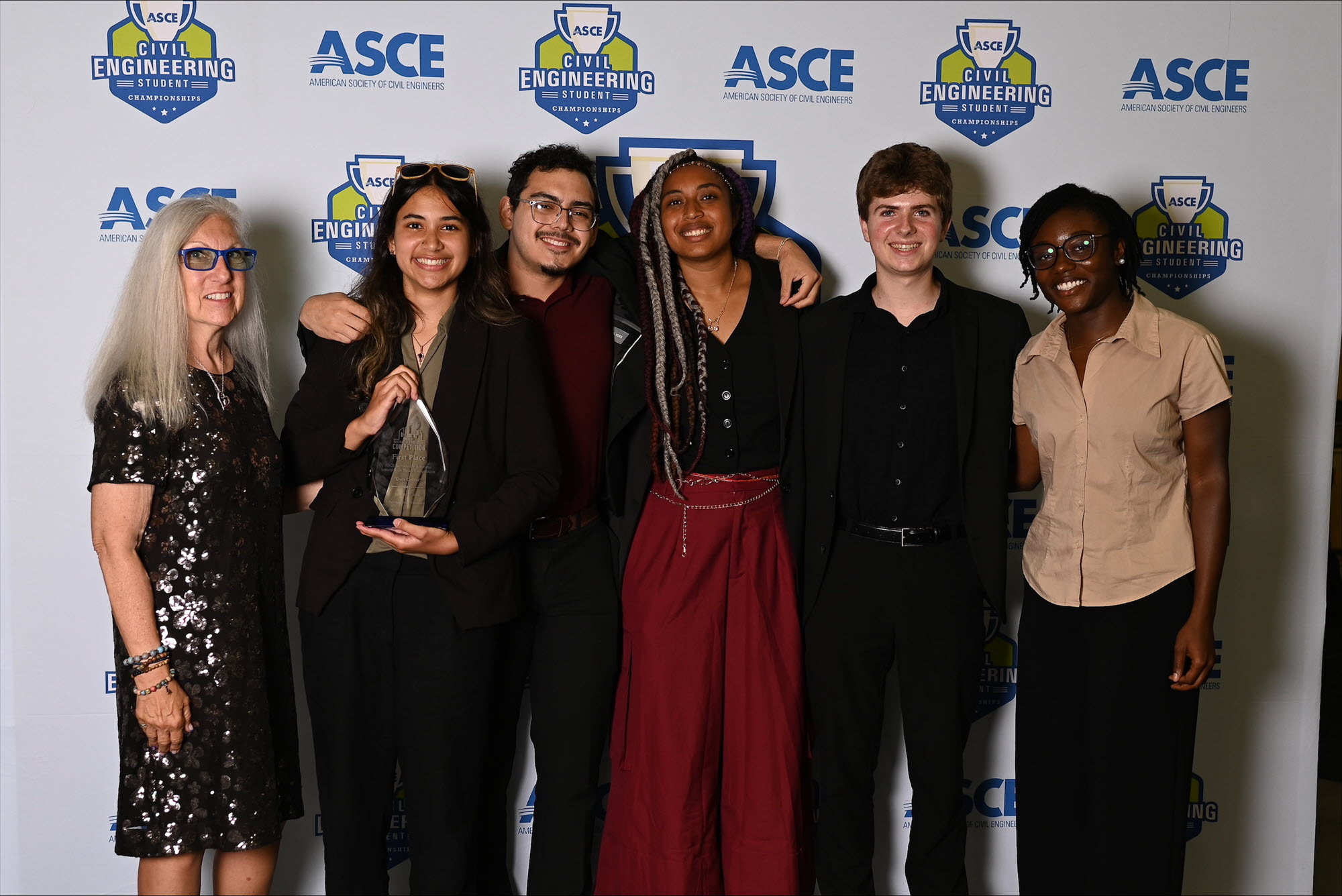
 Johns Hopkins University secured the top spot at the 2026 ASCE Sustainable Solutions Competition finals.
Athena Zapantis, co-captain of the team and a 2026 Collegiate New Face of Civil Engineering, sees interdisciplinary collaboration as a major factor in her team’s success.
And with an unusually small civil engineering department at Johns Hopkins – only 10 students in Zapantis’ graduating class – the challenge couldn’t have been done without embracing a wide range of specialties.
In fact, her co-captain, Adeola Ojuade, was a computer science major. And the team also had representation from environmental science, psychology, electrical engineering, environmental engineering, and systems engineering majors.
Each year, the ASCE Civil Engineering Student Championships bring together qualifying student teams from around the world to compete in the finals of the sustainable solutions, concrete canoe, and surveying competitions.
The annual ASCE Sustainable Solutions event invites teams to design sustainable infrastructure solutions. This year’s challenge asked competitors to design a new, sustainable data center for a location of their choice.
Teams focused on cooling and water demands, on-site electric generation, and system resiliency. The Institute for Sustainable Infrastructure’s Envision was used as the primary sustainability framework, and local policies were also taken into account.
In total, 117 teams competed in the competition. Twenty-four of those teams advanced to the final round at the ASCE Civil Engineering Student Championships. The Georgia Institute of Technology finished in second place, and the University of Central Florida placed third.
“I would say data center development and sustainable design in general is not only the responsibility of the civil engineer, because no matter what discipline of science, engineering, business, or art that we ultimately pursue, we all share the burden of ensuring that future generations can enjoy this planet too,” said Zapantis. “So, we feel like our team reflects that, and our breadth of expertise in all these different aspects of sustainability makes us strong.”
 Johns Hopkins University
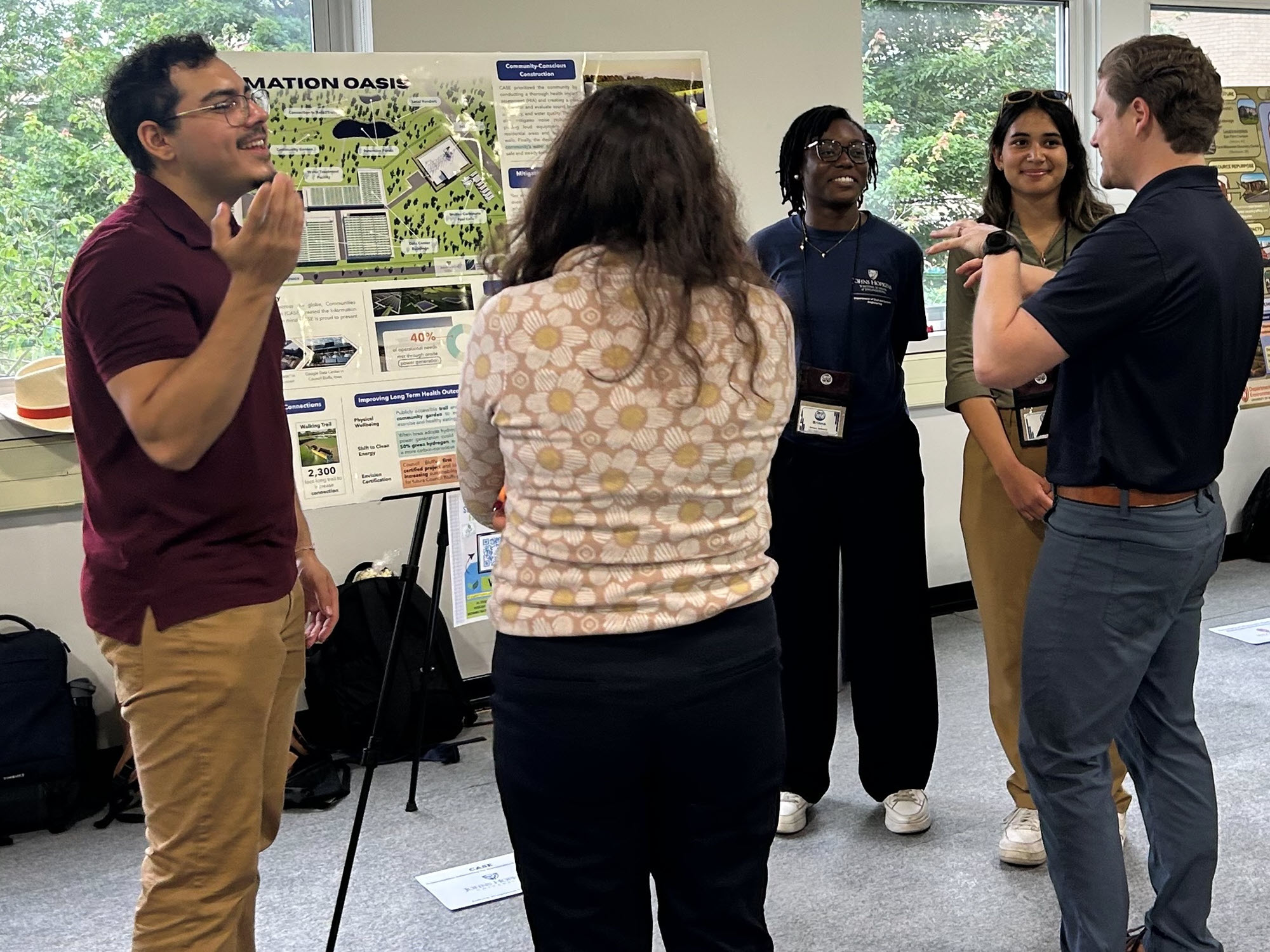
To leverage the different specialties of its members, the team used a flexible approach, allowing members to choose what parts of the project they wanted to work on and move to other aspects when their interests shifted. Although the work was delegated, everyone had a voice in the overall project.
“Ultimately, everyone was involved in every decision, which helped everyone gain a wider breadth of knowledge,” Zapantis said.
The team embraced not only each other’s unique ideas, but also those of other teams. They went in with winning as a loose goal and a larger focus on producing good work and learning from the work of others.
“We were really, really excited for the opportunity to be present because we knew we were going to see a lot of high-quality work generated by other teams and meet talented civil engineering students from around the world,” Zapantis said.
And the competition “seriously delivered.”
“These other schools have inspired us for many years, and it was super gratifying to be at the same competition as them, not to mention being honored with the first-place prize from such a competitive pool,” she said.
Zapantis hopes that the victory will uplift other Johns Hopkins teams, as well as “push our peers from around the world to continue attaining more knowledge and making even stronger projects in sustainability.”
Engineering Is a Team Sport
Big infrastructure solutions don't just magically appear while you're sitting alone in your cubicle. Solutions take shape when you open the door to collaboration and open your mind to new ways of thinking. Solutions happen when you work as a team.
ASCE2027: The Infrastructure and Engineering Experience is a first-of-its-kind event bringing together big thinkers from all across the infrastructure space, March 1-5, 2027, in Philadelphia. Join the team and step up your game!
Learn more about ASCE2027: The Infrastructure and Engineering Experience.