Some time in the late 1960s, we were cruising on the Taconic Parkway in my father’s large new Pontiac. I was sitting in the back seat. My father took out an 8-track cassette. He slid it into a wide slot on the dashboard, and the music started playing. It was a ’60s kind of song, optimistic and wide open. I think it was about a large balloon, with people going up, up and away. The music and the scenery streamed by. Rolling hills shined in early summer sunshine, with beams of sunlight poking through puffy fair-weather clouds.
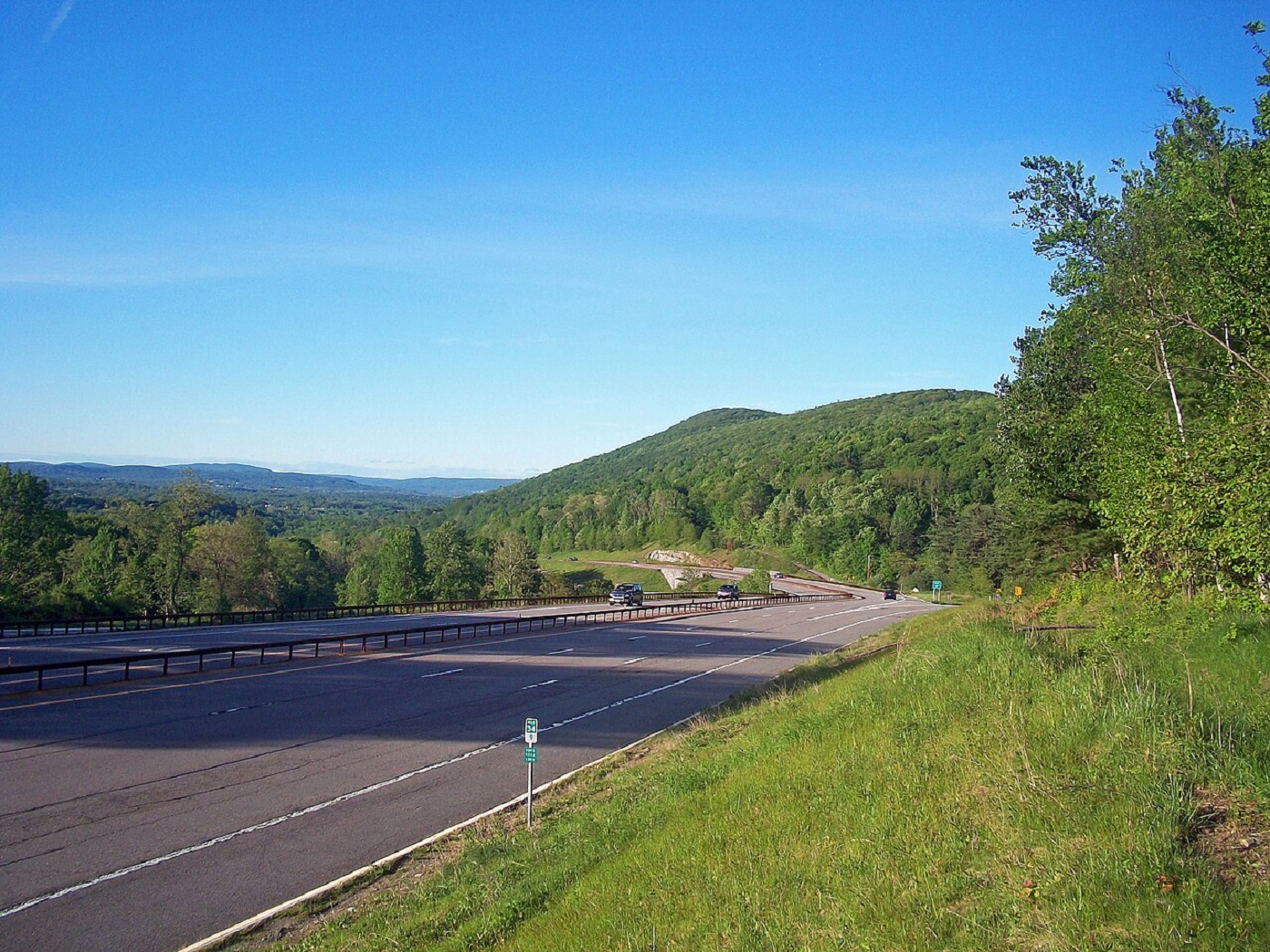 Daniel Case
 Something about the parkway layout caught my boyhood attention. The parkway exits widely spaced and many miles apart. In the ’60s, there were paper maps but no GPS or cell phones. You rode through the surrounding rural semi-wilderness in isolation, with no one beyond the car to talk to, and no one to text.
I had this image of drivers trapped on this endless highway. The drivers I imagined eventually made it to an exit, but even then, they were unable to escape the clutches of the parkway. For some reason, their exit was mysteriously blocked off on both sides. They were trapped and doomed to ride on the Taconic Parkway forever. After we stopped, I wrote it all down. It was a horror story that did not end well, and it spooked my family for many years.
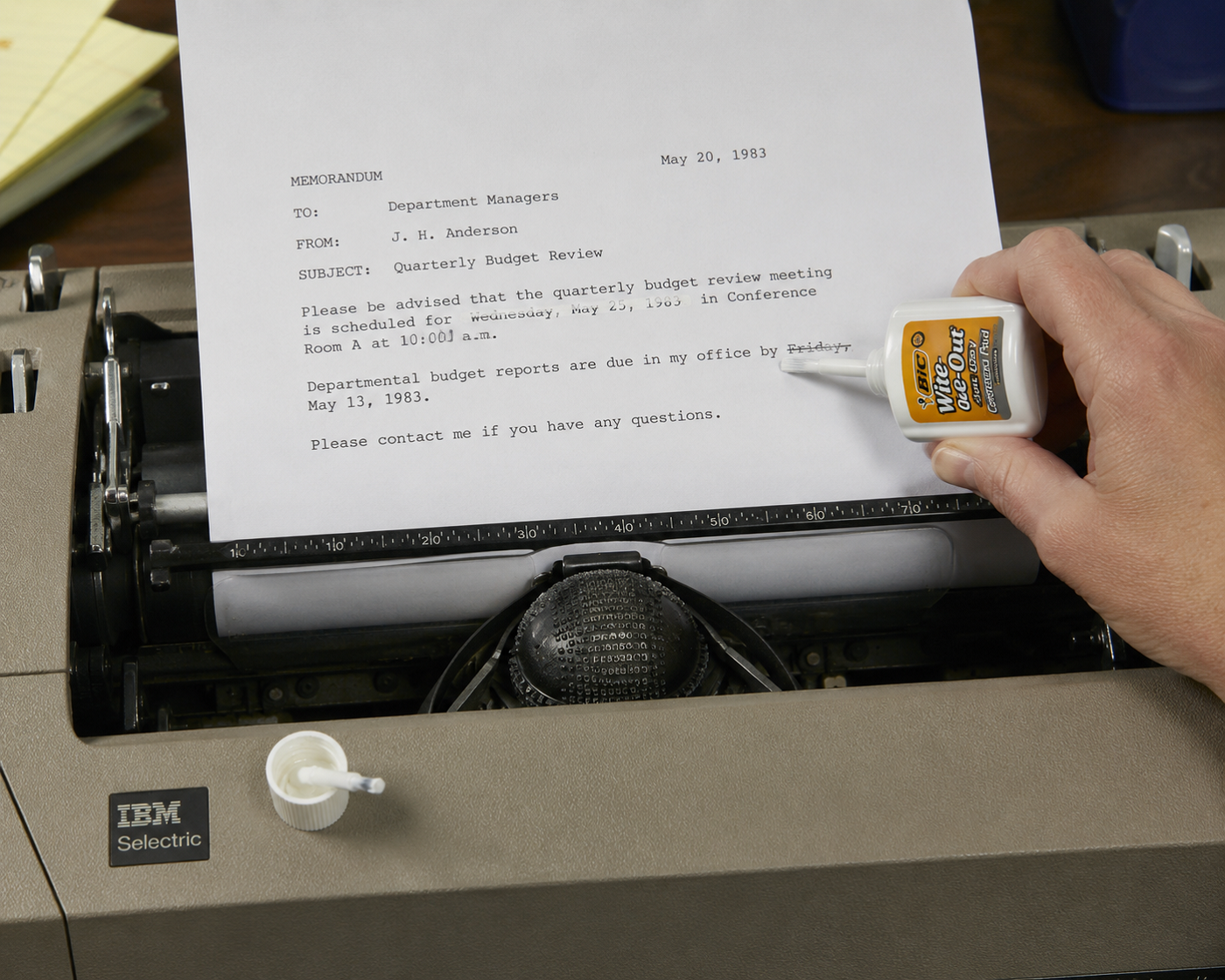
It was also the first thing I wrote. Back in the day, writing was done in longhand in cursive script with a pen and paper, or on an electric typewriter. My first story predated word processors by a decade or so. Writing then required more discipline. There was no freedom to write whatever you wanted in whatever order you chose. You either had to carefully plot it out before starting, or experience a stream-of-consciousness moment where it all made linear sense and could be written down, all at once. There was no cut-and-paste function available on the paper pad. Also, no spellcheck or helpful grammar suggestions. But there was something called “whiteout” if you made a mistake.
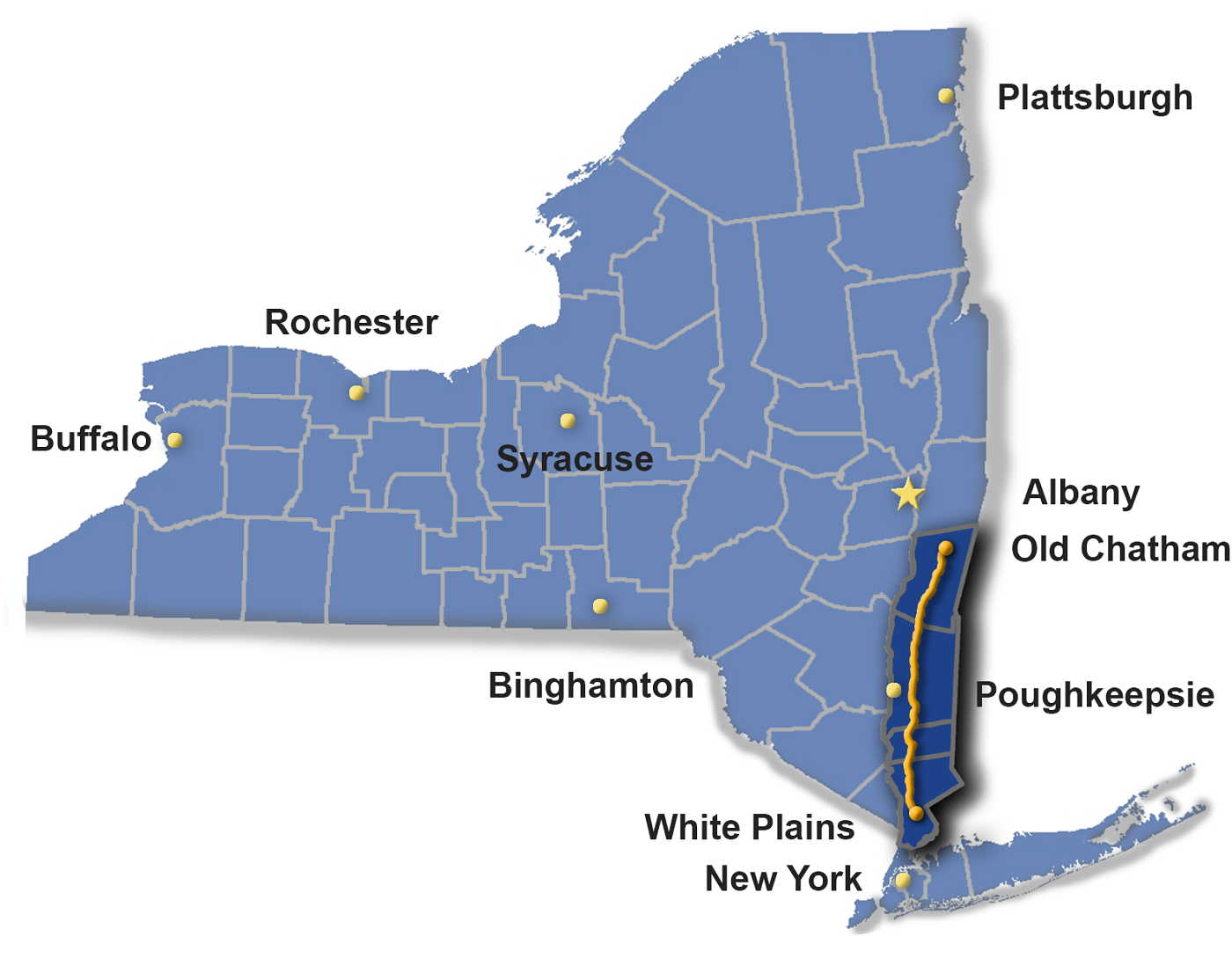
The Taconic Parkway rolls for 104 miles in New York on the east side of the Hudson River. It is in a beautiful but relatively quiet corner of the state. Commercial vehicles and trucks are not allowed on the parkway. Most north-south traffic uses the NY Thruway on the west side of the river instead. The east side has smaller towns, farms, wooded hills, and less traffic.
 NYDOT
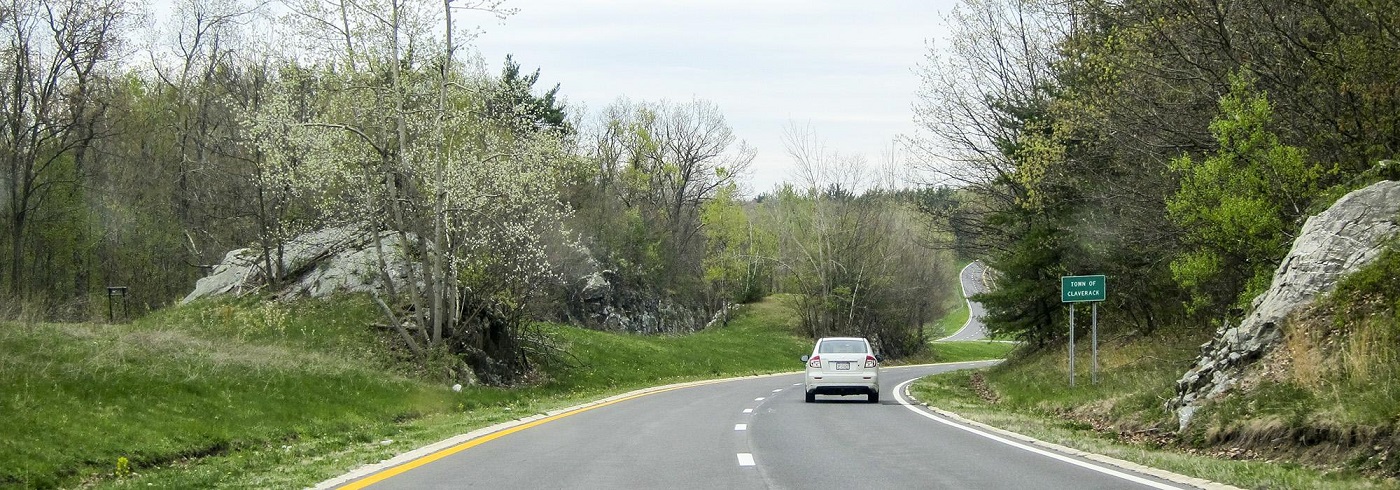
NYDOT In the 1920s, FDR championed the route and conceived it not as a freeway but as a recreational highway. He envisioned people on bucolic Sunday drives from the city, with no particular destination in mind. The parkway’s design team included a landscape architect, Gilmore Clarke. The parkway was designed to fit within the rolling terrain instead of plowing over and through it. The roadway had few cut-and-fill sections. When the route encountered a hill, the designers often curved around it. Sometimes, the northbound and southbound lanes would more widely diverge, with a hill remaining intact in between.
 TCLF.org
 The highway was built over several decades. Its design was as a partial limited-access highway. Major roads had grade-separated crossings, but smaller local roads intersected at grade, with stop signs.
It is interesting to compare older southern sections with the more recent northern extensions. The southern sections have more narrow rights-of-way and entrance and exit ramps with sharp curves and limited acceleration/deceleration lanes. The northern designs were influenced by developing highway technologies and standards championed by the Interstate Highway program. Northbound Parkway drivers today receive a highway design history lesson in changing and improving geometric standards as they proceed on the road.
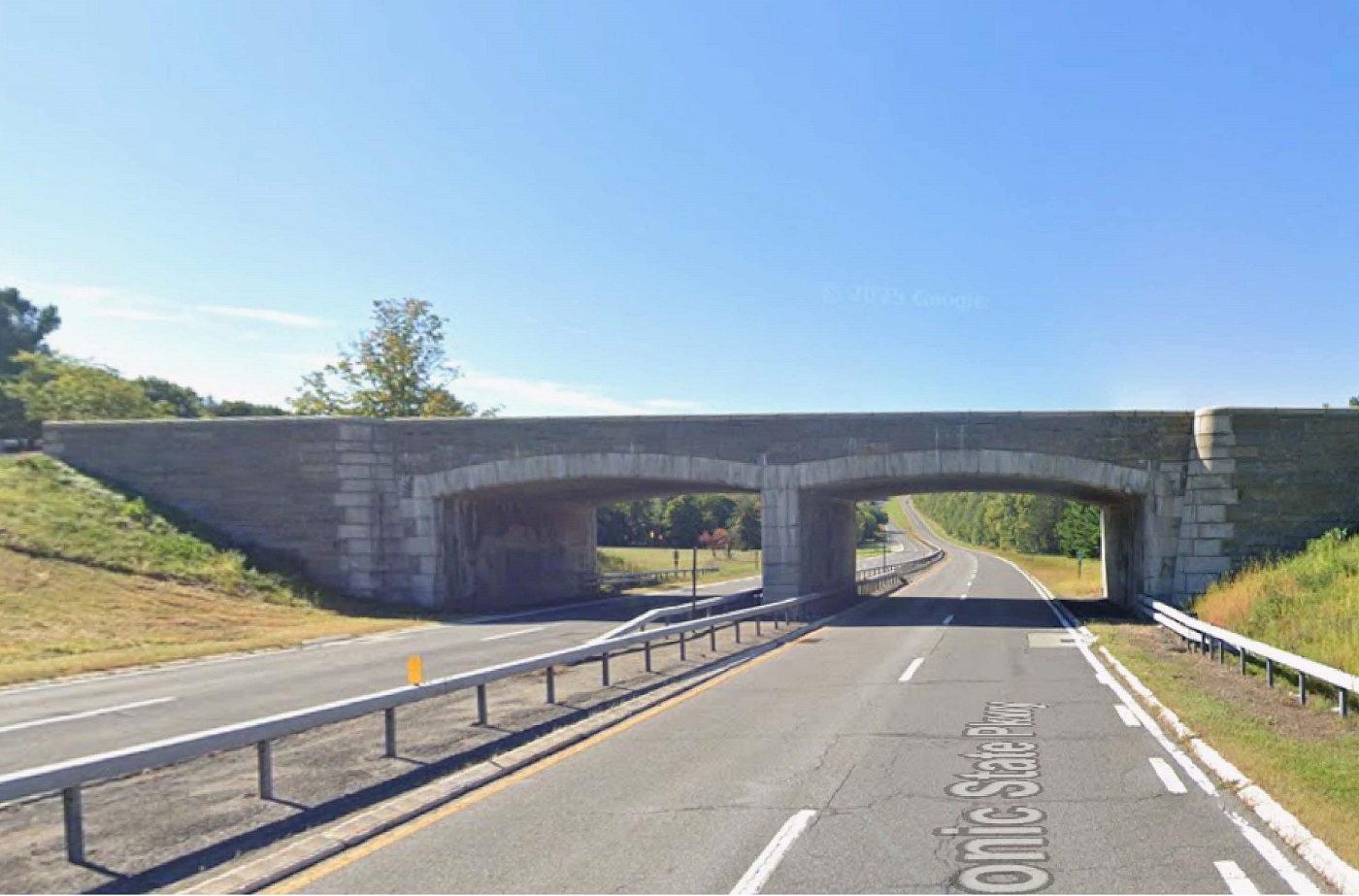
Parkway bridges were built to be not just utilitarian crossings. They featured stone cladding to match the park/recreational theme. This design approach was common on other New York metropolitan area parkways, with the most notable example being the Merrit Parkway in Connecticut. This highway elevated the idea of architectural grade separation bridges to the next level. Unlike the Taconic Parkway, which has a set of standard stone-clad bridges, each structure on the Merrit Parkway was designed with an individual architectural theme such as Art Deco or faux medieval castle.
 Google Street View
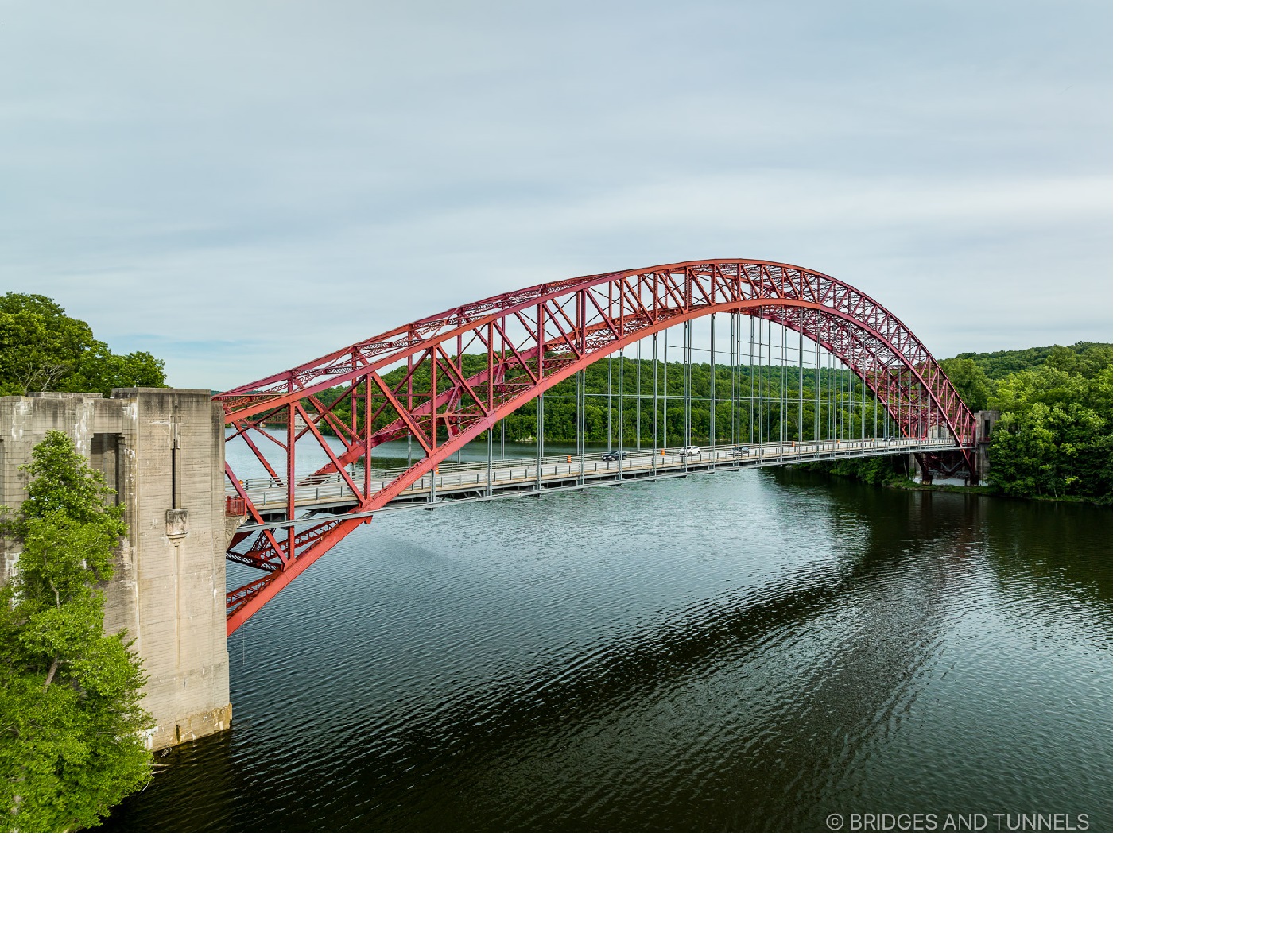
 Most Taconic Parkway bridges are smaller grade-separation structures or stream crossings. There are no larger bridges on the parkway, with two exceptions. The parkway crosses Croton Reservoir on a pair of long-span bridges. The older of the two is the AMVETS Memorial bridge, constructed in 1931. The bridge features a through, steel truss arch spanning 750 feet. The abutments have Art Deco–style towers. An accompanying truss bridge was built in 1970 and the parkway traffic was separated. Today the original arch carries NB traffic, and SB parkway traffic crosses on the truss span.
 Copyright Sherman Cahal
 For current riders, the Taconic Parkway seems anachronistic. The southern section serves as NY metro commuter highway. The rest of it pleasantly winds its way north through the Taconic hills, without a lot of traffic. It is a fulfillment of FDR’s original vision, when highways could be conduits for recreational drives in the country. The parkway provides fresh air and sweeping views, with few traffic jams and no artificial intelligence applications (so far). But the idea of taking your car out for a spin on the weekend has largely passed.
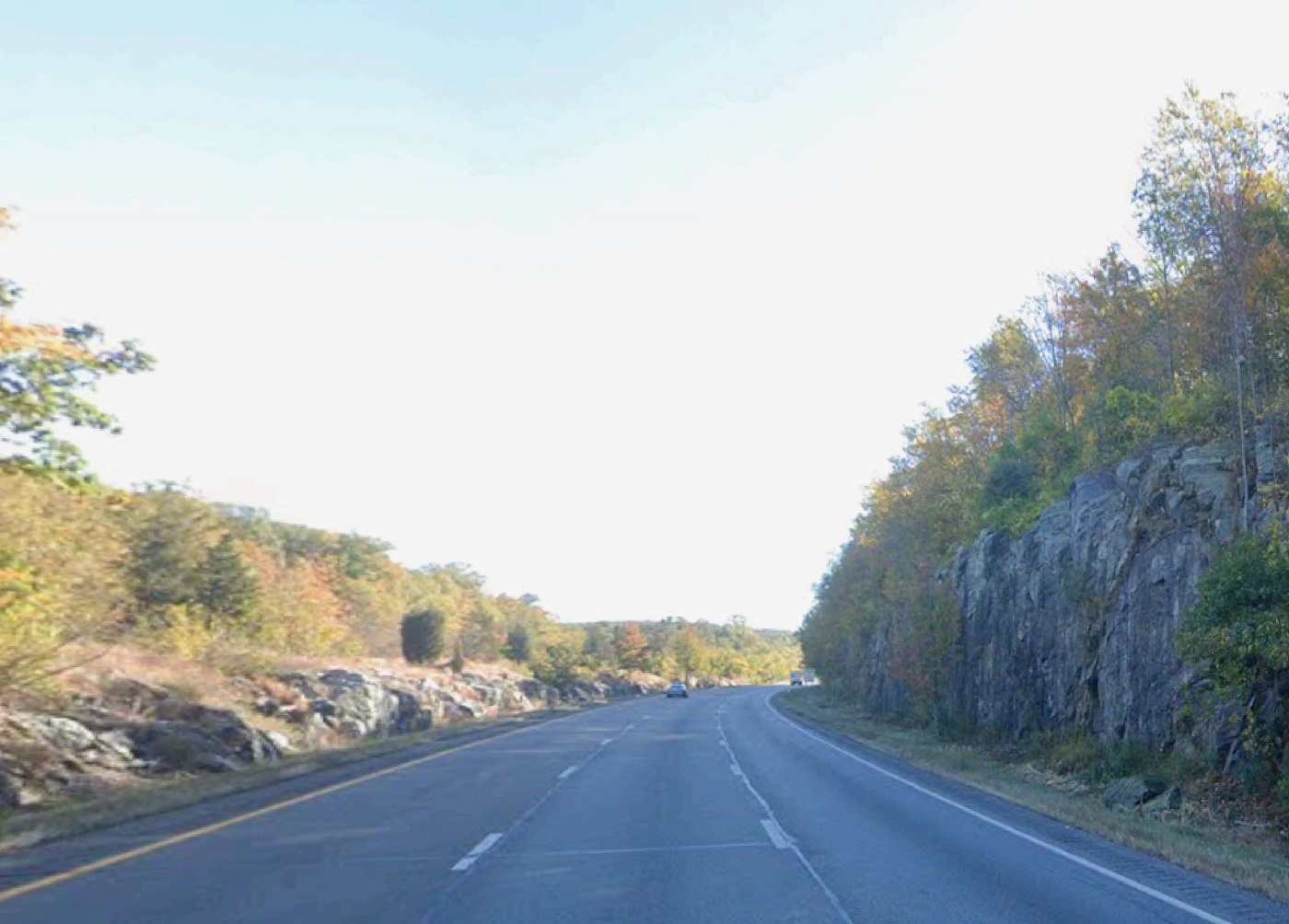
Another of my Taconic Parkway memories is how we got to it. Our old route had us connecting to the Parkway by driving first eastbound on Interstate Route 84. This new freeway was designed with a much different vision than FDR’s recreational parkway. I-84 was planned as a concrete ribbon that efficiently blasted through landscape features instead of around them. It was a highway of the future, where safety and speed were key.
 Google Street View
 I-84 had sleek steel beam bridge overpasses with no stodgy granite siding. It was a modern, futuristic road that got its job done directly, with no meandering.
Except that in the ’60s, it wasn’t complete. The freeway dead-ended at the Taconic Parkway. Driving eastbound, red warning signs alerted drivers that I-84 was coming to an end. Beyond the last exit, a piece of unused I-84 highway still continued on for a short distance up a hill and then stopped at the edge of the woods. As a boy, I wondered what would happen then. At some point, maybe soon, construction would be finished. The road to the future would then be complete.
After many decades, I had a chance to drive almost the full length of the parkway again. Our route took us from the Berkshires in Massachusetts south to New Rochelle, New York. The road was as beautiful as I remembered it, with its amazing overlooks of the distant Catskill mountains and views of continuous rolling farms and hills. That day we had no 8-track tapes and there were no balloons, but I had my GPS map on the dashboard and that made a big difference. The map showed a road not isolated in a frightening wilderness, but instead surrounded by a patchwork of roads and villages just by the parkway right-of-way. Modern technology had defanged my childhood fictional horror story. The Taconic Parkway was not isolated in the wilderness, but was part of civilization after all.
Another interesting update was the addition of a few new bridges and limited access ramps. These were built to support increasing local cross traffic. Unfortunately, the new bridges did not fit the original design theme. They were modern girder bridges with a few architectural cladding features to help them try to fit in (but not very well).
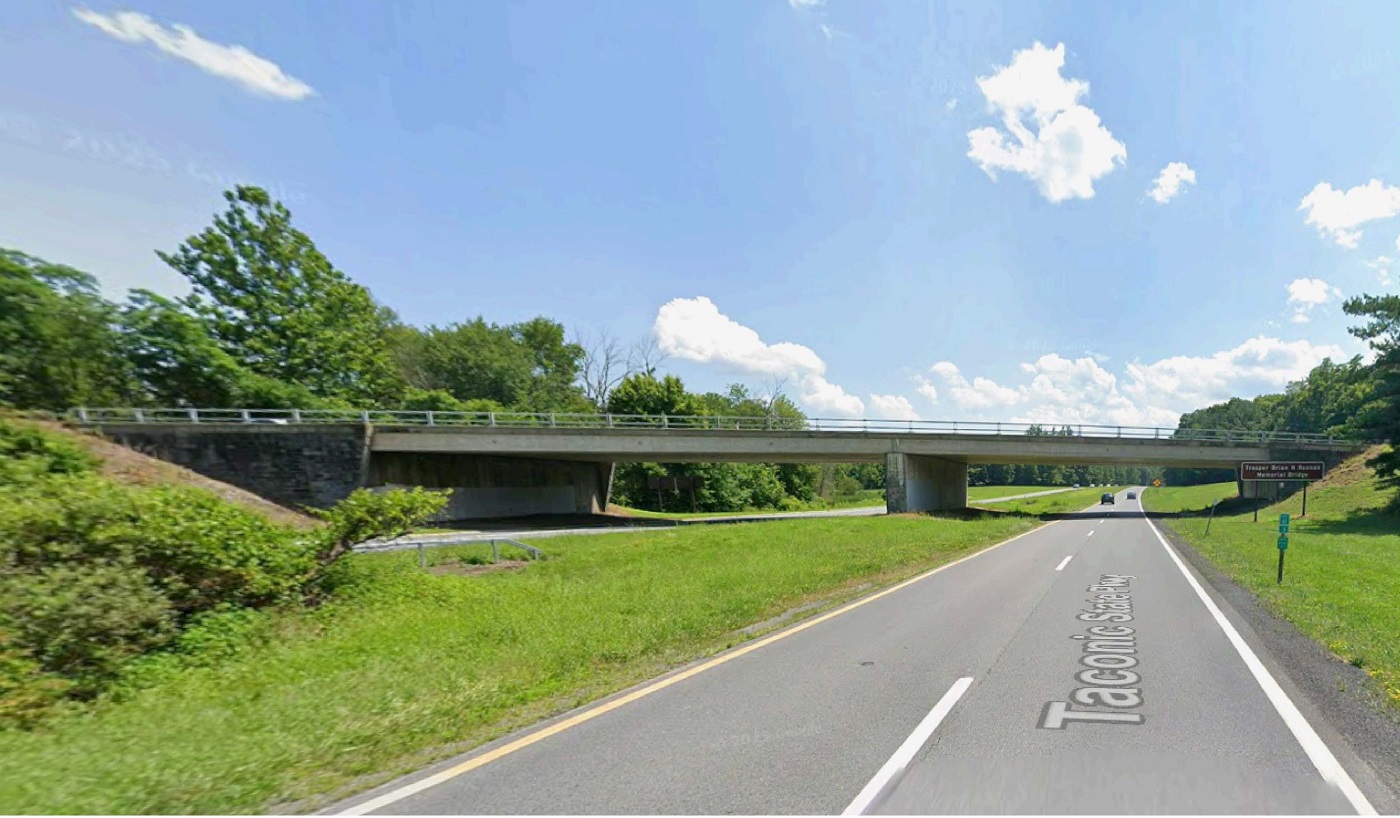 Google Street View
After 60 pleasant miles on the Parkway, the GPS announced our exit onto I-84 eastbound. We exited onto the interstate and drove up the hill where it had dead-ended at the edge of the woods. But now it was finished. This time we drove off into the future.
References
“The Long and Winding History of the Taconic State Parkway” by Richard Kreitner
Accessed September 2026
Accessed September 2026
Accessed September 2026
Accessed September 2026
Accessed September 2026