
By Mike Thomas, P.E., M.ASCE
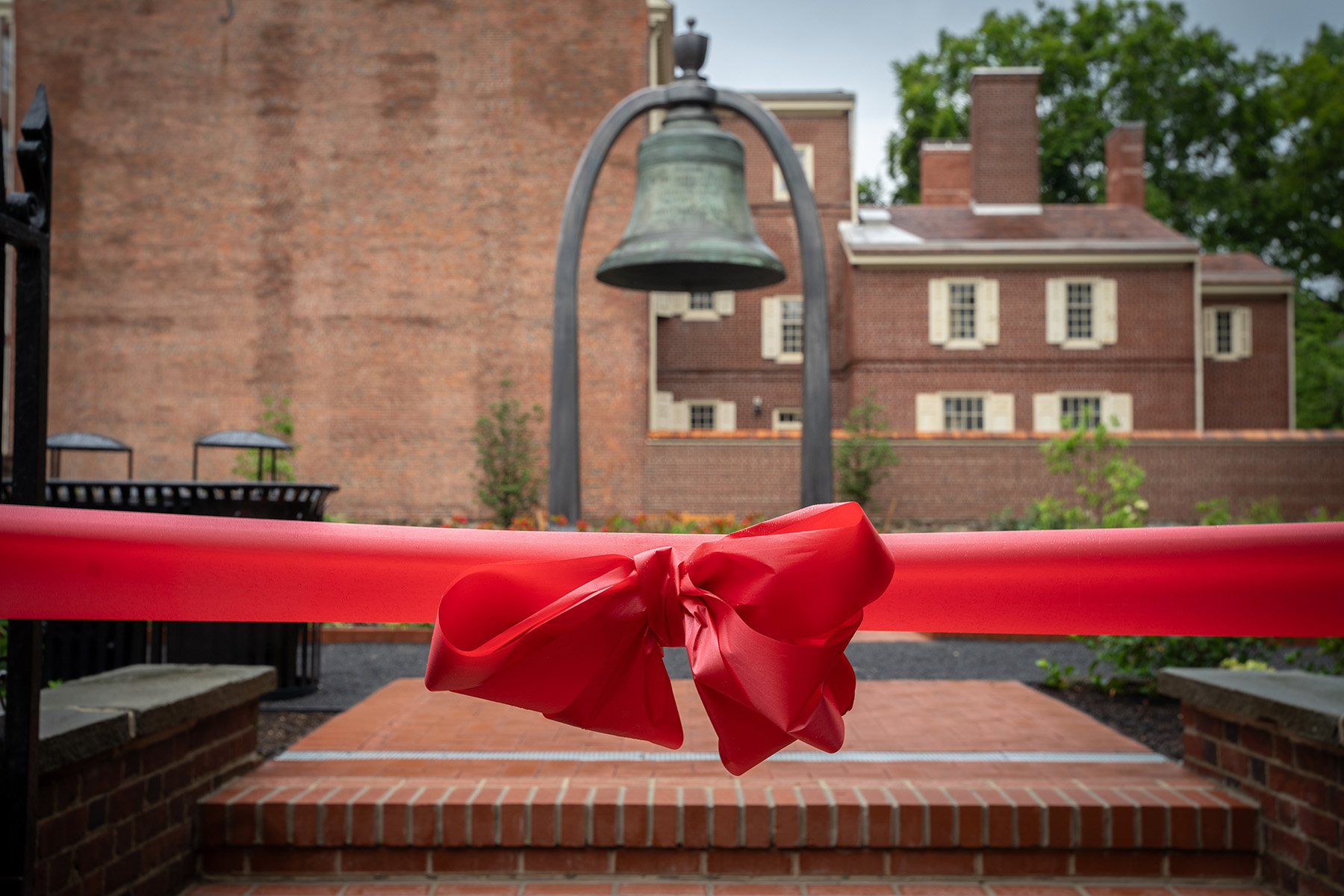
Philadelphia’s Benjamin Rush Garden, home of the Bicentennial Bell, has been reimagined, creating a more accessible visitor experience.
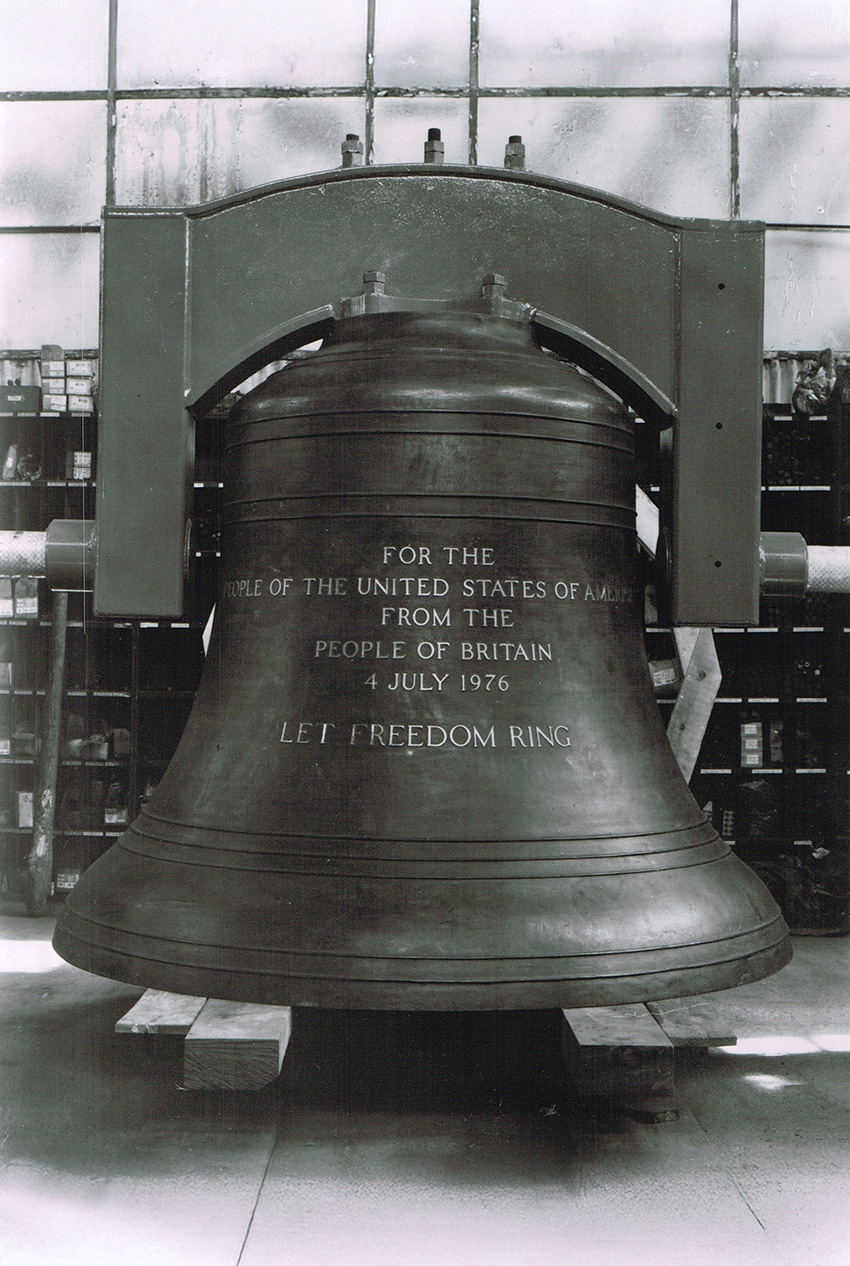
In Philadelphia, on July 6, 1976, Queen Elizabeth II presented the Bicentennial Bell to the United States in person during a special ceremony to celebrate the 200th anniversary of American independence from Great Britain and the enduring cultural and diplomatic history between the two countries. The bell, cast in London at the Whitechapel Foundry, is made of bronze, a traditional material for bell casting.
The Independence Historical Trust, created by the National Park Service in 1972, initially displayed the bell at the Philadelphia Welcome Center. However, in 2013 the trust moved it into storage, where it sat for over a decade to accommodate the construction of the welcome center’s Museum of the American Revolution.
During that time, the INHT and the NPS collaborated to find a permanent location for the bell. Their choice, the Benjamin Rush Garden — former site of Rush’s home, demolished in 1969 — is part of a larger historic district in Philadelphia that includes Carpenters’ Hall, Independence Hall, and several other significant locations. Rush, a Founding Father, fought in the Revolutionary War and signed the Declaration of Independence, cementing his place in American history.
The recent improvements to the garden were inspired by and revolve around the bell.
Modernizing from the Sixties
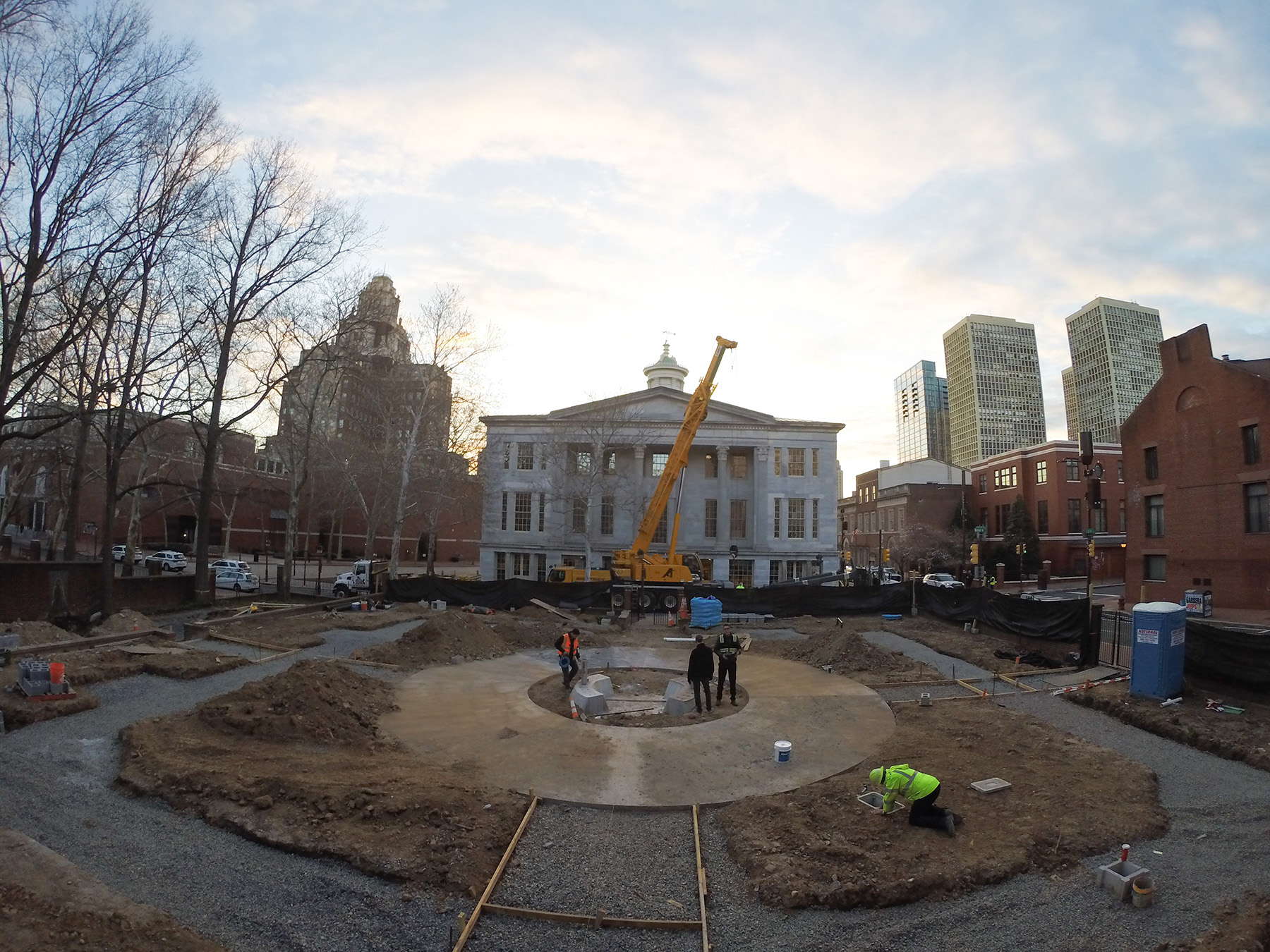
The garden was last renovated in 1966. The INHT hired Urban Engineers — a multidisciplinary consulting firm that specializes in design, planning, environmental, and construction support services — to modernize the garden while preserving and paying homage to its character from that 1960s renovation — a job that required careful management of the site. Urban’s approach to the project began with a thorough analysis of existing conditions, as-built drawings, and historical documents. Through this evaluation, the team developed comprehensive grading and structural plans.
One of the biggest challenges to bringing the INHT’s vision to completion above and below ground was creating a stormwater management system that fit within the existing garden layout. Leveraging the existing stormwater management features and flow patterns allowed the design team to implement updated, cost-effective, non-obstructing stormwater features that honor historic structures and walls.
Other challenges Urban needed to resolve included meeting modern NPS functionality requirements and replacing the original Orangeburg sewer pipe (a type of pipe popular in the 60s made of permeable materials like wood and asbestos bound together by a water-resistant adhesive and tar) with safer, more durable materials.
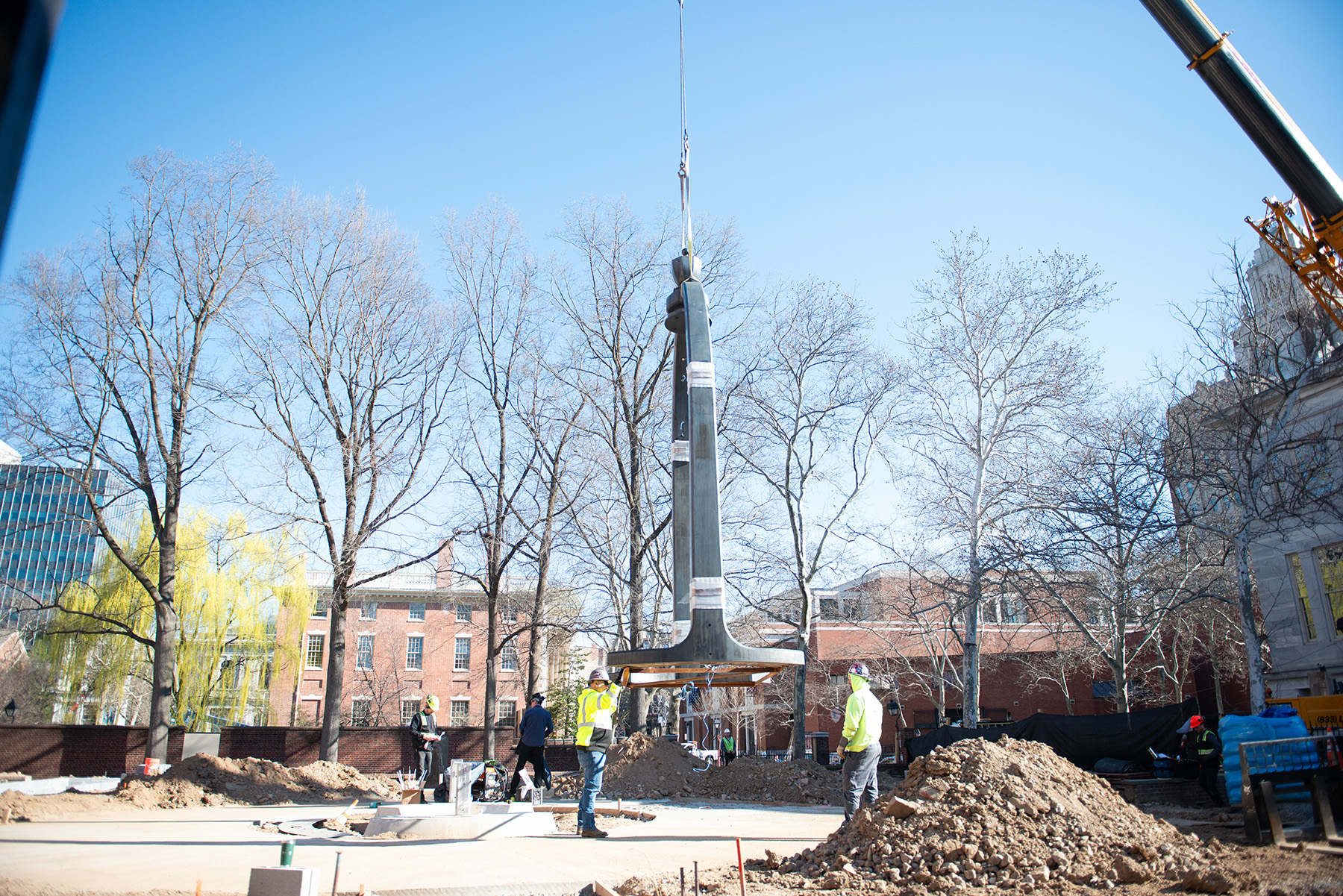
The six-ton bell hangs from an iron arch surrounded by stone that has 13 interlocking rings carved into it, with each ring bearing the name of one of the original 13 colonies. At the base, the bell is surrounded by decorative lighting, for which Urban helped design the electrical connections. The arch, stones, and rings are updates from the 1960s overhaul.
Another change from the 1960s was to a fountain, which Urban updated with new waterline connections.
Meticulous design
Throughout the project, the design team kept the visitor experience top of mind, all while honoring the site’s storied significance. To connect the various parts of the garden, Urban designed an accessible ramp in accordance with the Americans with Disabilities Act. The ramp was developed in collaboration with Studio Bryan Hanes, a landscape architecture and urban design firm in Philadelphia, to ensure a seamless design that complements the landscape.
To create continuity, the studio also selected the hardscape typology, and Urban provided ADA-compliant grading and drainage for plant beds. To ensure visitor safety throughout the site at night, the team installed decorative LED lighting and other pathway illumination.
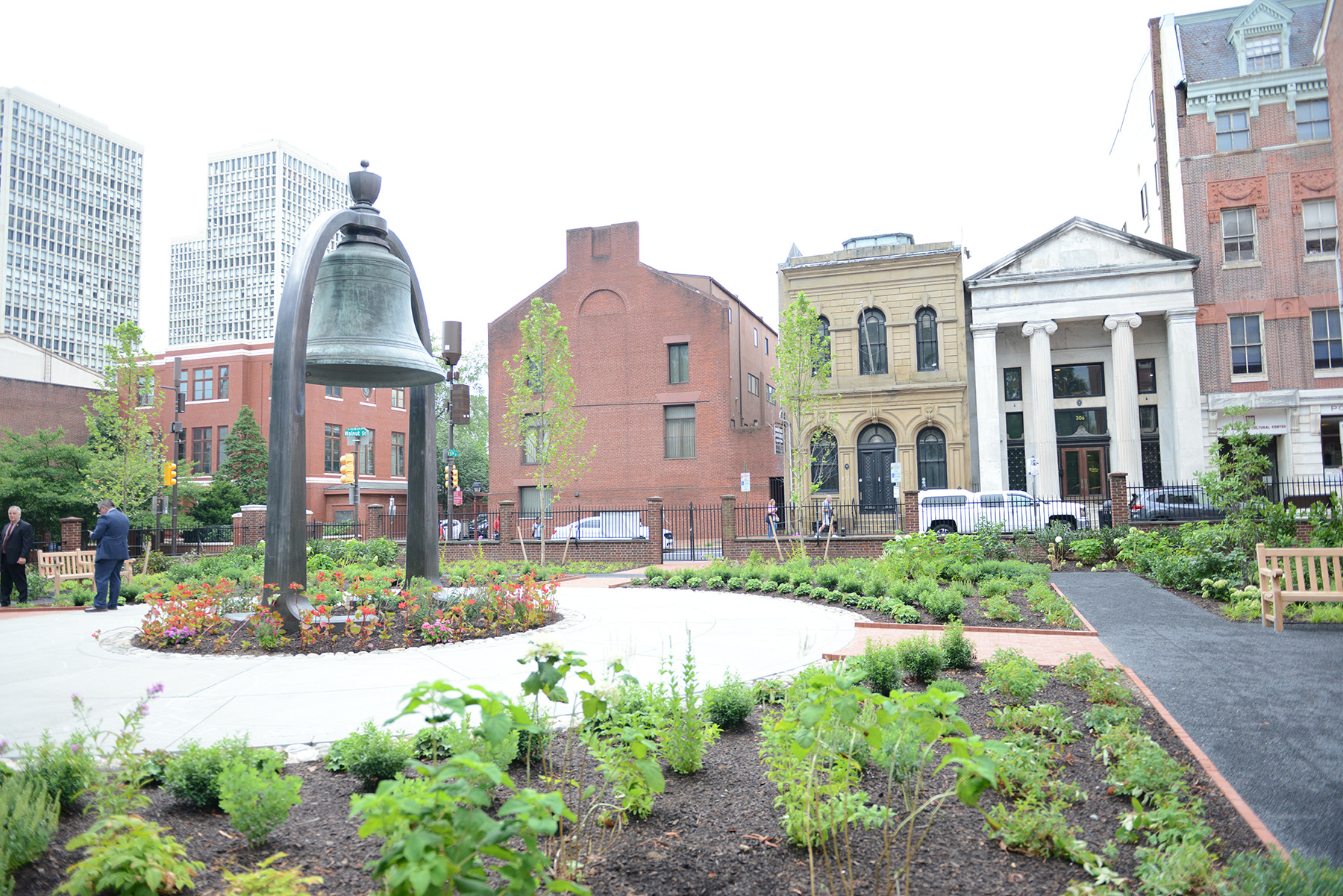
The design team kept the visitor experience top of mind, while honoring the site’s historical significance. (Photograph courtesy of Urban Engineers)
Another key goal was to restore a sense of vibrancy and relevance to the site because it had been long underused. The design brings new life to the garden through green spaces that are meditative and inviting. Planners envisioned the garden as a flexible space capable of hosting small ceremonies, educational tours, and informal gatherings, helping strengthen the garden’s role in modern civic life. This required careful consideration of pedestrian circulation, shade cover, and visibility to ensure that the space remained active and inclusive year-round.
Sustainability also played an important role in the planning process. The landscape team included native and adaptive plant species to reduce long-term maintenance and irrigation demands, as well as prevent runoff and erosion. The LED lighting was chosen for its energy efficiency and minimal maintenance requirements.
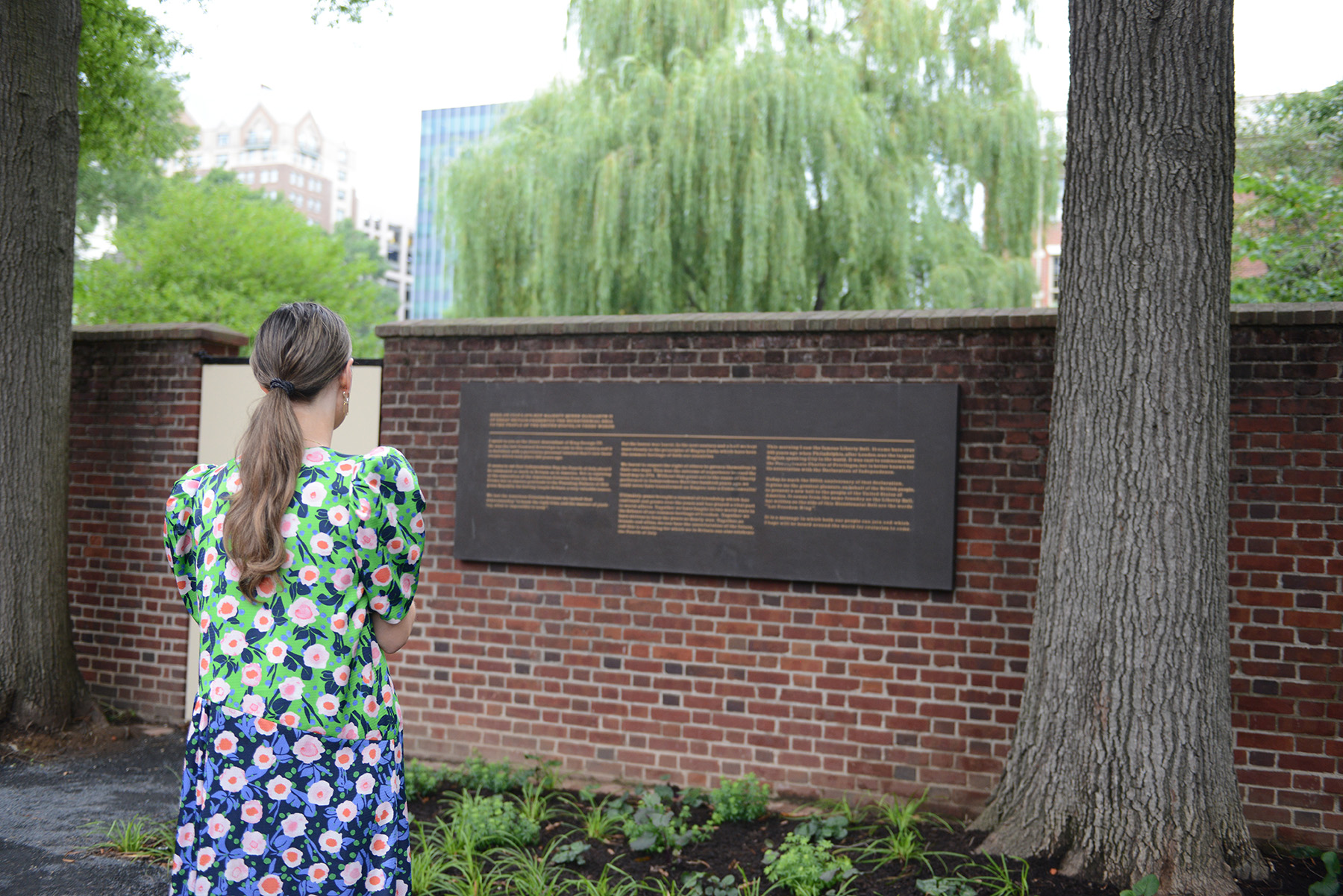
In addition to physical upgrades, the garden now features signage to educate visitors about Rush, the history of the bell, and the cultural landscape of the 18th century. The NPS has also developed guided tours and digital resources to enrich the visitor experience.
A grand opening
Although it was initially scheduled to have its debut on the country’s 250th birthday in July, the garden opened April 30, 2025. Prince Edward, the Duke of Edinburgh, attended the ribbon-cutting ceremony, dedicating the bell and the new garden. Despite the usual challenges associated with long-term planning, the renovations were completed without any major issues and received positive feedback from stakeholders and the public.
For many involved, seeing the bell returned to public view was the highlight of the project. Its new placement is central and dignified, making it a true focal point of the garden.
The Bicentennial Bell at Benjamin Rush Garden project highlights and explores the connections between engineering, design, history, and the evolving needs of urban spaces.
Project credits:
Site/civil, mechanical, electrical, and plumbing
Urban Engineers, Philadelphia
Landscape architecture
Studio Bryan Hanes, Philadelphia
Contractor
G-Force Engineering and Construction Services, Norristown, Pennsylvania
Bicentennial Bell supporting armature
Holzman Iron Studio, Philadelphia
Bicentennial Bell rigging and installation services
Sautter Crane Rental, Philadelphia
Independence Historical Trust project manager
Dan Bosin Associates, Philadelphia
Mike Thomas, P.E., M.ASCE, is vice president and site/civil practice leader at Urban Engineers, Inc.
ASCE2027 will take place March 1-5, 2027, in Philadelphia. Explore the challenges we're facing, discover the expertise and bold innovations needed to solve these problems, and experience the cutting-edge practices shaping our future. Visit experience.asce.org for more details.
This article first appeared in the January/February 2026 issue of Civil Engineering as “From England with Love.”
