
By Kayt Sukel
For decades, health care researchers have understood that holistic, patient-centered care can result in better outcomes, especially when facilities are designed with that kind of care in mind. Yet most hospitals and health centers are still planned in such a way that patients, even at their sickest, are transported from department to department to receive services. And in-hospital care is provided in cold, sterile rooms, often shared with other patients, which can also interfere with the healing process.
Now, HDR Inc., a multidisciplinary design firm specializing in engineering, architecture, and other services, wants to turn traditional health care delivery on its head with Bionica, an innovative, modular approach to patient care. Yunnan Allen, who led Bionica’s design team, said the inspiration for this unique design came from wanting to create a hospital that delivered care directly to the patient.
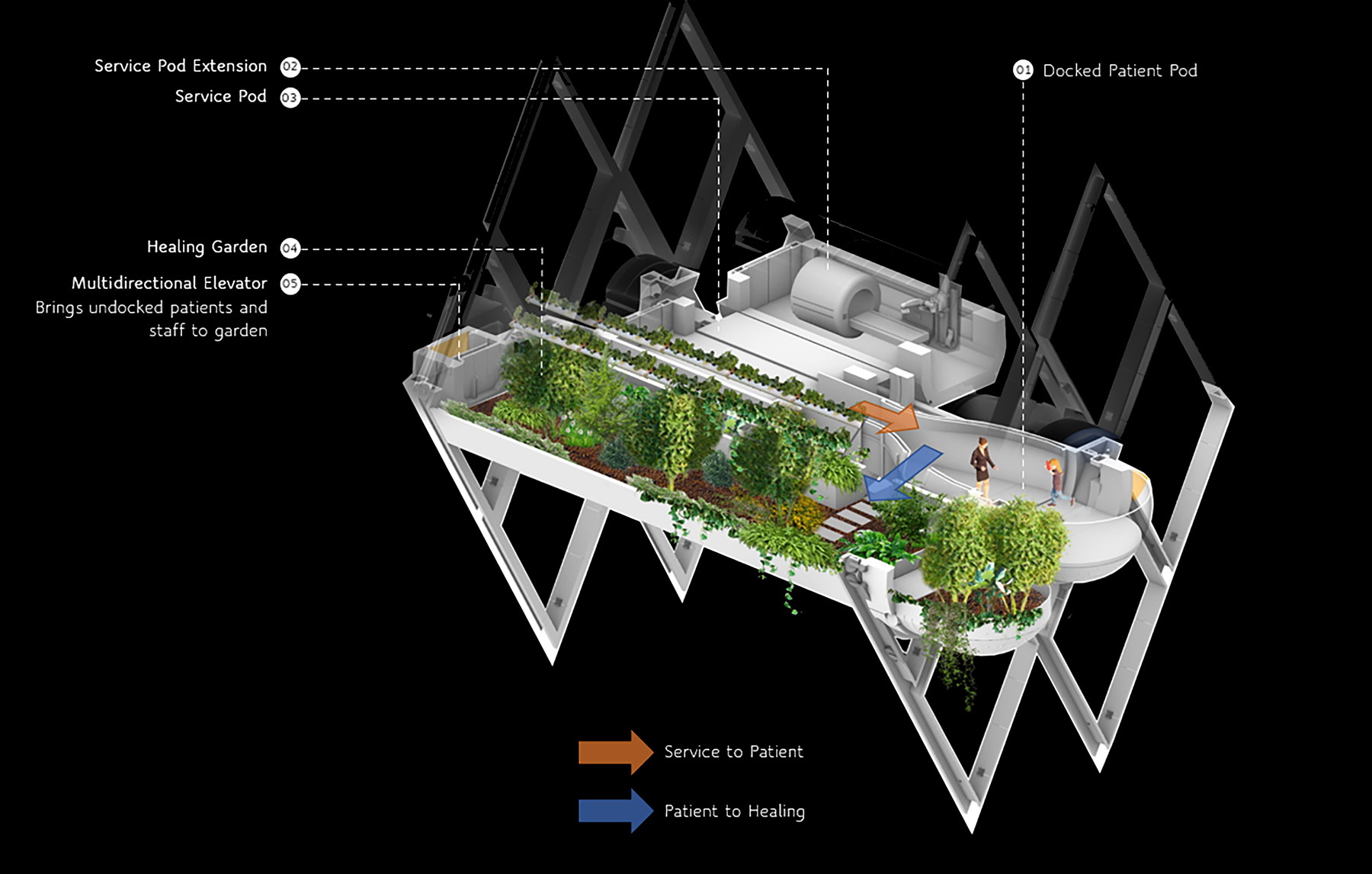
“People who are very ill or have complications generally go to the hospital, wait, see the doctor, wait, go to the lab, wait, get their scan, and wait,” Allen said. “All these sick and injured people get transported around, which seems counterproductive to healing. So, what if we flip that upside-down and transport services to people?”
The proposed scheme draws on modular robotics, like those commonly seen in aerospace designs. Patients are placed in a healing pod at their home so that they can rest and feel comfortable. If they require a service like labor and delivery, it can be offered right there in their pod.
When other health care services are required, like surgery or wound care, the healing pod can be transported via truck or helicopter to a Bionica health care center. There, different modules containing specific services can be attached to and then detached from the patient’s healing pod as needed. The patients, protected in their vibration- and sound-proofed pods, need not move for care. Instead, they can rest and heal in a peaceful environment, complete with a healing garden.
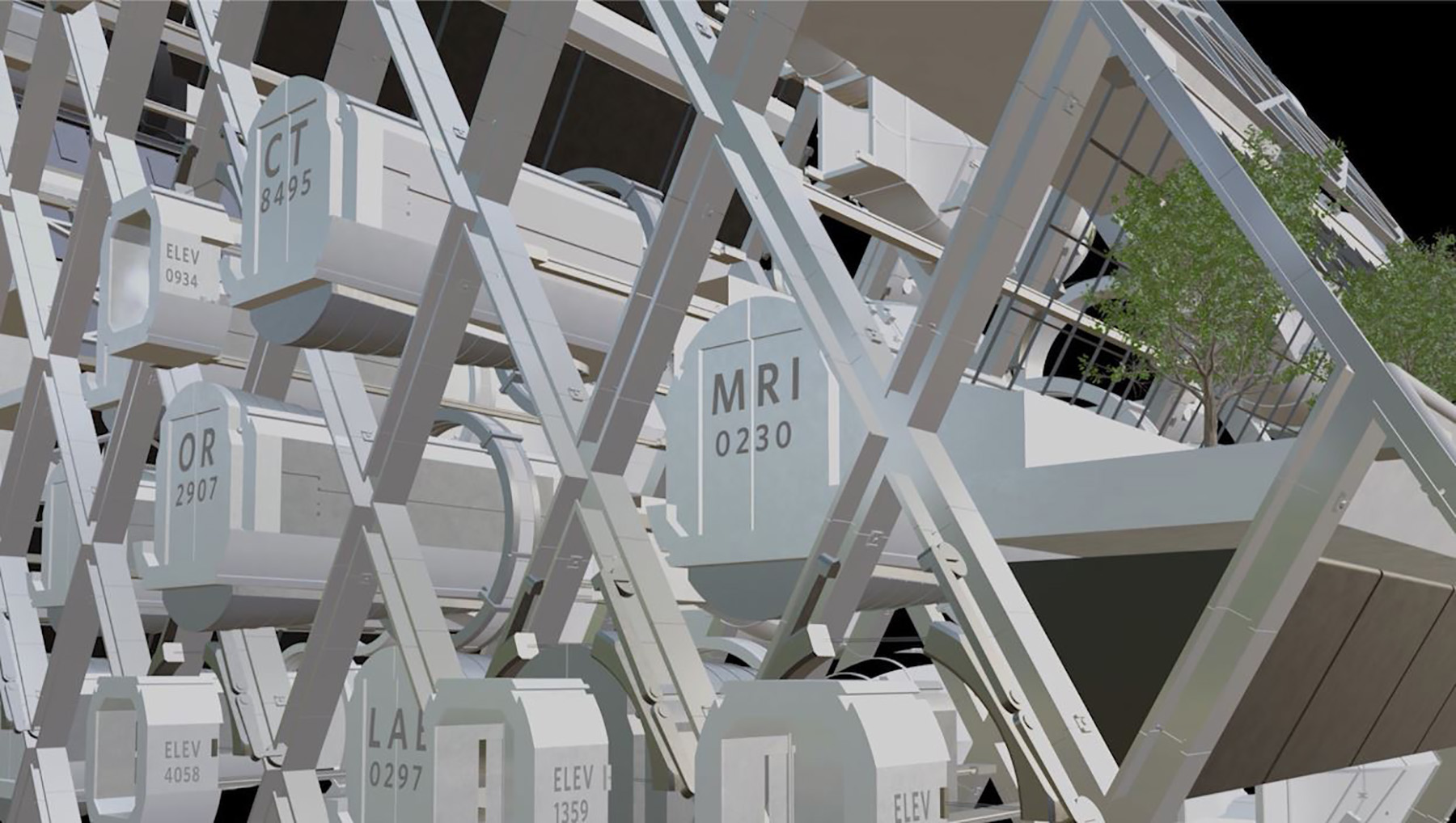
Because of the many regulations surrounding health care delivery, Allen said it can be challenging to think out of the box when it comes to hospital design. But in addition to a more patient-centric approach to care, Bionica’s novel plug-and-play design also offers hospitals operational benefits. Bionica centers can be easily built in busy cities or rural areas. Specific-care modules can be shared across different facilities as needed. Modules that require maintenance or repair can be taken offline without affecting the entire enterprise. And, without long corridors and empty rooms, the hospital does not have to pay for power and air conditioning for unused areas.
Others are taking notice. Architizer selected Bionica as a finalist in its 2025 Vision Awards in the Future of Wellness category. Allen hopes that other designers will take inspiration from their approach and find their own novel ways to manage “the conflicting needs” in today’s health care space.
Kayt Sukel is a science and technology writer based outside Houston.
This article first appeared in the May/June 2026 issue of Civil Engineering as “The Bionic Hospital.”