By Leslie Nemo
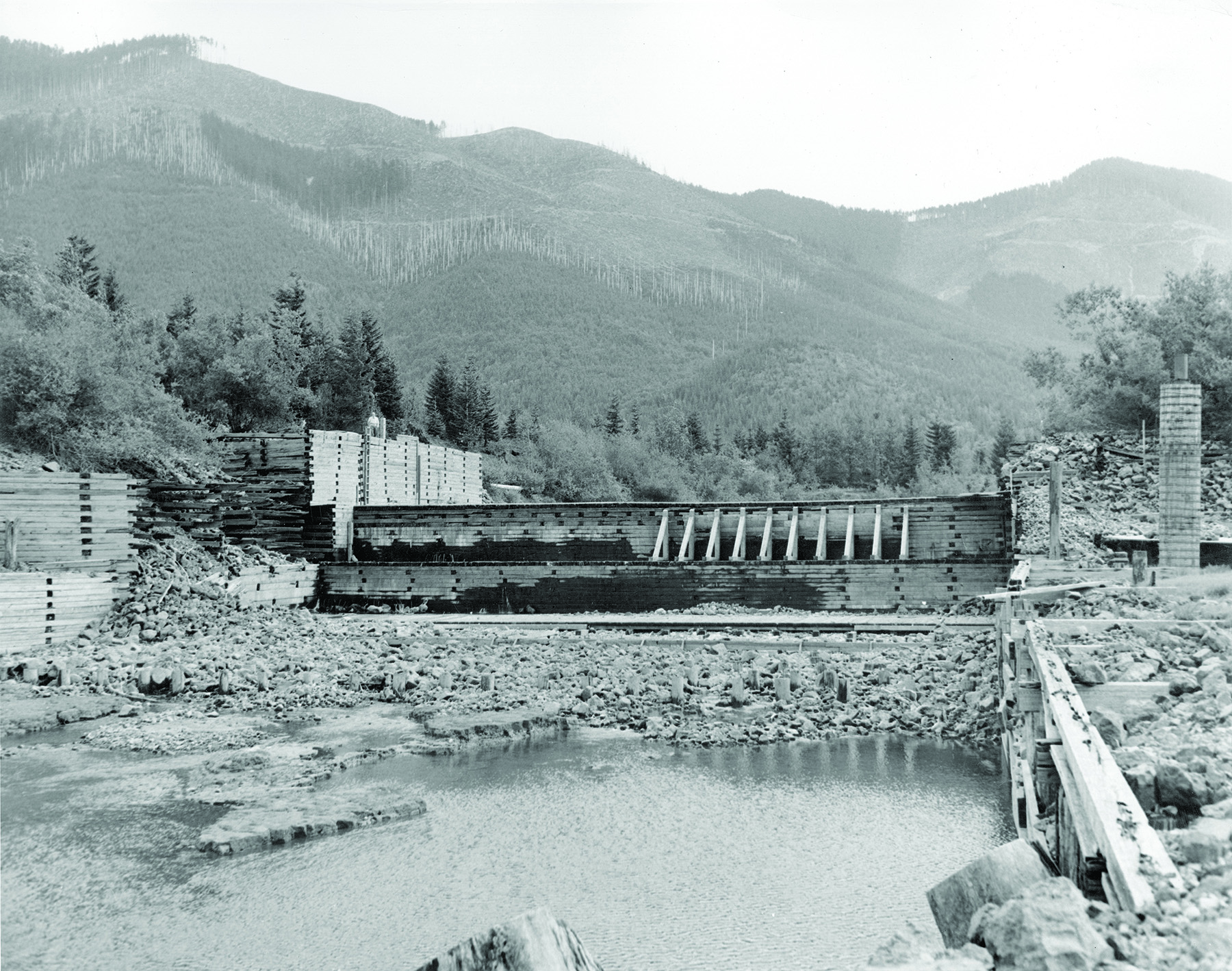
A rock-filled timber crib dam marked the city’s first attempt at a public hydroelectric power utility.
The early attempts to light the city of Seattle showed what hydroelectric power should — and should not — look like. The Cedar Falls Hydroelectric Project encompassed dams, electric power-generating systems, and other infrastructure in and around the Cedar River, which is tucked into the Cascade Mountains. The project’s first iteration, completed in 1904, included a 250 ft wide dam and two turbines generating 2,400 kW of hydroelectric power, growing into a 30 MW operation by 1929. It was also the first municipally owned hydroelectric system in the United States.
“This development at Cedar Falls played a vital role in shaping the direction taken by future (hydroelectric) projects and in influencing political developments within the city,” wrote Nancy Farm Mannikko in her 1990 Historic American Engineering Record report about hydropower projects on the Skagit River in Northwest Washington (“Skagit Power Development: Skagit River and Newhalem Creek Hydroelectric Projects,” HAER No. WA-24).
The outstanding success of its earliest construction, however, was followed by a lesson learned in poor siting practices. Despite the ups and downs, the project gave an influential Seattle engineer and public infrastructure advocate an entry into the profession, all while cultivating local appetite for power paid for and made by the public.
In 1900, most electricity available to Seattle was from the Boston-based Seattle Electric Co., which had bought up a number of smaller local electricity producers over the preceding years. As the company merged its private holdings, ideas about municipal power were also coming together. The term “public utility” was likely first used in its modern sense in 1895 in The Coming Revolution, a book by lawyer and economist Henry Call.
“After its introduction by Call, public utility rapidly became an indispensable addition to the vocabularies of U.S. reformers,” wrote Adam Plaiss in his October 2016 article “From Natural Monopoly to Public Utility: Technological Determinism and the Political Economy of Infrastructure in Progressive-Era America” for the journal Technology and Culture. The term was a perfect fit for America’s Progressive Era — a movement known for its commitment to social reform — and for the participants, who saw services owned and run by the government as the best way to fight widespread corruption.
Whether or not he labeled himself a reformer, Reginald H. Thomson, M.ASCE, aligned with some of the era’s goals. After he became city engineer for Seattle in 1891, Thomson called for a city-run electric power system. By 1901, he had some evidence that a public utility could work: The Seattle Engineering Department had begun supplying residents with water from the Cedar River via a city-built and city-owned pipeline. And because Seattle acquired the river and nearby land, an alternating current transmission line stemming from a hydroelectric power station on the same body of water could be routed through existing city property, he believed.
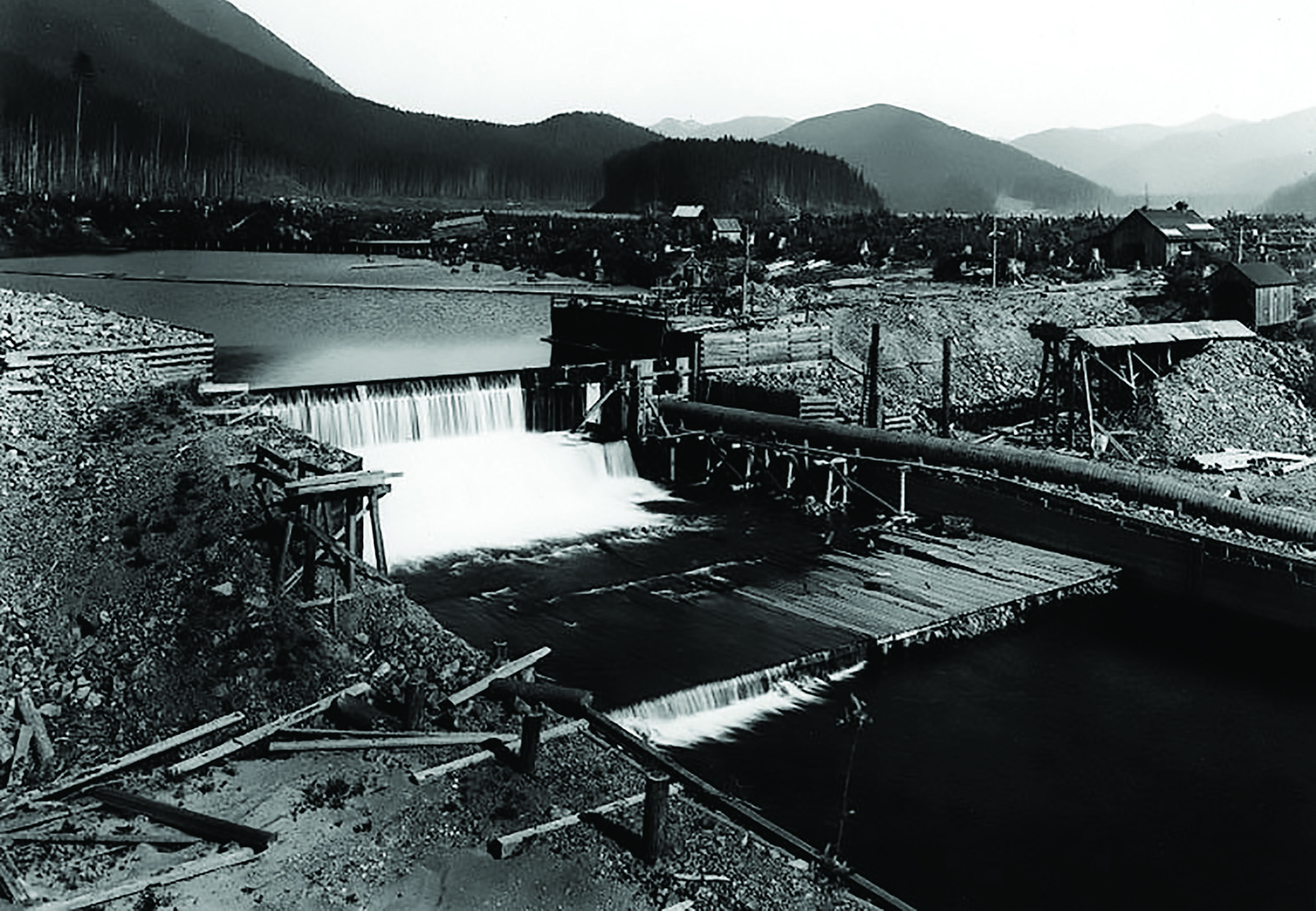
On March 4, 1902, by a ten-to-one margin, Seattle voters approved a $590,000 bond issue for a municipal power-generation plant about 40 mi from the city at Cedar Lake (within the Cedar River watershed and what would eventually be known as Cedar Falls). With these funds, Thomson planned a rock-filled timber crib dam, 250 ft wide, built with wood processed at an on-site mill. The location was remote enough that 3 mi of railroad had to be built to the foot of the Cascades before the mill machinery could be hauled to the site.
Thomson chose to build the dam on the Cedar River, which is three-quarters of a mile downstream from Cedar Lake. Workers dug the foundation and wings into a sand deposit because there was no available bedrock to excavate into, and they placed a head gate on the dam’s south wing. A 49 in. inside diameter wood stave pipe — also built at the local mill — was attached to the head gate, buried 18 in. underground, and run downriver for a distance of 15,407 ft. A 48 in. diameter riveted-steel pipe was installed for the last 1,008 ft before the powerhouse, which was in a valley at an elevation 600 ft below the dam, according to the July 1912 article “Seattle Municipal Light and Power Plant” in the Journal of Electricity, Power and Gas.
Around the time when construction began, James Delmage Ross joined the operation. If Thomson was a fan of municipal water and power, Ross was a lifelong devotee. He saw publicly owned utilities as entities that could build trust in local government and provide the resources needed to attract other industries. Ross, who would become the superintendent of lighting at Seattle City Light in 1911, would spend his engineering career advocating for public utilities nationwide. Despite his travels, he was committed to his adopted city and only agreed to work on behalf of the federal government when he was assured that he would be allowed to return to his projects in Seattle.
Back in 1902, however, Ross was a new, self-trained electrical engineer from Canada who had tried and failed to join the gold rush in the Yukon Territory before coming to Seattle. With his own electrical contracting business, he bid for and won the work of setting up the generating plant at Cedar Falls.
Construction on the Cedar Falls hydroelectric power plant wrapped up sometime in 1904. On October 14, the mayor, Thomson, and Ross started the generators for the first time. The dam raised Cedar Lake 18 ft, and water flowing through a penstock fed two 2,000 horsepower Pelton Impulse Water Wheels, a product of California gold mining efforts that earned ASCE National Historic Civil Engineering Landmark status in 1973. Each water wheel powered a 1,200 kW AC generator.
In the end, Thomson supervised the hydroelectric project, which included the rock-filled timber crib dam, the wood stave and riveted-steel pipes to the powerhouse, and a 36 mi transmission line into a substation in the city.
During construction, Thomson had negotiated with the Seattle Electric Co. to buy rights to all the equipment associated with the city lighting system. By the end of January 1905, the glow from downtown light fixtures was provided by Cedar Falls. That September, the city council authorized the sale of extra electric power at 8.5 cents/kilowatt-hour. Meanwhile, Seattle Electric’s rates were 20 cents/kilowatt-hour.
Residents quickly demanded more electricity from Cedar Falls, and Seattle complied. In 1908, voters approved a new bond issue for two more power-generating units, while the timber crib dam’s crest was raised 6 ft and additional penstocks were added, among other infrastructure. By then, the power plant could generate 10,400 kW.
In 1910, the city council created a new, stand-alone department, Seattle City Light, to handle all the work that went into providing electricity. A bigger dam would be necessary — early on, Ross and other city employees assumed that would happen — and in 1910, Seattle issued a $1.4 million bond to fund the new structure. That’s when Seattle’s luck started to change.
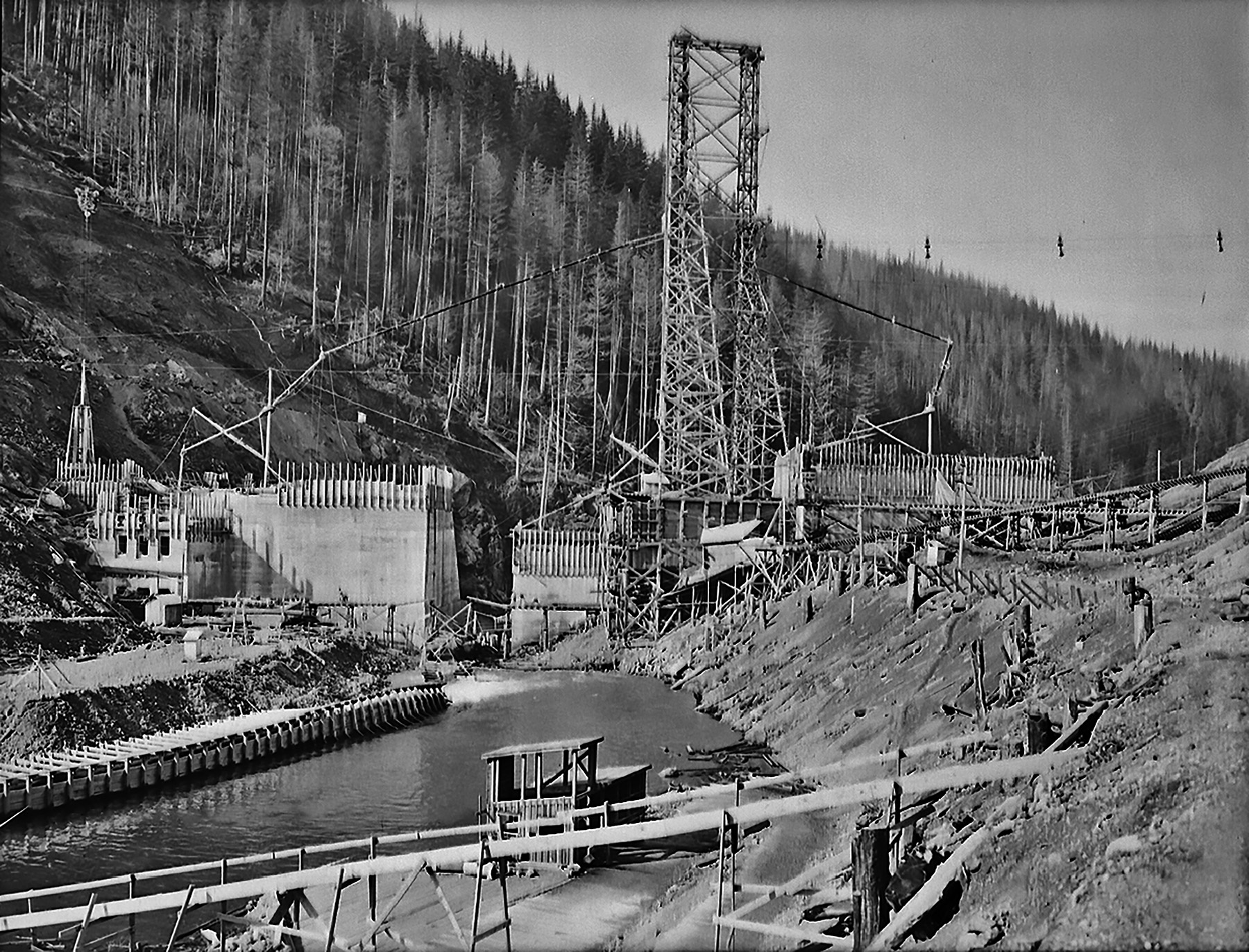
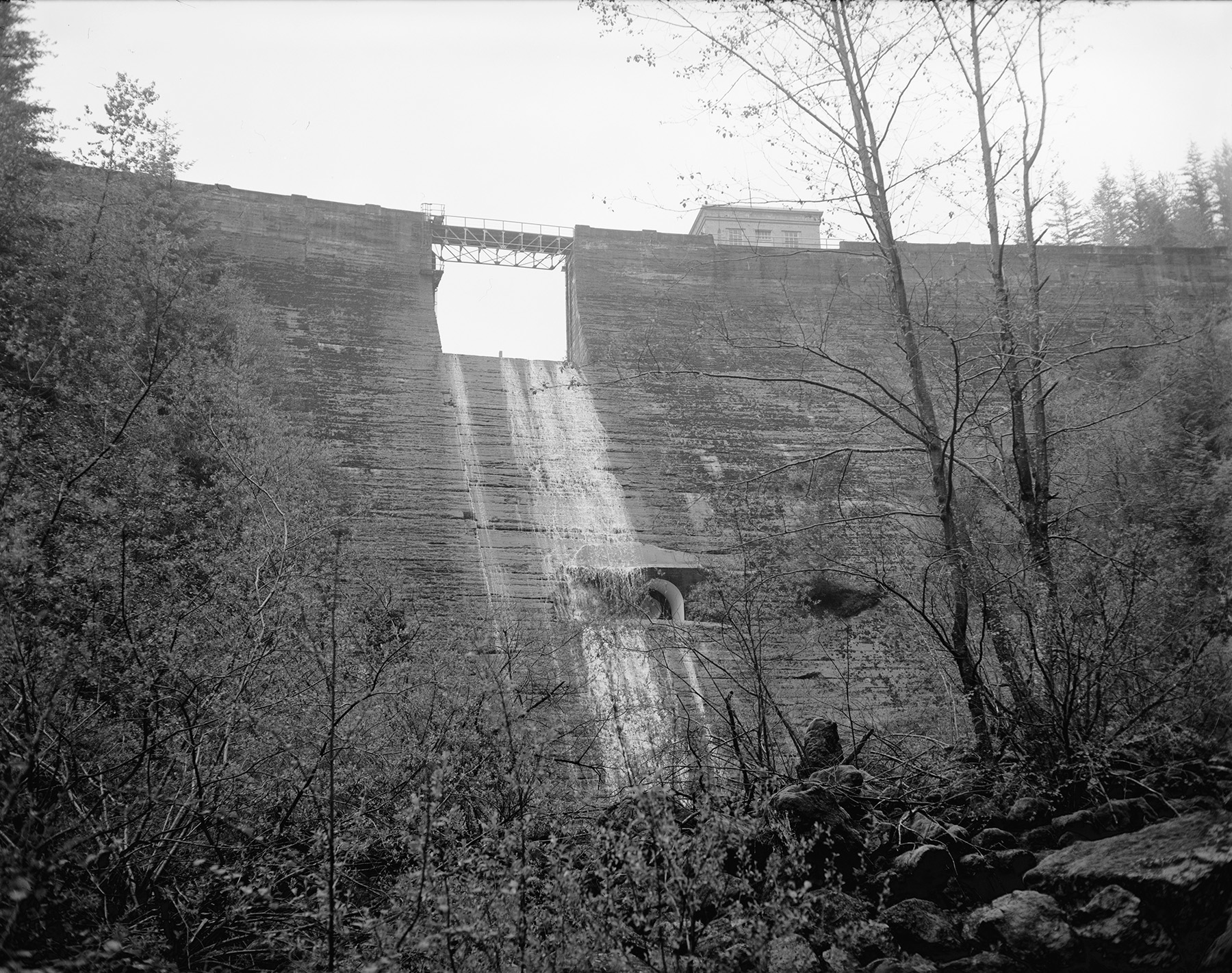
A larger dam required a foundation built into bedrock, which could be found 2.25 mi downstream of Cedar Lake. Seattle City Light wanted to use sand and gravel from an upstream pit and large, irregular stones from the excavations of a new spillway. “The object is to obtain a monolithic mass of stone and concrete, containing as large a proportion of stone as economical,” according to plans for the new dam written by Arthur H. Dimock, M.ASCE, and T.H. Carver (both engineers on the project). The city wanted a masonry dam 202 ft tall and 640 ft long, with the intention of raising the level of the lake another 58 ft, according to the 1986 HAER report “Cedar Falls Hydroelectric Works” by David W. Harvey and Kent Shoemaker.
The contract also stipulated that the masonry dam be built on and along the side of the foundation, which workers blasted, excavated, and hand-cut so that the base of the dam sat 40 ft below the riverbed. The dam was also designed to have a square-notched spillway, but it was never completed. Rather, workers opted to leave in place a temporary spillway near the dam’s center, according to the Harvey and Shoemaker HAER report.
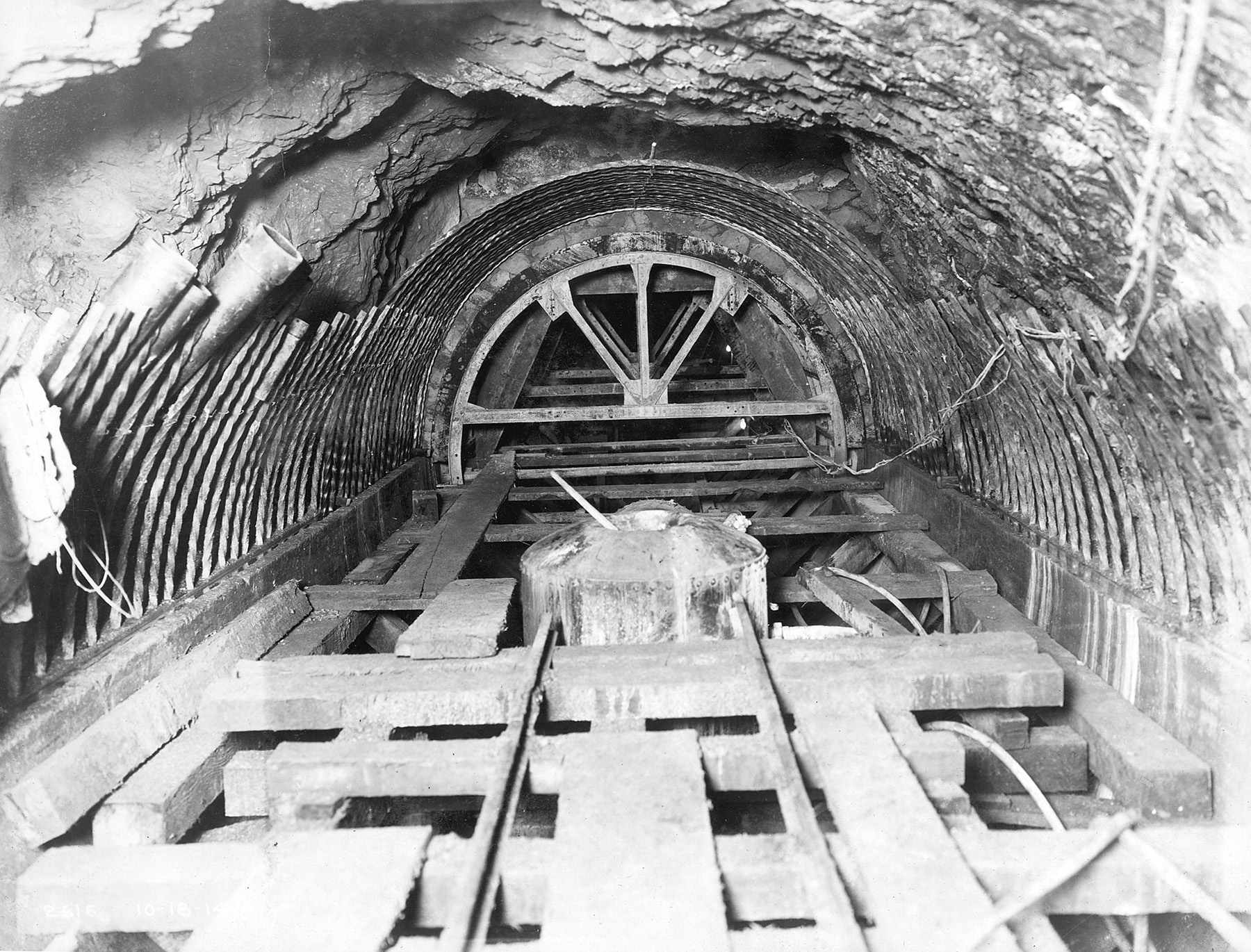
Elsewhere, laborers used compressed-air drilling and blasting to drive a new outlet tunnel stemming from the south end of the masonry dam. When rough cutting of the dam foundation was finished, workers installed a concrete lining along with stone and grout to fill the gaps between the material and the excavated tunnel wall. At the end of the outlet tunnel, the contract required the attachment of three 78 in. internal diameter riveted-steel penstock pipes.
Workers also built a 187 ft long, open-spandrel concrete-arch bridge to carry the penstock pipes over the Cedar River gorge. Crews would be able to disconnect the existing two penstock pipes supplying water to the turbines only after completion of the new outlet tunnel, with the gate valves installed.
Besides constructing the dam and pipelines, workers also paid extra attention to the northern wall of the reservoir. In July 1910, two engineers — Milnor Roberts and Henry Landes — reported the results of their site examinations to Thomson. The two were skeptical that the north bank of the Cedar River would impound the reservoir’s water because it consisted of glacial moraine. Before leaving his position as city engineer in 1912, Thomson recommended that the new dam be built at his chosen site. Whether appropriate test borings had been done would be controversial: Dimock, his successor, said Thomson had not done them, while Thomson said he had.
Either way, construction went forward. To counter any leaking from the north bank, the work contract called for an earthen dike with a reinforced-concrete core wall. The core wall, containing welded wire fabric, was designed to be 18 in. thick.
Compared with the 202 ft tall, 640 ft long dam envisioned by the city, a different version of the dam emerged, according to Ross’s 1914-1915 report from the Lighting Department. The one built was 215 ft tall and 961 ft long. Ross also reported that it took 112,500 cu yd of cyclopean masonry to finish the job. Construction of the new penstock pipes was still ongoing when it became clear that the north bank’s reinforced-concrete core was not reducing seepage. “When the water was turned (on) the loss from percolation proved to be greater than was expected,” Ross wrote.
As the “greater than expected” seepage continued, residents of the nearby town of Moncton were surprised to see water slowly coming up from underground and flooding their streets. The water kept rising, eventually lifting up homes and businesses. Residents had to leave, and today, the remains of Moncton are covered by Rattlesnake Lake, a feature that did not exist before the Cedar River dam.
In 1916, the city tried some additional sealing of the north bank, and two years later, engineers attempted to raise the water level in the reservoir. This time, instead of the gradual flooding of a small town, the area was hit with the Boxley Creek Blowout in December 1918. Continued percolation through the reservoir’s north dike wall flooded Boxley Creek, a waterway north of the Cedar River basin.
In the same event, high waters and mud slides inundated the town of Edgewick along with buildings and a sawmill belonging to the North Bend Lumber Co. The business sued the municipal office for damages in a dispute that reached the state supreme court. The company won, and the court determined that the utility owed about $362,000. By this point, Seattle had paid for not just the initial dam construction and attempts to seal the north bank, but also $69,000 in damages after flooding Moncton.
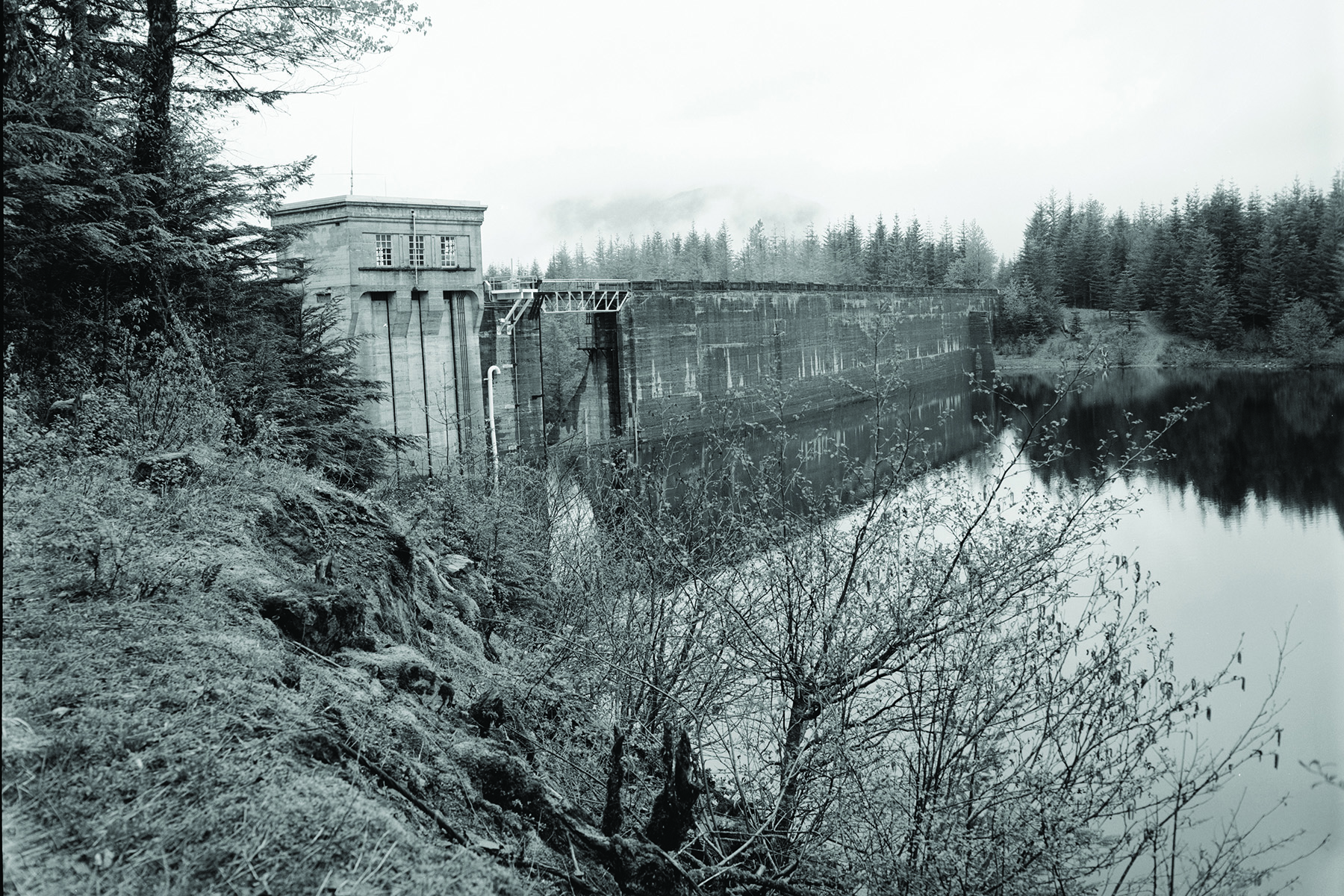
According to the Harvey and Shoemaker HAER report on the Cedar River developments, the reservoir made by the cyclopean dam was never filled to its maximum; water levels stayed 20 ft below the design level. Over time, Seattle modified the reservoir and the way that water was delivered to the turbines and generators. It took until 1929 for all water entering the power plant to come from penstock pipes connected to the masonry dam, according to a 2021 article by Nathan MacDonald, a former senior public relations specialist, and Rebecca Ossa, a historic resource specialist, at Seattle City Light. The four turbine-generator units at the site around 1910 have been replaced with two horizontal Francis-type turbines made by the Pelton Water Wheel Co., each paired with Westinghouse generators. Together, the system has a capacity of 30 MW.
Despite its struggles, the hydroelectric project at Cedar Falls marked the start of a distinct approach to public power. Ross went on to oversee the early phases of hydroelectric power plant construction on the Skagit River in the northwest part of Washington in the Cascade Mountains. Along with Cedar Falls, these power plants and others throughout the state are why 77% of power from Seattle City Light is hydroelectric. The lake that started it all continues to light up the town.
The Cedar Falls Hydroelectric Project was designated an ASCE National Historic Civil Engineering Landmark in 2000.
Leslie Nemo is a journalist based in Brooklyn, New York, who writes about science, culture, and the environment.
This article first appeared in the May/June 2026 issue of Civil Engineering as “Seattle Lights Up.”
To learn more about civil engineering history and ASCE’s Historic Civil Engineering Landmark Program, visit the Historic Landmarks page.