By Robert L. Reid
Attendees will learn critical information for their careers, their businesses, and the overall industry during ASCE2027: The Infrastructure and Engineering Experience.
Throughout the five days of ASCE2027, attendees will be able to explore a diverse range of topics during a series of vision and strategy sessions. These sessions will focus on critical concerns for civil engineers, ranging from investing in the infrastructure of the future to rebuilding cities following disasters, from retaining talent to deciding whether or not to sell a business or buy another firm, and more. Civil Engineering spoke with four moderators of vision and strategy sessions to preview the ideas, discussions, and debates that lie in store.
Rethinking infrastructure investment
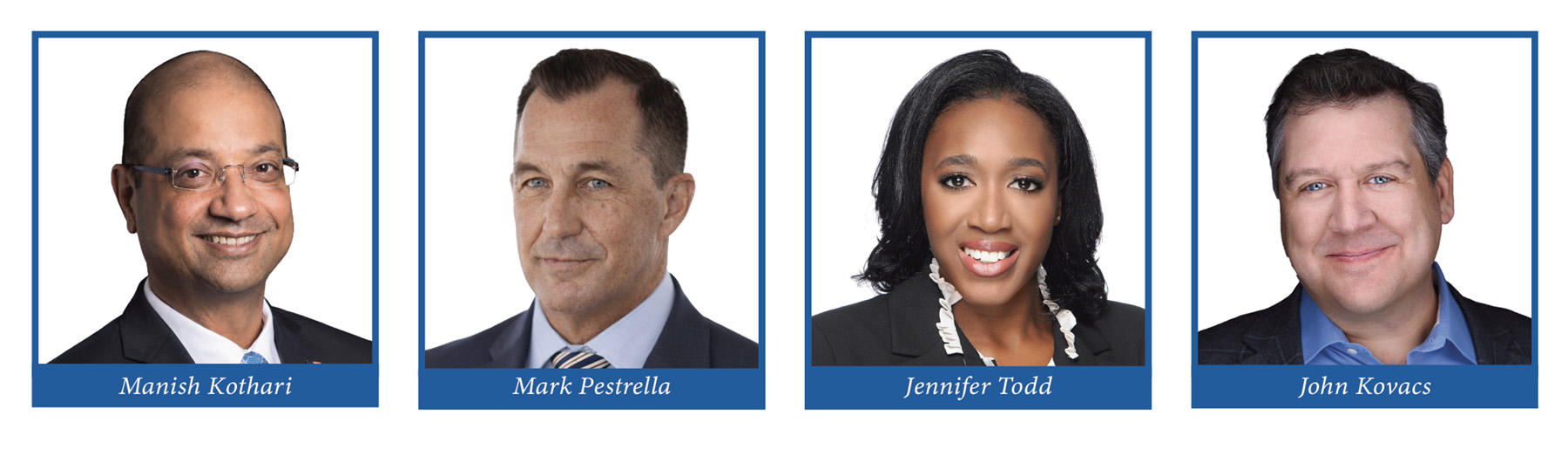
Manish Kothari, NAC, F.ASCE, the president and CEO of Sheladia Associates, a former chairman of the American Council of Engineering Companies, and a member of ASCE’s Industry Leaders Council, wants to know if the United States is investing correctly in its infrastructure. Kothari, who is moderating the vision and strategy session “Global Lessons, Local Impact: Rethinking U.S. Infrastructure Investment,” explained that the question comes down to a key distinction: Are we investing for the infrastructure of the past or the infrastructure of the future?
The infrastructure of the past is largely defined in terms of steel and concrete, Kothari said, and features bridges, tunnels, roads, and other traditional aspects of the built environment. Because that existing infrastructure is the backbone of the nation’s economic growth, “we cannot ignore (it),” Kothari noted. “But we cannot just keep fixing it” with the equivalent of bandages.
Instead, Kothari explained, “we need to integrate new innovations collectively to make sure the country’s long-term growth will fit into the national plan” for sustainable economic advancement. Those innovations for the infrastructure of the future will involve data, connectivity, and the ability to adapt and be resilient, among other new approaches. And to reach that future vision, “we need to plan and design for interconnected cities, as well as autonomous transit and traffic systems,” with investments in sensors, data systems, artificial intelligence, and similar technologies.
It is no longer a question of whether the U.S. can build smart infrastructure, Kothari stressed, “but can we afford not to build it?”
At events such as ASCE2027, Kothari said, “we must come together ... to challenge the norm, to push ourselves to think differently — not only as engineers and architects but also as owners, public servants, and technologists.” The challenge becomes “how can we collectively (use) our knowledge and intelligence to invest for tomorrow’s infrastructure? What does the government need to do to rethink its priorities?”
Although the U.S. has long been a leader in infrastructure innovation, the nation needs to avoid what Kothari calls “the arrogance of success.” That involves the mistaken view that “what worked yesterday is enough for tomorrow.” Instead, he urges American engineers to learn from other nations’ experiences.
“The whole world is struggling with the same questions,” he noted, adding that ASCE has members who represent more than 100 countries. So there are plenty of international examples of both successes and failures in infrastructure investments from which Americans can learn valuable lessons. For example, on the success side is Singapore’s “amazing technology” for water management, which includes predictive maintenance, leak detection, and demand forecasting, among other factors, Kothari noted. On the less successful side are examples such as Saudi Arabia’s proposed futuristic city NEOM, the plans for which had to be scaled back when expected levels of private investment did not materialize.

In the past, Kothari said, some people believed horses could never be replaced, but then automobiles came along, and today engineers work to implement self-driving vehicles. But sometimes innovation can be difficult for people to accept. He worked on autonomous vehicles in the late 1990s only to see the idea stall because of various obstacles, ranging from government regulations to the question of whether consumers were ready to let their cars drive them.
Kothari hopes that for those attending his session, they leave the event “with a forward-looking perspective that the decisions we take today will impact the future.” As inspiration toward that goal, he offered two quotes. The first — attributed to various sources, including management consultant Peter Drucker — is that “the best way to predict the future is to create it.” The second, often attributed to Leonardo da Vinci but actually from Johann Wolfgang von Goethe, emphasizes the need for taking action: “Knowing is not enough; we must apply. Being willing is not enough; we must do.”
Reimagining resilience
During the session “Resilience Reimagined: Community Recovery after Disaster Strikes,” Mark Pestrella, P.E., F.ASCE, the director of the Los Angeles County Department of Public Works and the current chair of the ILC, will begin with a discussion on how the Los Angeles region is rebuilding in the aftermath of the deadly 2025 wildfires that killed dozens of people and damaged or destroyed more than 16,000 structures.
Joining Pestrella during that conversation will be Maj. Gen. Jason Kelly, the deputy commanding general for civil and emergency operations at the U.S. Army Corps of Engineers. As part of the fire cleanup, the Corps and local jurisdictions collaborated to safely remove 4.5 million tons of debris and send it to landfills, Pestrella noted. That’s just one of many examples that will be highlighted during the session about how local and federal teams “worked hand in hand to get a great outcome” after the wildfires, he said.
As Pestrella will explain during the session, the 2025 wildfires were unprecedented in their destruction — damaging or destroying all infrastructure in the burned-out areas, from public and private buildings to parks, water and sewer systems, flood-protection measures, and even the roads themselves. But the resulting opportunities to rebuild the region are equally unprecedented, providing “essentially a clean slate” to upgrade the built environment, Pestrella noted.
Although this effort will replace infrastructure that in some cases dated back to the late 1800s with new, modern facilities, the county is careful not to say it’s going to “change the community,” Pestrella stressed. Community members have made it clear that they want to return to the culture, ecosystem, architectural styles, and other aspects of what existed before the fires. So “our goal is not to create a new community but to restore a community with resilience,” Pestrella explained.
Attendees will also learn about the unique approach LA County is taking to the rebuilding program. This includes a special governance structure that was created in June, bringing together people from all the region’s infrastructure agencies, utilities, political boundaries, community borders, and other stakeholder jurisdictions to help develop a master plan for recovery. Known as the Los Angeles County Disaster Recovery Rebuild Authority, and led by Pestrella as executive director, the organization will coordinate recovery efforts aimed at rebuilding the fire-ravaged communities to become safer and more resilient.
The session will also feature a panel discussion on broader resilience issues beyond the LA County wildfires. Although Pestrella urges civil engineers to seek leadership roles in various infrastructure-focused organizations and efforts, he also wants attendees at his session to understand the challenges associated with such work. “Our built environment is a system of systems,” he pointed out, “and it takes an integration of resources across many specialties to bring about true resilience.” Among other things, this means “being humble enough to ask and listen” to a community’s desires after a disaster, but also educating the community about its responsibilities to “own” some of the residual risk once damaged infrastructure is rebuilt.
In the case of LA County, this includes setting up “wildfire vegetation management areas ... to (handle) the defensible spaces around the community,” Pestrella noted. Such efforts will require community buy-in and participation, including higher taxes or fees, “which can be a tough sell when people have just gone through a major economic (event)” such as the wildfires, he conceded.
The county is also taking on greater risk through measures aimed at speeding up the recovery and rebuilding efforts. For example, county supervisors are deferring and refunding certain fees to encourage homeowners to rebuild single-family housing, while California-licensed architects and engineers are being allowed to self-certify that building plans comply with the county’s building codes.
“There’s absolutely risk” involved in such actions, Pestrella conceded. “But isn’t that what leadership is — taking the risk in the name of good public policy?” It is precisely the role civil engineers should take, based on their education and experience, Pestrella stressed. “We have the understanding of how things work and we can recognize what are unsafe conditions.”
And it is exactly what he and Kelly plan to discuss during their session: “Being leaders who are willing to take the risk, deliver the tough truth with respect, set an expectation, and then of course, meet that expectation together,” through the combined work of the government and the community.
Understanding the workforce
Jennifer Todd, M.L.S., the executive director of the nonprofit organization A Greener Tomorrow and a member of the ILC, knows that AI will be a key topic during her ASCE2027 session, “Building a Resilient Infrastructure Team.” But she doesn’t want it to “encompass the entire conversation.”

AI will feature in the session because “it’s trendy and sexy and everyone is talking about it.” But “it’s important that we do not let the technology overshadow the larger workforce conversation.”
So her session will also focus on the modern workforce and how “we have to understand the needs of people and how to support them,” Todd explained.
Additionally, the session will cover the need for mentorship of younger engineers and how to help them decide which aspects of civil engineering will best suit them in their careers.
The session will also examine how organizations support engineers across different career and life stages, including workplace flexibility, caregiving responsibilities, and advancement.
Engineering education is another vital issue that will be discussed, including the growing importance of community colleges, changing pathways into the profession, and how educators may need to adapt teaching and engagement strategies for a new generation of students.
The session will also explore the challenges of how to manage engineers in their 20s versus engineers in their 50s or 60s within an engineering company, along with how to keep mid-level managers within the industry and how the firm’s culture can play a huge role in losing or retaining talent overall.
“Those are conversations that can really only be had between people,” Todd stressed.
That said, the AI-focused portion of the session will likely examine issues such as which employees are best suited to using AI in their jobs. Todd believes early-career engineers should use AI in ways that accelerate learning without allowing the technology to replace the foundational work required to develop technical judgment. Young engineers still need opportunities to understand the fundamentals, work through problems, and develop the judgment they will need later in their careers.
Senior leaders have a different role in AI adoption, Todd noted. Their focus may be less on using AI for day-to-day technical production and more on governance, strategy, risk, adoption, workforce development, and determining where the technology can responsibly increase organizational capacity.
It’s middle managers and engineers with 15 to 20 years of experience who can best put AI to work in the firm, she said. “AI can generate information very quickly, but speed is not the same as judgment. Experienced professionals understand the context, risks, and nuances that determine whether an AI-generated answer is technically sound and appropriate for the situation.” Mid-career engineers are the ones who can best double-check the calculations the AI system performed or review the AI’s work on a proposal because “they have the technical knowledge, project experience, and enough context to evaluate where AI-generated outputs are accurate and appropriate,” she explained.
Another critical issue involving AI likely to be discussed during the session is the fear people have that technology will take away their jobs, Todd said. Firms that successfully use AI, she explained, are the ones whose culture builds sufficient trust that people feel they will not be replaced by AI. Otherwise, they will be reluctant to use the technology to improve how they design and deliver projects and increase the firm’s capacity to get work done.
Perhaps the most important point Todd wants attendees to take away from her session is the need to address the labor shortage across construction and engineering as people retire or move into other fields. This problem existed before recent advances in technology, she said, but it has become even more prevalent as AI spreads.
Todd wants people “not to be blinded” by what AI offers while understanding that it can be a powerful tool. “But ultimately, people still matter! And we need to make those personal, human connections to ensure that we continue to get people to choose civil engineering for their careers, because it is a choice!”
Buying or selling a firm
Mergers and acquisitions in the architecture, engineering, and construction sector have more than doubled over the past decade, reaching a record level of more than 500 deals in 2025, noted John Kovacs, P.E., PMP, CAIM, BC.GE, F.ASCE, the president of Advisory Insights LLC and a member of the ILC. Citing data from management consulting firm Morrissey Goodale’s Word on the Street newsletter from July 6, Kovacs added that the AEC sector seems to be on track for similar merger and acquisition results this year.
Kovacs is chairing the ASCE2027 session “‘Build, Buy, or Be Bought?’ — A Framework for Growing Your Firm.”
Given the sector’s robust market, Kovacs said, nearly every civil engineer will, at some point in their career, be affected by the changes wrought by the pace of mergers and acquisitions. “It’s likely they themselves or someone they know will be part of a business that goes through some type of merger or acquisition on either the buy side or sell side,” Kovacs explained. That is why he urges ASCE2027 attendees to participate in his session. “I think some general knowledge of the industry they’re in will be beneficial to their career and to understanding what that means for them going forward.”
Although civil engineering firms can grow their business by developing a more extensive talent base or building stronger relations with clients, mergers and acquisitions are an effective strategy, Kovacs noted. This is especially true when the firm being merged with or acquired comes with new markets or capabilities, or operates in new geographic areas.
When one firm looks to buy or merge with another firm, there are various factors to consider, Kovacs said. For example, why is the firm available for merger or acquisition? Often, these firms have a founder or other leading executive who is planning to retire or who wants to concentrate more on client relationships and projects than on the daily details of running a business. So, Kovacs asked, does that match the acquiring firm’s strategic plans? Is the acquiring firm counting on the other firm’s founder staying around? If not, who else within the firm’s upper management will or won’t still be there after the deal is completed?
Likewise, why might you want your firm to be acquired by or merge with another firm? Have you maxed out the possibilities for growth within your current markets? Are you looking to become part of a larger organization, which can help you offer a wider range of services to your existing clients or expand your efforts to a wider range of clients?
The company culture of each firm, and of the new firm that results from the transaction, is also critical, Kovacs said. If the acquiring firm has always been strong in structural engineering but the firm being acquired specializes in geotechnical work, how will those new capabilities be integrated into the new entity? It is one thing for the geotechnical aspects to be used as an internal resource by the acquiring firm, but it is something else entirely if the goal is to expand into new external markets.
Data is also a critical aspect of any merger or acquisition, Kovacs noted, whether it’s the data needed for designing and constructing projects, the data for due diligence during the acquisition or merger process, or even general marketplace data. That is why AI can also play a key role, he explained, adding that attendees at his session “should understand that AI is not just for design but also an aspect of how the industry runs.”
Whether a firm is acquiring or being acquired, its leadership also needs to understand that, despite all the work that goes into the completion of a transaction, “the really hard part starts at Day One after the deal closes, when you have to integrate the businesses, implement the strategy, and realize how the two businesses, now that they’ve come together, can be better than (they were) as individual organizations,” Kovacs concluded. “That’s taking the strategy into action.”
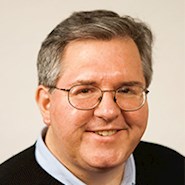
Robert L. Reid is the senior editor and features manager of Civil Engineering.
This article first appeared in the November/December 2026 issue of Civil Engineering as “Envisioning ASCE2027.”
ASCE2027 will be held March 1-5 in Philadelphia. To register or find out more about the conference, visit experience.asce.org. You can also explore some of the other vision and strategy sessions taking place at experience.asce.org/program/vision-strategy-sessions.