By Leslie Nemo
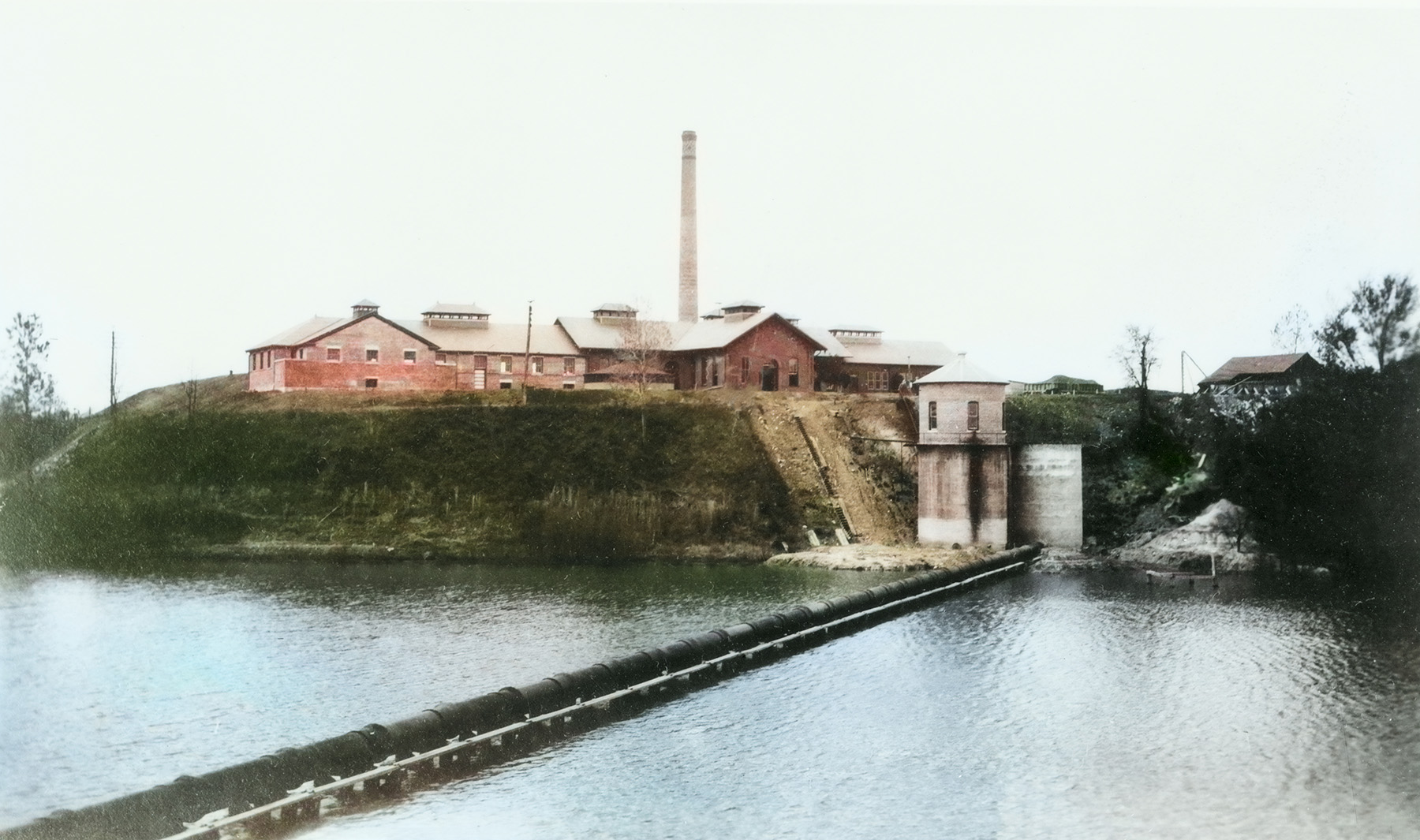
Shreveport, Louisiana, embraced the latest in water treatment technology in its McNeil Street Pumping Station.
In 1890, there were 3,196 public water systems in the United States — more than 23 times as many as just 30 years earlier, according to the National Register of Historic Places. One of the thousands that was built in those three decades was in Shreveport, in northwest Louisiana. Officially incorporated as a city in 1871, officials began pursuing a municipal waterworks system not long after. Over time, Shreveport built up an operation that deployed a number of cutting-edge water treatment technologies, a feat managed by a series of private companies.
Before establishing a pumped municipal water supply system, town officials spent the 1850s and 1860s trying and failing to meet local water needs with an artesian source and underground cisterns for firefighting reserves. Even if these isolated sources had worked, they would not have been able to handle waste, which by 1880 was being managed with an elaborate privy system. Bathrooms were required to have boxes or tubs that a municipal collector emptied into a larger vat every night and transported for dumping into the local Red River.
The program cost the city $20,000 a year, and the results were less than ideal because of the smell. At least one resident wrote a letter to the local newspaper, begging for a new water and sewer system that would rid the city of the constant stench, according to Terry S. Reynolds in the 1980 Historic American Engineering Report “Shreveport Water Works Company: McNeil Street Pumping Station.”
The public pleading for improvements aligned roughly with the time that elected officials began investigating a more formal water system. However, financial constraints limited the city to private operators because it was still cheaper than municipal ownership. Shreveport had recently come close to defaulting on its bonds, and the state constitution limited local taxes as well as what could be levied for public works.
Furthermore, residents had already voted to approve a tax for railroad expansion, thus limiting the ability to tax for water and sewer, so the city fielded interests from private developers, which was standard practice at the time. In the late 1880s, 56% of waterworks in the country were privately held, writes Reynolds in the 1981 paper Louisiana History: The Journal of the Louisiana Historical Association.
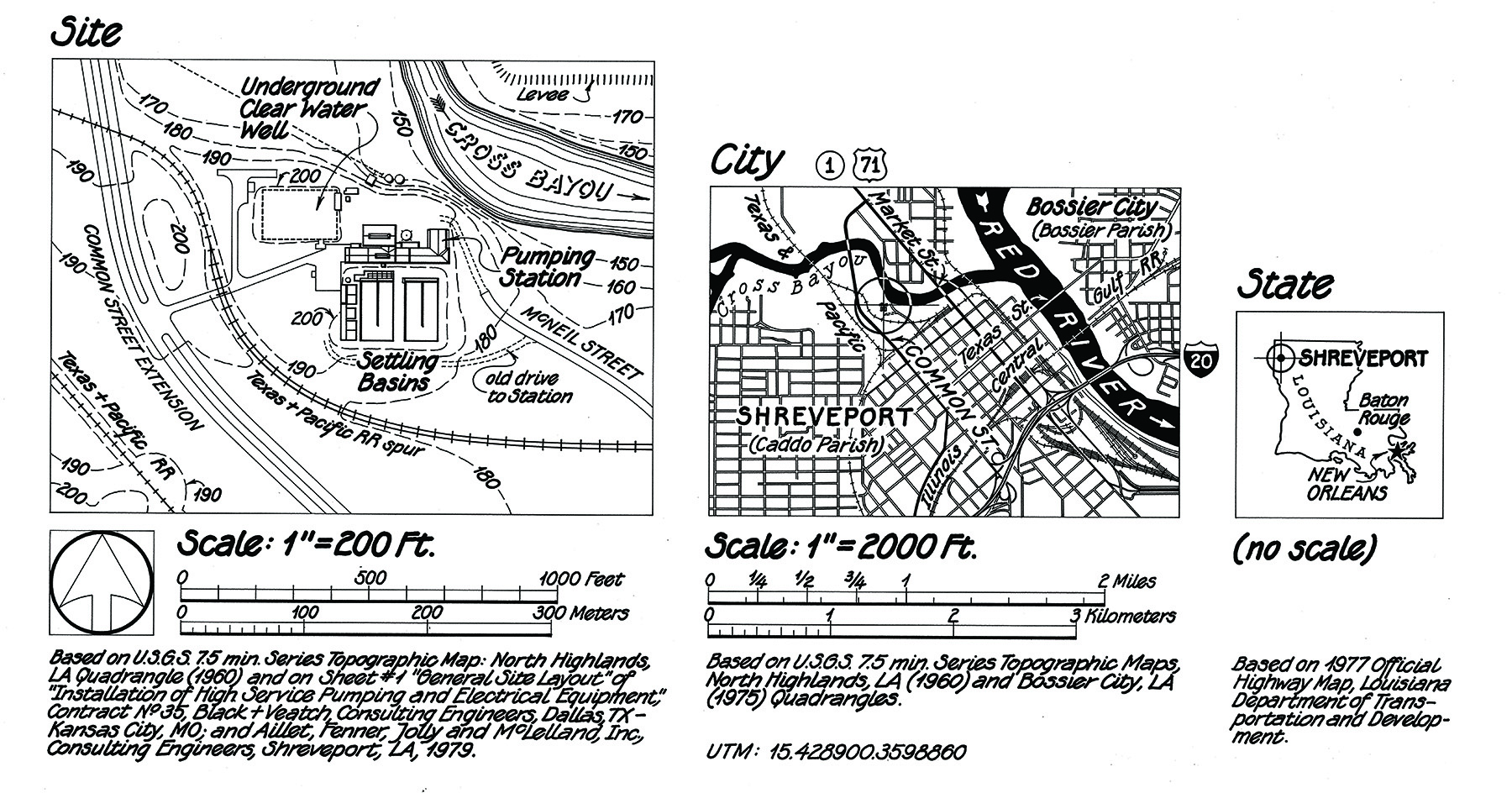
After about two years of failing to secure serious, capable bidders, the city council put out one more invitation for bids. This time, Shreveport advertised for a system that would draw from the nearby Cross Bayou, a stream on the northern edge of the city, whose waters would be pumped into two settling basins.
The winning bidder would have exclusive rights to the water and sewer system for 30 years, after which the city could buy the system. Samuel R. Bullock & Co. submitted the lowest bid at $8,800 ($5,800 for water and hydrants and $3,000 for sewage disposal). By September 1886, Bullock had accepted the franchise, completing construction in July of the following year. E.F. Fuller served as the plant engineer.
The central portion of the project was the McNeil Street Pumping Station. Brick foundations sitting 6 ft deep supported the L-shaped facility. In its northern leg was a low-service pump room that held a 13 ft diameter, 45 ft deep pump pit and “two Blake, single expansion, vertical steam pumps” that had a million gallons per day capacity, according to the HAER report. Inside a wooden tunnel, workers laid a pipe that ran from a timber crib dam in Cross Bayou to these pumps, which sent the water to the settling basins.
The eastern leg of the facility served as the high-service pump room and had “two horizontal, compound, condensing Blake steam pumps,” per HAER. These pumped water from the settling basins into the water mains to disperse to the rest of the city. In between, at the corner of the L, was a boiler room that provided power to generate steam for the pumps.
The settling basins — 110 ft wide, 180 ft long, and 23.4 ft deep — were behind the pumping station. With sloped sides separated by a wall, each basin could hold up to 2.5 million gallons of water. The construction team also installed a 110 ft tall, 20 ft diameter standpipe at one of the highest points in the city. It held only 250,000 gallons, which was insufficient as a storage reservoir, but the standpipe served to equalize the water pressure within the system.
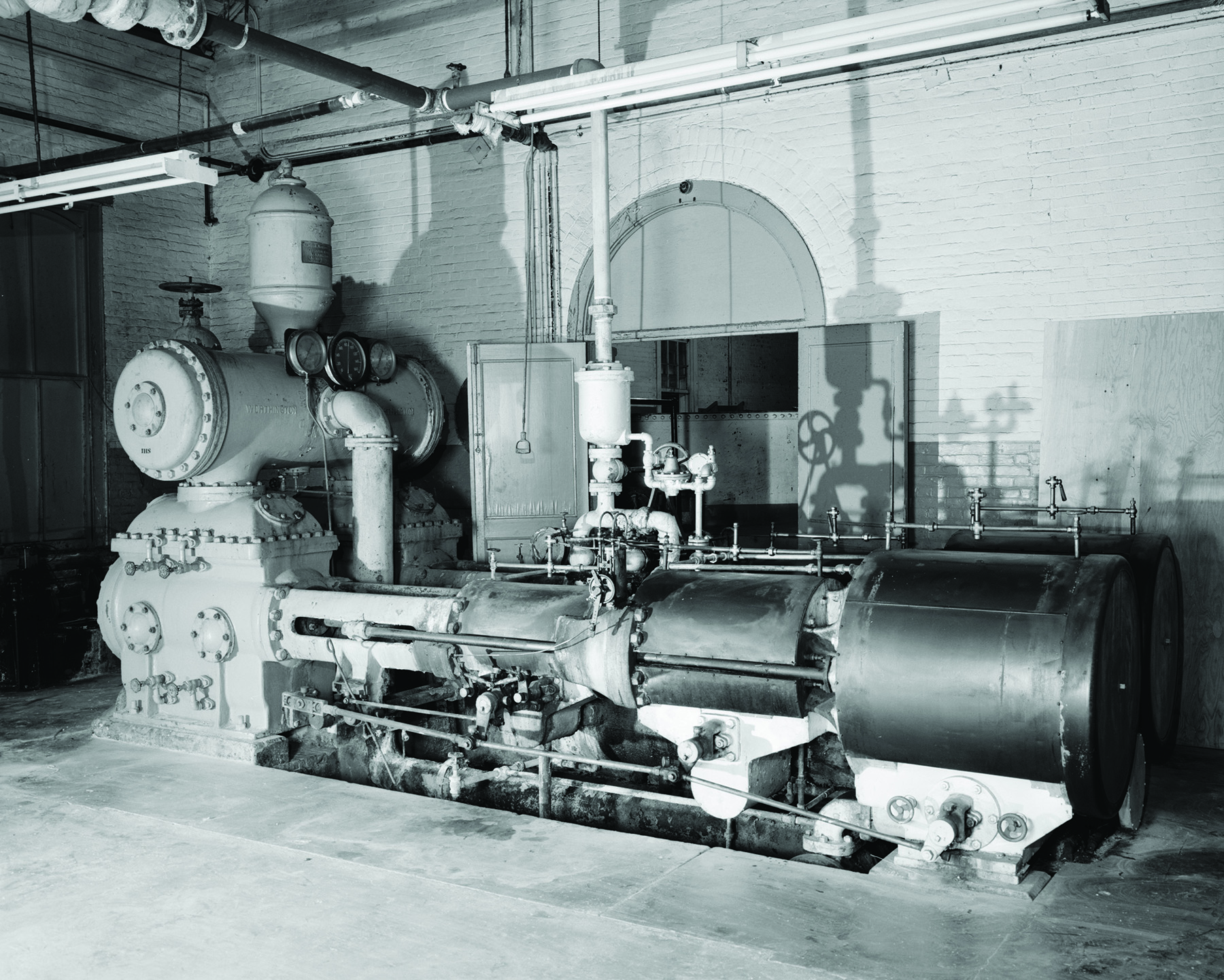
Sometime in the latter half of 1889, the water system came under new ownership — the First National Bank of New York City — namely due to complaints about the muddy water and insufficient water pressure to combat several fires that had broken out. The new owners added four 250,000 gallons per day “upward flow Hyatt pressure filters,” per HAER. The cylindrical equipment, standing 10 ft wide and 8 ft tall, contained 6 ft of sand on perforated false bottoms. This type of pressure-based filter system had been introduced to municipal water systems in the mid-1880s because it could be installed quickly and was more economical.
The new filtration system altered the way water flowed through the pump station. Water was still pumped from Cross Bayou into the settling basins by the low-pressure pumps and from there to the high-service pumps, according to the HAER report. But in this new configuration, the owner added filters in the “force main between the high-service pumps and the general water distribution system,” which boosted water quality.
Another layer of protection was added as well. Diaphragm pumps — placed between the high-service pumps and the new filters — injected lime, which softened the water, and alum, which made coagulation easier and added a gelatinous coating on the sand, helping the water move faster through the filter.
In the fall of 1892, the water works were purchased by Peter Youree. But the complaints and service issues piled up even under new ownership. Population increases caused more strain on the system. Residents and businesses required more connections to the water supply, causing the water system to further encroach on Cross Bayou and damage its water quality. Even though Youree promised “‘extensive and radical changes’ to improve ‘the efficiency of the service and give the city a larger and purer supply,’” his ownership came to an early end, lasting only seven years, according to a September 1892 article in the Shreveport Times quoted in HAER.
In 1899, the American Water Works and Guarantee Co. took over the franchise. Based in Pittsburgh, the company operated a number of water systems similar in size to Shreveport’s. AWWG would be the last company to operate the McNeil Street system as a corporate enterprise.
The new operator quickly undertook several major changes. AWWG added new pumps and engines to the system. Ultimately, the suite of changes — carried out over a 12-year period — boosted the system’s low-service capacity from 3 mgd to 10 mgd, while the high-service capacity increased from 2 mgd to 11 mgd. One Worthington model pump installed in 1900 operated until 1980.
The filtration systems were upgraded, too. In 1905, three gravity, rapid-sand filters also went into place, with a joint capacity of 1.5 mgd. This kind of technology had only been introduced in the late 1890s, according to Reynolds in the HAER report. Not only did the new gravity filters remove bacteria more effectively than the earlier pressure filters, but they could also be manufactured with an open top, making the equipment easier to access for repairs, and they could be built in rectangles in plan, which better fit room dimensions.
The gravity filters in Shreveport were also some of the first to be made of reinforced concrete. AWWG also made Shreveport an early municipal adopter of liquid chlorine, which it introduced via a Wallace and Tiernan chlorinating machine in 1914.
During this work on the treatment equipment, AWWG also sought a source of cleaner water, landing on Twelve Mile Bayou, which fed into the nearby Red River about a mile upstream from Cross Bayou. To access this new source, AWWG contracted with the Southern Engineering and Construction Co. of New Orleans in 1901 to build a 4,965 ft long canal that linked Cross Bayou and Twelve Mile Bayou.
Efforts to remove about 30,000 cu yd of soil were repeatedly foiled by the soft and swampy ground. Steam dredges started the excavation, but their vibrations caused previously excavated areas to collapse. Horse and mule teams got stuck, so hand excavations were the last resort, with teams on temporary structures since the soil was too soft to stand in. Even then, excavated sections continued collapsing. The canal was not completed until 1903.
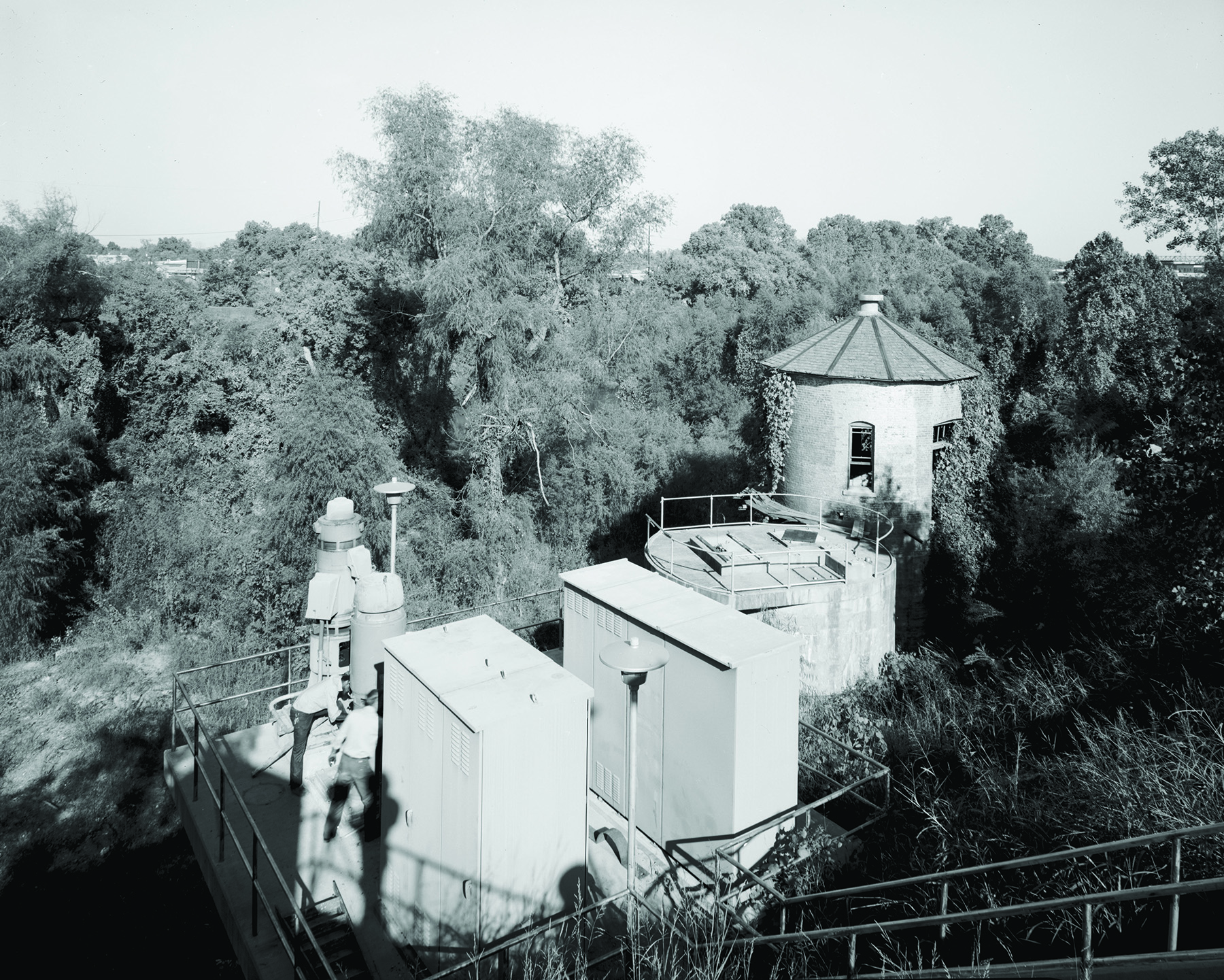
Teams also constructed an impounding reservoir capable of holding 1 billion gallons by building a timber sheet-pile dam on Twelve Mile Bayou approximately 200 ft below the mouth of the canal. A pumping station pulled water from above the dam and sent it into the canal.
This solution to consistently provide a clean water source would last only a few years. In 1908, the nearby Red River flooded and changed the course of Twelve Mile Bayou, gradually sapping the new canal of its source. Instead, the water company had to start drawing directly from Red River via the McNeil Street Pumping Station by building a 30 in. diameter, mile-long siphon line with a capacity of 8.5 to 10 mgd. The company used iron hangers suspended from timber joists to install the siphon line, which traveled to a receiving well installed at the pumping station.
Despite these changes, Shreveport residents were still dissatisfied with the intake water quality and its cost. Frustration peaked in 1911. In June of that year, fire broke out in the city, and as fate would have it, the water system was undergoing renovations, causing the water pressure to drop at two water mains while crews were trying to put out fires. A later consequence of the inadequate water pressure was financial: The city withheld its monthly payment to AWWG, and then the company raised its rates in retaliation. “While this increase in water rates probably was justified, it was not a diplomatic time for such an action,” wrote Reynolds in the HAER report.
What followed was years of Shreveport and AWWG trying to call each other’s bluff. In August 1912, after appraising the cost of buying the existing system or building a new one, Shreveport officials offered the water company $607,635.94 for its equipment. AWWG’s president reminded the city that according to its contract, any government purchase of the system needed a trio of appraisers determining a price together: one chosen by the company, one chosen by the city, and one chosen by both parties.
In October 1913, this three-person board of appraisers released its joint price of $1,354,273 — a figure that was $500,000 more than the system was appraised for in 1911. The city could not cover the cost because the million-dollar-plus figure was $150,000 beyond what the state law allowed it to raise.
E.B. Black, the appraiser hired by the city, told the city council that it might be able to build its own system for $1,000,000. In August 1914, the city voted to issue bonds for slightly more than that amount, and in November 1915, the council passed another referendum giving the city authority to build a new water system. Shreveport even purchased a tract of land for a new facility, hired an engineer to start drafting designs, and began the process of issuing bids for different parts of the project before the water company agreed to negotiate. Eventually, the two parties agreed on a price of $800,000, and in November 1916, voters chose to use the previously approved bonds to purchase the McNeil Street system. On January 1, 1917, the city officially owned and ran its own water system.
Sooner than expected, the new municipal operators faced paying for equipment replacements and upgrades. Some of the boilers, which had been in place since the plant’s beginnings, were at the end of their lifespan, and the chlorinator and other equipment needed repairs. The water quality also deteriorated to the point where it was so turbid it caused the machines to malfunction, forcing the water department to send raw water through the municipal system.
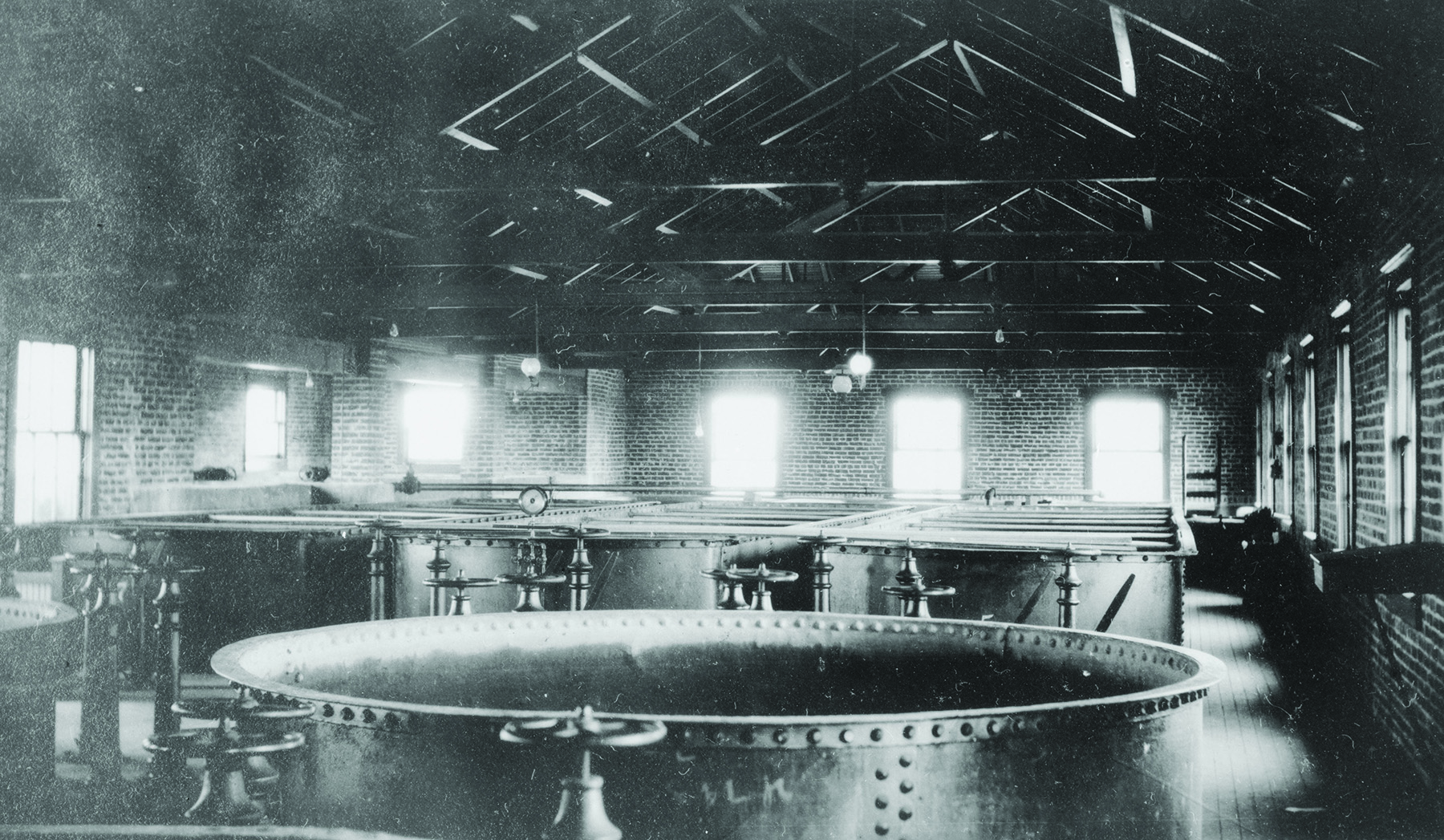
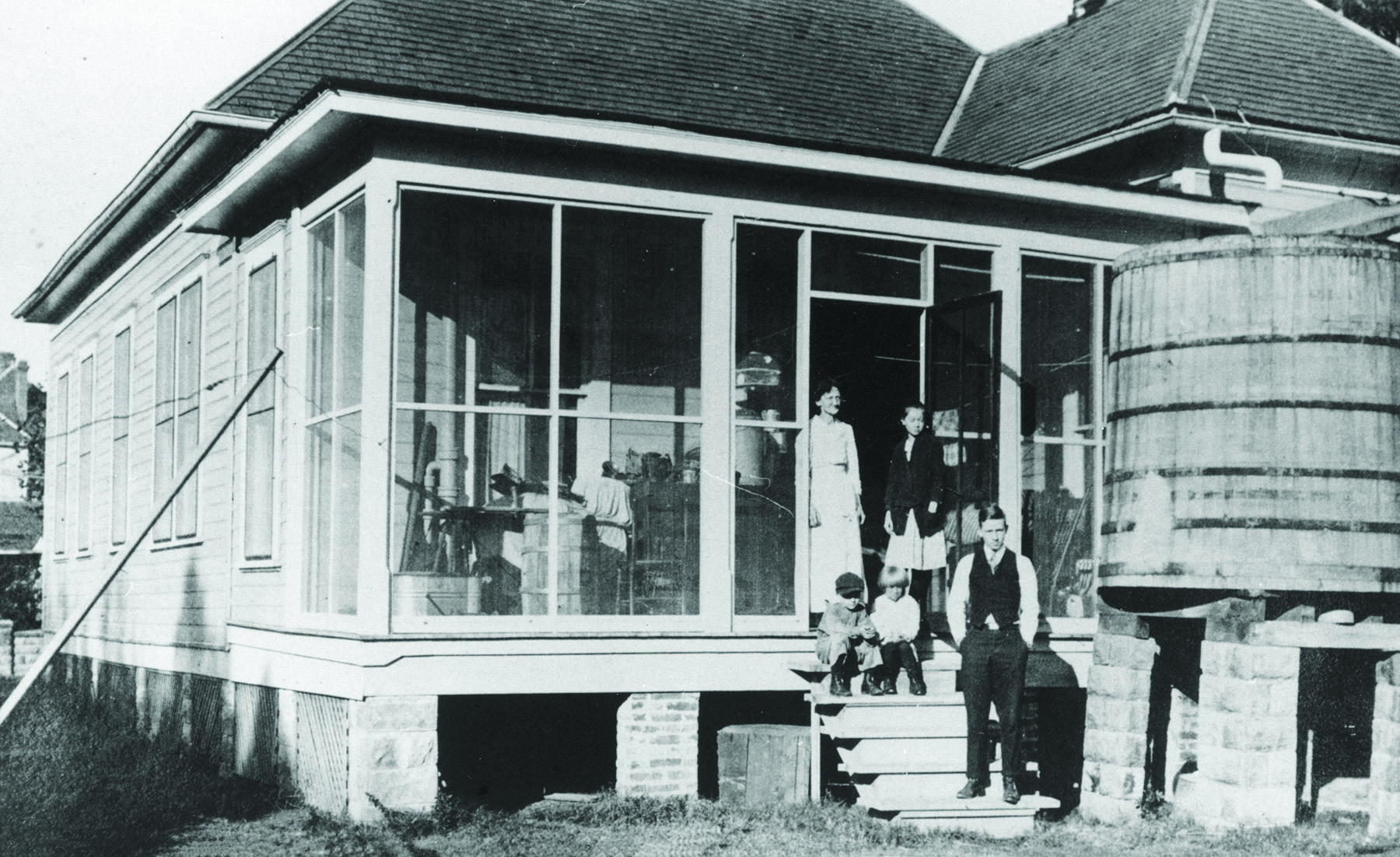
Yet another bond issue went toward solving these problems. A series of improvements took effect — including enlargement of the McNeil Street station, a new clear water well, an additional vertical low-service pump and a pit to hold it, a “5 mgd Worthington-Snow horizontal, cross-compound, crank-and-flywheel duplex” steam pump engine, larger force mains, remodeled settling basins, overhauled filters, a dedicated chlorinator room, and a laboratory — updates that would stay operational for more than 50 years, per HAER.
Almost the entire time it took Shreveport to acquire its water system and make these changes, the city had been trying to buy the land around Cross Lake. The body of water lay west of Shreveport at the headwaters of Cross Bayou, and it could serve as a higher-quality source of water, but it was mired in landowner lawsuits. Litigation resolved sufficiently enough in 1924 that the city could begin turning the lake into a reservoir.
To do that, more than 4,000 acres in the lakebed had to be “cleared of underbrush and trees.” An existing 8,000 ft long and 27 ft high railroad embankment nearby was reinforced with clay from the lake bed. The embankment was then covered in 10 in. of riprap to make it more durable and guard against erosion from wave action, per HAER.
Where Cross Bayou drained into Cross Lake, a 225 ft long concrete dam and spillway were built, “which backed water up into Cross Lake’s old bed at an elevation of 168 ft. The lake (the dam) created was 8 miles long, 1 to 3 miles wide, had 40 miles of shoreline, and covered around 10,000 acres,” holding about 20 billion gallons, according to Reynolds in the HAER report. A three-mile-long conduit — consisting of cast iron pipe for the first mile and concrete pipe for the last two — carried the water to the treatment plant. The water from Cross Lake began to run in Shreveport in January 1926.
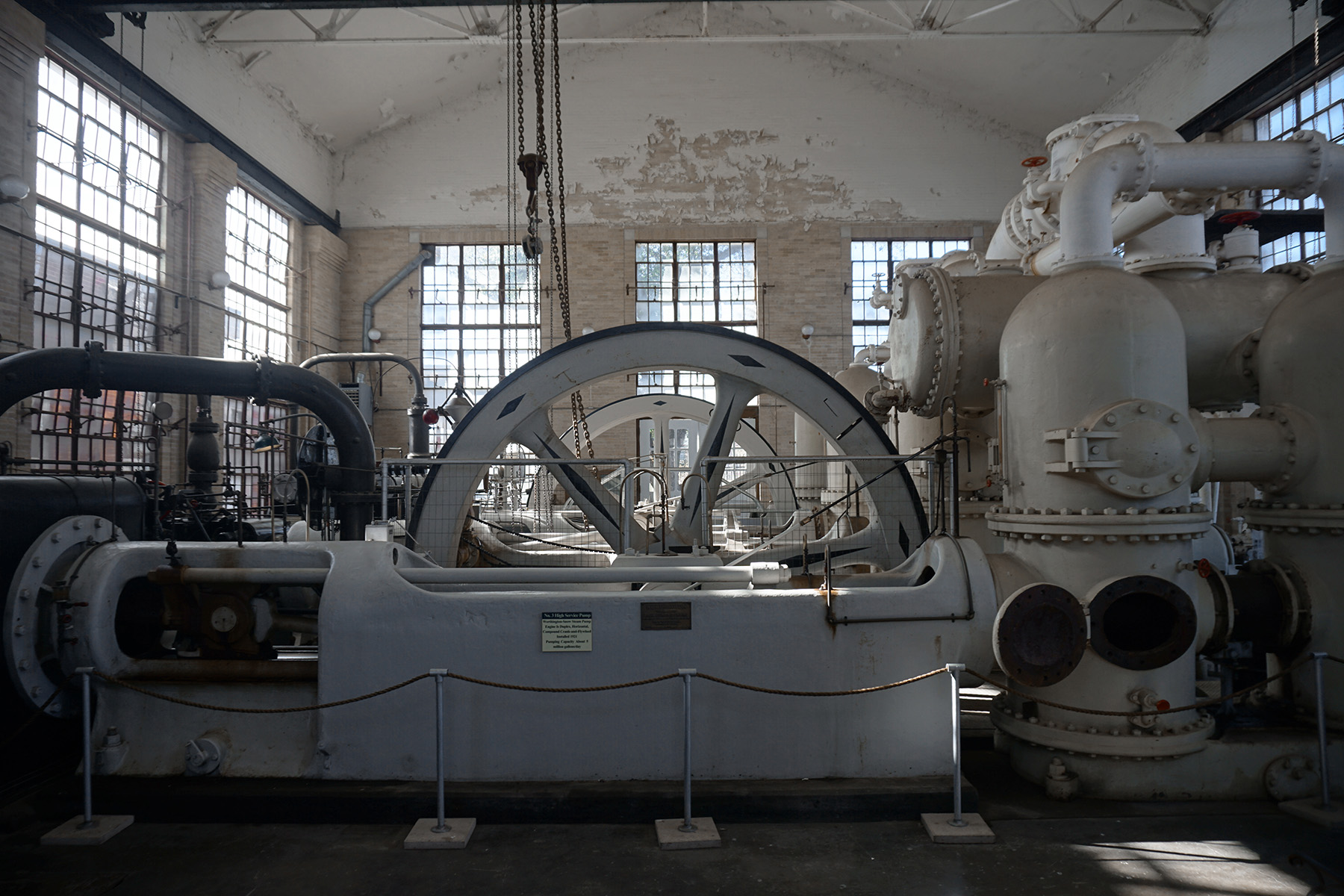
When McNeil Street’s steam-powered engines were retired in 1980, it was the last recognized steam-powered municipal water treatment plant in the nation. The facility stopped operating entirely in 1994. The decades-old equipment — still at the site — and the way the operations transformed over the years make the Shreveport facility representative of what municipal water development looked like in the United States in its early stages.
Those cities that did have water treatment equipment provided drinking water of much better quality than what most Americans had in their homes. In 1890, when the Hyatt filters were installed, only 1.4% of the nation’s population drank filtered water. Of the 187 filtered systems across the country, only a dozen were in the South, and only 50 had a mechanical filtration system in place. In 1915, 80% of water facilities used bleaching powder as a cleaning additive, though Shreveport had moved on to liquid chlorine — a more practical and efficient solution — nearly two years before.
The city might not have built the innovative system, but it did inherit the operations as it moved with the rest of the nation into the next and lasting phase of local water supply: public ownership.
The McNeil Street Pumping Station was designated an ASCE National Historic Civil Engineering Landmark in 1999.
Leslie Nemo is a journalist based in Brooklyn, New York, who writes about science, culture, and the environment.
This article first appeared in the November/December 2026 issue of Civil Engineering as “Small City, Big Changes.”
To learn more about civil engineering history and ASCE’s Historic Civil Engineering Landmark Program, visit the Historic Landmarks page.