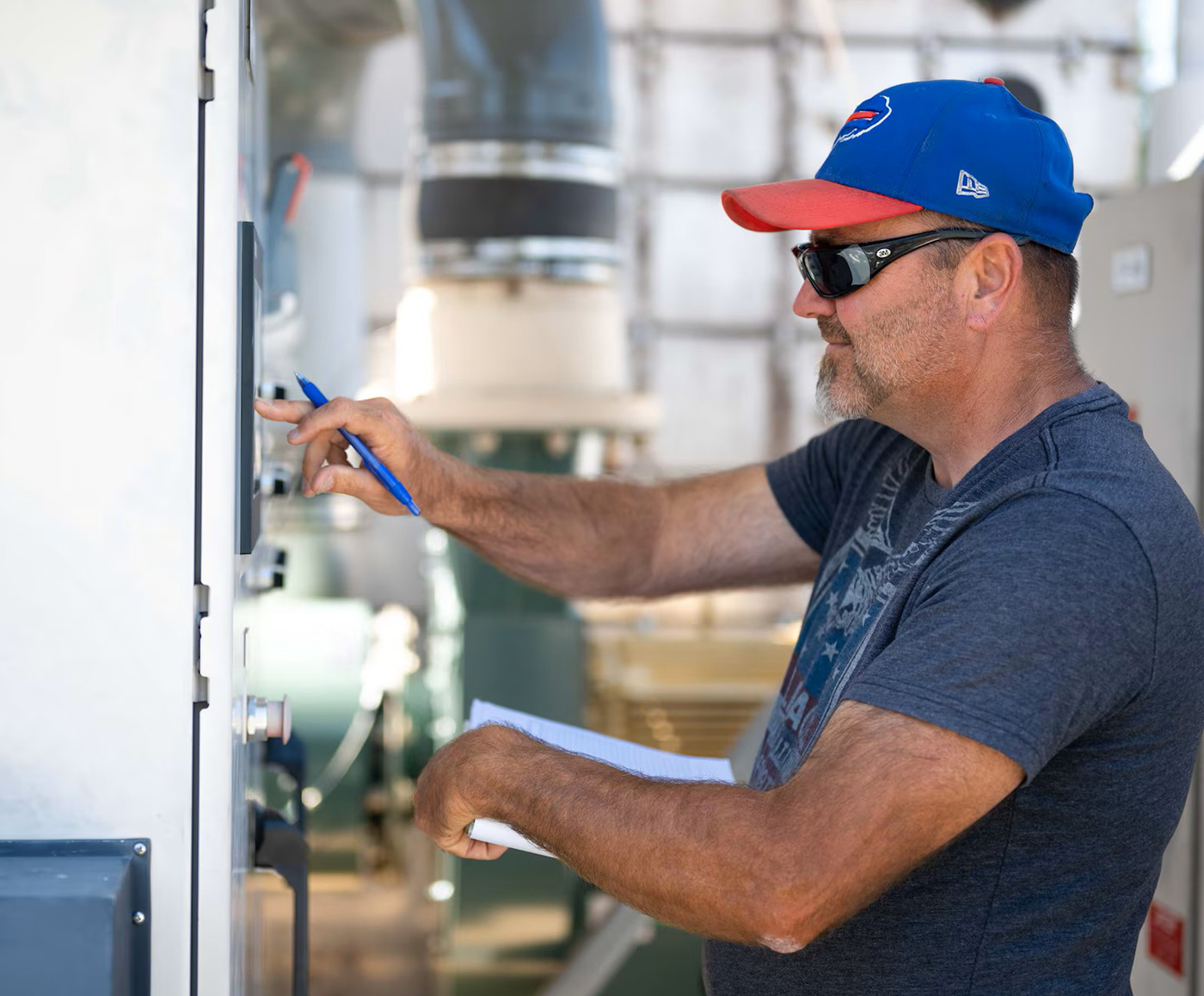
 Airman 1st Class Steven Cardo, U.S. Air Force
U.S. water utilities have a new resource as they increasingly turn to artificial intelligence and machine learning to solve issues ranging from aging infrastructure to rising energy costs.
AI and ML technologies help utilities work smarter by anticipating potential problems, reducing costs, and optimizing operations to protect public health and safety. Yet many water management entities struggle as they try to determine how to best use these emerging technologies for more proactive, secure, and data-driven operations.
Further reading:
- Transit agencies are testing AI’s potential, report finds, with broader adoption likely
- ASCE's AI RACE positions civil engineers to embrace responsible AI integration
- Hacks of US water systems make it clear: Cybersecurity is a civil engineering problem
To assist, Carollo Engineers, an environmental engineering firm that plans, designs, and oversees construction of water and wastewater facilities, partnered with Yokogawa, the National Water Research Institute, and Baylor University for a U.S. Bureau of Reclamation-funded research project, Data-Driven Fault Detection and Process Control for Potable Reuse with Reverse Osmosis and Membrane Bioreactors. The project culminated in a free learning resource for water utilities, the AI & Machine Learning Guidebook for Potable Reuse.
Yoko Koyama, Carollo’s national data science lead, said the firm was inspired to create the guidebook after noting there was a significant gap in materials available to water utilities to help them implement different AI and ML solutions.
“There are a lot of beginner-friendly AI-ML introduction materials – general things – but they are not specific to the water industry,” she said. “You have a lot of scientific studies published, which are very dense or specific, but then, on the other side, there are trade articles that are very high level and geared toward executives or managers.
“Our goal was to create something in the middle that could help utilities understand the technical aspects of AI-ML, so they could gain the proper level of understanding to better implement and evaluate these solutions.”
Laying out the benefits
The guidebook relies on potable reuse case studies to illustrate the need for that kind of technical understanding. Because this type of advanced treatment involves multiple and complex processes, as well as substantial energy demands, it is a place where AI and ML technologies can deliver tangible cost savings and other benefits.
Yet, Koyama said, despite this focus, readers will quickly see that the same principles that govern success here can also be applied to other water-related use cases.
“We focused on water-reuse applications because that was the focus of the U.S. Bureau of Reclamation research project that led to the guidebook,” she said. “Potable reuse systems involve multiple treatment processes and significant operational complexity, which makes them a good example for demonstrating AI and ML applications.
“But the fundamental AI-ML concepts discussed in the guidebook can be applied to conventional drinking water and wastewater treatment as well.”
The guidebook illustrates how utilities can leverage AI and ML to help them become more proactive in their decisions – ultimately making drinking water and wastewater treatment more efficient, resilient, and cost-effective. Koyama said the growing interest in AI presents an opportunity for utilities to better understand the technologies available to them and how they can support operations.
“Many organizations are exploring AI because of the attention around generative AI, but machine learning has been delivering real value in operational settings for years,” she said. “The opportunity for utilities is to understand which tools are best suited to their needs and where they can have the greatest impact.”
Success depends on organizations developing strong data foundations from which to work.
“Data management is often overlooked. Too many people think that AI can automatically make everything easier and solve … a range of different problems,” Koyama said. “But it can’t do that until you have good quality and good quantity data from which you can build AI upon. … When organizations understand the different data management challenges that need to be overcome first, they are in a much better position to effectively and efficiently implement AI and ML solutions.”
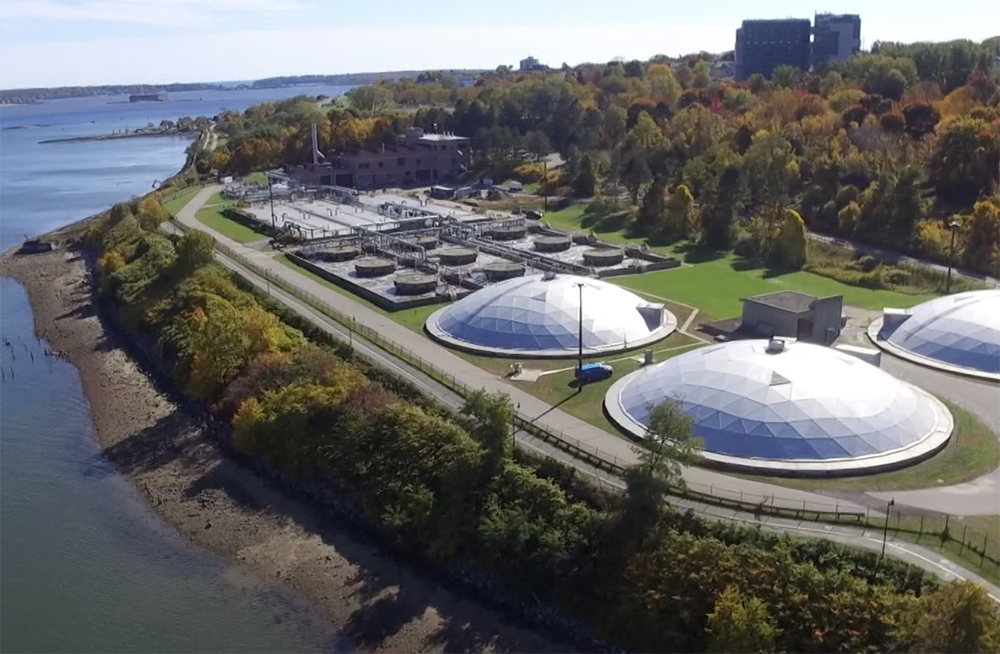 Seasider53 via Wikimedia
Taking it slowly
Even when organizations are working with reliable data, Koyama said, AI and ML implementation requires careful planning at every step.
Models must be tested under realistic operating conditions to determine whether their predictions remain accurate as treatment processes and water quality change. Utilities must also consider cybersecurity, staff training, and ongoing model maintenance. The guidebook encourages a phased implementation approach so organizations can take the time to evaluate model performance and identify potential issues at each step. That kind of human oversight is essential, Koyama said, especially as AI and ML models could ultimately affect treatment processes and, consequently, public health.
The guidebook also highlights several applications with practical implications for utility operations.
ML models can help predict membrane fouling, allowing operators to make more informed decisions about when to clean equipment and potentially reduce energy and chemical use. Other applications include forecasting water-quality conditions, identifying patterns that may signal equipment or process problems, and optimizing multistep treatment processes.
The guidebook, for example, discusses a full-scale trial at a Southern California-based water reclamation facility where AI and ML applications initially demonstrated an energy-use reduction of at least 10%. While Koyama said that AI-ML solutions are not one-size-fits-all, examples like this one illustrate how predictive tools can help utilities make marked improvements in efficiency while maintaining treatment performance and water-quality standards.
“We wanted to create a resource that would give utilities a foundational understanding of what ML is and how you can benefit from it,” Koyama said. “I’m hoping that it will have readers thinking about what makes ML and AI successful in the long term, the prerequisites of deploying these solutions at enterprise scale, how they can really use their data to become more proactive, and how AI-ML can best be used for organizational success.”
Feed Your Brain
Interested in the technology discussed in this article? Then, ASCE2027: The Infrastructure and Engineering Experience is the place you'll want to be. It will be a first-of-its-kind event bringing together subject-matter experts from all across the infrastructure space, March 1-5, 2027, in Philadelphia. So, yes, we know you’re excited about the Philly cheesesteaks, but ASCE2027 also is the perfect place to satisfy your appetite for learning.
Technical deep dives. Infrastructure expertise. Come feast!
Learn more about ASCE2027: The Infrastructure and Engineering Experience.