
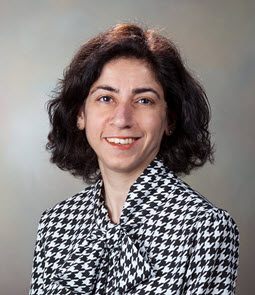
Pania Newell is a professor of mechanical engineering at the University of Utah and chaired the ASCE's Engineering Mechanics Institute's 2025 Biot Conference on Poromechanics. In today's Member Voices, Newell describes the experience and highlights some of the important takeaways from one of ASCE's essential annual events.
About a year and a half ago, I was asked a deceptively simple question: “Who will host the next Biot Conference?” Little did I know that this question would set in motion a collective effort much like an ant colony — complex, adaptive, and profoundly cooperative.
Hosting an international meeting dedicated to Maurice Biot, the father of poroelasticity, was both an honor and a challenge. From the outside, it might have looked like a single organizer leading the charge, but in truth, what emerged was a colony of researchers — each playing a role, sensing the environment, and working together toward a shared goal of celebrating Biot’s contribution to the field and its importance in today’s scientific and engineering discoveries.
With encouragement from colleagues and support from ASCE's Engineering Mechanics Institue, I formally submitted the proposal to host the eighth Biot Conference on Poromechanics at the University of Utah.
The vision was clear: to build bridges across disciplines, generations, and continents, much like ants construct bridges with their own bodies when facing gaps too large to cross alone.
 ASCE EMI
Three of us — the co-chairs — became the coordinating trio, laying pheromone trails of communication, aligning dates, securing venues, and assembling a diverse technical committee from around the world. Each member took on a specific task, not because of hierarchy, but out of shared instinct for collective progress. Our colony aimed high: to gather hundreds of scientists for plenary sessions, workshops, poster presentations, and moments of connection that would nourish the scientific spirit.
To coordinate the colony’s many tasks, we adopted the open-source Indico platform to manage registration and abstract submissions. With the help of my postdoc and the university’s IT support team, we customized and deployed Indico, creating a communication network much like the pheromone trails in an ant colony — guiding participants, organizing sessions, and keeping information flowing efficiently. This approach not only saved costs but also gave us flexibility and control over scheduling and participant interactions, allowing the colony to operate smoothly despite the many logistical challenges.
Then came the environmental pressures, the droughts and storms that test every colony’s resilience. Institutional budget cuts forced many to reconsider travel. Abstract submissions trickled in slowly. Yet, rather than scatter, the colony adapted. Committee members reached out personally to colleagues and students across continents, reviving trails of collaboration that had faded during difficult times. Gradually, the numbers grew — not in abundance, but in diversity and purpose.
 ASCE EMI
And just as momentum built, a new obstacle loomed: a U.S. government shutdown that barred program managers and national lab researchers from attending. For many conferences, this might have spelled collapse. But as in any strong colony, we adjusted course — redistributing effort, reinforcing weaker paths, and pressing forward.
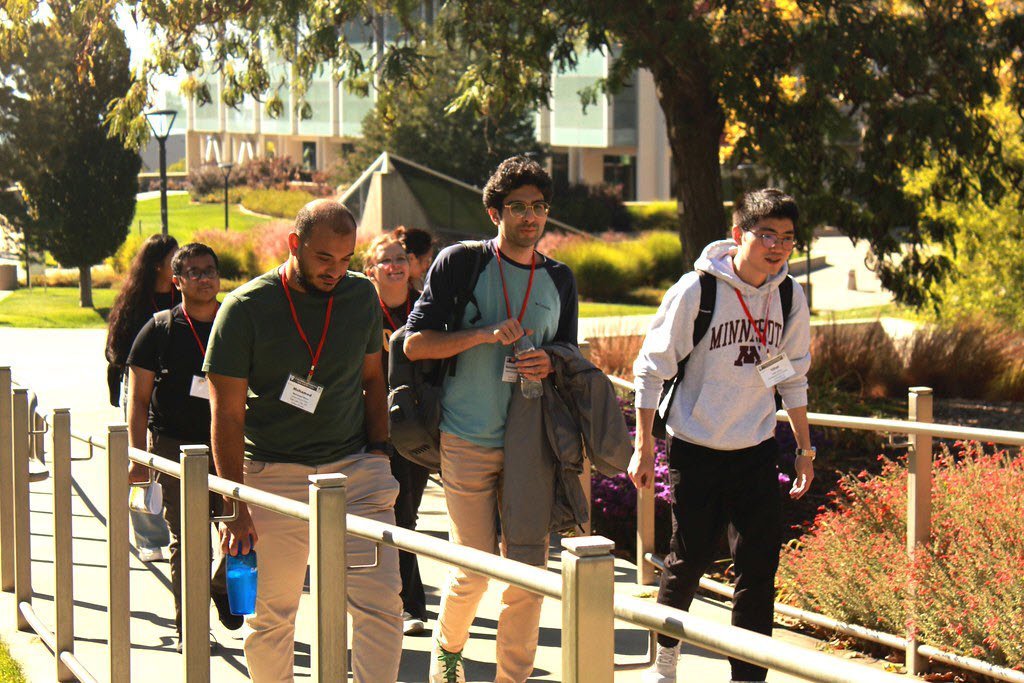
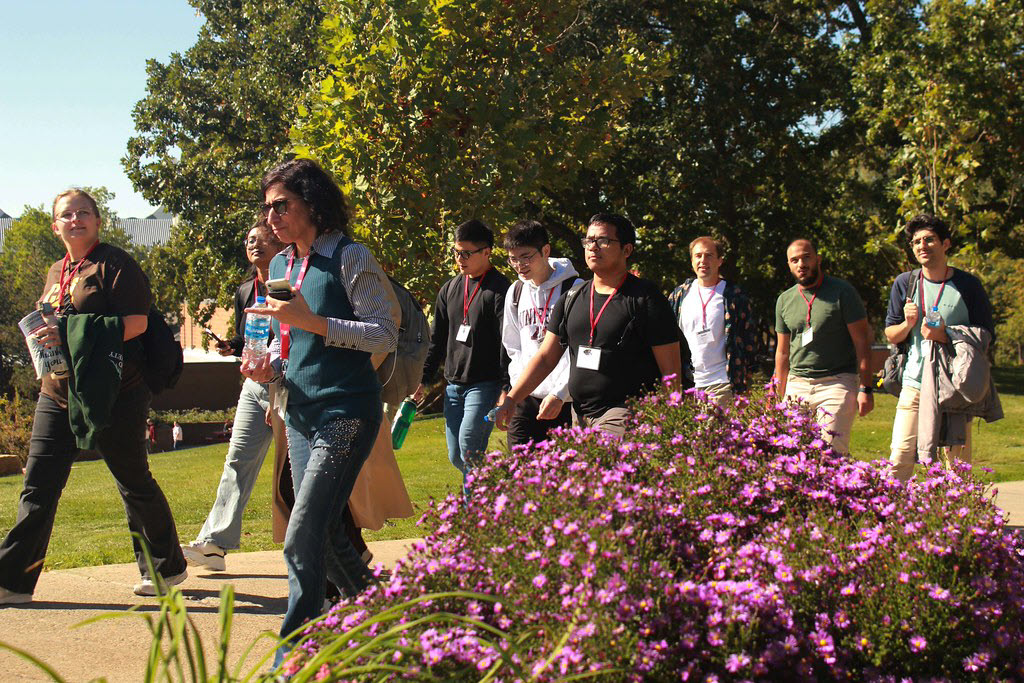
When the conference finally opened, something extraordinary happened. Attendees arrived — fewer in number but rich in enthusiasm and curiosity. Like ants converging on a newly found food source, participants filled rooms with energy, sharing knowledge and laughter in equal measure.
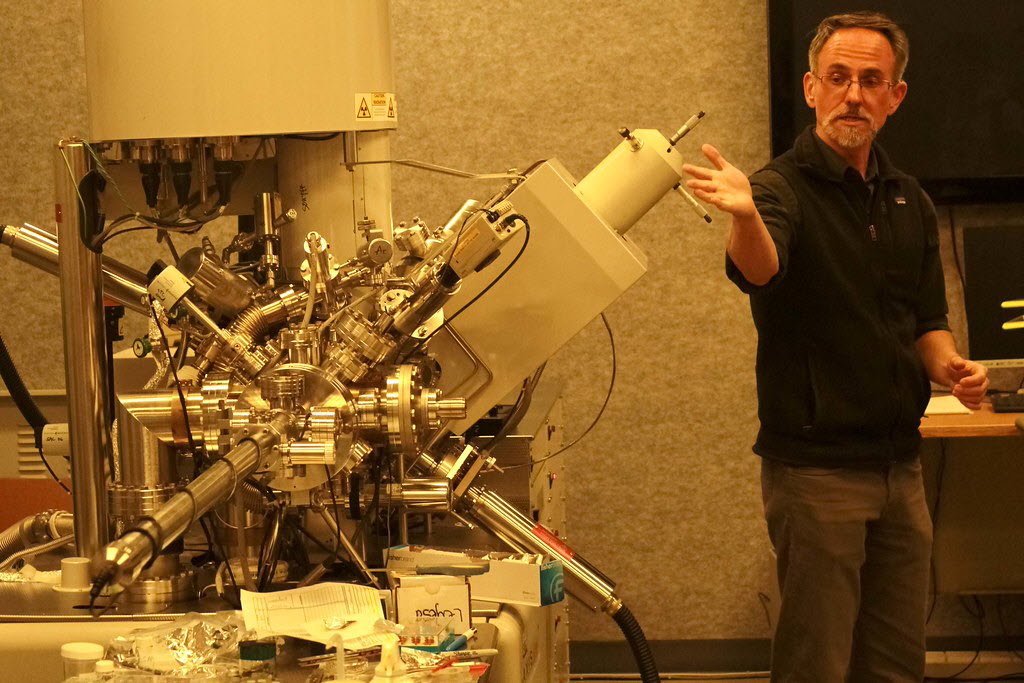
The conference unfolded like a living network, plenary talks, workshops, and poster sessions connecting researchers from mathematics, physics, engineering, and geoscience. Every exchange left behind a trace — an idea, a potential collaboration, a spark that would guide future exploration.
Despite limited resources, the event thrived. The breathtaking views of the Wasatch Mountains, the warmth of conversation, and the spirit of cooperation transformed constraints into creativity. What began as a challenge became a celebration of collective strength.
Thanks to my amazing co-chairs, Sanghyun Lee, associate professor of mathematics at Florida State University, and Stanislav Glubokovskikh, staff scientist at Lawrence Berkeley National Laboratory, our wonderful technical committee, and the dedicated support from the ASCE-EMI staff, we were able to bring our vision to life despite the challenges.
 ASCE EMI
 Like a well-functioning colony, everyone contributed: students carried logistical loads, session chairs guided the flow of discussion, and colleagues lent support wherever it was needed. The result was an event smaller in scale but richer in connection — a structure built not of abundance but of alignment.
Some might have thought the meeting resembled a Gordon Research Conference, and indeed, there were similarities in the depth of discussion and sense of community.
However, the Biot Conference functioned more like a coordinated ant colony: each participant played a vital role, from plenary speakers to students, workshops to parallel sessions, creating a self-organizing network of activity. It was more selective than a typical GRC, featured parallel sessions spanning a broader and more diverse range of topics, and was shorter in duration. In other words, it combined the intimacy and focus of a GRC with the adaptability, inclusiveness, and diversity of an international network, forming a living system where meaningful technical exchange and genuine human connection flourished side by side.
Reflecting on the experience, I realized that this Biot Conference was more than a meeting, it was a living demonstration of collective intelligence.
When resources dwindle, when challenges multiply, and when uncertainty surrounds us, the strength of the colony — our community — shines brightest.
Science, like an ant colony, survives not because of a single leader but because of countless small acts of cooperation guided by shared purpose. Constraints don’t limit us, but they teach us how to move together more intelligently.
Just as Maurice Biot pursued discovery through war and upheaval, our community showed that genuine collaboration will always find a way.
