
 Renant Antren Corp.
Anthony Reneaud, P.E., who has led multibillion-dollar construction projects, offers advice for engineers looking to secure relationships with construction professionals.
After three decades in construction management, working with some of the most respected firms in the industry – including Tishman, Turner Construction, Lendlease, and Structure Tone – and now as founder of an engineering consultancy, I’ve collaborated with countless partners on large and challenging projects.
Some have become indispensable team members. Others have become cautionary tales. The difference rarely comes down to technical competence alone.
As engineers, we often focus on the quality of our calculations, the precision of our drawings, and the thoroughness of our specifications. These fundamentals matter tremendously. But from the construction side of the table, technical excellence is simply the entry requirement.
The reality of construction timelines
Construction operates under relentless time pressure.
Every day of delay carries financial consequences that cascade through the entire project. When a construction manager calls an engineer with an urgent question, it’s usually because conditions on the ground have revealed something unexpected or an issue that requires immediate resolution.
This can present an urgent need for an engineer who is responsive and committed to keeping the project running smoothly. For many construction professionals, this can be a challenge.
Further reading:
- Civil engineering executive says workplace culture is key to growing your firm
- Connected leadership provides engineering firms path to sustained growth
- Advancement tips from a civil engineer who chose construction path
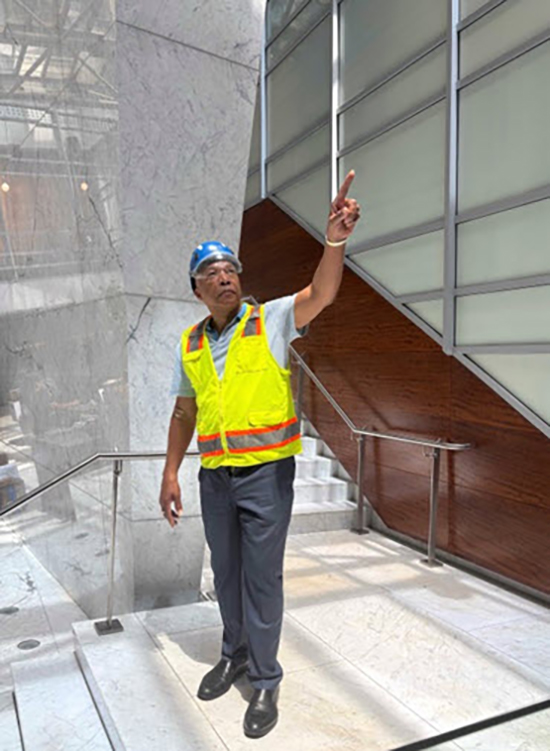
I learned this lesson when I received a call on a recent Saturday about standpipe modifications on a high-rise project. The request was straightforward, but the timeline was not. I visited the site on Sunday morning, walked 50 floors with the project manager, assessed the conditions, and delivered the required letter.
The client was grateful for our quick turnaround, but the reality is this kind of timing should be the norm. Why? Construction professionals face immense pressure when schedules are compressed and stakeholders are waiting, and their engineer must be ready at any time to complete the job.
Responsiveness: The differentiator
Technical credentials may open doors, but responsiveness keeps them open. In the construction environment, engineers who answer their phones, respond to texts and emails within hours rather than days, and treat urgent requests with genuine urgency become invaluable assets.
I’ve witnessed projects stall for weeks waiting for an engineer’s response to a question that could have been resolved in a single conversation. I’ve seen construction managers forced to choose between waiting for their preferred engineer or moving forward with someone more available. Almost universally, availability wins.
This doesn’t mean engineers should be available 24/7 or sacrifice quality for speed. It means establishing clear communication protocols, setting realistic response time expectations, and then consistently meeting them.
The value of site presence
The best engineering partners understand that drawings and specifications tell only part of the story. Jobsite conditions reveal challenges and opportunities that no amount of preconstruction planning can fully anticipate. Engineers who are willing and able to visit active construction sites provide value that extends far beyond their technical deliverables.
Site visits accomplish several critical objectives. They allow engineers to verify that their design intent is being properly executed. They demonstrate to the entire project team that the engineer is invested in the project’s success, not just in delivering sealed drawings.
Beyond single-discipline expertise
Modern construction projects increasingly demand engineers who comprehend how their work integrates with architecture, construction sequencing, safety protocols, and owner priorities.
My own background combines structural engineering with site safety oversight and owner’s representation. I also bring a business background and am deeply aware of the enormous financial implications of a stalled project.
This multidisciplinary perspective allows me to empathize with all project stakeholders, including the project owners, end-users, and, of course, my direct client.
Construction professionals value engineers who can think beyond their immediate scope of work. Knowing how engineering decisions will impact construction logistics, as well as how to communicate effectively with stakeholders who speak different professional languages, is critical.
Can you identify how your structural design affects the mechanical systems coordination? Do you understand the constructability implications of your specifications? Are you aware of how your design decisions impact the construction schedule?
Engineers who consider these broader implications become strategic partners rather than simply technical consultants.
Breaking the cycle: From subcontractor to prime
Many minority-owned engineering firms find themselves channeled into subcontracting roles, providing technical services while larger firms maintain client relationships and capture project leadership opportunities.
Breaking this cycle requires minority-owned firms to demonstrate the winning qualities that extend beyond single-discipline technical services. Construction professionals value engineers who can think beyond their immediate scopes of work.
This multidisciplinary perspective will position minority-owned firms like mine to compete for prime consulting roles where we bring strategic value throughout the project life cycle.
What engineers should prioritize
Based on my experience selecting and working with engineering partners across dozens of major projects, I recommend focusing on these priorities:
Establish clear communication protocols from Day 1: Define your typical response times for routine questions versus urgent issues. Provide multiple contact methods. Ensure someone on your team is always the designated point of contact.
Be honest about your availability and capacity: Construction professionals prefer knowing up front that you’re at capacity rather than experiencing delayed responses after you’ve committed to the project. If you can’t meet aggressive timelines, say so. We’ll respect that candor far more than we’ll appreciate missed deadlines.
Develop constructability awareness: Spend time on jobsites, even when your contract does not require it. Learn how construction actually happens. Understand the equipment, sequencing, weather impacts, and human factors that influence whether your design can be built efficiently.
Invest in relationships, not just transactions: The engineering partners we call first aren’t necessarily those with the most impressive credentials; rather, they’re the ones who’ve proved they’ll be there when we need them. Return calls and texts promptly. Follow up on commitments.
Embrace flexibility in your service offerings: Projects evolve, and needs change. Engineers who can pivot to provide ancillary services, whether that’s owner’s representation, construction safety consultation, or specialized inspection services, become more valuable as projects progress.
The bottom line
Construction professionals need engineers who are technically excellent, professionally responsible, and genuinely responsive. We need partners who understand that in construction, timing often determines the success or failure of a project.
The engineering partners who thrive in the construction environment are those who recognize that their roles extend beyond calculations and sealed drawings. They’re problem-solvers, communicators, and collaborators who remain engaged from design through completion.
When construction professionals find engineers who combine technical expertise with consistent availability, site presence, and collaborative spirit, it results in lasting partnerships based on mutual respect and shared commitment to delivering projects safely, on time, and on budget.
Get ready for ASCE2027
Maybe you have big ideas related to the civil engineering profession and construction. Maybe you are looking for the right venue to share those big ideas. Maybe you want to get your big ideas in front of leading big thinkers from across the infrastructure space.
Maybe you should share your big ideas at ASCE2027: The Infrastructure and Engineering Experience – a first-of-its-kind event bringing together big thinkers from all across the infrastructure space, March 1-5, 2027, in Philadelphia.
The call for content is open now through March 4. Don’t wait. Get started today!
