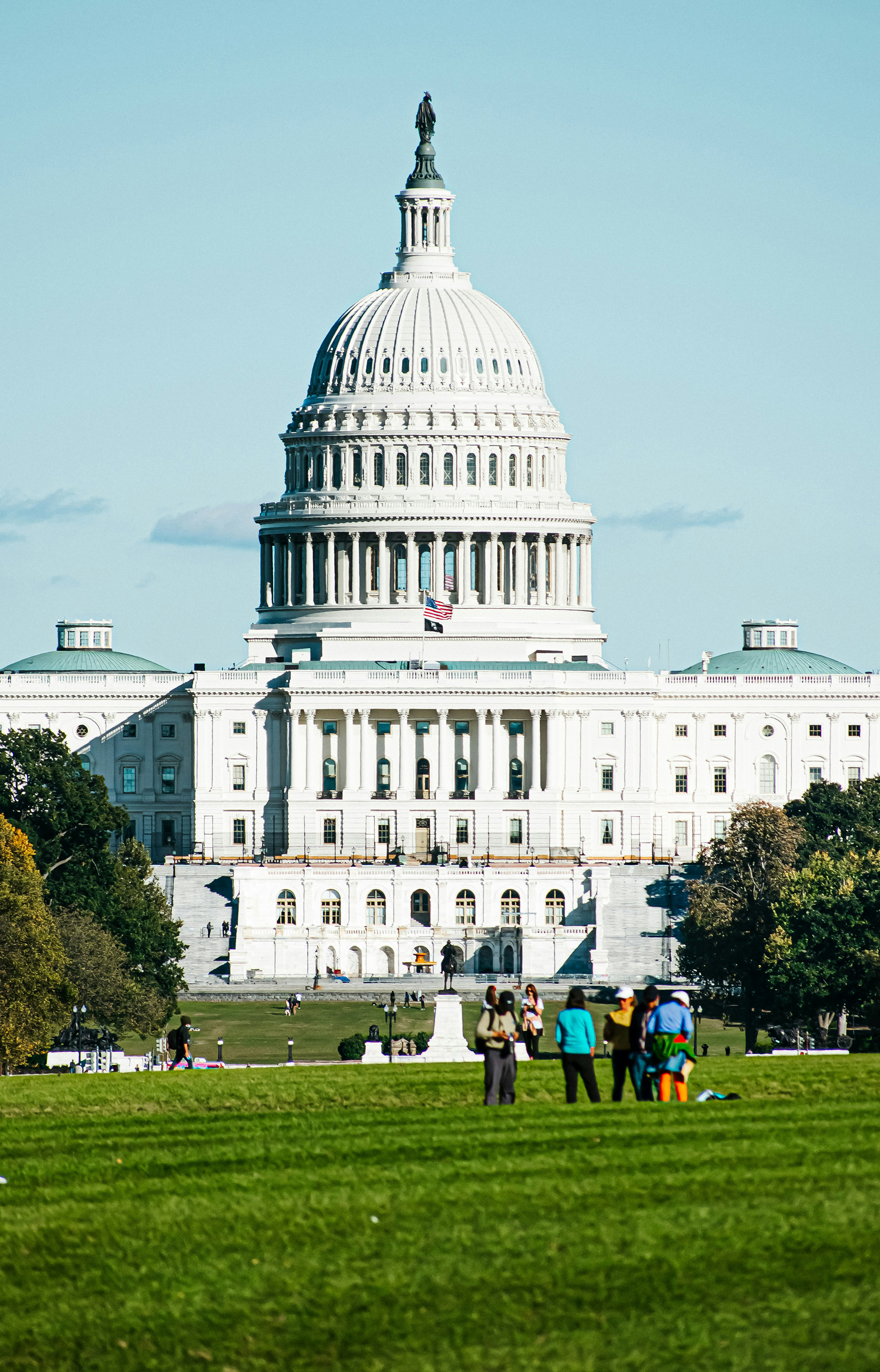
 Lukas Souza via Unsplash
Civil engineers Alyssa Sooklal, P.E., ENV SP, M.ASCE, and Jake Brunoehler, P.E., M.ASCE, both had recent experiences that bolstered their already strong belief in advocacy.
Brunoehler was visiting Washington, D.C., with a nonprofit advocacy group, settling in for opening remarks from Sen. Tammy Baldwin, who represents Wisconsin, his home state. Her words rang familiar, as they were based on the 2025 Infrastructure Report Card for America’s Infrastructure, a document to which Brunoehler was a contributor. A peer who was attending the event with Brunoehler gave him a knowing glance.
Meanwhile, Sooklal, who works in the water industry, was part of the team that put together ASCE’s Maryland infrastructure report card last year. While participating in the release event in the fall, the importance of that work really sank in.
“I’m not just trying to help communities with their stormwater infrastructure, their flood infrastructure,” she recalled thinking that day. “I can make a difference on the policy side that will then, in the future, help my work become easier and more impactful or perhaps provide more funding for the work that I do.”
Both engineers are longtime advocates and proudly represent ASCE and its priorities.
And this is a crucial year for infrastructure, with reauthorizations of surface transportation, water resources, and state revolving funds all on the table, coinciding with the expiration of the Infrastructure Investment and Jobs Act, which has been the law of the land since November 2021, and which authorized $1.2 trillion for infrastructure investment.
Further reading:
- Want better infrastructure? Add a personal touch to your advocacy
- Turning grief into advocacy
- The ASCE infrastructure report card as a resilience tool before disaster strikes
These will be among the top issues that those attending ASCE’s Legislative Fly-In in March will bring to their congressional representatives in Washington. Sooklal and Brunoehler will be among those eagerly attending.
The fly-in and beyond
Sooklal recalls the first time she attended the fly-in.
“I was excited but also nervous because I’d never done anything like this before,” she said. “I have worked in this industry (for a number of years), but I didn’t feel like I was as qualified or experienced as some of the other folks who were on the Maryland team. But it was so valuable for me to hear them speak and be able to provide my input.
“Since that first year, I really feel like I’ve learned more on the policy side, learned more about these various acts and policies, but I’ve also grown in my ability to speak freely with these legislative aides and legislators.”
Brunoehler has had similar positive feelings while attending multiple fly-ins over the years.
“It’s just such an experience to go out and meet with your policymakers in their congressional offices and realize that they’re tackling some serious challenges at the federal level,” he said. “There are key decisions being made that have repercussions at the local level. I work in the water industry, so when it comes to stormwater, drinking water and wastewater, everything that happens with the Water Resources Development Act has implications for us at the local level when it comes to long-term resilience and viability of our drinking water systems and our quality of life.”
While the fly-in and infrastructure report cards are high-profile advocacy tools, there are plenty of other ways that civil engineers can champion infrastructure, some of which they can do from the comfort of their own homes.
Sooklal encourages her peers to be heard via whatever methods they feel comfortable with.
Leaving public comments or feedback for bills or projects is a great way to advocate, she said. She likes getting involved at the grassroots level, including a time when infrastructure projects were happening in her own neighborhood. She said she and some of her neighbors made their opinions clear about the direction of those projects.
“If you want to get into advocacy, you don’t need to be that career professional or that long-standing, well-connected person,” said Sooklal, a senior project engineer at Barton & Loguidice’s Annapolis, Maryland, office. “You should start small, and it can be as small as sending an email or making a phone call. Being an advocate for something is really important.
“Sometimes we forget that it doesn’t have to be waving a flag or a creative sign at the Capitol. Putting your voice out there as a public commenter is very easy and doesn’t really require you to do much in terms of travel or getting yourself out of your comfort zone at home.”
Brunoehler, who has been a practicing engineer since 2009 and a licensed engineer since 2015 and is a national sales manager for PaveDrain LLC, said any advocacy on behalf of infrastructure is worth the effort.
“Advocacy is so important for engineers and more important than I think we even let ourselves realize because as engineers, we’re not partisan advocates,” he said. “We’re the subject matter experts who are just trying to bring truth about what communities actually need when it comes to infrastructure and better advocacy from engineers. It really improves infrastructure outcomes.”
Going to public meetings where infrastructure decisions are being made is another opportunity for civil engineers. “We should be attending those public meetings or public forums and providing our input as civil engineers on policy or legislation that impacts our industry,” Sooklal said.
Silence is not golden
Civil engineers face a conundrum, Brunoehler said.
If they perform their jobs well, the result is … nothing. The profession generally flies under the radar with the public. But when something goes wrong – a bridge collapses or a dam breaks – the magnifying glass is put on civil engineering.
By advocating, civil engineers can thrust the profession's importance onto the stage in a positive way and warn of potential negative consequences if infrastructure is not built and maintained in a way that ensures safety for all.
“The headlines just talk about the stuff that goes wrong,” Brunoehler said. “Engineers advocate for better infrastructure outcomes. If we do our jobs right, nothing happens. So all that advocacy increases that awareness with policymakers who, without that voice in the room, might not fully understand the technical outcomes of the decisions that they make.”
ASCE’s infrastructure report cards are designed to do just that.
Brunoehler flashes back to that moment with Baldwin. The national and state report cards are “just so digestible and so easy to understand for policymakers,” he said. “With good and strategic funding, we can do some really amazing things. And that report card is just so quotable. It was a fun moment.”
Sooklal led the stormwater chapter for Maryland’s infrastructure report card.
“It was very rewarding experience – daunting at times,” she said. “It’s just another tool that ASCE has that you can volunteer to help with and then hopefully turn that report card over to the legislators and let them use that information for when they are putting together bills like the Water Resources Development Act or the IIJA.”
Getting involved isn’t always easy.
Brunoehler notes that a supportive employer is essential. In fact, a primary consideration for him when choosing an employer is the organization’s stance on advocacy and its support for those involved.
“I’ve been very fortunate that my employers have been very supportive of me, both financially and with time and with space to be active in this part of industry,” he said. “It’s not every employer that values it to that level, that says, ‘Sure you can go spend two or three days in D.C. just trying to make infrastructure better, trying to bring better outcomes to our communities.’”
There are other obstacles to advocacy.
One of those hurdles is personality, especially for those who fit the stereotypical civil engineer profile of being introverted. But starting simple can be emboldening. Sooklal’s advocacy journey began just that way.
“As an entry-level engineer, I did not see the importance or the value of putting my time toward advocacy, particularly in the infrastructure space, because I didn’t know enough about it, and I was not interested in talking to politicians or legislators.”
At her first fly-in, she thought: “‘I am not politically minded. This is not my world. I want to see how it goes, but it is not my world.’ And then by the end of that event last year, I just felt so much better positioned to be a person to speak on the legislative side of infrastructure, even if I don’t know every single nitty-gritty piece of information. I just felt so much more empowered to continue learning and continue being a part of this conversation.”
Also of note
- Leaders of two House Committees introduced an aviation safety bill on Feb. 19 after a report highlighted issues regarding the deadly midair collision of an Army helicopter and a commercial airliner last year near Ronald Reagan Washington National Airport in Arlington, Virginia.
- The White House paid the funds it owed to the Gateway rail tunnel project, complying with a federal court order and enabling construction to resume. The $16 billion Hudson Tunnel Project would add a new rail tunnel and rehabilitate an existing one under the Hudson River, improving access between New York City and New Jersey.
- Residents of Washington, D.C., and its suburbs continue to deal with a sewage spill into the Potomac River that has released more than 243 million gallons of wastewater.
- ASCE on Feb. 11 submitted a comment to the U.S. Department of Transportation as the agency seeks input on its Research, Development, and Technology Strategic Plan for Fiscal Years 2026-2030.
Get ready for ASCE2027
Maybe you have big ideas about infrastructure in the U.S. Maybe you are looking for the right venue to share those big ideas. Maybe you want to get your big ideas in front of leading big thinkers from across the infrastructure space.
Maybe you should share your big ideas at ASCE2027: The Infrastructure and Engineering Experience – a first-of-its-kind event bringing together big thinkers from all across the infrastructure space, March 1-5, 2027, in Philadelphia.
The call for content is open now through March 4. Don’t wait. Get started today!