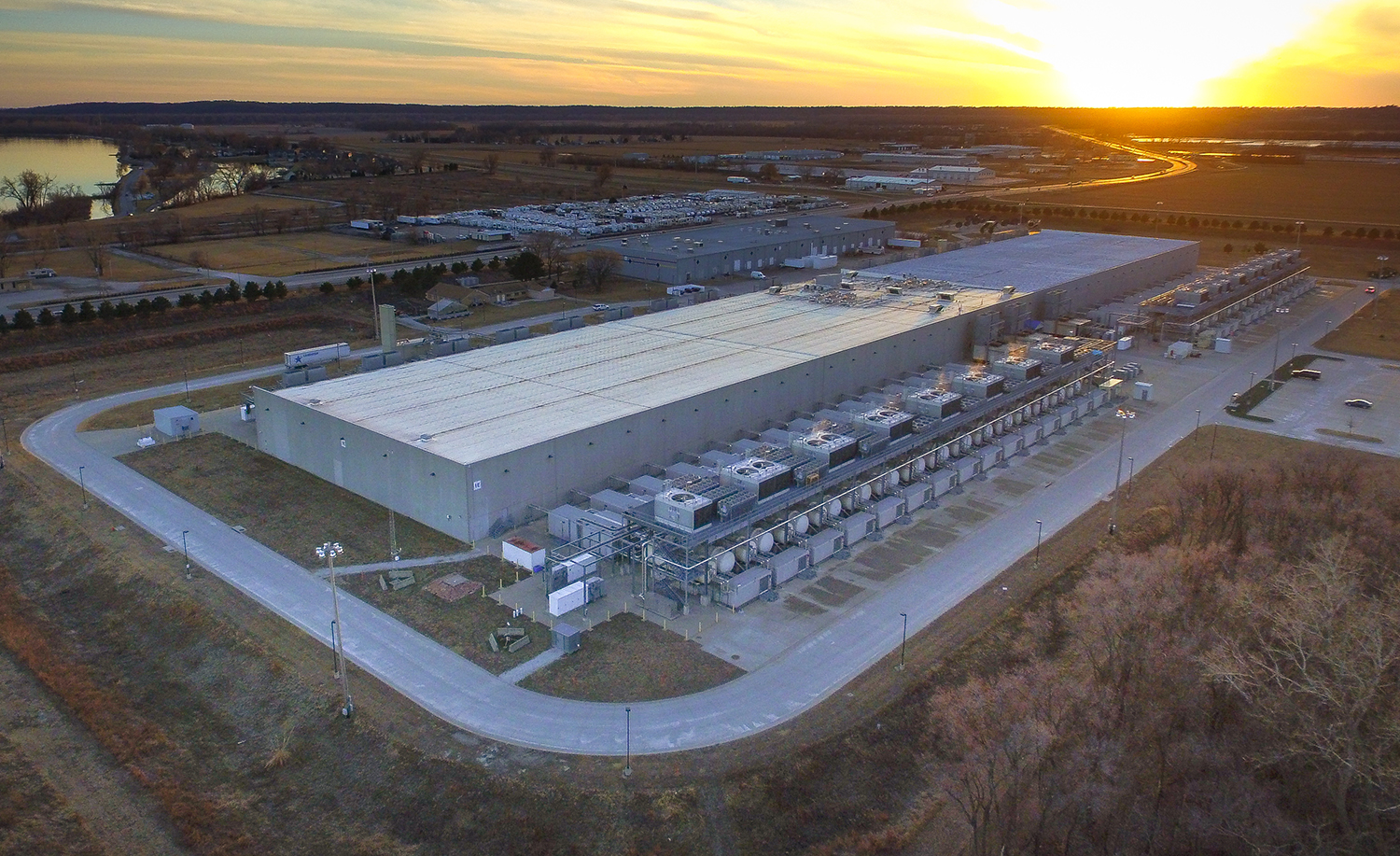
 Chad Davis via Wikimedia
The U.S. energy sector is facing unprecedented demand, and engineers are scrambling to keep pace.
“The public expects us to be better,” said Otto Lynch, P.E., F.SEI, F.ASCE, during a recent ASCE webinar. “We’ve had a change in attitude. Back in the ’70s, it was OK if you lost power. … It wasn’t the end of the world. Now if you lose power, you can’t charge your phones, you can’t watch Netflix, your kids can’t play their games. Everybody’s upset. We expect the power to be on. We need it.”
Further reading:
- Demand for data centers soars; could small modular reactors meet the need?
- How civil engineers can strike the AI balance
- AI in civil engineering: How practitioners are finding their roles in a shifting field
Yet energy was one of only two sectors whose grade dropped when ASCE’s Report Card for America’s Infrastructure was released in March 2025.
The 2025 report card assigned an overall grade of C to U.S. infrastructure, a tick up from the C- of 2021. Energy, meanwhile, received a D+, down from the C- it received four years earlier. Rail was the only other sector whose grade declined. One driver of energy’s slip was an unexpected sharp rise in energy demand, largely the result of a rapid expansion of data centers needed to power artificial intelligence across the country, the webinar panelists said.
To keep up with this boom, the energy sector needs nearly $1.9 trillion in investment over a 10-year period that started in 2024. The sector faces an estimated $578 billion investment gap, the report card found.
And things are changing even more rapidly than anybody anticipated. For example, the 2025 report card predicted 35 gigawatts of capacity would be needed by 2030 just for data centers and electric vehicles. But former Google CEO Eric Schmidt recently warned that demand could reach 92 gigawatts by 2030.
Lynch, a Bentley Systems vice president who leads the company’s Power Line Systems, noted that it’s not just the Netflix-watching public that demands electricity. Other key infrastructure sectors are dependent on it too.

“If you don’t have electricity, you’re not going to have aviation, you’re not going to have water, you’re not going to have rail, you’re not going to have a lot of this stuff,” he said. “And that’s pretty evident after there is a storm. The first thing we need back up is power and communication.”
Bill Pfister, senior director of business analytics and finance at the electric utility trade group Edison Electric Institute, amplified Lynch’s comments.
Pfister said that demand for electricity in the U.S. was essentially flat for a 20-year period starting in 2003. But then it rose about 3% in both 2024 and 2025, with about half the increase coming from data centers.
“We are 5% of GDP, but we like to say we’re the first 5% because without electricity, you really can’t do anything else,” Pfister said. “We are an enabling factor for the rest of the U.S. economy. And when you look at some of the critical infrastructure sectors, we are the most critical of all critical infrastructures.”
Who foots the bill?
These massive upgrades come with a price tag: higher electric bills for consumers. While acknowledging rate increases, Pfister noted that electricity expenditures remain historically low for most Americans, who on average spend 1.3% of their disposable income on power – the lowest percentage in 60 years.
“Our role is to provide power at the lowest price possible, but that becomes challenging when you have to install certain assets and they cost more than they used to,” Pfister said. “And that’s what we’re seeing here.
“I am not saying that you are not paying more now for electricity than you were last year. I’m not saying that this is not causing challenges for some people to afford their utility bills. I’m just pointing out that on a relative basis, this is a very small fraction.”
Howard Gugel, senior vice president of regulatory oversight at North American Electric Reliability Corp., noted that energy is in transition, with an emphasis on the three Ds, meaning the sector is becoming more distributed, decarbonized, and digitized.
As coal facilities are shuttered, natural gas and renewable energy, including wind and solar, are becoming more prominent, Gugel said. Coal’s share of U.S. electricity generation has dropped from 33% to 16.3% in the last 10 years. Meanwhile, when accounting for both utility-scale plants and small-scale rooftop installations, wind and solar surged from 5.7% to 18.9% of total net generation during that same period, according to the U.S. Energy Information Administration.
“This transition that we’ve had to inverter-based resources and renewables has made us much more reliant upon natural gas,” he said. “Natural gas is a big factor, and (on the electricity side) we’ve become much more dependent upon natural gas and frankly natural gas upon us. It’s a very symbiotic relationship.
“We’ve got a lot of installed generation capacity, but we have a lack of actual energy that’s available, whether it’s that the sun’s not shining, whether it’s that the wind isn’t blowing, or that we need to shift energy when it’s available during the day to at night.”
The surge of data centers
In northern Nevada, Jim Lehan, P.E., M.ASCE, the manager of transmission/civil engineering for NV Energy, has seen major changes during his decades of service. The first data center came to the state in 2015 – a facility that ultimately opened the door for dozens more.

“In the last five years, AI has completely changed the landscape,” Lehan said. “We now have over a dozen data center campuses being built out in the Tahoe Reno Industrial Center. These are the big-name players: Apple, Google, Microsoft, Switch, and a whole bunch of others.”
Northern Nevada has signed contracts for 6,000 megawatts of new load and another 12,000 in development, he added. That doesn’t count the data centers being built in the Las Vegas region.
“We’re being tasked with increasing our total system peak by three to 10 times, depending on how quickly they ramp up,” Lehan said. “And just for perspective, here in the little northern Nevada, it took us about 100 years of growth to get to a system peak of 2,000 megawatts. Now we need 6,000, 10,000, 12,000, 15,000 megawatts. It’s staggering.”
According to Lehan, this situation makes it difficult to meet Nevada’s mandate of 50% renewable energy output by 2030. NV Energy reached 46.8% in 2024, he said. “We were doing a good job, but the immense load growth dilutes those percentages,” Lehan said. “If you’re at 50% renewable, then you double your load, you’re not at 50% anymore.”
With data centers surging in numbers and scope – and many indications that they will continue to do so – Lynch said there are reports indicating that a significant number of data centers face delays or cancellations, introducing additional uncertainty into planning and investment decisions.
“It’s a moving target, and the biggest thing that we have to do is be ready for whatever that target may be,” he said. “Sometimes I use a Whack-a-Mole analogy. We’re just having to whack the moles as they pop up. Our job is to have the energy and the infrastructure available to meet our society’s needs.”
Keeping pace with the growth is a primary challenge nationwide. Lehan said Nevada recognizes the trend and is preparing accordingly.
“Data centers are not going to go away,” Lehan said. “We are working very hard on new infrastructure and new generation and upgrading our transmission network while trying to do that within a regulated utility environment. We can’t just double everybody’s power bill and rates. It’s a delicate balance.”
Also of note
- The House Committee on Transportation and Infrastructure advanced key components of a surface transportation reauthorization package. The Building Unrivaled Infrastructure and Long-term Development for America’s 250th Act would reauthorize surface transportation programs at $580 billion from fiscal years 2027 to 2031.
- The Senate last month confirmed former Purdue University engineering dean Arvind Raman as director of the National Institute of Standards and Technology.
- The Federal Aviation Administration awarded grants totaling $970 million to support airport infrastructure across dozens of states and also opened a separate funding opportunity to bolster the aviation workforce.