 Cambridge Mobile Telematics
 At the Wyoming Department of Transportation, traffic engineers used to make do with data on speeding, distracted driving, and other road-related problems that were at least six months old and often much older – perhaps a year or more in the past.
Moreover, information on certain incidents could only be collected if the driver voluntarily reported it to WYDOT. Or the agency could send someone to a particular intersection or section of highway to manually record any unsafe driving the staff person might observe. But that only included things that happened while the WYDOT staffer was physically present at the site.
Further reading:
- Texas DOT works to leverage artificial intelligence’s power
- Engineering firms could add AI roles to organizational charts sooner than you think
- How artificial intelligence can benefit construction projects
Now, thanks to a web-based software tool powered by artificial intelligence, WYDOT not only can collect more varied information than it could previously, it can also access this information much sooner – perhaps just a few days after an incident, said Karson James, WYDOT’s highway safety behavioral grants program manager.
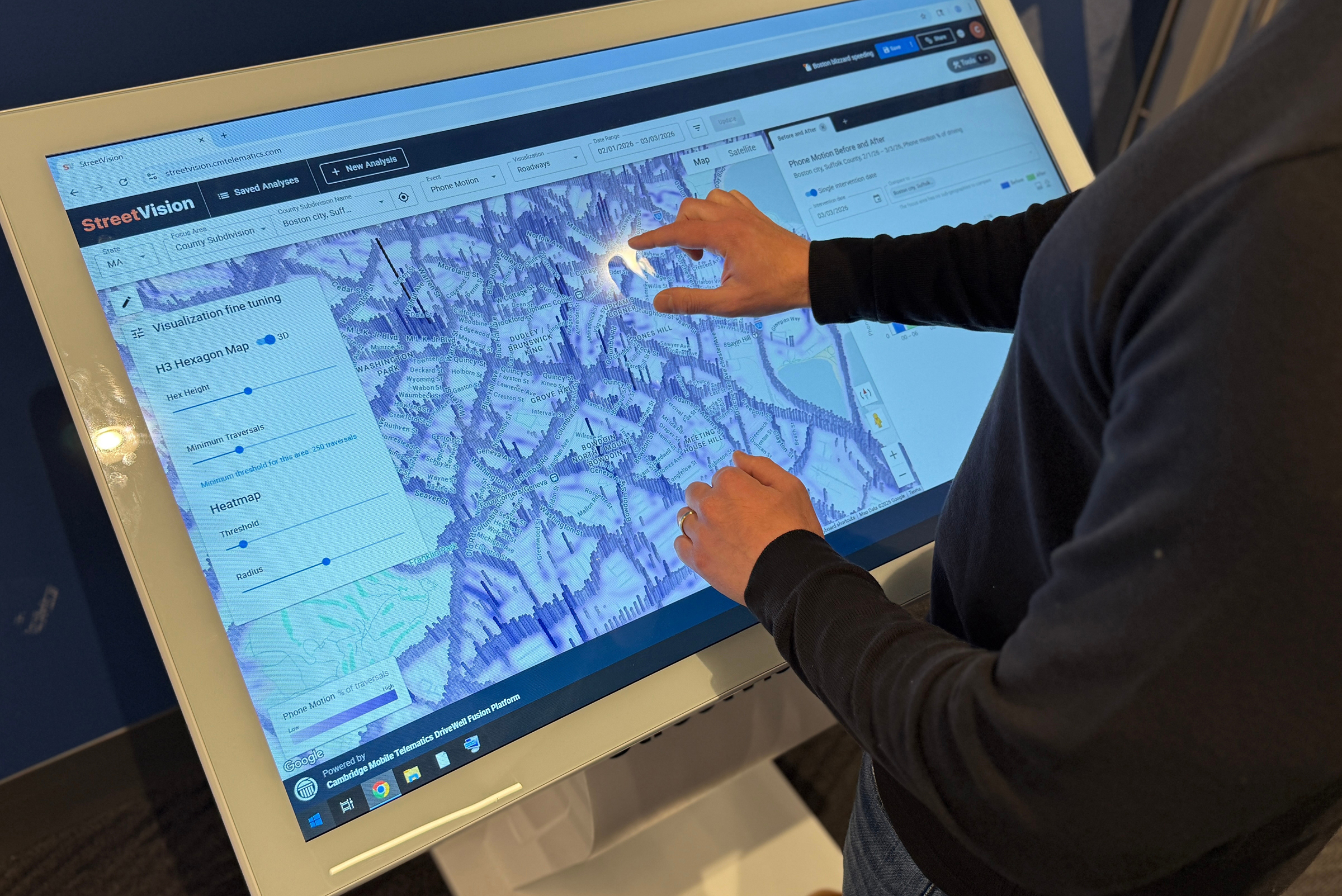
WYDOT is able to accelerate its monitoring, analysis, and responses to traffic safety issues by working with StreetVision, an AI platform from Cambridge Mobile Telematics, of Cambridge, Massachusetts. The agency initially tried out StreetVision last year as part of a demonstration project, James explained, but later purchased five licenses to use the product, which CMT launched officially in September 2025. As a result, James noted, “we’re seeing things on our roads now instead of several years ago. And we’re better able to implement projects, programs, and countermeasures to make a difference now.”
Statewide situations
Because Wyoming is a very large state, “with a lot of highway miles between towns, we see a lot of behavior issues,” said Keri Bohlmann, P.E., WYDOT’s state highway safety engineer. But the agency’s data on crashes used to be limited in certain cases to information that the driver chose to provide – such as whether he or she had been talking on a cellphone prior to a crash.
By contrast, the StreetVision system uses data collected from connected devices, such as CMT’s patented DriveWell Tag sensors, as well as cellphones, dashcams, and various Internet of Things devices that drivers have agreed to use in or with their vehicles, the company explained.
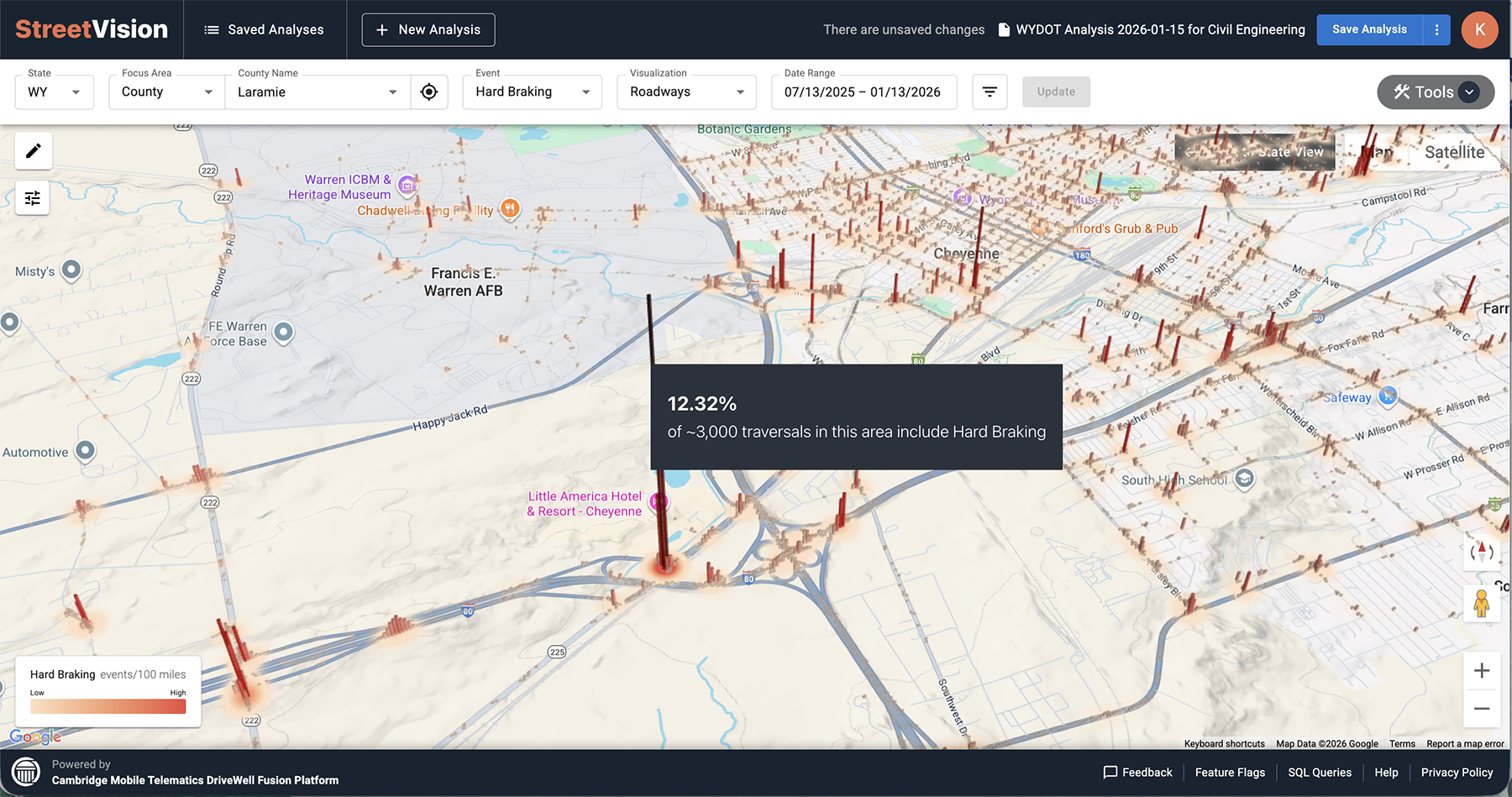
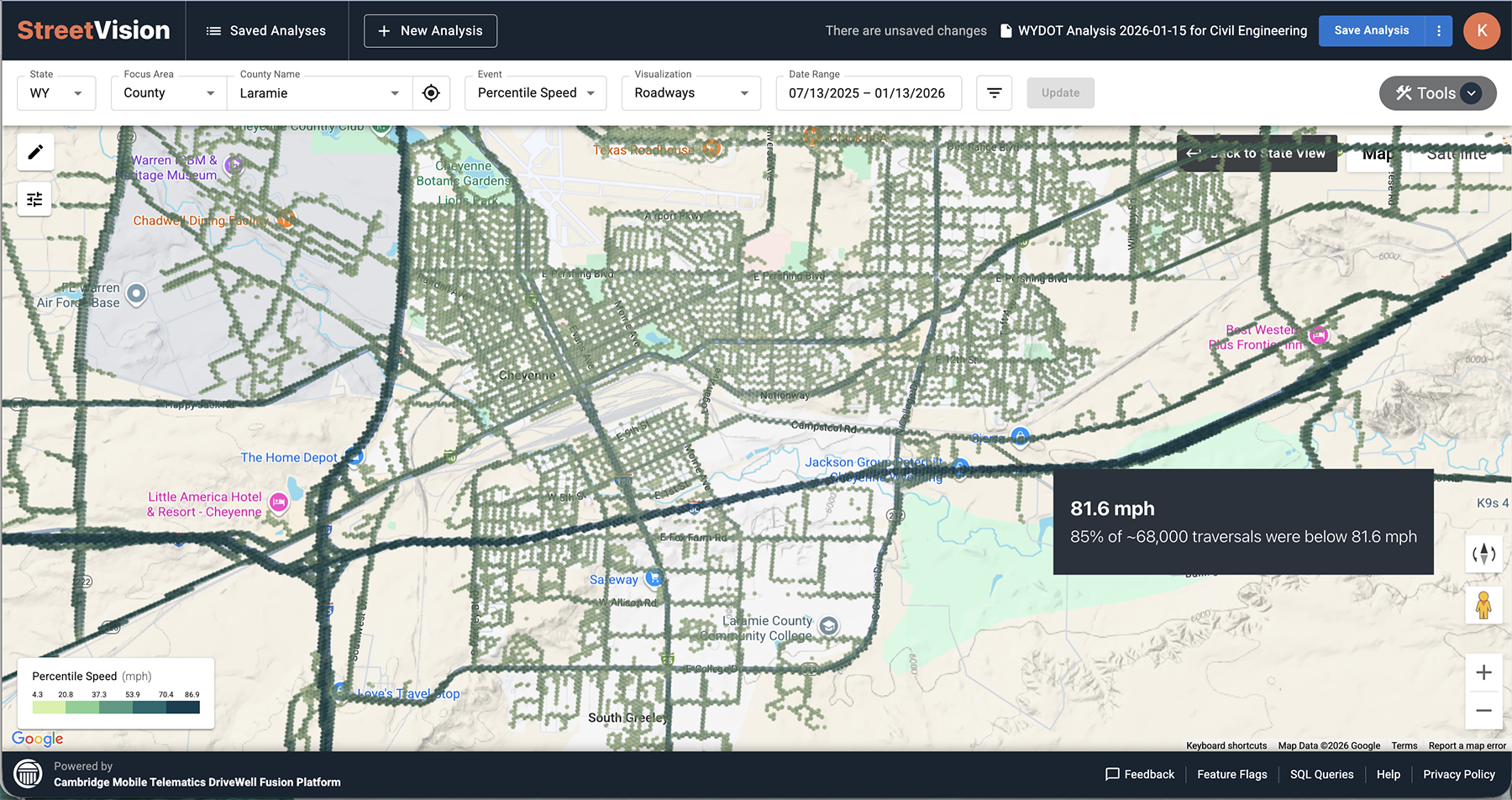
Consequently, these systems enable StreetVision to capture data on multiple unsafe driving behaviors, including phone distractions, speeding, hard braking, rapid acceleration, and aggressive cornering – all “strong predictors of crashes” that are “difficult to measure through traditional methods,” according to CMT.
The data collected provides WYDOT with valuable information on specific road segments, corridors, and intersections while safeguarding privacy by keeping drivers anonymous. “So we see more data in real time to fill in the gaps on where we have issues and need to focus our safety money,” Bohlmann explained.
The system is especially useful for towns or cities that are developing new traffic safety plans, Bohlmann added. Using StreetVision data to generate reports, “we will show them a map of where activity is happening, where the ‘hot spots’ are on their highways or intersections,” she said.
The local jurisdictions can then focus their money and attention on those specific areas where problems have been identified, such as by sending a police car to a certain location where numerous drivers have been recorded speeding, James said. Such “high visibility enforcement” can be an effective deterrent to unsafe behaviors, he added.
Preventing incidents
Another benefit of the system is that it can actually help WYDOT prevent traffic crashes, Bohlmann noted. Previously, she explained, the agency could only collect data after a crash had happened. But the StreetVision system “allows us to see (dangerous locations) when crashes don’t happen,” Bohlmann said, because the data collected will indicate where multiple drivers are going around a curve much too quickly, hard braking at an intersection, or speeding up to get through an intersection.
“A lot of this information we can use to implement countermeasures in those areas to reduce the risk of a crash happening,” James explained. These countermeasures range from placing warning signs well in advance of a construction zone – so drivers know to expect delays ahead – to community outreach efforts to working with local law enforcement to adapt to changes in unsafe driving.
In one case, James noted, a police department had stationed officers along a route that had been experiencing a spate of unsafe behaviors. Although it seemed initially that the problem had been solved by the presence of the police cars, in fact the StreetVision data revealed that the unsafe behaviors had simply shifted to another nearby street. Armed with the new information, the police were able to quickly respond to the changing situation, James noted.
The drop-down menus of StreetVision make the system quite user-friendly and easy to learn, James said, with no advanced computer knowledge or experience required. Although WYDOT has primarily used the data to address unsafe driving behaviors to date, Bohlmann sees the possibility of eventually using the system to help make traffic engineering and design decisions as well.
Information in motion
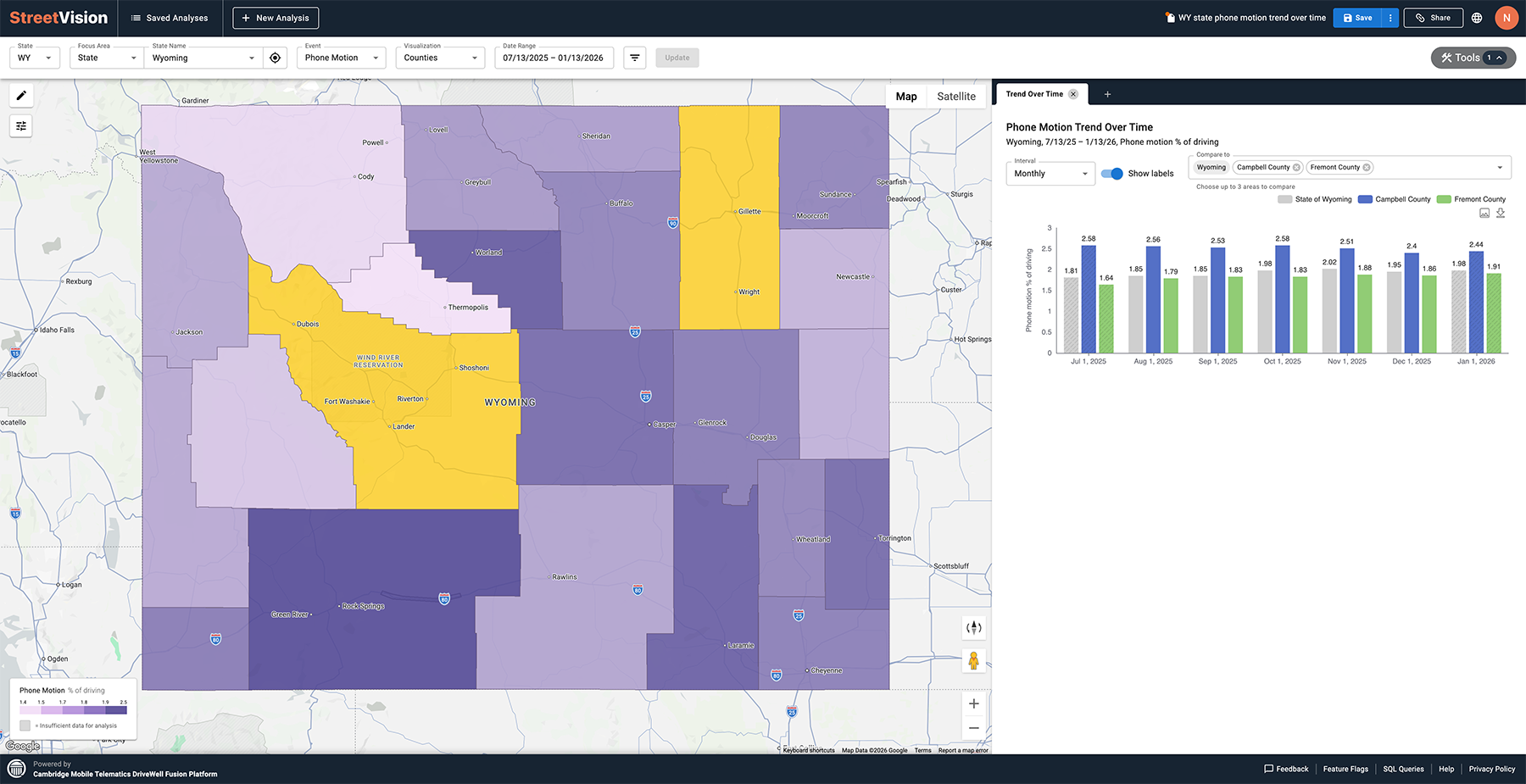
Cambridge Mobile Telematics provided Civil Engineering Source with several examples of StreetVision screen captures that demonstrate the format and detail of data being collected for the Wyoming Department of Transportation.

Get ready for ASCE2027
Maybe you have big ideas about technology. Maybe you are looking for the right venue to share those big ideas. Maybe you want to get your big ideas in front of leading big thinkers from across the infrastructure space.
Maybe you should share your big ideas at ASCE2027: The Infrastructure and Engineering Experience – a first-of-its-kind event bringing together big thinkers from all across the infrastructure space, March 1-5, 2027, in Philadelphia.
The call for content is open now through March 18. Don’t wait. Get started today!