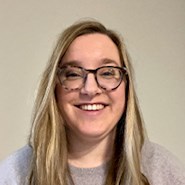
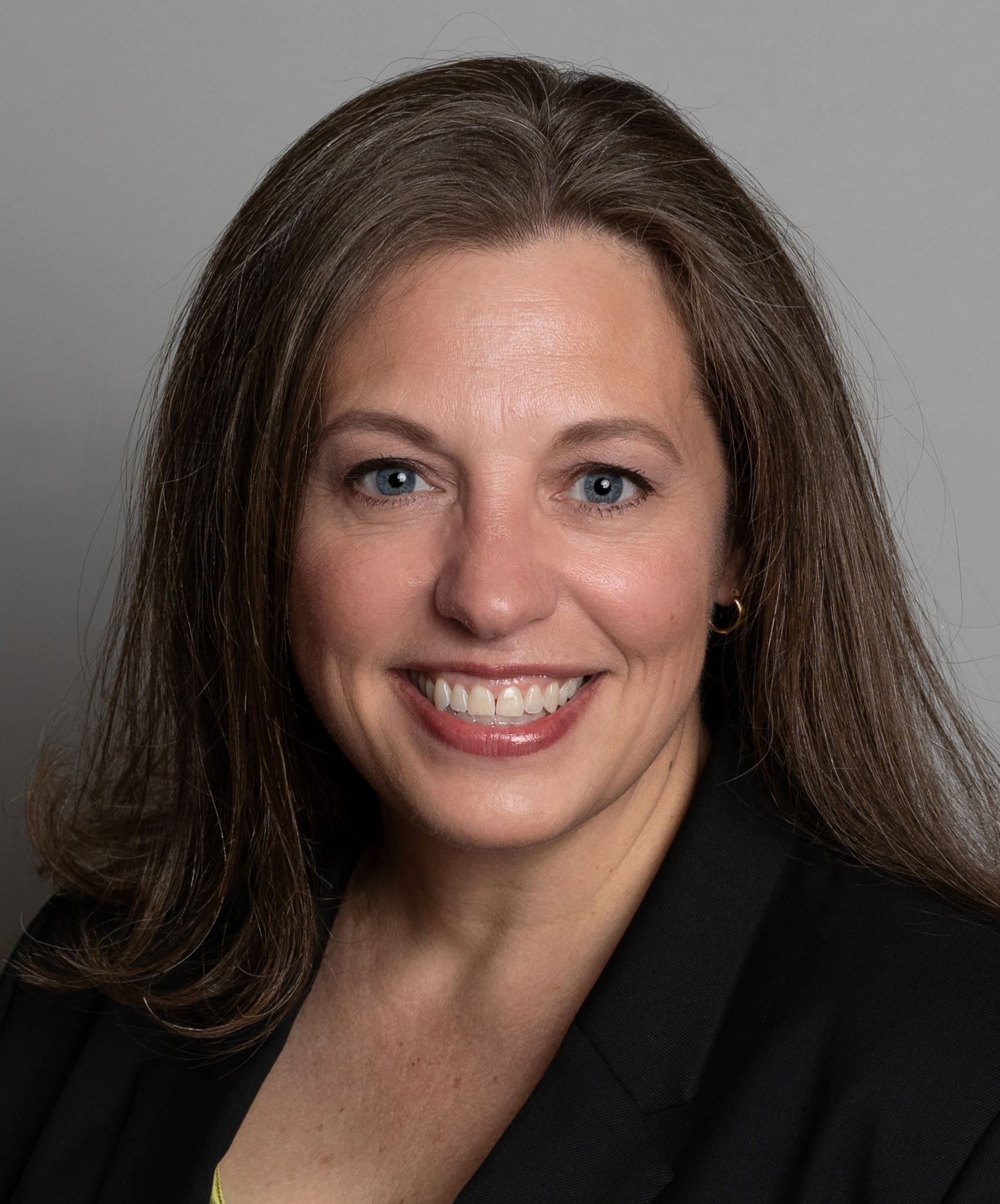
View from the C-suite is a monthly interview series with leaders in the civil engineering industry, designed to provide insight to peers about advancing in the industry. This month’s installment features Carrie Falkenrath, P.E., PTOE, PTP, RSP1, owner and principal transportation engineer and planner at Tsquared Traffic and Transportation in St. Louis.
Civil Engineering Source: Your company is just you as a full-time engineer. What are the benefits to this structure?
Carrie Falkenrath: In short, it reduces the risks to me as an owner because I can manage the client relationships, budget, and schedules pretty nimbly. It also reduces the coordination time, so I can make my schedule as flexible as I need to. My workspace is flexible as well – I work from home. A big driver for me starting my own company in 2016 was the flexibility of working from home more. It wasn’t my plan to be a single employee forever, but it does have a lot of benefits.
Source: How did you decide to operate within a nontraditional approach?
CF: The easiest way for me to start my business and to learn how to be an entrepreneur was to start as small as possible. It gave me time when I really needed flexibility with my family life and my career.
There was a point that I was in discussions with another engineer, and we decided not to bring her into the company. It ended up being better for both of us because that was January of 2020, just three months before the world shut down. Those sorts of unknowns weigh on me every time I think of growing because I don’t want to get ahead of myself.
Source: What three nontechnical skills should all civil engineers cultivate in their practices?
CF: Cultivate the differences between cooperation and coordination. People can coordinate, but they’re not always great at cooperating because they don’t always get to be in the front seat or get to define their place; they just need to be part of a team. Two, cultivate the difference between leadership and management, because they’re not necessarily the same thing. A lot of people want to think that managers are leaders, but being a leader isn’t a title; it’s the role you take and what you do within a team.
The third one is to cultivate the difference between the big picture and the fine details. Lean into the fine details and sometimes forget about the big picture. Become aware of the situations where you need to focus more on one or the other.
A bonus: Be true to who you are. When I look back on my career, I realize I made choices because I thought I needed to in order to fit within a prescribed impression or role of women in engineering. The more that you can be true to yourself, the more you’re going to enjoy your career and the more that you’re going to feel comfortable advocating for yourself to move in the direction that you want to go.
Source: Can you share your greatest career accomplishment?
CF: It’s the fact that I'm almost 30 years into my career and still love what I do. This career is so meaningful to me, and I have managed to do it without stepping away for a period of time. I advocated for myself along the way. I helped raise two kids who are equally amazing, and I’m so proud of them. I gave everything that I could to them at the same time I’ve had my career. I’m also proud to be an adjunct professor at Southern Illinois University at Edwardsville and Saint Louis University.
Source: What has been your favorite project?
CF: I’ve gotten to work on really cool projects. I got to work with the Saint Louis Zoo and then the (Gate]way) Arch when we redid the … grounds about a decade ago. My favorite was the I-49 Outer Road Conversion project (near Kansas City, Missouri). It was a design-build project, and the client and contractor were both on board to put in a roundabout. But the agency that owned I-49 did not think it was great.
The team went back and forth for a year trying to get their buy-in and approval of what we confidently knew was the right solution. I probably looked as if I hated every minute of it, and I pulled my hair out constantly. But I learned so much because my work was picked through with a fine-tooth comb and evaluated, and it made me more sure of what I was doing.
Further reading:
- Civil engineering executive says workplace culture is key to growing your firm
- Advancement tips from a civil engineer who chose construction path
- New ASCE report shows civil engineering salaries up an average $9,000
Source: What is your time-management philosophy?
CF: My philosophy has always been this: If it is important to me, I make time for it.
Earlier in my career when my kids were younger, I would leave in the middle of the day for field trips or appointments. Now, if I’m driving somewhere and pass by an errand I need to run, I stop and do it. On the flip side, I’m one of those people who pulls out my laptop on vacation. I never leave home without my laptop.
Source: What is one of your career regrets – and what did you learn from it?
CF: I mismanaged a project. I was doing several traffic calming projects for a city and each one had a different alderperson. One alderperson and I were not on the same page, and I didn't know it.
I was giving her small incremental improvements that she could make with her annual budget, which I thought made perfect sense. In the end, she didn’t think I delivered anything substantive because my suggestions were all incremental improvements. So, I learned the value of communication early on, even when it doesn’t seem like communication is needed.
In one of my classes recently, we had a roundtable discussion where people shared projects that went awry. Nobody likes to talk about their failures, but we should share more of them so that everybody realizes that mistakes happen. Mistakes don’t make you a bad engineer.