 Joe Fielder at English Wikipedia
 Traffic is a universal inconvenience.
Whether someone is on the way to work, picking the kids up from school, or driving to a new travel destination, traffic can negatively impact people’s day-to-day lives in many ways.
And major construction can make delays much worse. In the case of bridge construction, road closures and long detours can add another layer to road congestion.
But engineers are always looking for ways to minimize these impacts.
Accelerated bridge construction, known as ABC, is “bridge construction that uses innovative planning, design, materials, and construction methods in a safe and cost-effective manner to reduce the on-site construction time that occurs when building new bridges or replacing and rehabilitating existing bridges,” as defined by the Federal Highway Administration.
ABC began gaining traction across the United States in the early 2000s and is now widely used. And it has definitely lived up to its name.
Why ABC?
Using ABC, engineers can repair or replace bridges in a matter of weeks, days, or even hours, dramatically reducing on-site construction time and length of delays. And for longer-term projects, ABC can reduce project timelines by months or years.
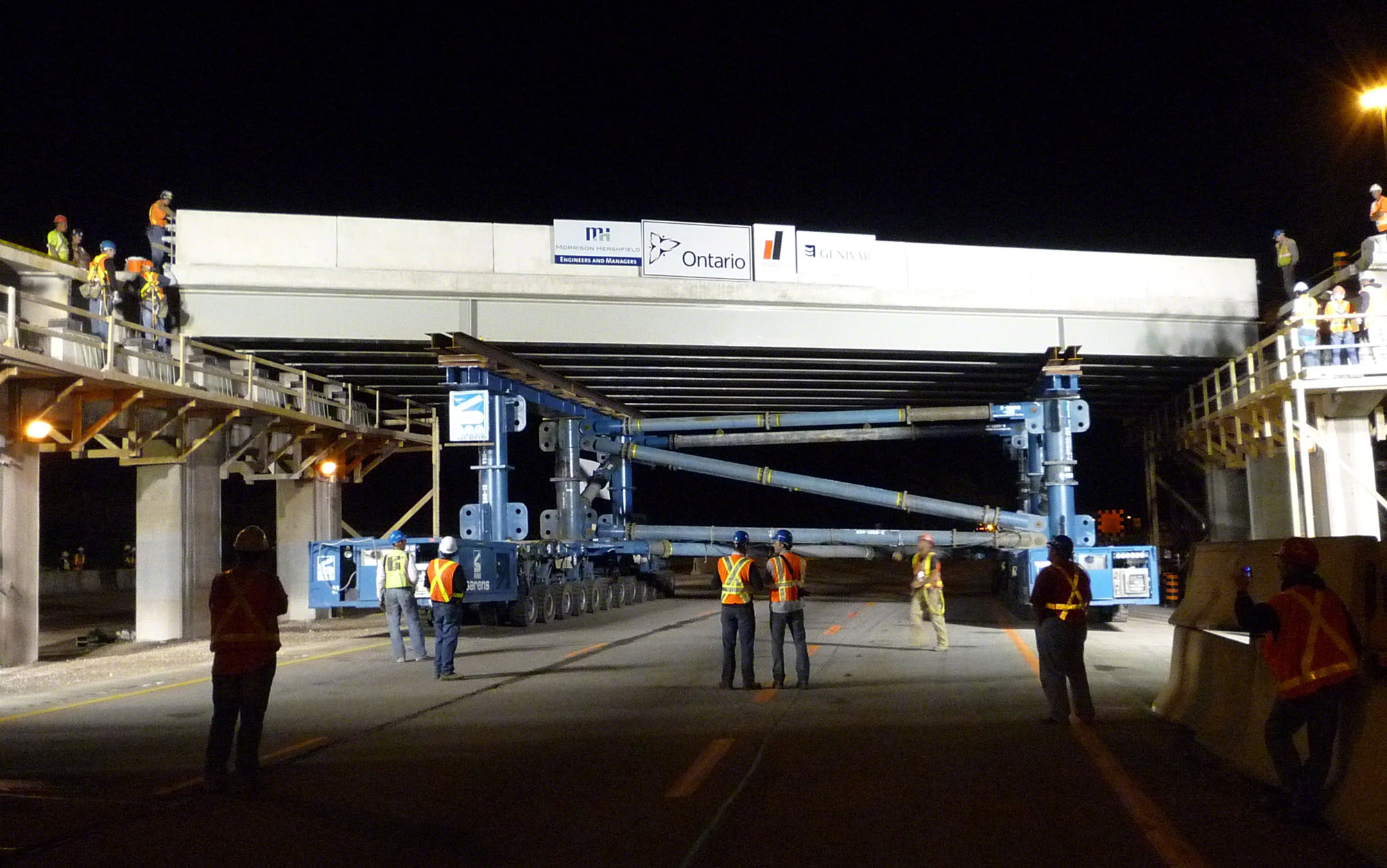
There are many techniques that fall under the ABC umbrella, including prefabricated bridge elements and systems, meaning the use of components produced off-site; slide-in construction, in which a new bridge is built adjacent to an existing bridge and moved into place after construction is complete; geotechnical solutions to prepare sites for construction; and different types of contracting methods.
These methods can greatly reduce the impact construction will have on people’s lives.
In cities where traffic is already problematic, closures of major routes are an obvious issue. But even less populated areas can face challenges with construction.
“This is a problem in even a rural area because if you close one bridge, you have to travel 30, 40 miles away to get to the destination,” said Atorod Azizinamini, P.E., a professor in Florida International University’s department of civil and environmental engineering. “… In small cities too, the traffic is a problem because the streets are not as wide.”
But reduced traffic isn’t all ABC has to offer. Reducing the time in which a work zone is present around a bridge also reduces the safety risks associated with work zones.
Estimates from the U.S. Department of Transportation indicate that in 2023, there were over 100,000 crashes, 39,000 injuries, and nearly 900 fatalities in work zones.
“It’s not that work zones aren’t safe; they’re just not as safe as a finished road,” said Mike Culmo, P.E., M.ASCE, chief bridge engineer at CHA Consulting. “We narrow lanes down, we narrow shoulders to try to get traffic through the work zone, and inevitably there’s more accidents and more fatalities within work zones.
“With ABC, we can minimize the time that work zones are in place,” he continued. “In some cases, we close the highway, detour traffic, and reopen the highway on Monday morning, so there really isn’t a work zone, per se.”
To shorten construction timelines, ABC projects often utilize prefabricated elements that are built off-site prior to construction. And at these sites, engineers often have more control over environmental conditions, which can increase the safety of bridges.
“The quality of those elements is great because they manufacture the fabricated parts in the shop,” said Junyi Meng, P.E., assistant state structure and bridge engineer within the Virginia Department of Transportation’s Structure and Bridge Division. “So, it’s not like concrete if you pour it in the field where the environment, moisture, temperature is not controlled very well. If you precast structure parts, the quality, generally speaking, is better.”
ABC also makes it possible to work more in tune with environmental restrictions.
“If it’s a bridge over a river, many times we have projects where there’ll be environmental restrictions on construction, things like spawning periods for certain animals or fish. … So, we’re limited with when we can do certain work,” said Culmo. “If you miss that window, it could be a year’s wait to get out and drive piles again.
“We can get a lot more built in that (accelerated) work window, so we can get in and out faster and cause less disruption to the environment by just building things more quickly.”
That is what happened with the Fast 14, a 2011 project in which 14 bridges on Interstate 93 were replaced in 10 weeks in Medford, Massachusetts, a Boston suburb.
“It’s an eight-lane expressway,” Culmo said. “Average daily traffic runs 175,000 cars a day, which is a lot of traffic.”
During the project, Culmo was asked by the Massachusetts Department of Transportation to determine if, at first, one bridge was able to be replaced in a weekend. When he determined it was possible, they moved on to another, and eventually, the decision to replace the bridges on that timeline was made.
For each bridge, Culmo’s team was given a 55-hour work window. The existing bridges were demolished each Friday night and swept away Saturday mornings. Once the debris was removed, the team would put the prefabricated elements in place and later pour high early strength concrete in the joints to connect these parts. By each Sunday evening, the concrete was set and the bridge was complete.
“It went remarkably well; they hit the number every weekend,” Culmo said.
And the project would’ve taken much longer without ABC. An analysis by MassDOT confirmed that with conventional methods, it would have taken five years to build the bridges.
Another successful ABC project conducted by VDOT set out to replace a railroad bridge over North Delphine Avenue in Waynesboro, Virginia, that was too low or narrow for certain trucks to pass through, causing accidents and traffic bottlenecks.
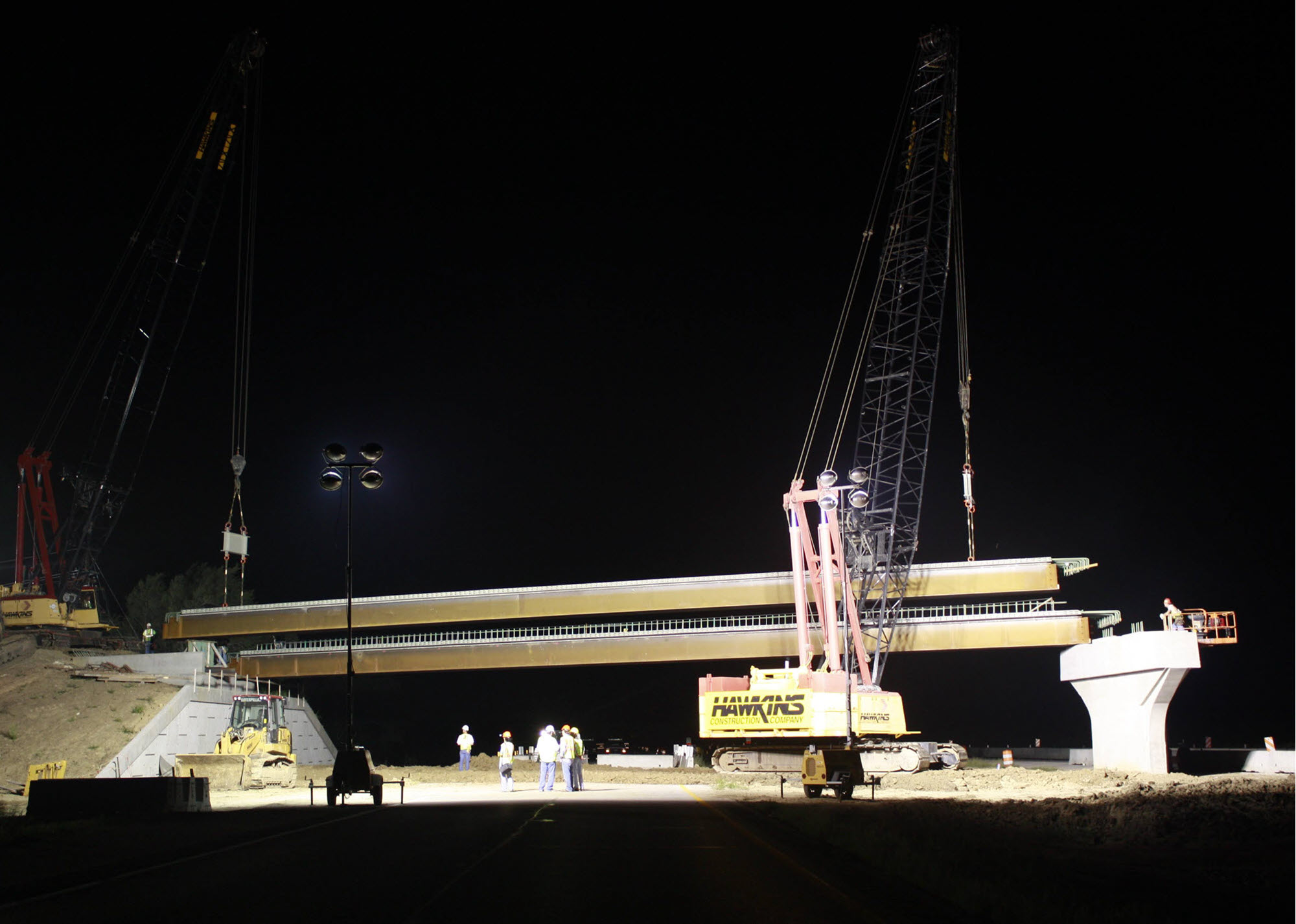
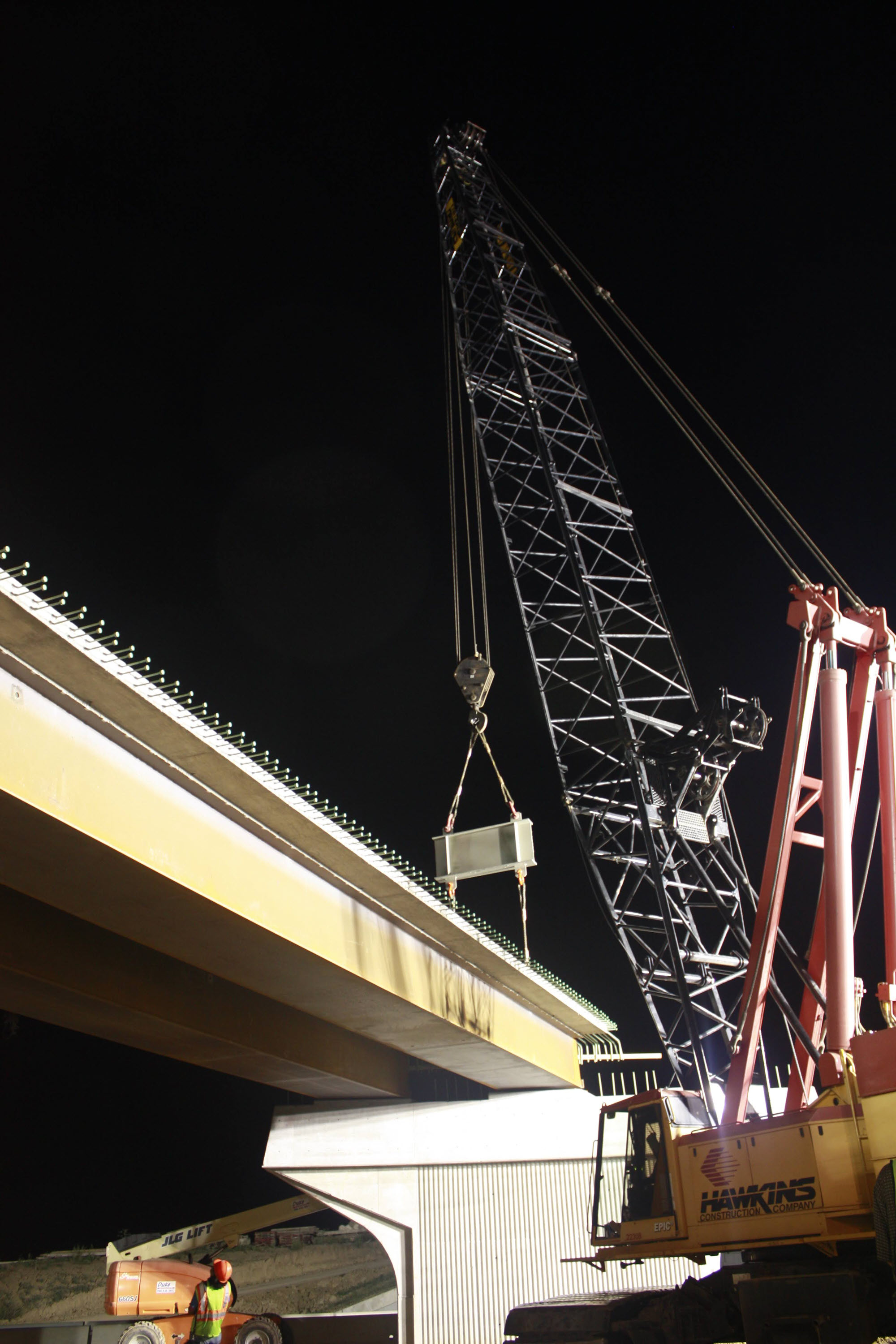
During the project, the bridge’s superstructure was built off-site, assembled on-site, and installed using large cranes capable of moving very heavy weight.
“The railroad gave a very short time window where you needed to cut the tracks, remove the existing ballasts, clean up everything, and put the new superstructure there,” said Meng.
“This one is a railroad project, so time is very important to them,” he added. “You cannot delay for hours – you need to finish your job within the time window.”
The project was successful and provided lessons learned. Although the original three span bridge design accounted for limited capacity cranes, through a value engineering proposal, the contractor re-designed the bridge and used high-capacity cranes to finish the work efficiently and even save money.
Meng expects these cranes to become more easily accessible in the future.
Can ABC costs pay for themselves?
One of the biggest hurdles to getting an ABC project off the ground is the perceived cost.
At first glance, ABC projects might look more expensive than traditional bridge construction, especially with the use of materials such as UHPC, which can be expensive.
But there are other factors that can offset the cost of materials.
“If you do any work on highways, you likely need traffic control” Meng said. “Sometimes, the traffic control costs a significant portion of the cost of the entire project.”
And using such strong materials offers additional safety benefits.
“The connections and the joints are always our concern with the prefabricated units, but if we use high performance concrete or fiber-reinforced concrete and good connection details, we can make the connection stronger, better, or more durable,” said Meng.
In the case of the Fast 14, the speed of the project dramatically reduced the amount of money spent on construction management.
“We eliminated four years of construction management,” he said. “And at the end of the day, the DOT figured that it was a wash, and the extra money we spent on the bid, we saved on construction management on the back end.”
And expensive materials might not cost as much as it seems they will at first glance.
 Atorod Azizinamini
 Azizinamini noted that even though the unit price of UHPC is higher, projects don’t require as much of it as they would with conventional concrete due to its strength. And FIU created technology for sprayable UHPC, which adds even more flexibility.
“No matter what condition the steel culvert is in – it could be completely corroded, holes and all that – you can rely on the strength that you are getting out of the UHPC,” he said. “Two inches of spray with the UHPC is equivalent to probably 8 inches of normal-strength concrete.
“Really, it’s superior material, and it allows us to do things that we were not able to do in the past,” Azizinamini emphasized.
Even when ABC projects do end up costing a bit more, public satisfaction can make up for that.
Some states, such as Utah, have done a lot to raise public awareness of the benefits of ABC, and it has paid off.
In 2011, a Utah Department of Transportation annual survey found that a large majority of respondents – over 90% – supported the use of ABC, with 59% reporting that they favor the method and 32% reporting they are somewhat in favor.
“It’s very popular with people, and when politicians hear that it’s that popular with the voters, they jump right on board,” Culmo added.
At the forefront of technology
From the start, ABC has embraced new technologies and practices. In fact, many new techniques have been perfected with lessons learned from ABC projects.
During an earlier ABC project using self-propelled modular transporters to move prefabricated elements, Culmo observed the movement of the bridge parts during transport, in which stopping and starting caused them to sway.
But that wasn’t accounted for in the design. So he led a study by the National Cooperative Highway Research Program to investigate the impact of these movements on prefabricated elements.
“The response spectrum we got from that research basically looks just like an earthquake curve,” he said.
This research led to the development of a new design specification to account for movement during transportation.
 Atorod Azizinamini
The technology and methods of ABC continue to evolve.
3D-printed concrete is gaining traction in construction and – when coupled with UHPC – could offer increased efficiency.
“If I want to build a column and a cap beam where I put the girders on top of it, I have to do formwork, build the formwork out of wood, let’s say, then put the steel inside, then pour the concrete, and then come back after some days and remove the formwork,” Azizinamini said.
“That takes time. Now what can you do? The technology is that we can print a formwork with the 3D concrete printing and spray it with a UHPC,” he continued. “Now all of a sudden, you have a structure, a basically permanent formwork, and you can put a lightweight concrete in there.”
As technology continues to advance, ABC is likely to evolve with it.
“If you asked me in 2010 how ABC would be doing in 2025, I would have said probably a niche kind of thing once in a while here and there,” Culmo said.
ABC has proved itself across the U.S. since then. And there is no doubt that it is here to stay.