 Hefin Owen via Flickr
According to the United Nations’ 2025 Sustainable Development Goals Report, the rate of populations affected by extreme weather events has increased by 75% over the past decade.
Across the globe, communities have been hit hard by droughts, floods, and intense storms, resulting in direct economic losses in excess of $200 billion each year. Given such changes, civil engineers are carefully considering how to better design and maintain roads, power lines, railroad tracks, bridges, and other structures to protect both the strength and service life of these key pieces of infrastructure.
Further reading:
- Rising heat is scorching Americans – and our infrastructure
- Warming Sun Belt cities turn to cool pavement to help mitigate climate change
- Climate change further threatens our aging grid; experts offer solutions
And that, they say, requires changing the way they think about temperature – as well as developing more informed, data-driven systems-level modeling capabilities.
More moisture, more weight
Ahmed Abdelaal, Ph.D., M.ASCE, an assistant professor of mechanical engineering technology at State University of New York Polytechnic Institute, said that engineers have long used average hot and cold temperatures from the past to guide infrastructure design. As weather patterns continue to change, however, they are related to other issues that should not be overlooked.
“As the temperature continues to rise, the more moisture you will see being held in the atmosphere,” he explained. “That doesn’t always result in heavy rain. In winter, it can also result in heavy snow and heavy freezing rain which can accumulate and overload different structures.”
Abdelaal’s research looks at the impact of this kind of accumulation on infrastructure like power lines and roads. Generally, he said, temperature, on its own, is not a huge threat. Yet, the load – caused by freezing rain or heavy snow – on top of the temperature often leads to failures.
“When you then add the wind or other weather variables to the temperature and accumulation, the risk of a problem significantly rises,” he said.
One problem is that civil engineers rely on historical temperature data to guide designs and often only look at these different weather-related variables in isolation. To remedy the issue, Abdelaal is teaming with the ASCE 7 working group to determine new load requirements, while considering a variety of different weather-related factors, to better design safe, resilient, and sustainable infrastructure.
But to do so, he said, requires more accurate weather models that can account for the variability we are seeing and will continue to see related to temperature and associated weather events.
“We need to better understand how the climate is behaving – and that requires a lot of research,” he said. “Canada has been working on this for a long time. So has Europe. In the U.S., we’ve started to work on this, but we need to catch up so we have the data and (then can) create the models we need.”
Thermal buckling
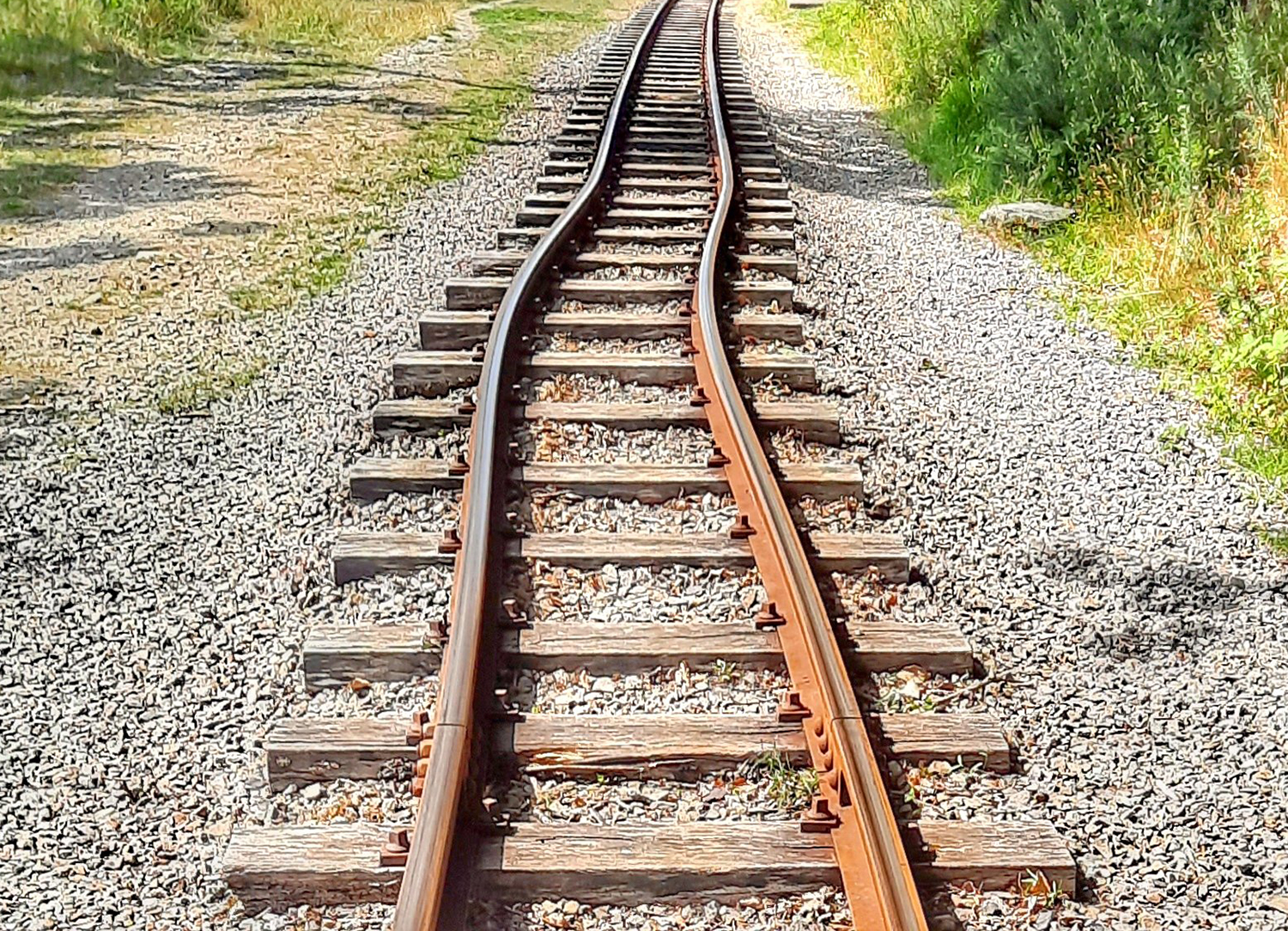
Haizhong Wang, Ph.D., M.ASCE, a professor at Clemson University’s college of civil and environmental engineering and earth sciences, also looks at the intersection of temperature and infrastructure resilience – but focuses on extreme heat events and their effect on railroads. He said the Federal Railroad Administration in 2023 recorded more than 600 buckling-related events, where temperatures cause steel tracks to expand and warp to the side – which led to almost as many train derailments.
“The heat-related buckling contributed to 16 fatalities and about $320 million reported in damages,” he explained. “Higher sustained temperatures, as well as other weather events like flooding, landslide, and wildfire, are really challenging today’s infrastructure owners, operators, and stakeholders. But the problem is quite complex. Extreme temperatures don’t translate into just a material problem. It’s a system-resiliency-type of problem.”
Wang said the probability of buckling significantly increases when steel reaches 130-140 degrees Fahrenheit – and such temperatures are becoming more common, especially in areas like Arizona and Texas.
“These extreme temperatures are happening more often and are happening for a longer duration,” he said. “We really need to be looking more into climate projections to help us model the effects and see where we need to better monitor and manage potential buckling – and that becomes harder to do when phrases like ‘climate change’ have become a sensitive term that we have to try to avoid using.”
Understanding thermal gradients
The U.S. is not looking at just a greater number of extreme cold and heat events that can affect infrastructure. We are also experiencing more rapid shifts between hotter and colder temperatures.
Such shifts lead to an increased risk of cracking and defects in bridges, said Lauren Linderman, Ph.D., EIT, M.ASCE, associate professor in the department of civil, environmental, and geo-engineering at the University of Minnesota.
In 2008, when Minnesota opened the Interstate 35W St. Anthony Falls Bridge with a built-in monitoring system, the state started collecting a breadth of important data from the structure. When Linderman came to the university in 2013, she started combing through that data and quickly saw that thermal loads were driving greater demands on the bridge.
“That’s something I hadn’t seen before. Normally, when we do bridge monitoring, you think about wind load or traffic load as (driving demands),” she said. “It was interesting to see how large of an impact temperature gradients had on the structure.”
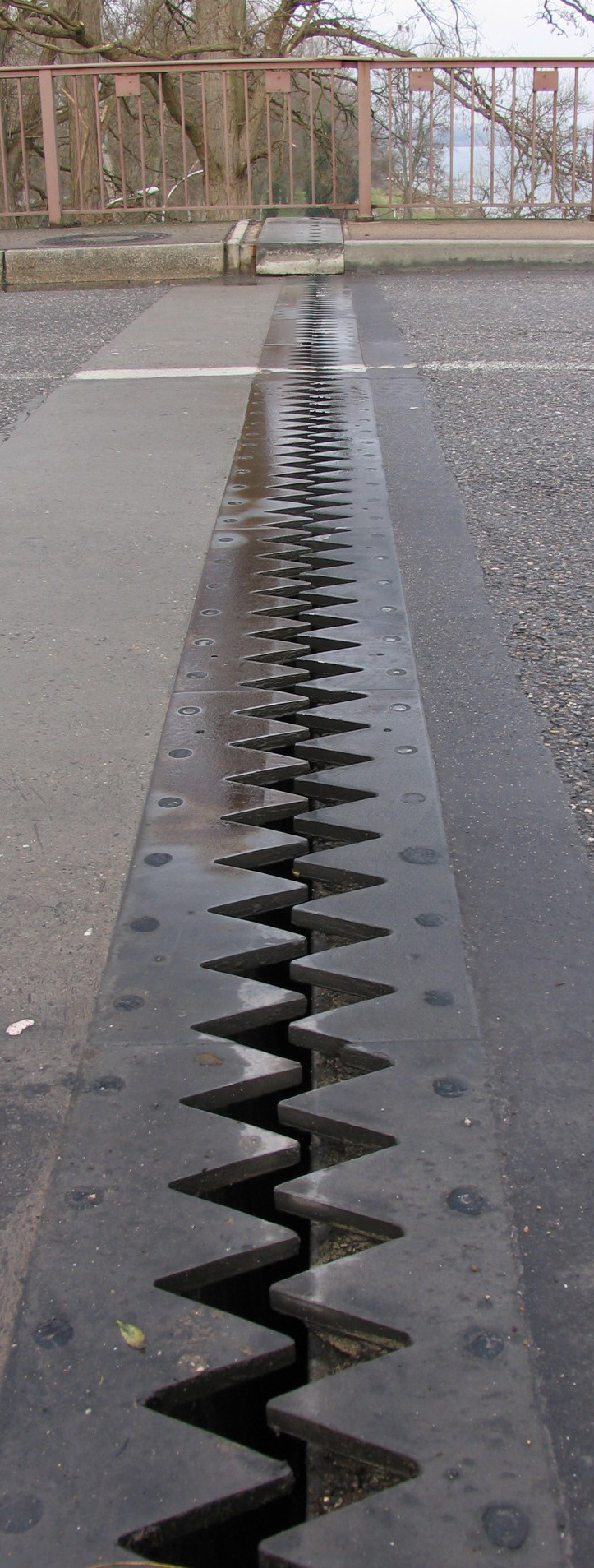
Temperature gradients are defined as when some parts of a bridge are warmer than others. And when Linderman and colleagues used temperature and sunlight projections using climate models, they saw such gradients can result in defects.
“It’s less about the actual extreme temperature and more about the temperature difference,” she said. “The uniform temperature, yes, will cause the structure to grow or shrink. We know that. But when part of the structure is warmer or cooler than another part, it causes additional stresses. Part of the bridge wants to expand, the other part doesn’t, and when the magnitude of that gradient grows, so does the potential for cracking.”
 CrazyD via Wikimedia
It’s the extreme swings in temperature that seem to have the greatest impact on the gradients, Linderman learned – and, ultimately, that influences the service life of bridges.
“If you start to get cracking in places where you didn’t think you’d get cracking, you will see slow degradation of the structure,” she said. “It’s going to impact the long-term performance of the bridge and also increase your maintenance requirements.”
Creating resilient infrastructure for the future
As researchers learn more about the potential effects of extreme temperatures – as well as their second-order effects and interactions with other weather-related variables – Wang said different research groups, which often focus on specific types of infrastructure, materials, or designs, can learn a lot from one another to build more data-driven models to design and retrofit for greater resilience.
“We need more systems-level modeling tools – because infrastructure is inherently and increasingly interconnected,” Wang said. “One type of failure can grow and cascade, affecting other systems. We don’t, at this point, have credible tools to capture and really understand all those different potential impacts.”
Abdelaal agreed – and said that infrastructure stakeholders need to invest more in climate science and climate modeling to provide engineers with the appropriate data points to develop those tools. It’s necessary to design new resilient infrastructure, as well as maintain or retrofit the bridges, roads, and other key structures that are already in use.
“We remain in the learning phase – and we’ve been doing too much based on historical weather data. We need to be thinking about what might happen in the future where we are going to see more of this (weather-related variability),” he said. “Our biggest limitation right now is that we don’t have enough resources to build the models and test new designs so we can optimize them.
“Resilience in structures is not just about saving money, it’s about saving people’s lives – and we need more data to understand what problems we might be facing so we can do both.”