 Euthman via Wikimedia Commons
Cities, towns, and municipalities of all sizes across the U.S. are taking a hard look at their existing infrastructure, and a new ASCE-involved report is helping provide increased clarity.
With notable increases in frequency and intensity of extreme disaster events, including storms, floods, droughts, and wildfires, communities are realizing that far too many roads, bridges, water systems, and power networks are being pushed past their design limits. As a result, many, especially in smaller and mid-sized communities with limited staff and budget, are looking for practical ways to build and maintain infrastructure that will last, even under today’s – and tomorrow’s – climate conditions.
Upcoming infrastructure event
To assist, Duke University’s Nicholas Institute for Energy, Environment & Sustainability, in partnership with ASCE and other industry partners, released Built to Endure: A Smart Guide for US Cities to Build Resilient Infrastructure That Lasts. The new report provides a variety of case studies, from flood recovery in Kentucky to community engagement in Wellington, New Zealand, to highlight the importance of thinking beyond individual infrastructure projects and embracing a more interconnected, system-of-systems approach.
The report also offers three key building blocks for systems-level success: strategic, proactive resilience planning; policy and regulatory strength; and community empowerment. By leveraging these three foundational principles, as well as accessible digital tools to support them, communities can better integrate the kind of resilience that will stand the test of time and weather.
“Every day, civil engineers work on building safe, reliable infrastructure,” said report co-author and ASCE Chief Resilience Officer Jennifer Goupil, P.E., F.SEI, F.ASCE. “Understanding how the systems are connected and form the economic foundation for the community is critical.”
Elizabeth Losos, Ph.D., executive in residence at the Nicholas Institute and a co-author of the report, said she had been working with Bentley Systems, an infrastructure engineering software solution provider that also contributed to the new report, on ways technology can better support systems-level resilience. As more disasters strike, it becomes clearer that a community’s different pieces of infrastructure are connected – and a failure of one will have cascading effects on the others.
The need for actionable guidance
This became even more apparent to Losos after serving as a member of her community’s planning commission after Tropical Storm Chantal hit Chapel Hill, North Carolina, in July 2025. She said she quickly realized smaller and midsized communities like hers needed more actionable guidance on how to create enduring infrastructure.
“This was one of these so-called thousand-year tropical storms, and it just devastated Chapel Hill’s commercial areas and affordable housing units,” she said. “We understood we needed to address our infrastructure resilience, but at that time, as we looked at case studies about how to do so, they not only seemed aspirational but really just unobtainable due to cost and what our government might do about the problem.”
But, Losos said, after talking to industry partners, she realized that many smaller municipalities are simply unaware of success stories or emerging technologies like expanded data foundations and digital twins that could help them shift from a reactive, project-by-project stance to one that proactively addresses resilience across the entire community.
And given that members of smaller city and community councils and planning commissions, including Losos, are usually volunteers, Goupil added that it’s imperative that any guidance be accessible and applicable.
“(Planning volunteers) have other jobs. They often may not have full-time expertise on how to create resilient infrastructure for their communities,” she said. “But by looking at these different case studies and seeing how they align with the three building blocks, these examples seem very approachable and are something they can do in their own community.”
Many of the case studies featured the ways good data models can better inform decision-making.
Further reading:
- Podcast: New report maps secret of success for smaller cities to build resilient infrastructure
- Report highlights urban density, resilience hurdles for cities in the Americas
- Community resilience starts with people
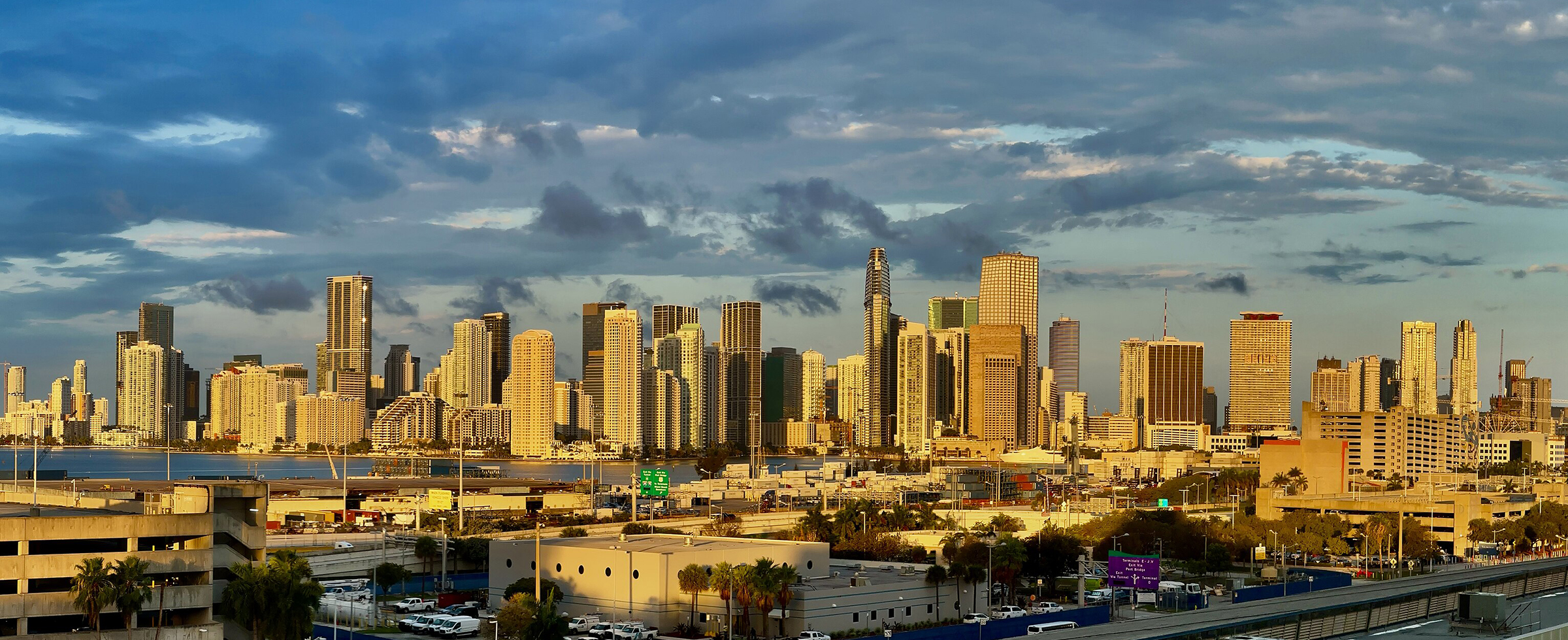
Miami planners, for example, embedded climate data, including sea-level rise projections, into all their infrastructure decisions. In Norfolk, Virginia, a team used geographic information system modeling and flood risk data to guide how land would be used. But Losos said one of the case studies that surprised her most was the one from Wellington, where the city created an interactive digital twin to help residents visualize climate risks and foster greater community engagement.
“These systems can also communicate with the residents and public – and that’s something that’s just as critical as public works or financial stakeholders to making good decisions,” she said. “In Wellington, the models included Maori knowledge to help let the community understand the impact. And since that system was in the middle of a community center, where anyone could come in and run some scenarios, the community could really get a good handle on the what-ifs.”
Technology, however, is only a tool. And Goupil emphasized that the three building blocks are vital to helping lean communities work at a systems level.
Taking a different approach
Planning helps identify what to do to support systems resilience, policy ensures that it can and will happen, and community engagement and empowerment build the support to follow through on more resilient infrastructure systems, Goupil said.
“This is a strong opportunity for infrastructure stakeholders to add real value to their communities, especially as we start to talk more about the impacts of increasingly severe storms and changing environmental hazards,” she said. “But it means thinking about these issues differently than we have in the past.”
For those still considering where to begin, Goupil said the report contains not only the different case studies for inspiration but also a robust resources section.
“We worked purposefully to collect the different resources that are publicly available,” she said. “We organized those tools in a way that they can add value wherever a community is right now.
 Kari via Wikimedia Commons
“If they are at the very beginning, there are resources to help them plan. If they have a plan in place and are ready to implement it, there are tools to help them engage the community. We tried to set things up so people can plug in wherever they are at and use the resources to help them move forward.”
Losos hopes that civil engineers reading the report will see that the “technology is catching up with the discipline.” The combination of the building blocks plus innovative modeling technologies will position the field to achieve the kind of sustainable, systems-level infrastructure design that will withstand whatever the future holds.
“We now have a lot of digital tools that can do more,” she said. “For example, with digital twins, you can start with a focus on flood risk. But you can layer on drought and then heat and fire and storms to see what the effects are.
“And each layer makes the model richer, more robust, and better equipped to help us manage all the different hazards that we’ll have to deal with moving forward. … It’s time to embrace these new technologies and approaches so we can think beyond the project level and really address the entire system.”