 Simona Murrone, courtesy of Parco Archeologico del Colosseo
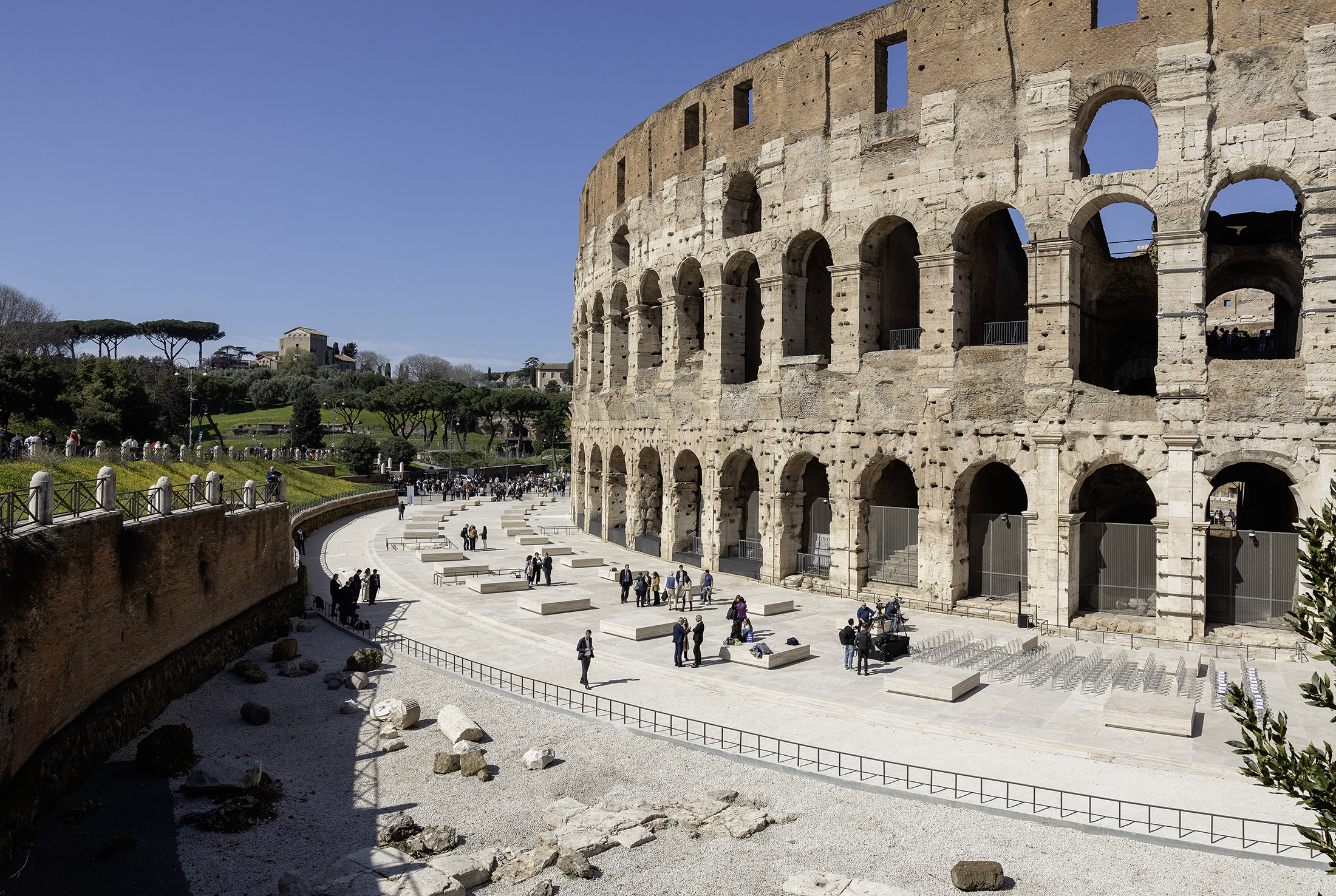
The ruins on one side of Rome’s Colosseum have been restored somewhat, at least aesthetically, through a project that offers visitors “a clearer understanding of the monument’s original layout,” according to a press announcement.
Stefano Boeri Interiors, a multidisciplinary design studio based in Milan, led the recent restoration project. The work focused on the perimeter and ambulatory areas on the southern side of the Flavian Amphitheater, as the Colosseum is also known, where the arched facade had collapsed over time.
Further reading:
- Colosseum floor reborn with monumental engineering solution
- Did ancient builders use hydraulic engineering to build step pyramids?
- Restoring a Michelangelo project paved way for modern engineering, author says
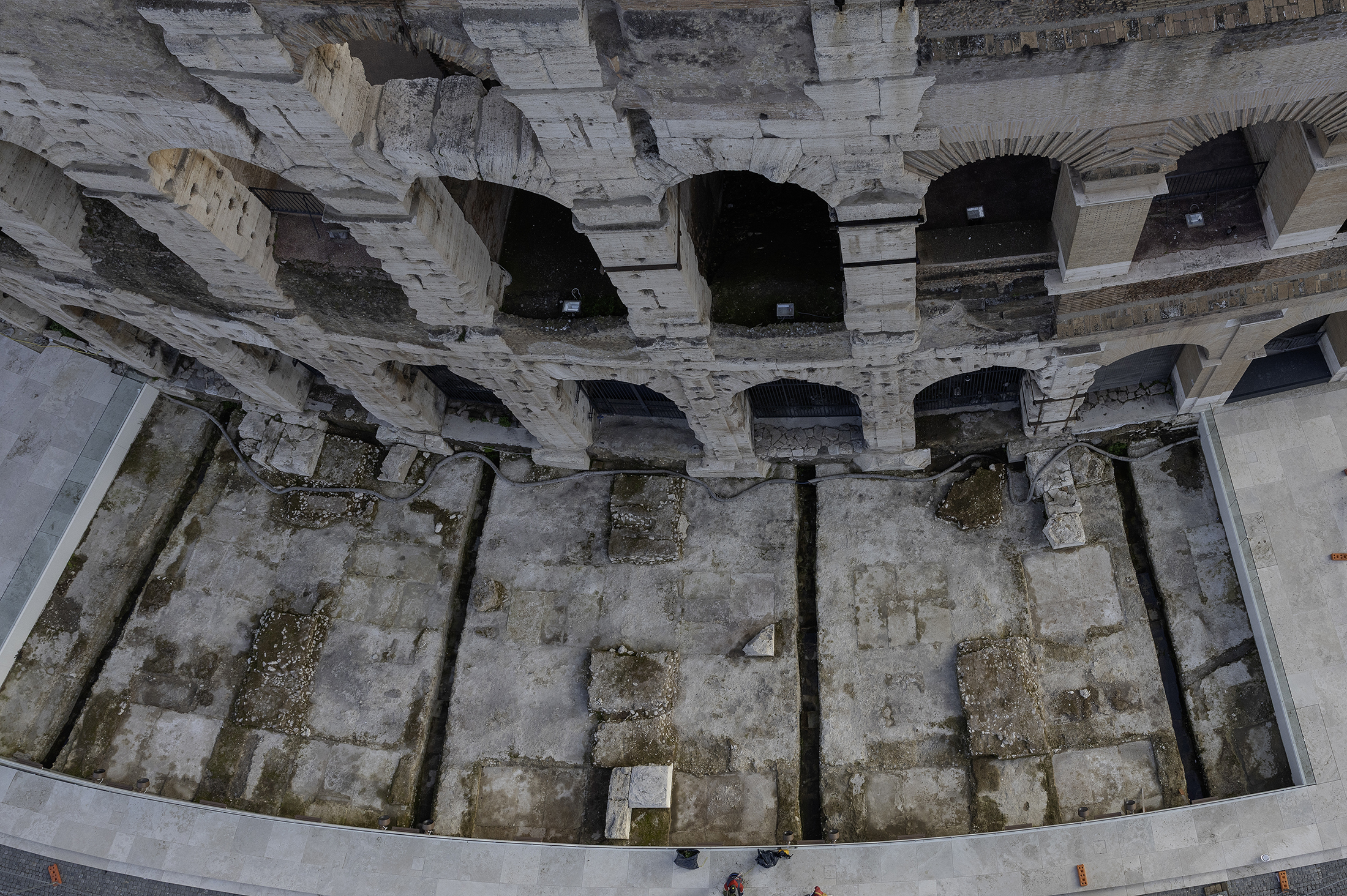
The restoration design was based on an analysis of the Colosseum’s northern facade, where the original elements were intact, and archaeological investigations conducted by the Parco Archeologico del Colosseo, which operates and maintains the amphitheater’s ruins and other monuments in the central archaeological areas in Rome. The work featured an excavation of the existing piazza on the southern side of the oval-shaped amphitheater, between arches 1 to 18 and 60 to 76, lowering the area by approximately 1 meter to reach the site’s historical levels.
This enabled the project team to restore the area’s crepidine – the stepped perimeter at the base of the structure – and to repave the missing sections of the southern ambulatory areas. These efforts “also offered the opportunity to reconsider the stormwater drainage system,” Stefano Boeri Interiors explained in its news release. “The altimetric redefinition of the piazza enabled a thorough analysis and optimization of rainwater runoff, calibrating slopes and transitions in coherence with the monument’s original layout. The result is a public space that is both hydraulically organized and more accessible for visitors, where water management becomes an integral part of the paving design.”
Made in marble
Covering approximately 3,130 square meters, the southern ambulatory areas were restored with travertine marble from the Cava del Barco quarry in Tivoli, the same site where the ancient Romans sourced their building materials. This new marble was “cut along the bedding plane to ensure material and chromatic continuity with the original surfaces,” according to the release.
 Simona Murrone, courtesy of Parco Archeologico del Colosseo
The design was organized into a grid featuring alternating bands of regular bays interspersed with compensation strips – a technical solution “that absorbs geometric variations imposed by the curvature of the crepidine,” Stefano Boeri Interiors explained.
In addition to the marble, the project also used a lime-based, cement-free screed material and an adhesive developed specifically for the restoration work by Milan-based Mapei S.p.A., which served as the project’s technical sponsor.
Arches and access
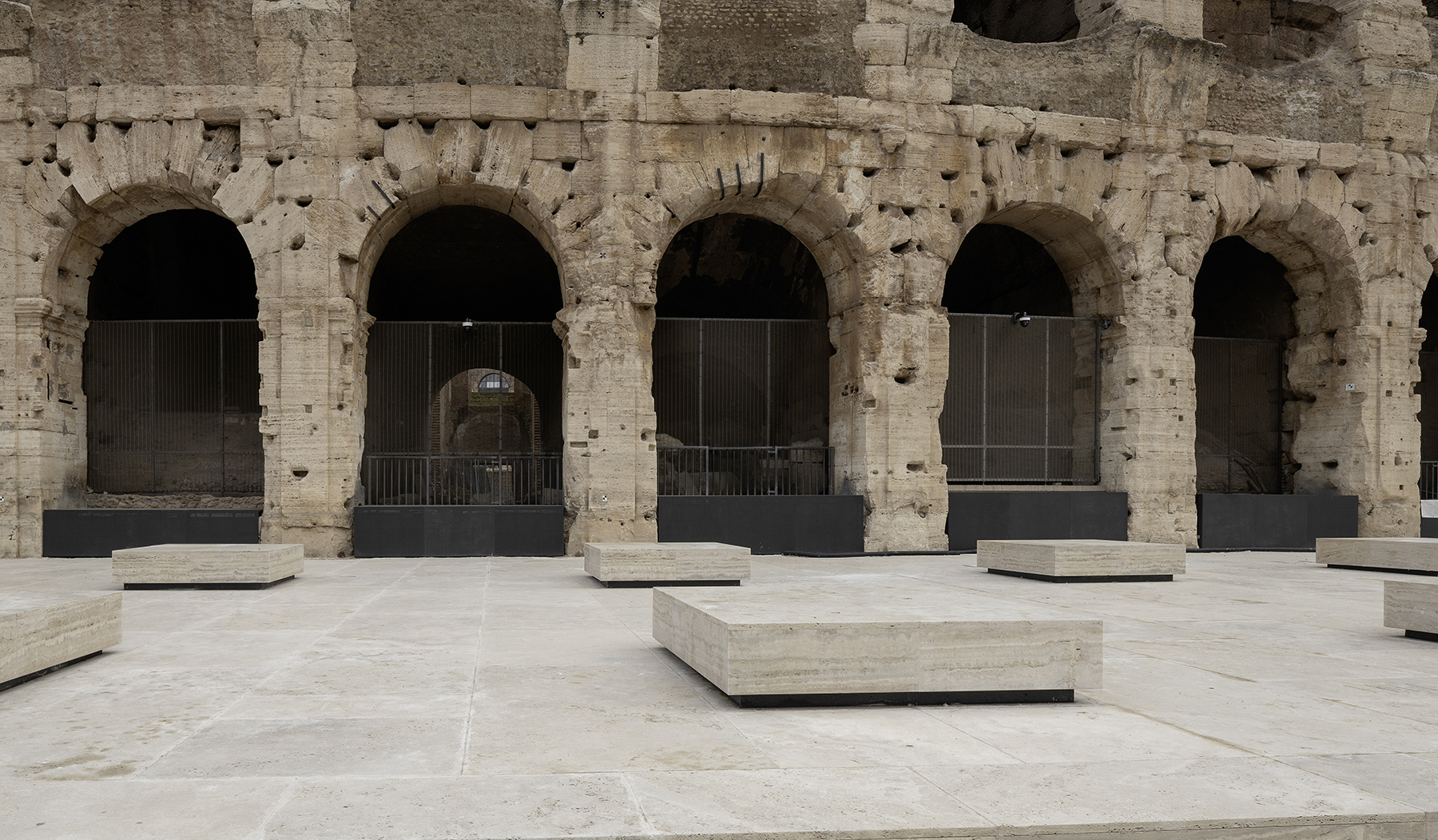
To mark the location of the arches from the original southern facade, the restoration project installed a series of 44 travertine slabs, each 40 centimeters high, that also serve as seating across the site. Because many of the arches originally featured Roman numerals to identify the entrances, the project also plans to reintroduce a similar numbering system on the ground, which will be “engraved on dedicated travertine slabs, measuring 120 x 60 centimeters, aligned with the entrances, thereby ensuring the continuity of the original orientation system,” according to the release.
Access ramps were added to key locations across the site so that visitors can easily “overcome the level differences created by the restoration of the historical elevation, making the area continuously and inclusively navigable while integrating the access devices into the new spatial configuration,” the release noted.
The new marble paving was left uninstalled at one excavated section between arches 65 and 71, creating an “archaeological window … allowing a clear view of the (monument’s) foundations and historical stratifications,” explained Stefano Boeri Interiors.
Monumental history
Summing up the project, architect Stefano Boeri said the “redesign of the Colosseum’s southern piazza has finally restored the perception of the monument’s original scale and pavement level, while offering the public the opportunity to approach its walls and imagine the rhythm and sequence of the ambulatory areas and arches that have been lost.”
Fellow architect Giorgio Donà, a co-founder of Stefano Boeri Interiors, concluded that the restoration “has been a collective effort enriched by a variety of contributions from archaeologists, researchers, architects, and technical partners. The project aims to offer the city, the international community, and visitors a new piazza and a close-up viewpoint: a completely novel way to engage with the monument and its history.”