 Pennsylvania State University
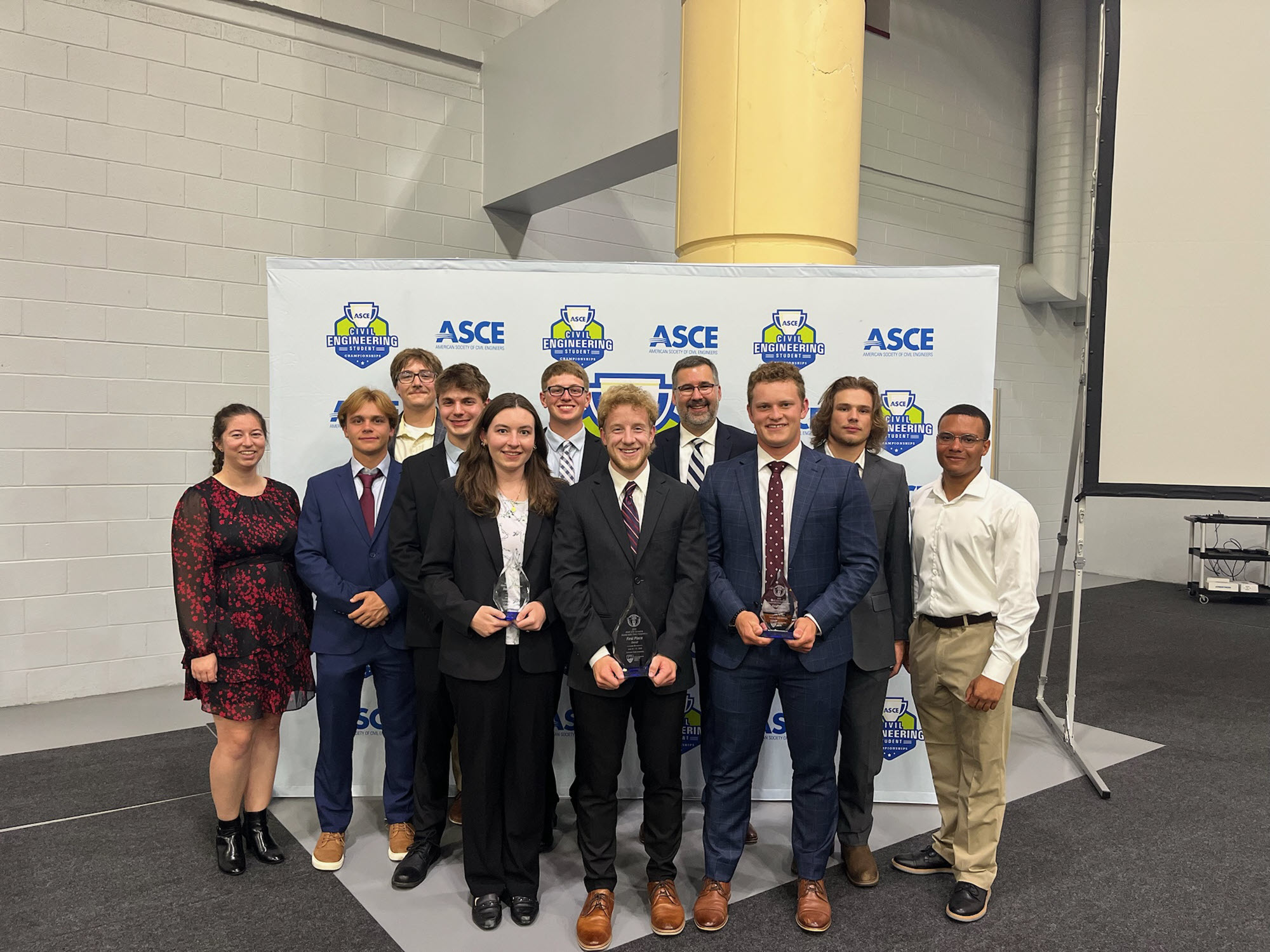
 The Pennsylvania State University claimed first place at the 2026 ASCE UESI Surveying Competition finals.
Team captain Kyle Kullman credits this victory to his team’s confidence in each other.
“Every member of our team brought something valuable to the table, and our skill sets complemented each other’s very well,” Kullman said. “We all trusted each other to handle any part of the competition … and that level of confidence, as well as our teamwork, made a big difference.”
Each year, qualifying student teams from around the world convene at the ASCE Civil Engineering Student Championships to compete in the finals of the surveying, sustainable solutions, and concrete canoe competitions.
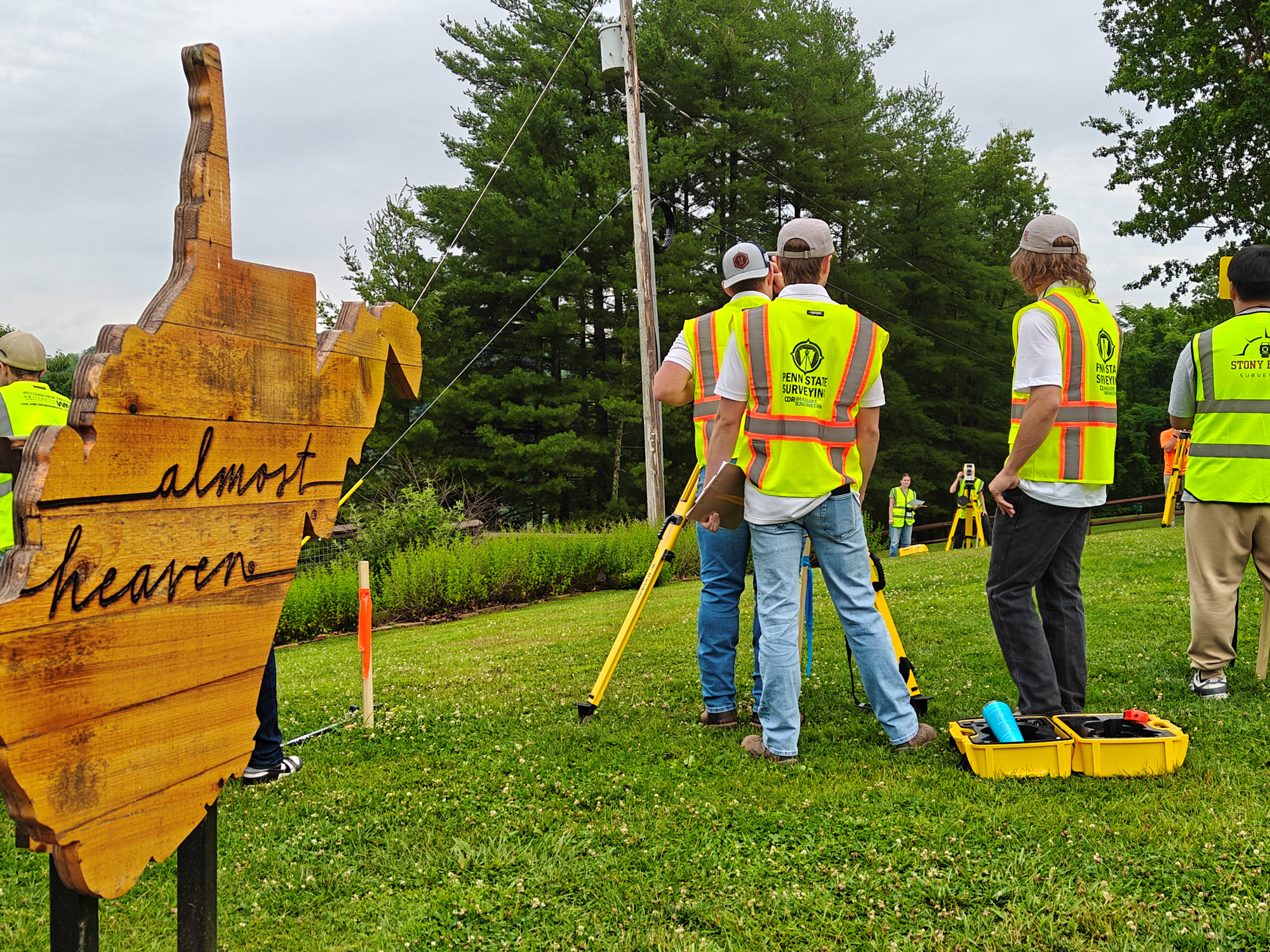
The ASCE UESI Surveying Competition emphasizes the importance of surveying in civil engineering projects, challenging students to apply basic surveying principles to solve common industry problems using standard field and office equipment and procedures.
The competition includes two components: a mapping project and a field component, in which teams complete a task from four different categories. Distance by pacing, differential leveling, and determining proposed sewer depth and cut are just three of the several possible field tasks.
Out of 130 total teams, 19 advanced to the finals. California Baptist University earned second place, and Stony Brook University came in third.
 Pennsylvania State University
“It was a surreal moment when they said, ‘The winner is Penn State University.’ Everyone on our team was super excited and surprised,” said Kullman.
That moment came after a buildup of excitement as winners of each category were announced.
“I realized that we had a real chance at winning when we won two individual field tasks and the mapping portion,” Kullman said.
The win didn’t come without plenty of hard work. It was a combination of skill, dedication, and striking the balance between delegating tasks and working together that made the team so strong.
Four team members, including Kullman, worked on the mapping task.
“Any more would be too many hands in the pot; it wouldn't work very well,” he said. “And any less would be too big of a load on each individual person.
“We had a project lead for that who was one of my teammates, and he broke down a master list of everything that needed to be done and delegated sections to me, my two other teammates, and himself,” said Kullman. “And from there we would just work on it.”
To prepare for the field tasks, the team came together as one to practice all the tasks they might have been thrown into.
“We took turns doing different roles in the task to ensure that everyone was comfortable with the equipment, the procedure, and the computations that went along with it,” he said.
The team’s culture of trust and collaboration wasn’t built overnight – “a big part of it comes from our leadership,” said Kullman.
“We have a very strong mentorship from our seniors who have now graduated,” he said. “There's pretty consistent turnover of younger members, and there's always knowledge being passed down.
“The students who graduated before us have played a huge role in this win as well – they taught us everything that we know,” he continued. “And our advisor is also very, very dedicated to us.”
Engineering Is a Team Sport
Big infrastructure solutions don't just magically appear while you're sitting alone in your cubicle. Solutions take shape when you open the door to collaboration and open your mind to new ways of thinking. Solutions happen when you work as a team.
ASCE2027: The Infrastructure and Engineering Experience is a first-of-its-kind event bringing together big thinkers from all across the infrastructure space, March 1-5, 2027, in Philadelphia. Join the team and step up your game!
Learn more about ASCE2027: The Infrastructure and Engineering Experience.