 Aksakal via Pexels
Carbon emissions are not the only culprit for climate change. Pound-for-pound, nitrous oxide has a global warming potential that is 273 times that of carbon dioxide, according to 2021 data adopted by the Environmental Protection Agency.
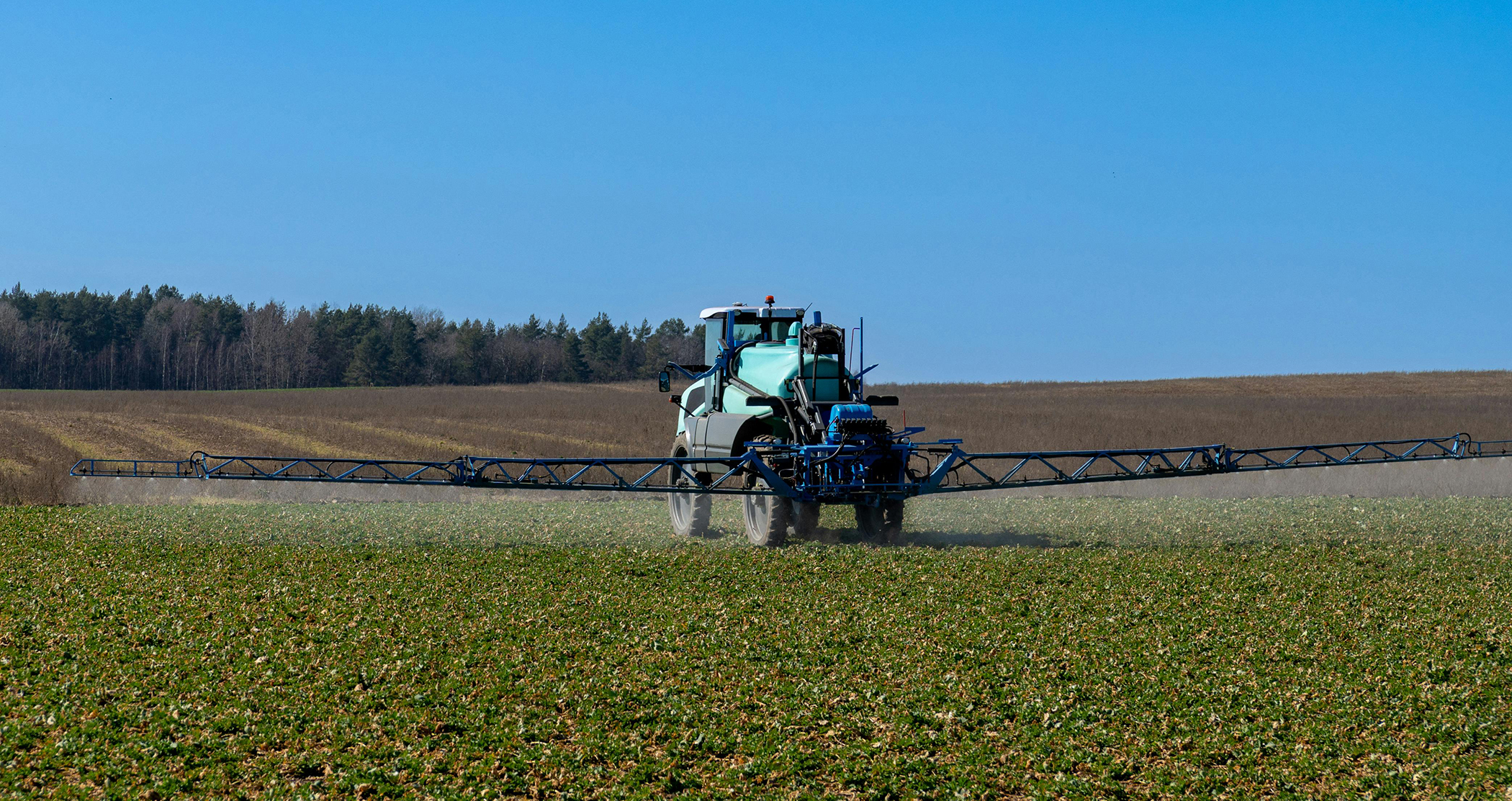
Managing these emissions will require controlling the use of nitrogen-based fertilizers – the primary contributor of N2O – while also monitoring the gas and its impact on the built environment.
Further reading:
- Agrivoltaics: How combining solar panels and farming delivers big benefits
- Can machine learning make up for limited data on water evaporation?
- Machine learning algorithms fuse data to forestall urban growing pains
Unfortunately, current methods of estimating N2O amounts from soil chemistry are inadequate because of the complexity of interdependent parameters like soil moisture, carbon, and weather. Improving the measurements is critical not just for land managers but also for civil engineers tasked with remediation and designing climate-resilient infrastructure.
In response, a Michigan State University research team has developed a hybrid model that incorporates machine learning to dramatically improve accuracy from about 20% to more than 80%, said a co-leader in the effort, Bruno Basso, Ph.D., a distinguished professor in the plant, soil, and microbial sciences department of the university’s College of Agriculture and Natural Resources. Others on the team included G. Philip Robertson, Ph.D., who is another MSU distinguished professor, and postdoctoral researcher Prateek Sharma.
N2O’s harmful effects
Nitrogen-based fertilizers have helped feed the planet’s growing population for years so the problem of generated N2O is not new. Agronomist Norman Borlaug’s successful efforts to increase crop yields and fight global hunger won him a Nobel Peace Prize in 1970, but since then, artificial fertilizers have come under fire for their destructive effects on the environment. By 2030, N2O emissions are expected to have increased by 35-60% globally from 2005, largely as a result of excessive use.

It’s becoming increasingly necessary to optimize use of nitrogen fertilizer. But getting there requires accurate predictions of the resulting N2O, which is where a hybrid prediction tool based on real-world data inputs and machine learning inferences helps, Basso said.
Emission predictions bring data challenges
Simple statistical approaches to N2O emissions – X will yield Y – don’t work, so process-based models that better capture the environmental and chemical complexities in soil conditions have been used. But these models are not very accurate and have to be calibrated through labor-intensive processes for every new region where they’re deployed.
Machine learning could address some of these challenges, but that faces hurdles too. For one thing, existing emissions data in the U.S. is scarce and sparse, Basso said. But since machine learning feeds on large volumes of data, scarce and sparse won’t do.
The researchers overcame the problem by developing an “ensemble modeling system” that first ingested datasets from five process-based ecosystem models: the Agricultural Production Systems sIMulator, the Environmental Policy Integrated Climate model, the SALUS model, the Decision Support System for Agrotechnology Transfer, and STICS. Data from these models fed an ensemble of four machine learning models.
 Goran Jaksic via Unsplash
“It’s like an ensemble of instruments in an orchestra,” Basso said. “If just one were to play alone, nothing much happens. But it’s beautiful when you get many instruments playing together.”
The final system leveraged more than 12,000 N2O measurements from 17 agricultural sites across the Midwest and Great Plains regions. The sites also differed in crop management styles and soil composition. This set of training data through layered use of many different models and different perspectives enabled the Michigan State team to develop a strong prediction solution.
Machine learning then worked on this foundation to study patterns among the many variables like soil carbon, biomass, ammonium, nitrate, soil moisture, temperature, and more. Studying the patterns helps clarify the complex mechanisms at play so researchers can make new and future predictions with improved confidence. The opaque complexities in predicting N2O emissions are now less so.
“The power of AI is basically in its inverse modeling capacity: For a measured observation it can tell us what factors led to that value, which in turn can help us predict that variable in another location that the model has never seen before,” Basso said.
Future iterations of the new hybrid system can also incorporate new data inputs, like those received from field sensors that measure crop growth, ripeness, and more.
Future use cases
Basso envisions a scenario where the hybrid model can form the foundation of an open-source platform for use by a variety of entities, including nonprofit organizations in the agricultural and civil engineering sectors.
“Much like a doctor sends a prescription to their patients, we can use the platform to figure out how much fertilizer should be used to reduce greenhouse gas emissions while still optimizing yield,” Basso said. “Now that answer becomes much more accurate.”
For the near future, Basso sees use within the U.S. because the model is trained on U.S. data. As more data from the world gets input into the open-source platform, its utility will expand to more geographies.
 Antony Trivet via Pexels
Expanding that utility globally would be vital, as lowering emissions from its sources “would be good bang for the buck,” said Colleen Rosales, Ph.D., an air quality scientist with OpenAQ, a nonprofit providing free, open-access air quality data worldwide.
Land managers can use data on N2O emissions as guidance on what types of land management they should be doing, whether that’s working with cover crops or enhanced rock weathering, among a variety of other techniques.
Civil engineers also have a vested interest in improving the accuracy of N2O emissions.
For one thing, increasing greenhouse gas emissions affects calculations for all built environments. In addition, civil engineers have to contend with N2O generation as a byproduct in wastewater treatment facilities.
Biological nutrient removal processes remove toxic nitrogen compounds from wastewater but release N2O in the process. More directly, N2O from soil finds its way into groundwater, and understanding the extent of leakage can improve the quality of remediation assessments, Basso suggested.

Feed Your Brain
Interested in cutting-edge technology like the one in this article? ASCE2027: The Infrastructure and Engineering Experience is a first-of-its-kind event bringing together subject-matter experts from all across the infrastructure space, March 1-5, 2027, in Philadelphia. So, yes, we know you’re excited about the Philly cheesesteaks, but ASCE2027 also is the perfect place to satisfy your appetite for learning.
Technical deep dives. Infrastructure expertise. Come feast!
Learn more about ASCE2027: The Infrastructure and Engineering Experience.