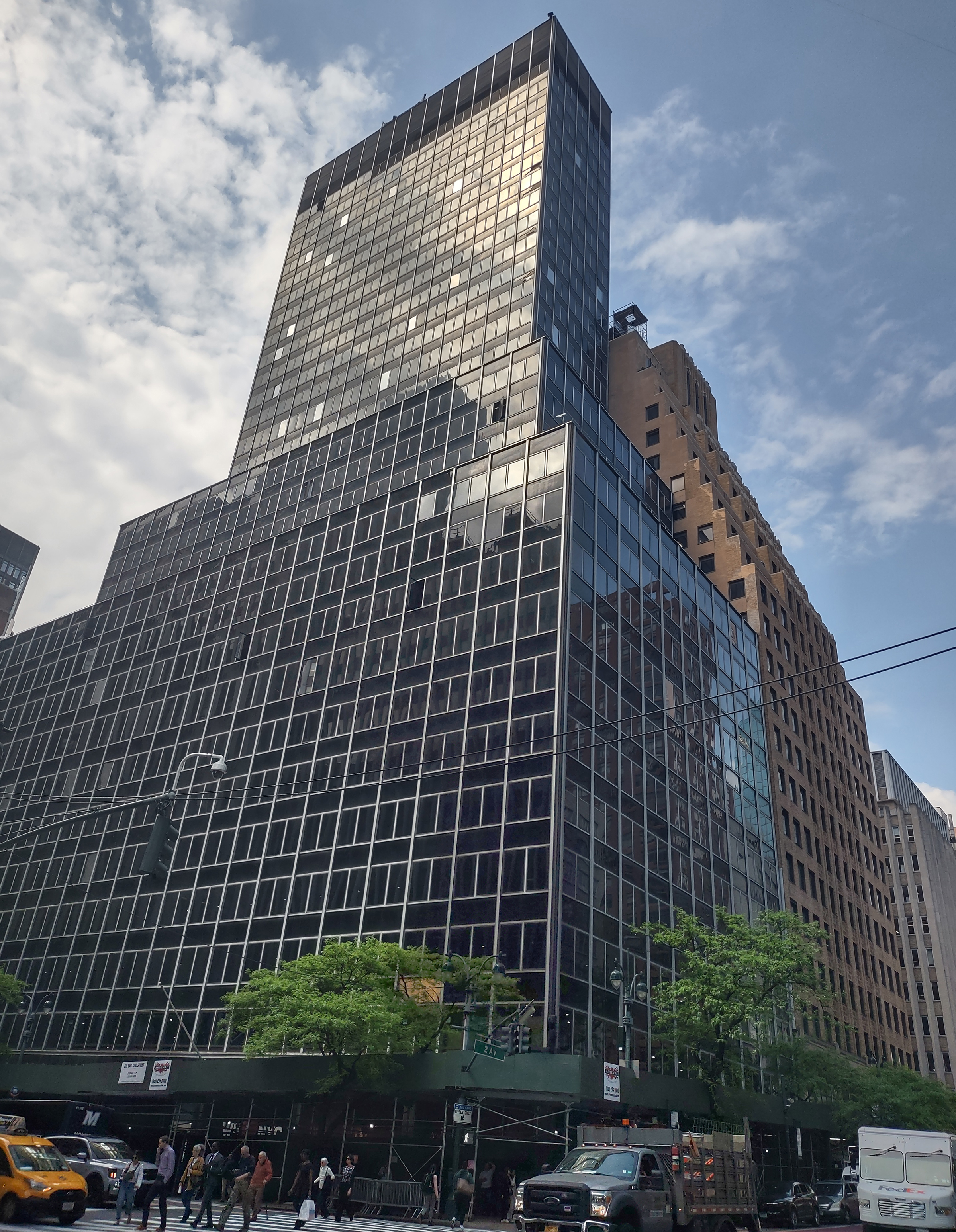
 Jim Henderson via Wikipedia
When a high-profile office-to-housing conversion in New York City was at risk of partial collapse this month, the national media took notice.
As the city blocked off several streets in the area to protect public safety, some questioned whether the risks of this type of adaptive reuse approach might outweigh the possible benefits.
Further reading:
- Strengthening seismic resilience in Haiti after devastating earthquakes
- Ancient Colosseum in Rome receives modern restoration
- 2025 OCEA awards recognize civil engineering's great innovations
But experienced structural engineers say office-to-apartment conversions, even in densely populated areas, can be done safely – as long as engineers conduct careful structural analyses so they can understand the intricacies of the existing buildings they are modifying.
“I’ve seen a lot of speculation – a lot of articles and questions about whether office-to-residential conversions are dangerous and should stop, especially since there are so many of them going on in New York right now,” said Joe DiPompeo, P.E., F.SEI, F.ASCE, founder and president of Structural Workshop in Mountain Lakes, New Jersey. “There seems to be a desire to tie this type of project together with danger – and that’s just not the case. This is a good way to take buildings that are perfectly fine and turn them into buildings that we need, which is housing.”
Developers and policymakers say these conversions, such as the one underway at the former Pfizer headquarters on Manhattan’s Midtown East – the project behind those recent headlines – are a win-win in the development world. They create much-needed, affordable housing options in cities and can help revitalize business districts that have been struggling since the COVID-19 pandemic.
Understanding the ins and outs of existing construction
While completing the structural retrofitting of the former Pfizer building, workers noticed that two load-bearing steel columns on the 21st floor were buckling, causing several floors to sag – significantly increasing the risk of collapse within a busy city block. Official city inquiries into what might have caused the buckling are ongoing.
Troy Morgan, Ph.D., P.E., M.ASCE, a New York-based principal engineer with Exponent, said it will take time to conduct the forensic analyses to understand exactly what might have occurred. Still, Morgan added, the incident is a vital reminder that engineers should take the time to fully understand the properties of any existing structure before attempting modifications, for an office-to-apartment conversion or otherwise.
“The steel has a certain strength. The beams, the columns, braces, and floors all have their own properties,” he said. “You need to understand those properties well, so you know what you are dealing with before you are adding floors or punching through floors or walls to let additional natural light in.”
That’s not always easy, he added. Many buildings, especially those in urban settings, are older and may have been renovated multiple times over their lifespans.
“If you take a building that was built 60 or even 110 years ago, it’s likely it was built with materials common at the time that may not be so common anymore. You need to understand those materials,” Morgan said. “You also need to check out the condition of the building. Is there a level of corrosion? How’s the grout between bricks? Does anything need to be repointed or replaced? You need to do a lot of investigation into a building to determine its condition and what kind of modifications are possible.”
Anwar Alam, S.E., a senior structural engineer with Alpha Structural Inc., agreed. He added that sometimes, even when building records of all renovations for a structure are available, they may not tell the full story of those changes.
“The record may say one thing, but the construction may not have been done in the way shown on the drawings exactly. There can be variations – and you need to take the time to really look at what you have and do material testing,” he said. “You need to do a very thorough analysis.”
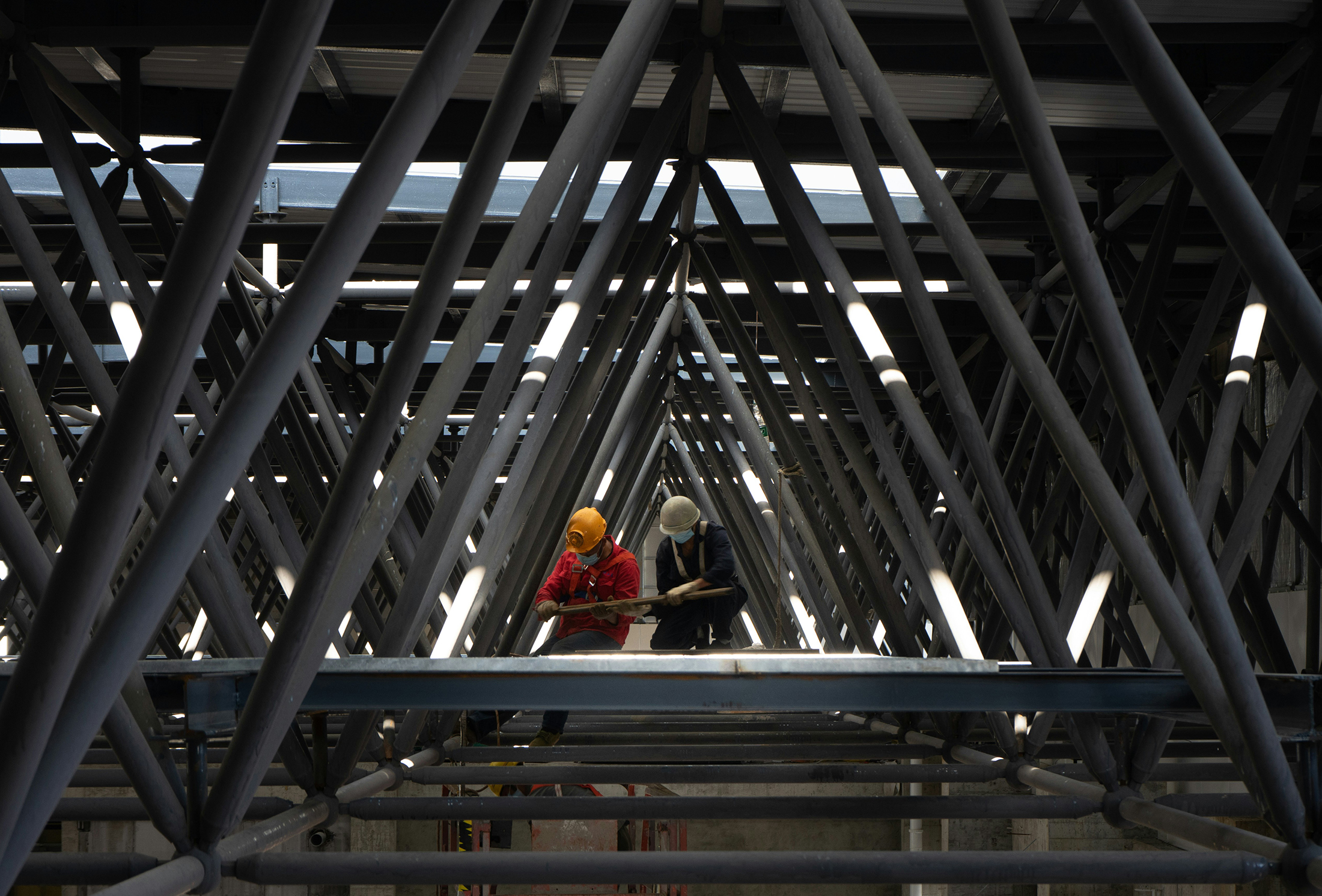
Converting a commercial space into apartments isn’t just a matter of simple remodeling. Successful office-to-apartment conversions are, in fact, a reverse-engineering effort. Only by going back in time and understanding the structure completely can engineers gather the data they need to calculate how every new change or load might affect a building.
 Unsplash
“The onus is on the engineer,” said DiPompeo. “You need to get as much documentation and plans on a building as you can. But there’s often missing information, and you have to come up with a plan to fill in those blanks.
“Sometimes it’s as simple as getting up on a ladder and measuring something. Other times, you are talking about testing and scanning, which is expensive. But either way, that kind of analysis needs to happen.”
Dense populations, big decisions
Such a thorough analysis is even more important in urban areas where potential failures can reverberate through neighborhoods.
“If this building had completely failed, it could have affected an entire city block,” said DiPompeo. “It could have affected multiple streets, probably the buildings across the street – it could have been catastrophic.”
Morgan is quick to emphasize that we still don’t know what might have caused the buckling at the Pfizer building. That makes it hard to use it as an exact case study for what not to do in urban office-to-apartment conversions.
But he emphasized that this near-miss is a stark reminder that, especially in densely populated areas, engineers need to ensure each modification is carried out in a way that maintains “safety and stability at every step.”
“Any incident like this will stay with us as part of our practice, and while it may not change the way we perform engineering design analysis, it will likely give us some pause when we start evaluating the impacts of a proposed modification,” he said. “It will help us keep in mind that we need to think about all possible failure modes because their impacts will be felt not just in the building but beyond it.”
A demonstration that a ‘system of systems’ works
After the issue at the former Pfizer headquarters was discovered, construction workers installed emergency shoring, leading the city’s Department of Buildings to declare the area “safe and stable.” The Wall Street Journal also reported that the incident has inspired the department to start inspecting other affiliated construction projects across the city as a proactive measure. While many might want to focus on what went wrong in this scenario, Morgan said he takes heart in knowing so many things went right.
“Living in New York City and working nearby, I have to say that the Department of Buildings and the Fire Department of New York did a great job. It was a great example of how officials can react to a potential disaster and communicate what’s happening to the public in an effective way,” he said.
DiPompeo agreed.
“New York City is one of the most regulated building departments in the country, and there’s good reason for that,” he said. “But when it’s needed, you see these different groups – from the Department of Buildings to the police to the engineers doing the shoring operations – all working together to deal with the issue and protect the public safety. … Even though there was an issue in this building, public safety was protected.”

Feed Your Brain
Safety is always top of mind for civil engineers. Expect the topic to be prominent at ASCE2027: The Infrastructure and Engineering Experience, a first-of-its-kind event bringing together subject-matter experts from all across the infrastructure space, March 1-5, 2027, in Philadelphia. So, yes, we know you’re excited about the Philly cheesesteaks, but ASCE2027 also is the perfect place to satisfy your appetite for learning.
Technical deep dives. Infrastructure expertise. Come feast!
Learn more about ASCE2027: The Infrastructure and Engineering Experience.