 Sofía Arias Amorós
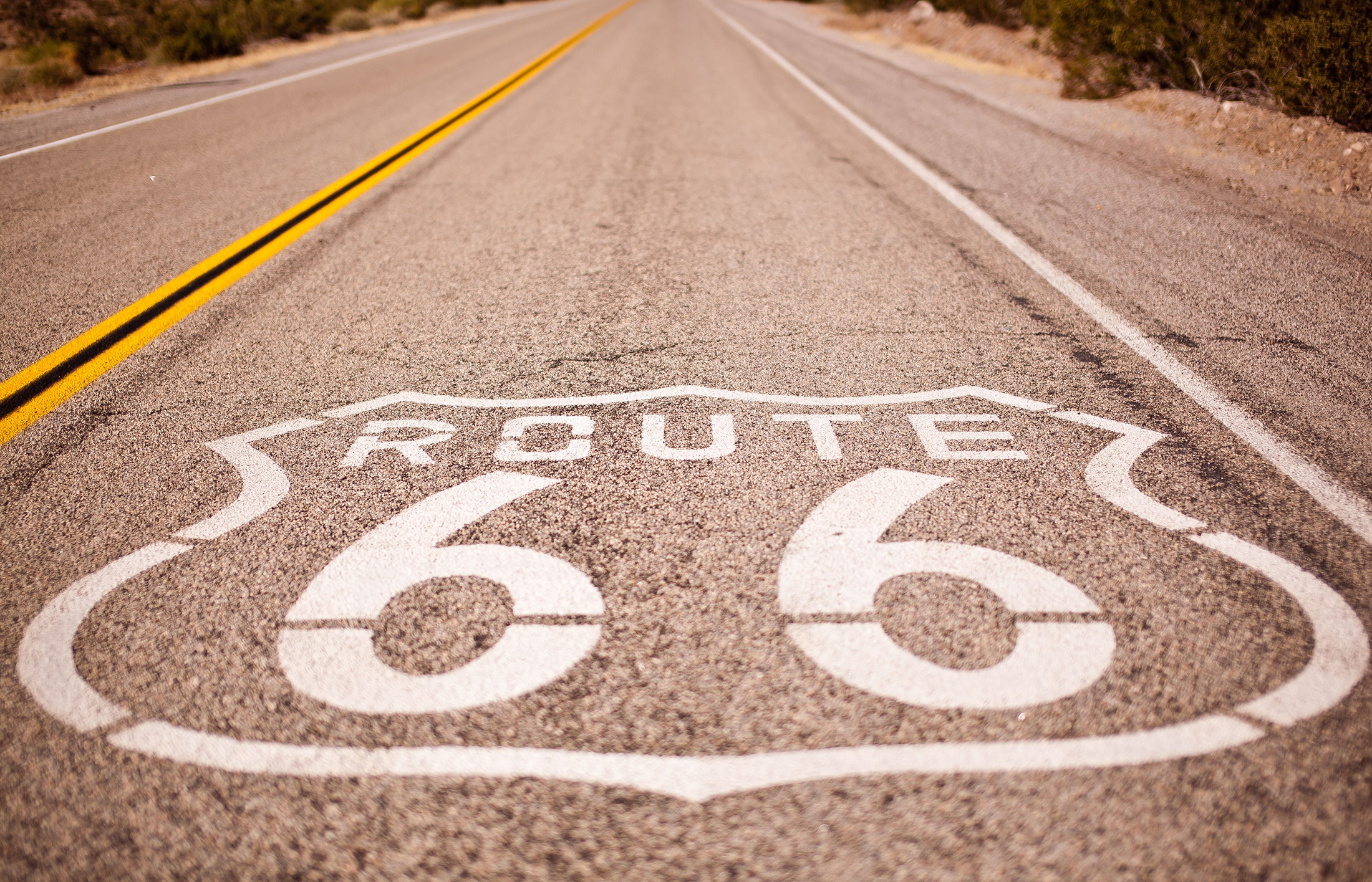
Route 66, one of the most famous and fabled highways in American history, turns 100 this month.
Established on Nov. 11, 1926, Route 66 followed a diagonal alignment from Chicago to Santa Monica, California, a distance of more than 2,400 miles that crossed six additional states along the way – Missouri, Kansas, Oklahoma, Texas, New Mexico, and Arizona. The route was officially designated by ASCE as a Historic Civil Engineering Landmark this year.
Further reading:
- Route 66 rolls to Landmark Madness victory
- Hoover Dam is iconic at 90, but rise in US dam removals signals changing mindset
- Spotlight your community’s critical infrastructure with ASCE’s new Built to Shine campaign
Over the decades, the alignment changed several times in various places to create a safer, smoother, and easier transportation corridor for everyone from migrants escaping the Depression-era Dust Bowl to military convoys to people seeking work in West Coast defense plants during the Second World War to vacationers heading toward the Grand Canyon, the Painted Desert, Disneyland, and other popular attractions during the 1950s, 1960s, and beyond.
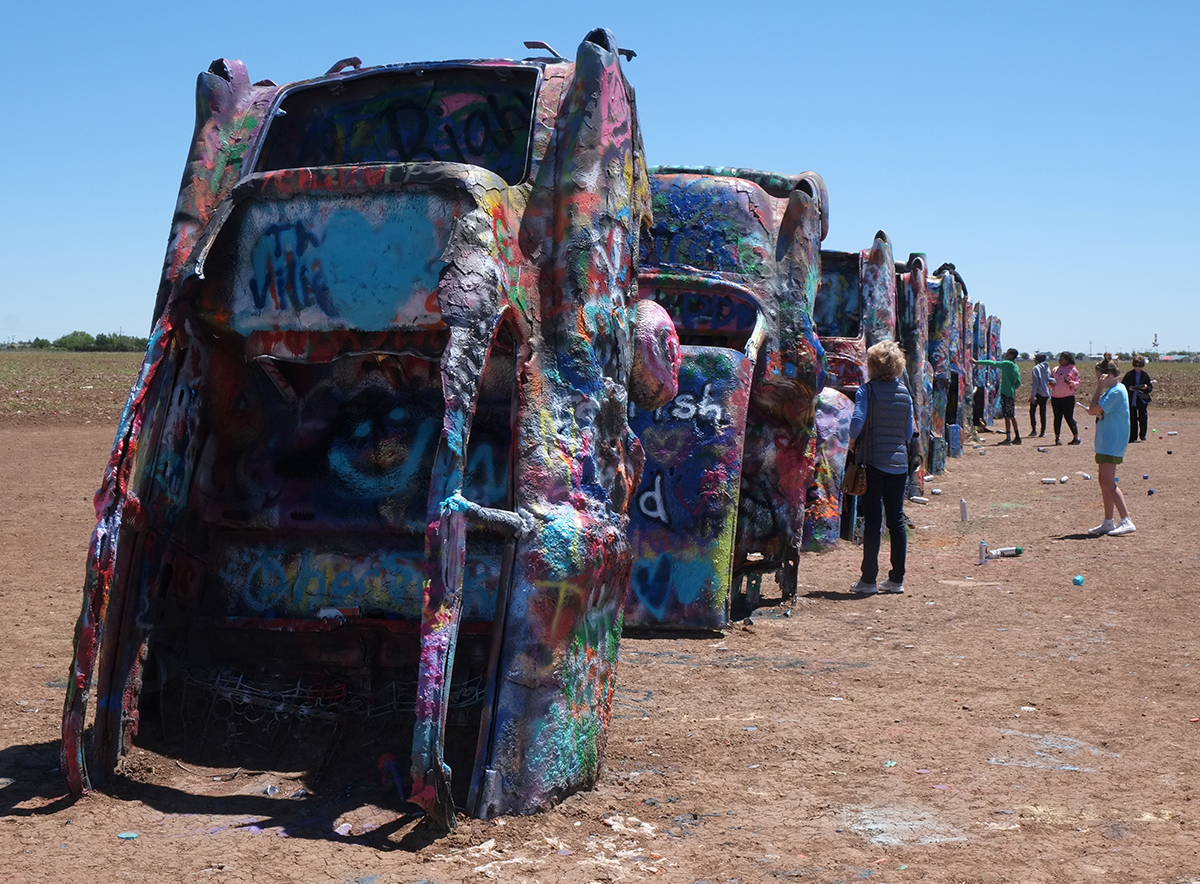
Route 66 itself also hosted multiple roadside stopping points, ranging from Civil War battlefields and Native American Pueblo villages to famously kitschy draws such as a motel with tipi-shaped accommodations and a series of partially buried Cadillacs sticking up out of the ground.
 Jim Ross
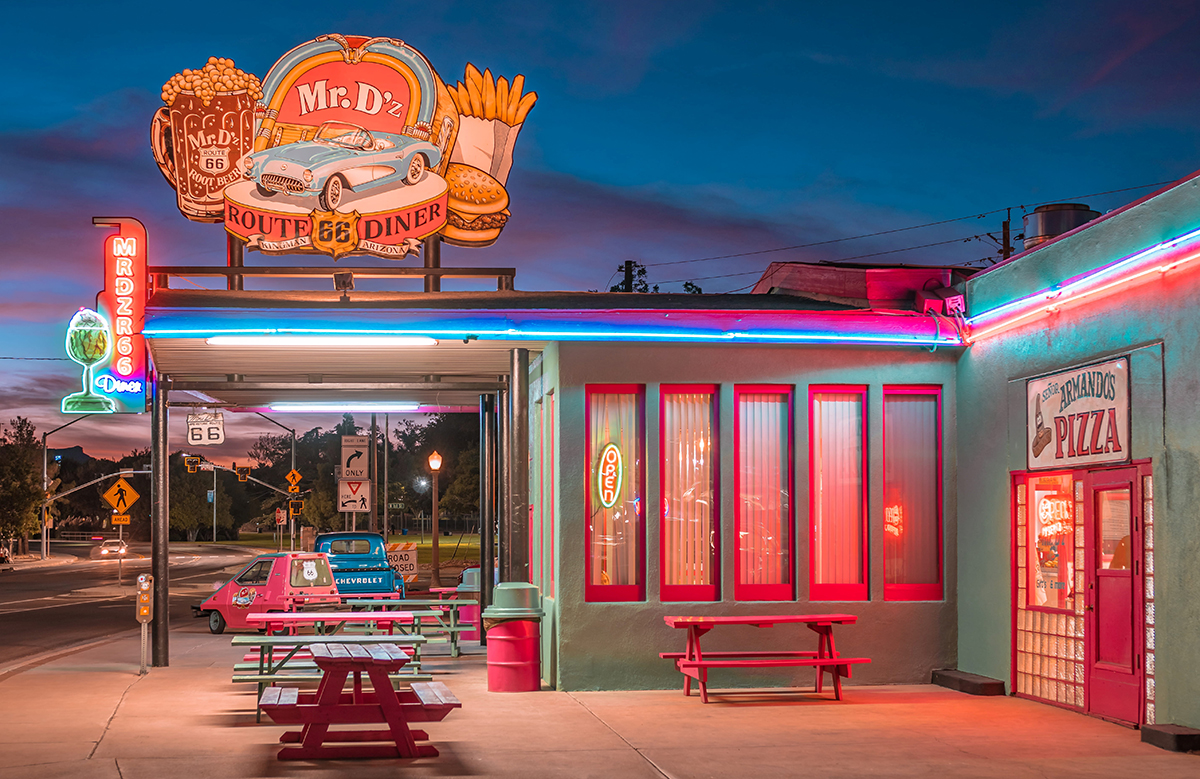
And, of course, there were lots and lots of neon signs at motels, restaurants, souvenir shops, and other sites.
Driving popularity
The U.S. Interstate Highway System eventually replaced most of Route 66, which was decommissioned as an active U.S. highway on June 27, 1985. Portions of the road are still in use as local or state roads while some isolated sections don’t lead anywhere anymore but still attract enthusiasts eager to drive on them, according to Jim Hinckley, author of numerous books on Route 66 and creator of a related website and a blog.
Moreover, the route’s role within American popular culture, always strong, has continued long after the end of its heyday as an active part of the nation’s transportation infrastructure, Hinckley noted.
What other element of America’s built environment can boast an enormously popular song – Get Your Kicks on Route 66, written by Bobby Troup and recorded in 1946 by Nat King Cole – and a 1960s television program? The route was dubbed the Mother Road in John Steinbeck’s Pulitzer Prize-winning 1939 novel The Grapes of Wrath and the subsequent 1940 film directed by John Ford and starring Henry Fonda. It also featured heavily in other films such as Easy Rider; It’s a Mad, Mad, Mad, Mad World; and especially the Disney-Pixar animated film Cars, which fictionalized how the interstates superseded Route 66 and left many small towns along the way struggling to survive economically. The Cars animators even based several buildings in the movie on iconic structures found along Route 66.
Engineering evolution
For civil engineers, Route 66 can serve as “a museum of the evolution of highway engineering” over the past century, noted Hinckley. What began in 1926 as a mostly unpaved route linking together a series of existing state, county, and local roads with mainly gravel or graded dirt surfaces, became by 1938 an all-weather transportation corridor paved from end to end in concrete or asphalt, Hinckley explained.
But the route was in a “constant state of evolution,” he added, with major realignments in 1937 and 1952 to reduce grades, eliminate dangerous curves, shorten distances, and make other improvements. So, when people tell Hinckley they would love to drive Route 66, “I ask them: Which one?”
 Federal Highway Administration/Roamin Rich Dinkela
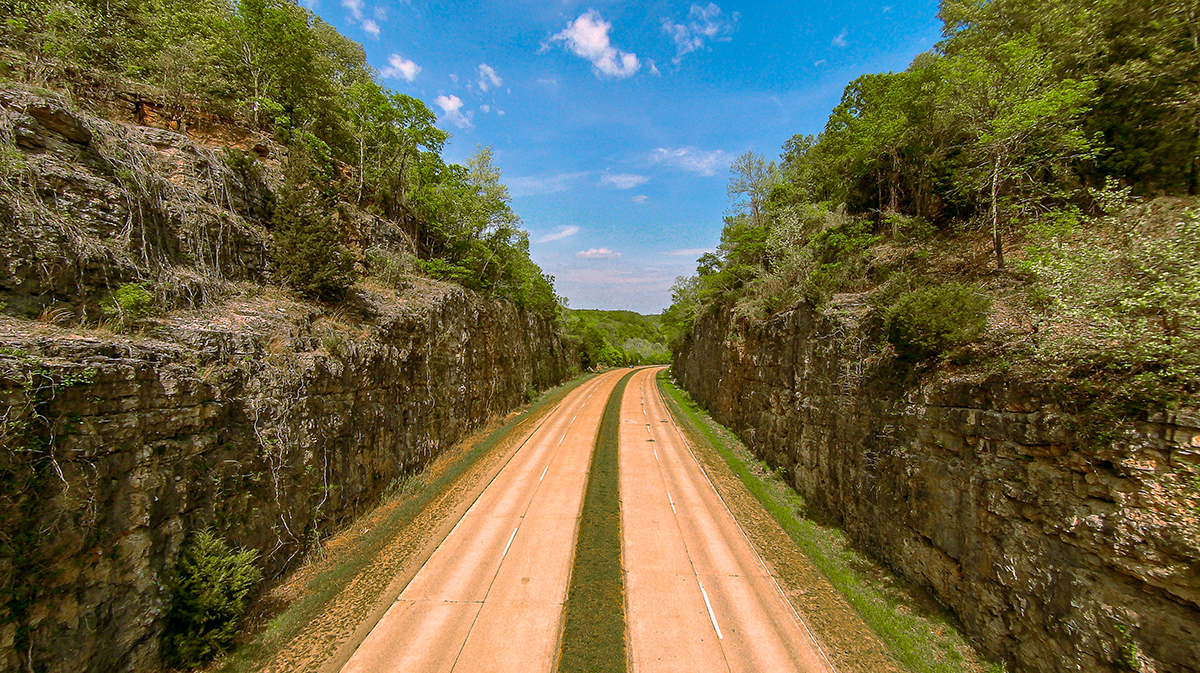
Changes to the route over its useful life represent a “time capsule” of urban and rural highway development, Hinckley said, with examples of major civil engineering efforts such as Hooker Cut in Pulaski County, Missouri. Constructed during the 1940s, the cut involved a 92-foot-deep excavation “through a limestone ridge to straighten the path of Route 66 … the deepest road cut in the country at the time,” according to the State Historical Society of Missouri website.
Route 66 also featured a wide assortment of bridge styles and materials, with examples of timber bridge construction, steel truss bridges, concrete Marsh arch bridges, and others. Although some Route 66 bridges remain in use and others are preserved as tourist attractions, many of these “vintage bridges are being lost at an alarming rate,” explained Jim Ross, a photographer and author of the 2016 book Route 66 Crossings: Historic Bridges of the Mother Road.
Ross, who also maintains a state-by-state database of Route 66 bridges, works to preserve and document these crossings and “raise awareness within transportation departments to recognize the historic value of these bridges.”
Bridges along Route 66 include those that were constructed prior to 1926 and those built specifically for the corridor. But the shifting alignments of Route 66 meant that some bridges that had once been part of the route were later bypassed while other crossings not initially part of the system were later added to it, Ross explained.
Among the notable bridges of Route 66 still in use are the Colorado Street Bridge in Pasadena, California, an open-spandrel concrete arch crossing that opened in 1913 and was preserved thanks to a $27 million rehabilitation effort, Ross’ database explains. Likewise, the bridge that spans the Big Piney River at Devils Elbow, Missouri, a structure consisting of a one-span Warren pony truss and a two-span Parker through truss, was rehabilitated and remains open to traffic.
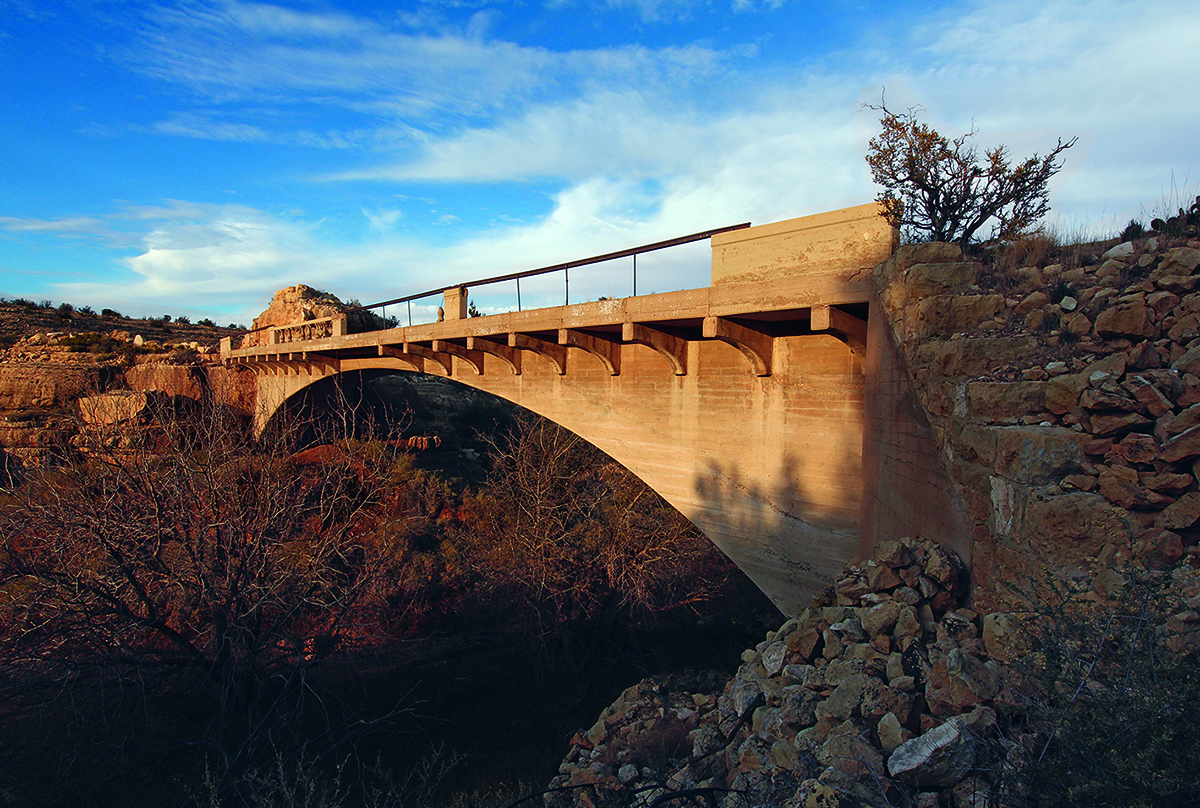
Other interesting crossings include the Canyon Padre Bridge, a concrete Luten arch structure near Twin Arrows, Arizona. Completed in 1914 but not in use since 1937, the bridge is listed on the National Register of Historic Places and remains intact, although access is limited.
Route 66 was also home to such unique structures as the Gasconade River Bridge, near Hazelgreen, Missouri, a mixed through-truss steel crossing with pony truss approaches, and a modified Baltimore truss bridge with concrete deck girder approaches that crosses the Mojave River in Victorville, California.
Some of Ross’ favorite bridges are simple structures that have “a lot of character,” such as a small, abandoned concrete bridge near Paraje, New Mexico, that features decorative guardrails “and tons of charm,” he explained.
Notable tunnels along Route 66 include the art deco-ornamented Figueroa Street tunnels that brought traffic into downtown Los Angeles in the 1930s and remain in use as part of the city’s Arroyo Seco Parkway. The Arroyo Seco is considered the first modern freeway in the western U.S. and was designated by ASCE as a Historic Civil Engineering Landmark. There were also several pedestrian underpasses along Route 66, including ones in Odell, Illinois, and Sayre, Oklahoma, that helped children safely pass beneath the traffic to reach their schools.
Cultural history
While construction of the interstates was “intrusive on the landscape” and tended “to cut through the contours of the land … most portions of Route 66 followed and conformed to the terrain,” noted Peter B. Dedek, Ph.D., a professor in the Department of Family and Consumer Sciences at Texas State University, in his 2007 book Hip to the Trip: A Cultural History of Route 66. But that less impactful approach has not always been appreciated. By the 1970s, Dedek wrote, “the vast majority of Americans viewed the interstates as a modern blessing and saw highways like Route 66 as obsolete, dangerous, and inefficient.”
 Gorup de Besanez
And not everyone who traveled Route 66 got their “kicks” along the way. In addition to high accident rates that earned sections of the route the moniker “Bloody 66,” poor migrants and ethnic minorities – especially African Americans during the Jim Crow era – sometimes faced hostility and discrimination through certain towns’ laws and at accommodations or restaurants on Route 66, Dedek noted.
Nonetheless, nostalgia for Route 66 and the enduring myth of the great American road trip remain strong. This popularity is, in part, the result of effective marketing, Hinckley said, adding that “from its inception, Route 66 has always had the best press and publicity.”
Hinckley especially credits Cyrus Avery, a Tulsa, Oklahoma, businessman who is considered the Father of Route 66. As a member of the federal Joint Board of Interstate Highways, Avery helped launch the U.S. Highway 66 Association that promoted the new road and worked to get it paved. The association “became a sort of Chamber of Commerce for the entire Route 66 corridor … and it took off!” Hinckley said.
Among the association’s best-known efforts were a transcontinental footrace along Route 66 in 1928 – won by a young Cherokee runner – and a campaign linking the road to the 1932 Olympics in Los Angeles that described Route 66 as “the scenic route to the Olympics,” Hinckley explained.
Today, organizations that commemorate and celebrate the legacy of Route 66 can be found throughout the world, from the Americas to Europe and Asia. At one European gathering in the Czech Republic, Hinckley met a man who had grown up during the Cold War behind the Iron Curtain.
 Wikimedia Commons
Yet even there, the lure of the American road trip inspired people who heard the Get Your Kicks song or watched bootleg copies of Easy Rider. Driving along America’s highways, especially Route 66, “came to symbolize freedom for his generation like the Statue of Liberty had for previous generations,” Hinckley explained.
For information about events, programs, and other efforts to commemorate the Route 66 centennial, see the centennial website.