 Simpson Gumpertz & Heger
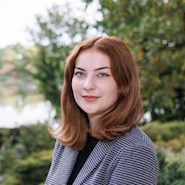
 “One thing that I've learned throughout my early career is that no single engineer has ever solved a project by themselves,” said Pinn Winyoopongphun, P.E., M.ASCE, a project consultant at Simpson Gumpertz & Heger and a 2026 New Face of Civil Engineering.
Any one piece of infrastructure has many faces behind it. Designs come from ideas, and perfecting those ideas is something that happens across all individuals, organizations, and disciplines involved in making a piece of infrastructure a reality.
It’s a team effort.
“(A project) is broken down into so many practices, from mechanical, groundwork, civil, and landscape design,” Winyoopongphun said. “So, from the get-go, great projects do not happen when only one engineer works on them – they don't have the whole picture.”
Many civil engineering companies and ASCE groups have embraced teams in a literal sense: sports. These activities help build trust, understanding, and a collaborative spirit among staff, members, and even their broader communities.
Paving a path for personal connection
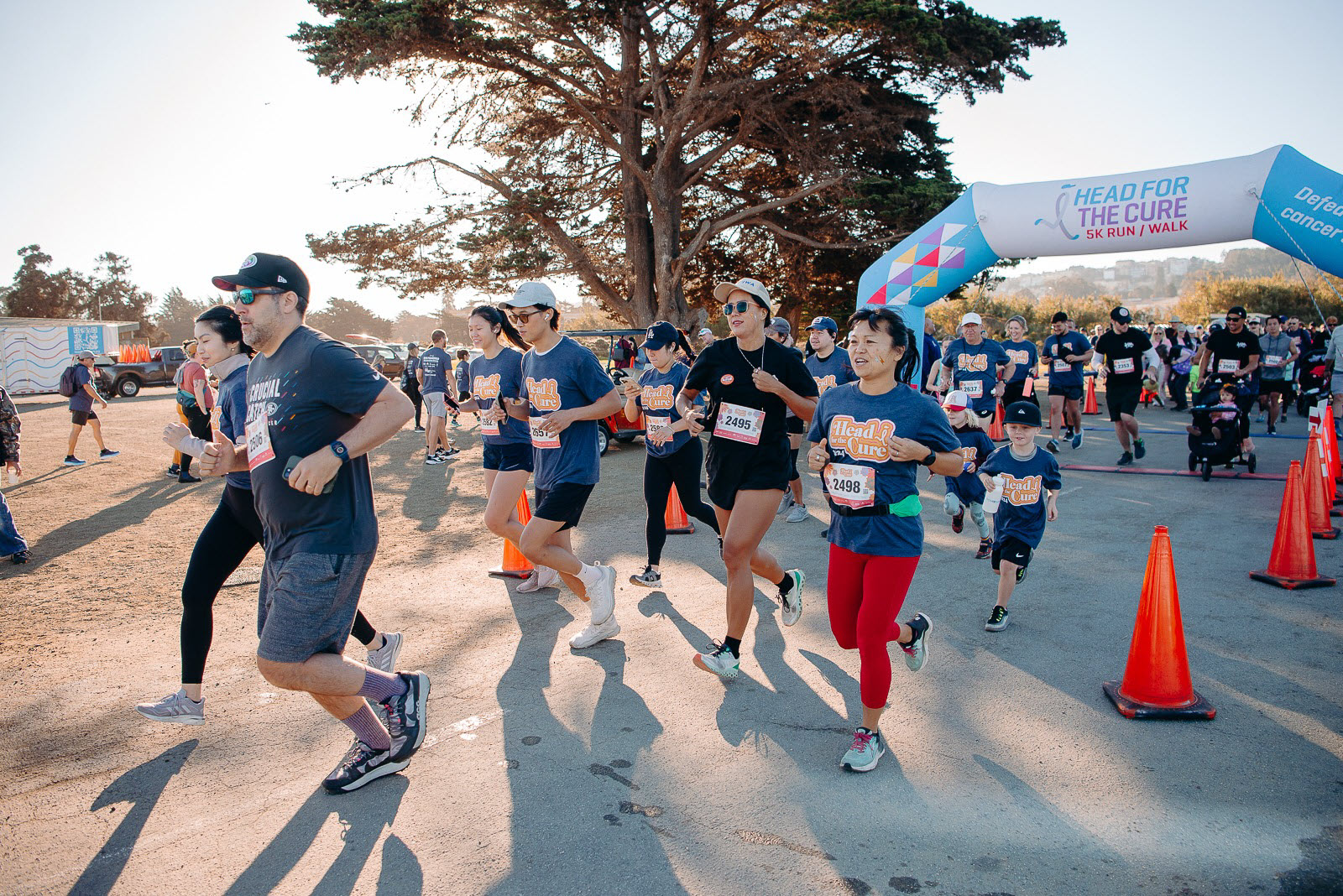
Winyoopongphun got his company involved in the annual Head for the Cure 5K race in San Francisco in 2022 when given the chance to find a team-building activity. He chose the organization for its mission of advancing brain cancer research and financial transparency: donations go to providing lab positions for researchers.
Around that time, he learned of a colleague’s personal connection to a similar cause. And after a few years of SGH staff coming out for the race, the cause became even more personal when a team member received a diagnosis.
“What started as ‘let me get people active being outside’ has now become more of a meaningful event that’s more about community rather than just doing the activity,” said Winyoopongphun.
In the first year, eight people came. But after sharing photos, Winyoopongphun saw more people in his office express interest in the event. And over time, it evolved more organically.
“The second year, the number of people doubled. People started asking, ‘Hey, are we doing this again next year?” he said. “People got to meet other people, even significant others or family members. Kids came out, people brought their dogs.”
Winyoopongphun likes to keep the event open to anyone: “It’s a Sunday together. And we get brunch after.”
He estimates that last year, around 40% of his office came to the event, many bringing plus-ones.
“It creates this shared experience outside of the office that consequentially builds trust inside of the office because you get to meet people in different departments on an interpersonal level that breaches the ‘work shield,’” he said.
Having those personal connections can also bridge gaps between different disciplines – something that can make or break a project.
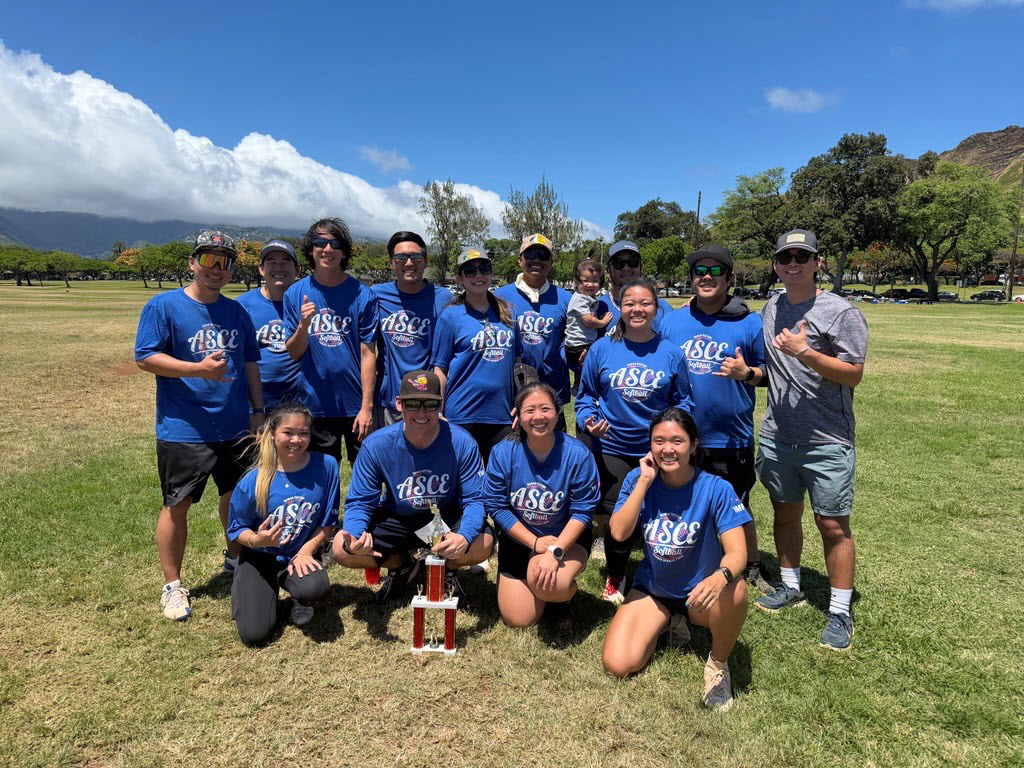
Matthew Murakami, P.E., M.ASCE, is chair of the ASCE Hawaii Section Younger Member Forum softball team, whose members have expanded their presence outside the group itself.
The team competes in Hawaii’s Architects & Engineers softball league, which includes a variety of construction and engineering firms, from civil to mechanical to architecture. The league has helped bring the section closer to engineers of other disciplines, who, during projects, can sometimes butt heads, said Murakami, a project manager at Austin, Tsutsumi & Associates.
“Design thinks one way, and construction says, ‘No, that's not possible,’” he said. “But the best way for projects to keep moving forward and to be successful is for the design team and the construction team to really work together.”
Being a part of the league exposes engineers of different disciplines to each other’s way of thinking. And understanding different thought processes makes it easier to discuss serious topics, Murakami said.
“I can talk to this person; they'll understand where I'm coming from, and I’ll understand where they're coming from,” he said.
 Hawaii YMF
Personal connections can be built from a structured activity, but sometimes, the connection is already there – it just isn’t known.
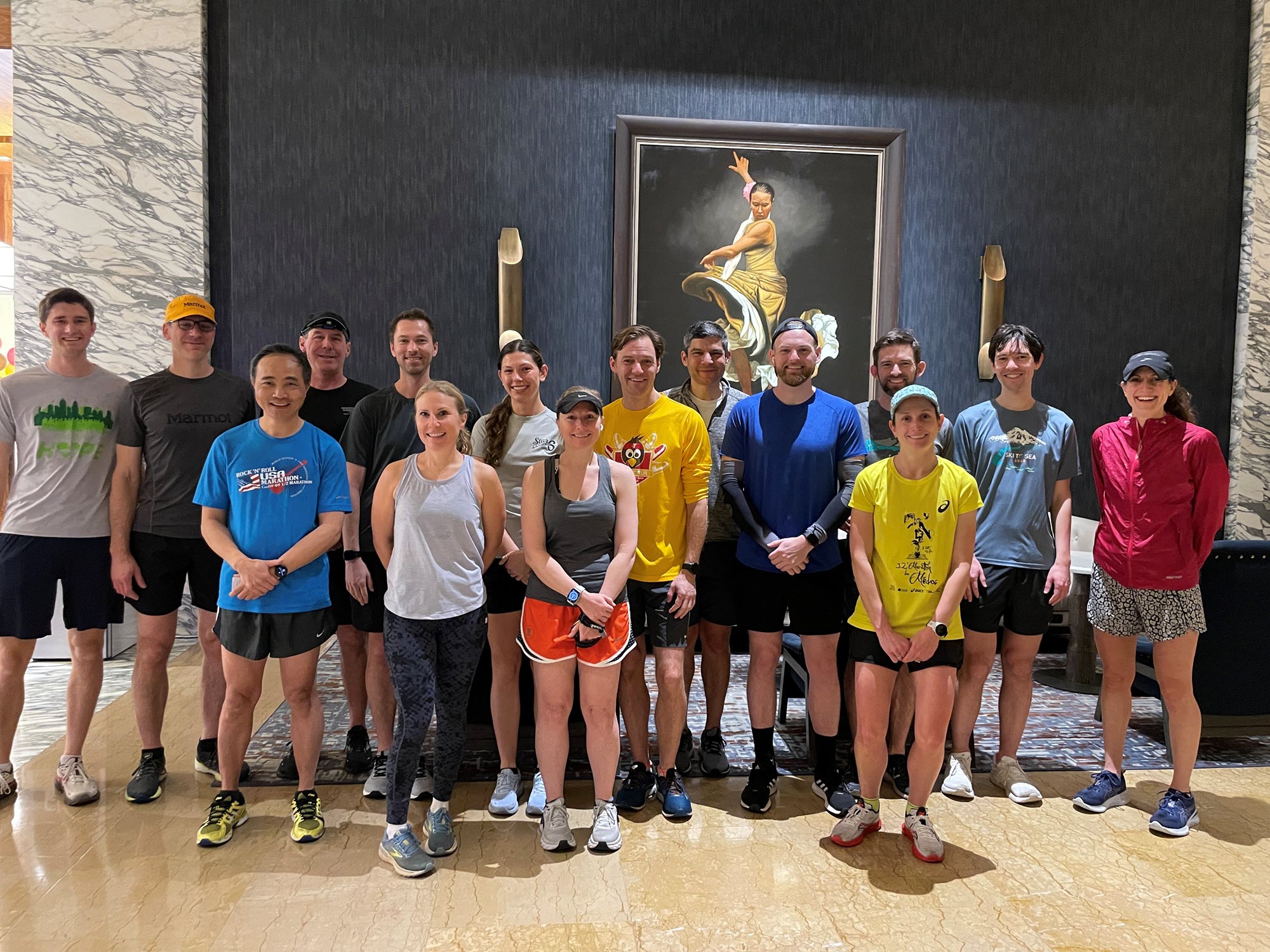
SEI Runners is one example. Cherylyn Henry, P.E., F.SEI, F.ASCE, a structural engineer and senior project manager at ZAPATA, who helped formalize the group, said it grew from the discovery of a shared interest in running.
“The SEI Runners group came about organically through (Structural Engineering Institute) members already working together on committees,” she said. “We realized during the 2012 Structures Congress in Chicago that we had all packed running attire. The next morning, we met in the lobby of the hotel, and the first unofficial run took place.”
They ran through a “frigid morning,” enduring 3 miles together. When other SEI members heard about their endeavor, they were interested in joining, said Henry.
In 2013, they made SEI Runners official. And over time, the group grew organically.
“Young professionals and students have also always been a great contribution to the group,” she said. “They learn about the morning run at the welcome reception and then participate each morning of Congress.”
Winning isn’t everything
When the goal is connection, victory or breaking records aren’t the only measures of success.
As the winners of the Lower Division Consolation Championships – or what Murakami called “the losers’ bracket” – the Hawaii YMF team has exemplified this mindset.
“Even though we didn't win, I'm still proud of the team because we've come a long way from where we started,” he said.
Murakami became softball chair in 2020, when the pandemic caused many players to leave the team. When group activities resumed, he had to make sure the team was welcoming to new members, some of whom had never played softball. And that started with a positive attitude.
“Winning is fun for most people, but for this specific team, my main concern was just keeping everybody engaged by having fun and not being too serious,” said Murakami. “I've been on teams where, when it's too serious and you have a bunch of newbies, it scares them away.”
The strategy worked, people stayed, and the low-stakes environment Murakami created kept the team going through early losses.
“We took a few beatings those first few years, but everyone had a great attitude, which was awesome; I really like that about our team,” he said. “Even when we're getting beat down pretty badly, we're always cheering each other on. We're always happy when we score one run, even if the other team has 20.”
The team has improved since then, getting more wins over time – like the Consolation Championships.
“It shows that our team is resilient and we have the right attitude,” Murakami said.
Winyoopongphun takes a similar approach with the 5K event.
“The event is very much wide open to whoever, if you want to walk, if you want to run, and if you want to jog,” he said.
SEI Runners also takes a casual approach. For Henry, personal connection is “the most fulfilling aspect.”
“The SEI Runners group gives the engineers at Structures Congress an opportunity to get to know each other better, bounce ideas off of each other, and get a better sense of the SEI community as a whole,” she said.
With the Congress being in different cities each year, members who don’t often get to see each other can catch up while exploring a new place. Those who haven’t already met can make new friends and even network.
 SEI Runners
Honoring individuality together
In the corporate world, organizational and social boundaries can make it hard for new hires to feel like they fit in. Sports can help break down those boundaries, Winyoopongphun said.
“When they first enter the office and get to experience an event like this, I think it helps them be themselves and forge relationships with co-workers more easily,” he said.
Even for those who have been with a company for a while, participating in sports with colleagues can add dimensions to existing relationships – for example, those with a manager.
“When you see your manager outside of work, it forces you to view them in a different way,” said Winyoopongphun. “Now, we're not just connected by work; we're connected by an outside activity that we both enjoy.
“… It's one of the few times where we're not in the office and success isn't measured by a deadline or deliverables, so you get to see a completely different side of your co-worker,” he said. “And the finish line becomes a celebration of everyone's individual accomplishments; you get to celebrate everyone who runs through the finish line individually.”
Seeing new sides of people can lead to stronger bonds as a team and even friendships.
“When you're playing on the same team, you just get to know (someone) as a person, not just as a person you work with,” Murakami said. “You get to know them more as a friend or a teammate.”
Participating in sports together can also bridge the gap between young engineers and more established professionals.
“Our group has grown to more than 25 participants in some years, giving newly minted young professional scholarship winners the chance to have a casual conversation with some of SEI's longest-running (pun intended) leaders,” said Henry.
Although public perception of engineering might not always view engineering as a social profession, it is, by nature, about teamwork, Henry said.
“Engineers cannot operate in a vacuum and must communicate, coordinate, and work with other team members and stakeholders to successfully complete a high-quality project,” she said.
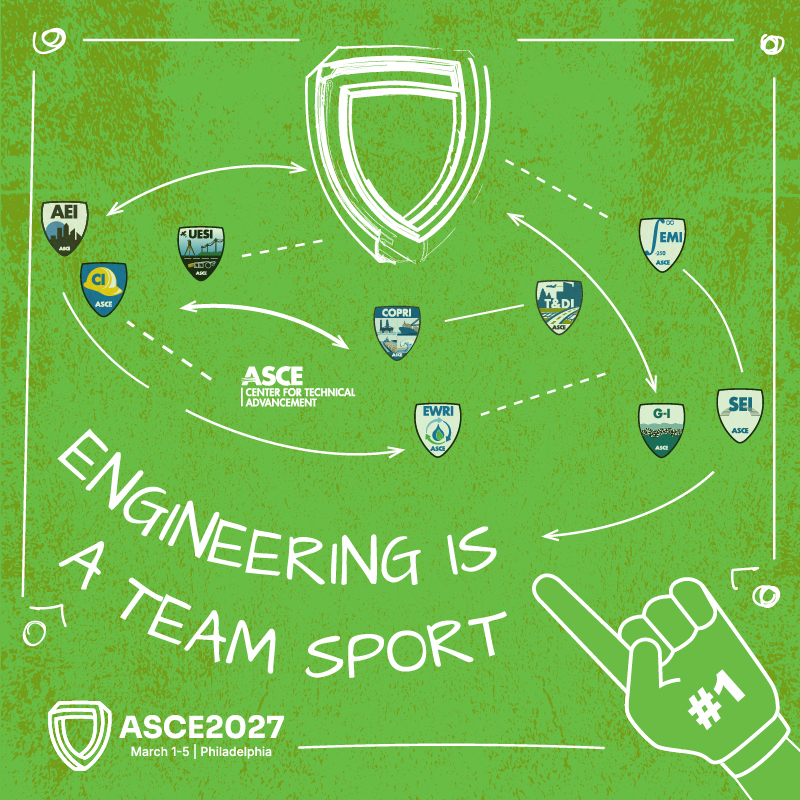
Engineering Is a Team Sport
Big infrastructure solutions don't just magically appear while you're sitting alone in your cubicle. Solutions take shape when you open the door to collaboration and open your mind to new ways of thinking. Solutions happen when you work as a team.
ASCE2027: The Infrastructure and Engineering Experience is a first-of-its-kind event bringing together big thinkers from all across the infrastructure space, March 1-5, 2027, in Philadelphia. Join the team and step up your game!
Learn more about ASCE2027: The Infrastructure and Engineering Experience.