 U.S. Army Corps of Engineers
Twenty-five years ago, the world watched in horror as two hijacked commercial aircraft, loaded with more than 15,000 gallons of jet fuel, intentionally crashed into the North and South towers of New York City’s World Trade Center complex at high speed. The morning only grew grimmer when hijackers using the same method attacked the Pentagon in Virginia.
While most viewed the events with horror and fear, many structural engineers saw these terrorist acts through a slightly different lens. As they waited, alongside the rest of the country, to see if the towers would hold, they likely considered how load, stress, and physics would influence the buildings’ ultimate performance before they collapsed less than two hours later.
Further reading:
- Young professionals might not remember 9/11. But lessons learned persist
- Reflections on the 25th anniversary of 9/11: Share your thoughts
- The evolution of tall building design after 9/11
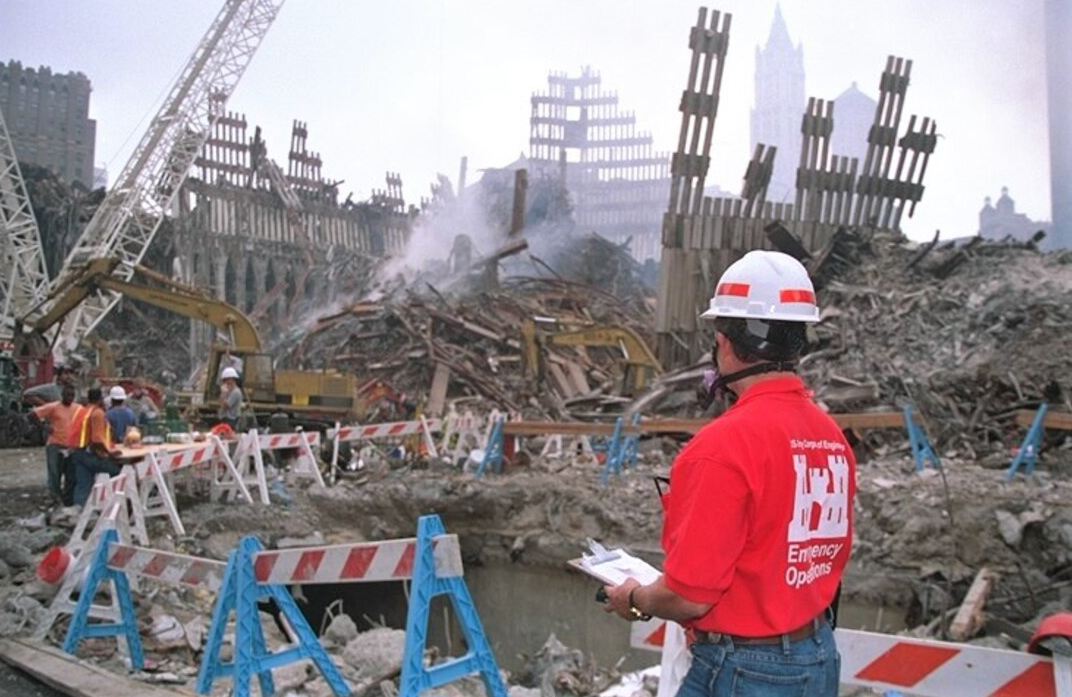
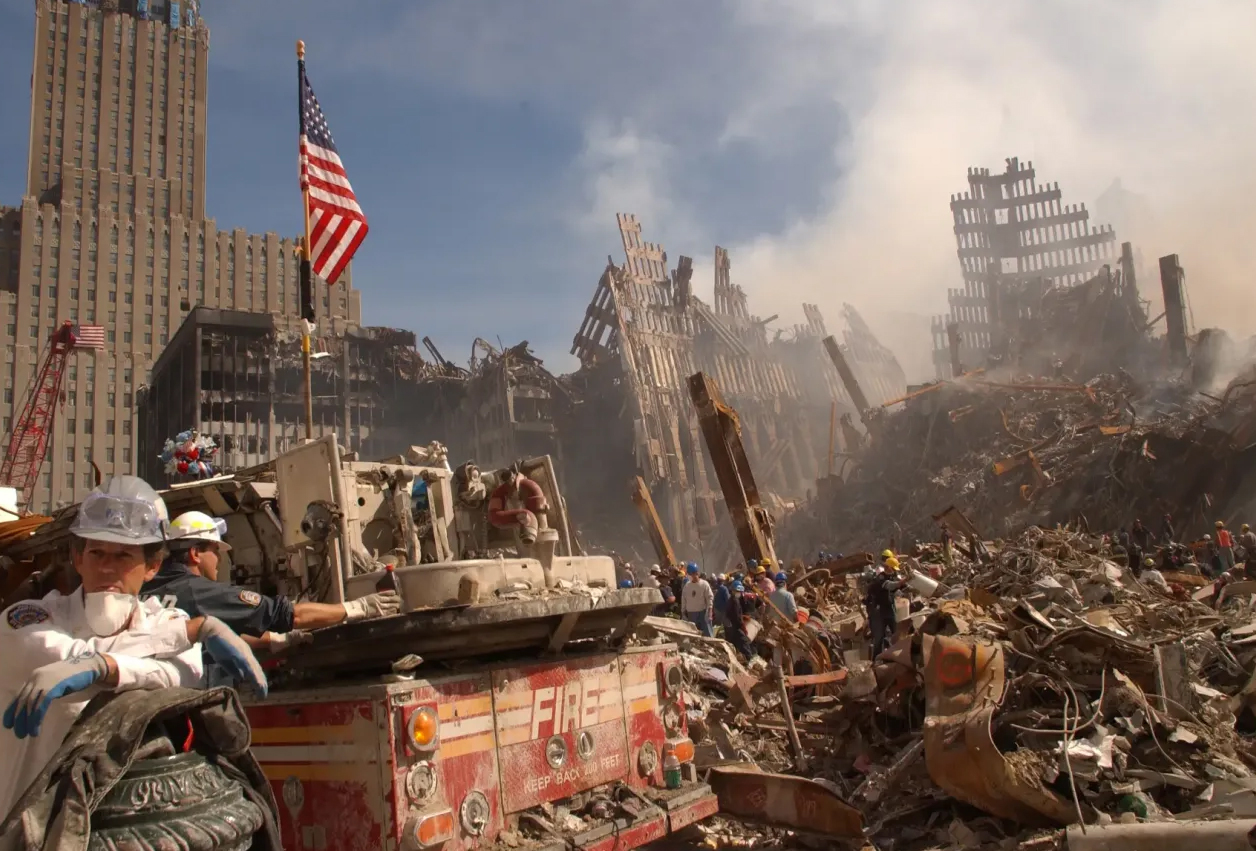
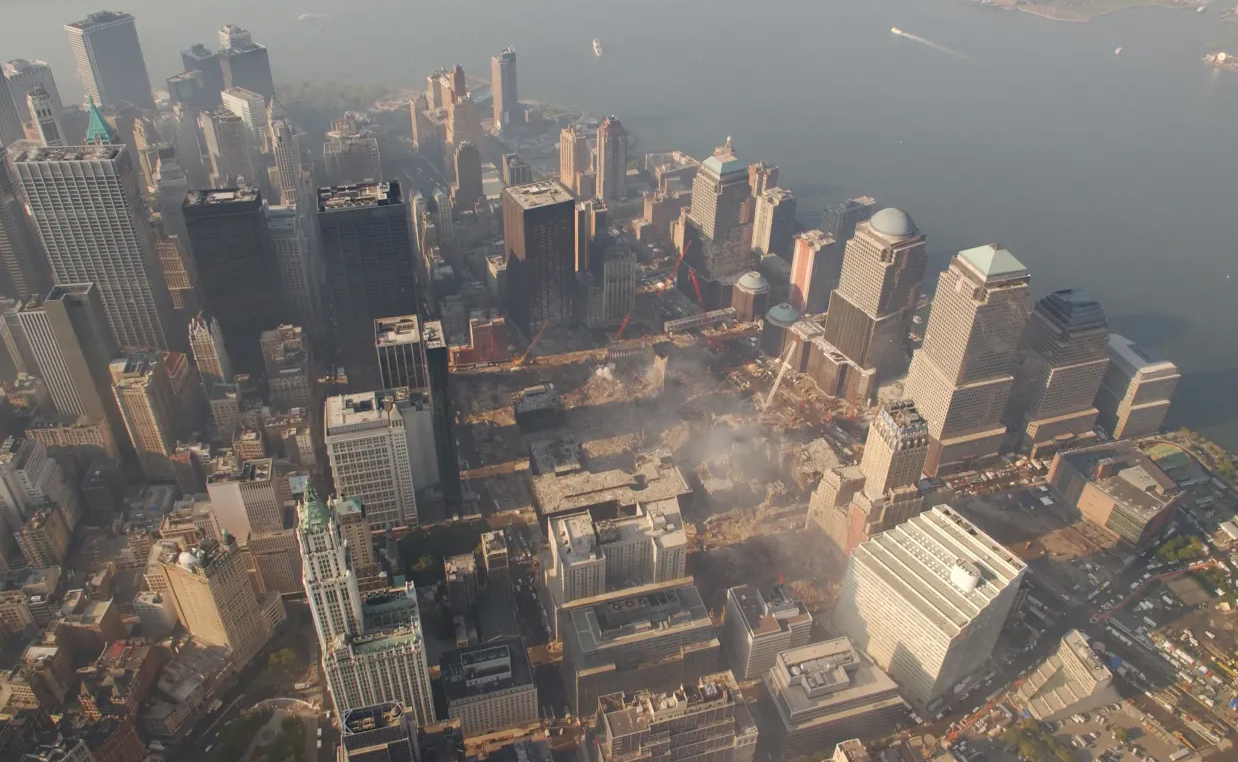
In the aftermath of these terrible events, volunteer structural engineers, led by the Structural Engineers Association of New York, mobilized to help firefighters safely search for survivors in what H. Gerard Schwartz Jr., Ph.D., P.E., then ASCE’s president-elect called “a pile of rubble that was nine stories tall.” Those engineers remained for months to help New York City remove more than 1.5 million tons of debris.
ASCE and organizations like the National Institute of Standards and Technology conducted in-depth investigations to understand what triggered the towers’ progressive collapse. But engineers who contributed to the understanding of what happened at the World Trade Center and the Pentagon took away more than a detailed technical analysis of the structural failures.
Here, they share their stories about the events of that terrible day, the impact the attacks had on the structural engineering field, and lessons learned that will continue to help make structural designs safer.
The need for a blast standard
On the morning of Sept. 11, 2001, Paul Mlakar, Ph.D., P.E., F.SEI, Dist.M.ASCE, an engineer emeritus with the U.S. Army Corps of Engineers, was preparing for a telephone call with colleagues to discuss the need for a blast-resistant design standard. He had a news show muted in the background when the first plane hit the North Tower at 8:46 a.m. EDT.
 Andrea Booher, FEMA
“These events were happening, but we were engineers sticking to a plan, as we tend to do. We just went on with the call,” he said. “Interestingly, one of the others on the call, Bob Smilowitz, worked for a firm that was in lower Manhattan. He could see what was happening out his window. And then our colleague at ASCE, Jim Rossberg, was driving on the parkway by the Pentagon when the third plane hit there and had to pull off to the side of the road. It was then that we finally said, ‘Maybe we should postpone the call to a calmer day.’”
Mlakar said 9/11 underscored the importance of developing what would become the ASCE/Structural Engineering Institute 59-22 Blast Protection of Buildings standard.
While federal agencies had been interested in having a standard after events like the 1983 bombings of State Department facilities in Beirut, Lebanon, and the 1995 Oklahoma City bombing, the events of 9/11 helped structural engineers recognize that government buildings might not be the only targets for future terrorism.
“Not all buildings need to be blast-resistant,” he said. “But for public buildings, we now have the ASCE standard to provide a basis for that. It could help designers better protect those structures in the future.”
Designing to avoid progressive collapse
Schwartz, who became president of ASCE the month after the attacks, first visited Ground Zero in late October 2001.
“It’s hard to imagine. I was there five weeks after 9/11, and I had to walk around with a gas mask. The amount of rubble was just stunning,” he said. “They had already started removing some from the site but, to me, there was still so much left it looked like the collapse had happened the day before.”
Schwartz said most people do not realize how much structural engineers, particularly SEAoNY members, contributed to rescue and cleanup.
“Think of a big pile of debris that is stories and stories tall. There’s still fires burning beneath it, and you need to get big, heavy equipment in there to start removing all the wreckage,” he said. “It was the structural engineers who were crawling into the debris before any trucks or bulldozers came there to make sure bringing those things on-site would be safe for everyone.”
Schwartz, as the new head of ASCE, helped coordinate the civilian forensic teams that would do the building performance assessments and analyses at the World Trade Center and the Pentagon. He said that work has helped the field better understand what factors contributed to the resulting collapses and can be used to inform future designs.
“The planes hit the World Trade Center tower at an angle, cutting through several floors,” he explained. “The building was actually strong enough structurally to withstand that hit. But it wasn’t strong enough to withstand the fire that resulted from all the jet fuel. That lit everything inside the building on fire, buckling important joists that provided important vertical and horizontal support.”

Interestingly, the ASCE team that traveled to the Pentagon for an after-event review, which included Mlakar, discovered that the building’s older design helped protect it from a larger progressive failure.
“There was a lot about the way the Pentagon was designed and built (beginning) in 1941 that made it more resistant to the progression of collapse,” Mlakar said. “There was a relatively small area of the building that collapsed 20 minutes after impact, but the extent of it was fairly minimal, thanks to the continuity of the structural system and the way the columns were reinforced. We can learn from that.”
A broader view of risk
Vicki Arbitrio, P.E., F.SEI, M.ASCE, an associate partner at Gilsanz Murray Steficek, headquartered in Manhattan, was secretary of SEAoNY when the twin towers fell. She spent a great deal of time at Ground Zero as the city cleaned up rubble. She said “strong engineering judgment” ensured that no one died from physical injuries during the arduous and dangerous removal process.
“It’s hard for people to imagine the scale of it – and the number of people on the site. Having the engineers close by to say, ‘No, don’t put a crane there; there’s a tunnel underneath there you can’t see. Move 5 feet over,’ was invaluable,” she said. “The fact that no one died from injuries on the site caused by the physics of all that debris piled up really is just incredible.”
Twenty-five years later, she believes that, thanks to the ASCE and NIST investigations after 9/11, building safety, in general, has greatly improved. She also credits the tragedy with a cultural shift in structural engineering, with more collaboration across different disciplines.
“In the New York City code now, buildings are peer-reviewed,” she said. “We see collaboration not just amongst engineers but within the whole design and construction team as they build any new structures in the city. We even adapted some protocols from California to assess the buildings around the World Trade Center site so we can tell people when it is safe to go back to their apartments,” she said.
Arbitrio also believes the event has helped engineers take a broader approach to risk assessment. She reminds the community that the World Trade Center was, in fact, designed for a plane impact.
“Planes have gotten so much bigger since the building went up (in 1973), and no one thought any impact would be intentional,” she said. “We understand now there are other technologies we need to learn more about so we can understand their potential impact on a structure, depending on where a building is and what’s around it. There are a lot of possibilities that you want to consider as you work through a design.”
 Andrea Booher, FEMA