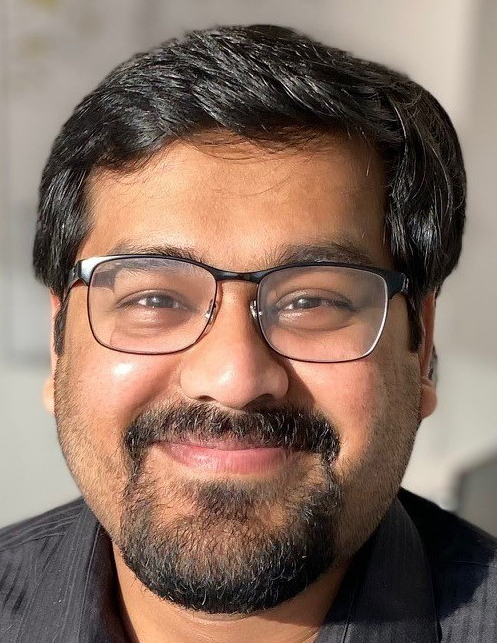
View from the C-suite is a monthly interview series with leaders in the civil engineering industry, designed to provide peers with insight into advancing their careers. This month’s installment features Shofiq Ahmed, P.E., PTOE, RSP1, M.ASCE, executive vice president at Peggy Malone & Associates Inc., who is based in Maryland.
Civil Engineering Source: How would you describe your leadership philosophy?
Shofiq Ahmed: To be a leader that my team doesn’t need on a day-to-day basis or for everyday tasks. The best example I can give you is a recent one. I went through severe health challenges where I was out for almost two months from my job, my volunteering roles, and other commitments. I didn’t have to worry about my team (at PMA) for a single moment because there was someone else who could step in and fulfill my responsibilities. That didn’t happen by chance. I deliberately built the structure, cross-trained, and trusted that my team would keep moving without me.
Further reading:
- Young civil engineers should not fear taking chances, veteran leader advises
- Civil engineers can help firms and advance careers by speaking up, leader says
- From mentee to mentor: This civil engineering leader offers career growth advice
Source: What three nontechnical skills should all civil engineers cultivate in their practices?
SA: The first one is curiosity. I enjoy being a curious person, but it’s about thinking through both new and old things. Old guidelines or processes. … Why are things done the way that they are? Why might we use certain calculations or numbers when completing projects? Going the extra mile to ask these questions helps me and my team learn something new or encounter new opportunities we would have missed otherwise.
The second one is communication. In each phase of your career, you have a role to play in terms of communication (with) your client, other teams, your own team, higher leadership, and people you supervise. Communication is far more effective when you consider the person in front of you. So, learning about the individual you are speaking with and adapting to different styles is one of the most important skills an engineer can develop.
The third is relationship building. Relationship building takes time – sometimes years or a decade. It’s an old-school mentality to take years to build rapport with different colleagues in the industry.
I look at relationship building and time a little differently. Rather than spend years in the industry getting to know people, I decided if I showed up more frequently within a shorter period of time, I could build quality relationships faster. But however you view relationship building, the fundamentals are the same. You build rapport through showing up, communicating well, and letting people see your face and your work.
Source: Can you share your greatest career accomplishment?
SA: This one is tough because I see my career in two distinct segments. The first is my day-to-day work as an engineer and project manager. One experience that stands out came just two years into my career when I was assigned sole design lead on a project, responsible for each phase of project delivery.
After it was completed, the client reached out to my project manager asking permission to use my project plan as a model for other consultants doing similar work. I learned a great deal on that project, and knowing the client valued the outcome meant a lot to me.
The second segment is the volunteer work I do, which is just as important to me. I am deeply involved with ASCE, the Institute of Transportation Engineers, and the Conference of Minority Transportation Officials. Along the way, I’ve been honored as a New Face of Civil Engineering by ASCE and a Young Leader to Follow by ITE.
Source: What is one of your career regrets? And what did you learn from it?
SA: Honestly, I do not regret anything about my career. I have learned not to sort experiences into good or bad. Some are simply ones I didn’t hope for at the time, and each of those has taught me something I carry forward.
I once took on a responsibility where the expectations kept shifting as I went, and the work kept piling up beyond what any of us first imagined. I did not (realize) how demanding it would become, but it taught me a great deal about staying steady, adjusting as things change, and asking for help when I need it. I would rather carry that lesson forward than carry a regret.
Source: Who has helped shape your civil engineering career?
SA: I am so fortunate to have had bosses, managers, mentors, and people who have been willing to support me. I have to shout out a few names here. My first boss, Amy Staud, who is still with HDR, set the foundation early. Then I had Billie Joy Budner and Mohammed Khan, who work for Michael Baker International now. These are great friends. I can still pick up my phone and call them and discuss anything that is going on with my life, either with career or personal things.
My current boss, Sophia Williams, the president of PMA, has become a true friend. She supported me enormously through my recent health challenges, and I am grateful for her.
Source: What are you currently learning?
SA: Everyone is learning artificial intelligence, right? I spend a lot of time working with AI agents, trying to see from an organizational perspective what we can actually do with it. It’s not going to do everything for us. What I’m really trying to figure out is what new services we can offer through AI, and what the technology means for our existing service lines.

AI could save us time, but I still review every status, phase, and delivery on our projects. The professional engineering credential, the P.E., remains as important as ever. It’s essential to have a human in the loop across all of our processes. At the end of the day, our work carries real public safety consequences, and a model cannot be held accountable for those decisions the way a licensed engineer can. That responsibility is exactly why the human judgment behind the credential still matters.