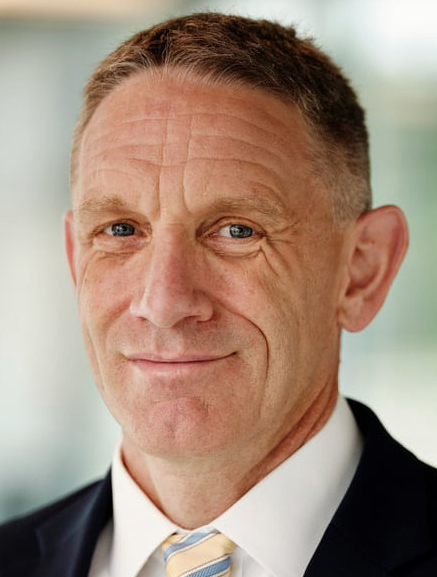
View from the C-suite is a monthly interview series with leaders in the civil engineering industry, designed to provide peers with insight into advancing their careers. This month’s installment features Niklas Vigener, P.E., M.ASCE, senior principal and chief operating officer at Simpson Gumpertz & Heger in Waltham, Massachusetts.
Civil Engineering Source: What is your favorite aspect of leadership?
Nik Vigener: My favorite aspect of leadership is seeing people I hired and coached years ago move into leadership roles. In 2001, I opened the SGH office in Washington, D.C. Some of the people I hired grew up in the office, are still with us, and are now senior professionals. That’s super gratifying.
Source: What three nontechnical skills should all civil engineers cultivate in their practices?
Further reading:
- There’s no single path up the career ladder for civil engineers, executive says
- Civil engineering leader says running solo practice offers work-life balance, efficiency
- Civil engineering executive says workplace culture is key to growing your firm
NV: Learn a foundational skill early on in your career that grounds you and becomes a stabilizing lens through which you see the world. In high school, I learned carpentry. It was not just a great engineering-adjacent skill that enriched my life; it also taught me a value system.
Another skill is learning how to touch-type. I can type really fast, and I bet it has saved me thousands of hours in my career.
Finally, learn how to deal with people. I love hiring people with backgrounds in retail or food service. Those jobs are perfect training grounds for engineering; they teach humility and are customer-facing.
Source: Who has helped shape your civil engineering career?
NV: My first mentor was Dean Rutila, one of our senior principals. He’s one of our smartest problem-solvers and taught me the importance of fastidious preparation.
When I was a young engineer in my 20s, I went to meetings as the sole representative of the firm, and he prepared me in advance. He’d ask me challenging questions, he’d talk me through who was going to be there, and we’d role-play, which gave me a lot of confidence. In those meetings, I was the most knowledgeable person there by topic. As a result, people saw me as a decision-maker.

I continue to tell our engineers: “When you walk into a meeting with clients, stakeholders, and citizens, you have to be the most well-informed, most helpful person in the room.”
Source: What is one of your career regrets – and what did you learn from it?
NV: I’ve been at SGH for over 30 years. During the Great Recession in 2008 and 2009, we had a hiring freeze. It was the right economic move at the time, but it was shortsighted because it robbed us of a generation of leaders that we would have wanted to have today. During the COVID-19 pandemic we kept hiring and even today, we keep hiring. We might not be able to keep new people busy right off the bat, but we want to have them 10 years from now.
I’ll also give you a personal regret. I never learned how to play an instrument. My grandfather never went to college and couldn’t read music, but he could pull out a harmonica and within a couple of minutes get an entire barroom laughing, clapping, and singing. As a kid, that was the coolest thing to see, and I’d give anything to have musical skill.
Source: How did you learn the values you embody in your leadership practice?
NV: I grew up in the industry with great professionals who constantly worked on their crafts and had incredibly high expectations for themselves and others. I’ve observed and emulated a lot. I’ve built my own practice based on emulating the people I admire.
Source: What is one moment that has profoundly impacted your career?
NV: One time as a young professional, I accompanied my predecessor, Tom Schwartz, who was our former president, to a meeting. We were with a client who had had a really bad experience with us; they were very critical and angry. We sat down at the table, Tom listened, and then said, “I’m sorry. We didn’t do this right, and we’ll make it right.”
That moment of humility was incredibly powerful. It cemented a continued, decades-long relationship with this client. Words really matter. People will pay attention to what you say and how you conduct yourself.
Source: Where do you see the field in five years?
NV: I’m a big optimist. In the future I see civil engineering entering another Golden Age. I see it expanding in scope to include planning and building entire cities and landscapes, harbors and coastlines. I see it including all the technology to deal with our growing population and big societal challenges.