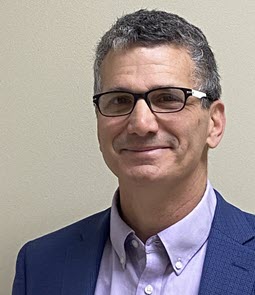
Scott D. Schiff, Ph.D., P.E., F.ASCE, a civil engineer, academic, and student recruiter who has spent nearly 40 years dedicated to developing resiliency solutions, has been named to the ASCE Board of Direction.
Schiff works to make buildings more resistant to high winds and debris impact. To this end he promotes the use of mass timber products in building construction and challenges students to use their problem-solving ingenuity.
He arrived at Clemson University less than a month before Hurricane Hugo made landfall along the coast of the South Carolina in September 1989. Hugo was then the strongest hurricane to impact the Charleston area – $7 billion in damage to the built environment and 49 deaths.
Schiff and three Clemson faculty colleagues secured a substantial grant from FEMA to develop the Clemson University Wind Load Test Facility (WLTF), to conduct applied research to better design and construct low-rise buildings to resist the effects of high winds. The research led tosignificant changes in building codes and standards and to the construction of low-rise buildings.
In 2015, Clemson asked Schiff to lead forestry, engineering, and architecture faculty to establish the Clemson Wood Utilization and Design (WUD) Institute. Timber is South Carolina’s top agricultural product and contributes over 100,000 jobs and $23 billion each year to the state’s economy.
The WUD Institute initially focused on the use of Southern Pine lumber to create cross laminated timber (CLT) wall and floor panels. The WUD Institute also promoted mass timber construction to design professionals who could impact the decisions of building owners in the design stage.
In 2013, the Dean of the College of Engineering and Sciences encouraged Schiff to co-create EMAGINE! – an outreach program offered to middle and high school students from across the state, after witnessing the success of outreach programs held in Greenville, South Carolina.
The nation needs more engineers, and Schiff wanted to use EMAGINE! to recruit more engineering students by highlighting that the profession requires not only excellent math and science knowledge, but also great creativity, out-of-the-box thinking, and communication/team skills.
Schiff was also active in civil engineering student competitions. In the fall of 2019, he joined the new ASCE Committee of Student Conferences and Competition (CSCC). Within a couple of months, he was asked to chair CSCC (after inaugural chair resigned) and lead CSCC to complete initial tasks identified by the ASCE Board of Direction.
In spring 2020, the impact of COVID-19 was extremely detrimental to ASCE student membership and event. CSCC used this period of low student activity to reorganize student chapters into groupings based on ASCE geographic boundaries to promote better engagement of ASCE Region leadership with planning activities of the student chapter hosts and attendance at ASCE Student Symposiums.
CSCC also developed numerous resources to reduce the amount of effort required by ASCE Student Chapters to host ASCE Student Symposiums. It took nearly 18 months of dedicated effort by CSCC to get students reengaged with ASCE Student Symposiums and to create high-quality ASCE Student Symposiums.