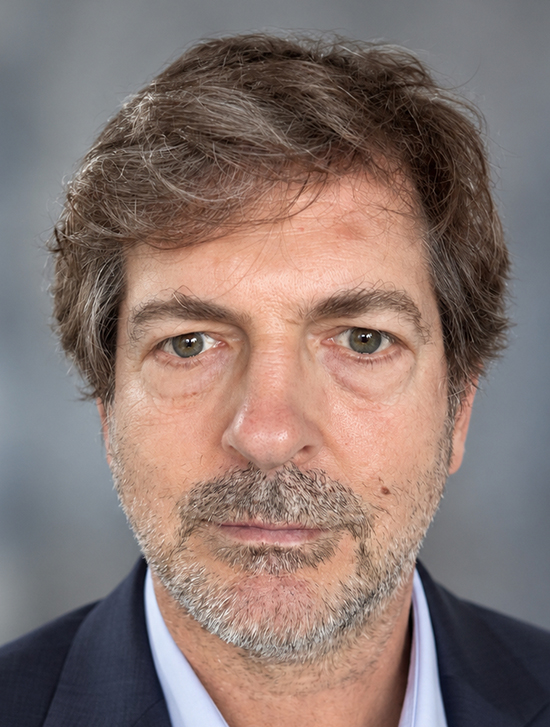
View from the C-suite is a monthly interview series with leaders in the civil engineering industry, designed to provide peers with insight into advancing their careers. This month’s installment features Mike Jelen, P.E., F.ASCE, executive vice president and principal at CES Consultants Inc. in Alexandria, Virginia.
Civil Engineering Source: What are your favorite aspects of leadership?
Mike Jelen: I like to think about it in terms of what’s rewarding for me about leadership. The first part of this is the tangible results. In civil engineering, you get to see the results of your work and share them with your neighbors and your family. I’ve built bridges, schools, and parks, and to be able to see those results is rewarding, particularly when I can see my contributions in the finished work.
The second part is the camaraderie that I’ve enjoyed with teammates over the years. Some of the closest professional relationships that I have now stem from the camaraderie that resulted from tackling difficult situations.
Further reading:
- Civil engineering executive: Cohesive teams, strong relationships breed success
- Young civil engineers should not fear taking chances, veteran leader advises
- Civil engineers can help firms and advance careers by speaking up, leader says
Source: How did you learn the values you embody in your leadership practice?
MJ: There are three parts to this for me. The first is formal training. A lot of that came from the Army. There’s experience, putting it into practice. And the third is following the examples or understanding the examples that have been set for me by other leaders I’ve worked for.
On the Army side of it, there’s a tremendous amount of leadership training that goes into being an Army officer. For any aspiring young leader, it’s important to have grounding in leadership theory and doctrine. It helps validate your judgment and explain, in many cases, group dynamics.
One thing that I’ve leaned on and returned to over and again that was first introduced to me by the Army is the Hersey-Blanchard Situational Leadership Model. It basically says every situation is different, and you have to adapt to the unique circumstances of each team and each project. Understand what your subordinates’ competencies are and help them appreciate what the assignment is, where you’re trying to go, and then lead from there.
If you have an interest in leadership, formal education can help ground you in your point of view so that you can be more decisive, and it can also validate that what your gut is telling you is correct.
There are a couple people that come to mind. Back in the ’90s, I worked with … Nick Nicholson at the Virginia Department of Transportation. Nick encouraged me to learn how to be patient with subordinate staff, to develop them, and to lean into their aptitudes and strengths.
The second is Roger Millar, who is a distinguished member of the Society. We worked together on workshops about 10 years ago. Roger was the first engineer that I know of who put into words something cogent that I hadn’t been able to articulate: Engineers had given away what historically had been their role in infrastructure planning in the late 19th and early 20th centuries. Over the 20th century, the field shifted planning to other professionals. Roger was articulate in the need for engineers to return to that role.
A mistake I’ve seen made a lot, and that I have made in the past, is when people have had leadership success in one situation, and they think that’s the way to lead all the time, everywhere. And then they move into another situation with a different group of people, different problems to solve, and they try applying what worked in the past. It doesn’t work out that way.
Source: What is one of your career regrets? And what did you learn from it?
MJ: I reacted viscerally to the word “regret” when I first read your questions. When I think back to what I expected from my career and what I’ve experienced, it’s exceeded all my reasonable expectations. Surely there have been bad days, but on the whole, I don’t have any regrets.
I’ve definitely made mistakes, but I don’t regret them. The mistake that comes to mind is from 20 years ago. I led a portfolio of projects and one of them was sensitive. The stakeholders and the situation were sensitive, so my boss had been managing it himself before bringing me on board.
My boss wanted to work through the National Historic Preservation Act, Section 106 process to justify his preferred approach to the project. The mistake that I made was that I quickly realized that my boss’s approach was not the right one and I didn’t talk to him about that. The Historic Preservation officer assigned to the project pushed back on my boss and brought in the Advisory Council on Historic Preservation. They are kind of like the Supreme Court of historic preservation, and they rarely get involved in local issues, so it was a big deal.
The council’s input gave me the confidence and clarity of purpose to talk to my boss, and we changed course. The project got built out, the neighbors were happy, and it even won some awards.
But then, a couple years later, the Army called me to Hawaii (and) had me attend an advanced Section 106 seminar that was being delivered by the Advisory Council. It wasn’t led by the people I’d worked with. Somewhere in the middle of this two-day seminar, they reviewed case studies in what they called “worst practices,” examples of the most poorly run projects that they’d ever been involved in.
Sure enough, this project was one of those cases. That was really humbling for me.
What I learned from that was to not sit on bad news. It doesn’t get better with time, so be bold. Additionally, I learned that our professional community is really small, and you can go to the ends of the Earth and you still might be confronted with the results of the work that you’ve been involved in.
Third, I had worked through collaboration and cultivating consensus before this project but not in such a politically charged environment with so many formal stakeholders. Ever since then, when I have to build a broad consensus on projects, I’m not afraid to get everybody in the room early and to talk through it collaboratively.
Source: What has been your favorite project?
MJ: The one that I’m really thankful I had the opportunity to work on was Task Force Guardian, the U.S. Army Corps of Engineers’ New Orleans hurricane protection system restoration program after Hurricane Katrina. I had been in the Army Reserve, and the Corps asked me if I would volunteer to be put on orders there. I’m so thankful that I had the opportunity to do that. The project had a very clear, compelling mission.
The risk of the New Orleans community being hit by another hurricane without having any hurricane protection system in place after it had been destroyed was really tangible. There was a tremendous amount of camaraderie generated from that project. Part of that project also involved working through the visioning of what came next for New Orleans, what organization needed to look like for the Corps to build long-range hurricane protection. That’s all been built out now, and it’s great to think back to all the work we did in 2006 and to see the long-term impacts of it.
Source: What is your time-management philosophy?
MJ: I establish patterns on weekly and monthly bases. I set aside time to respond to messages, and I’m comfortable letting messages sit when they come in outside of the hours I’ve dedicated. I try to stay involved in professional events … because being involved in the profession is part of what we need to do.
I also value my time away from work. I encourage everybody I work with to take their vacation and to not take their phones with them or work while they’re gone.
I eat healthy. I still work out. I’m going to be running the Army Ten-Miler (on Oct. 11), and I’m looking forward to it. Getting a good night of sleep is nonnegotiable. Mistakes happen when you get tired, and your brain can’t see problems the same way as when you’re rested.
It’s easy for people to accept if their disciplines erode over time because the significance of each of these decisions on their own is small. There are so many of them that do add up to death by a thousand cuts, though, if you let yourself stray from your cadence.
Source: Where do you see the field in five years?
MJ: The digital design environment is going to become much more standard. I see … digital twins and 3D information models right now similar to where (computer-aided design) drafting was in 1990. It’s not universally adopted yet, but it’s going to become much more prevalent.
I also think artificial intelligence, which right now is a subject of great concern to a lot of people, will have gone through the validation process so that the angst around whether or not the tools are reliable will have been put to rest. Tools created by AI are going to be professionally vetted by the industry and start to be accepted.
In the late ’80s, early ’90s, computer models were starting to become sophisticated, and some people were using computer models to complete complex calculations that the older engineers had only ever done by hand. There still wasn’t a whole lot of universal trust in computer software. That’s where we’re at with AI.
Also, I think of resilience in our infrastructure. Not just designing for climate adaptability but designing for hazard scenarios, worst-case scenarios. Resiliency considerations and design in the public realm are going to continue to become important and almost as important as the considerations around safety and everyday use have been historically.