Arctic Passages: Ice, Exploration, and the Battle for Power at the Top of the World, by Kieran Mulvaney. Washington, D.C.: Island Press, 2025; 240 pages, $30.
Even when the world is not quite so obviously embroiled in significant military conflicts as it is at the moment, it is always undergoing power struggles of one sort or another among nations.
In relatively recent times, one such chess game that began more than 500 years ago has accelerated into the midgame. As detailed in Arctic Passages, all involved as active participants – as well as the rest of us – would do well to realize that this flurry of moves and countermoves is possible in significant part due to climate change, which may, in fact, accelerate us toward an endgame on that front.
Further reading:
- History of engineering traces profession’s global evolution
- What business leaders need to know when it comes to climate change
- ‘Inevitable’ makes strong case that EVs will dominate global auto market
The race in question is the increasing establishment and use of passages through parts of the Arctic Circle as shipping corridors. Beyond the benefits of shortened trade routes, these passages offer the option of avoiding potential geopolitical choke points such as the Suez and Panama canals. (While the Strait of Hormuz serves a fundamentally different purpose for global trade and does not figure directly in these developments, the current Middle East conflict has nevertheless vividly illustrated the strategic importance and inherent fragility of such passageways.)
Author and journalist Kieran Mulvaney began with the original intention of writing a largely historical book about the early, centuries-long efforts and expeditions to find a Northwest or Northeast passage. Many of those ended up as disastrous failures, with a few qualified successes mixed in, but all of them are fascinating stories of audacity, tenacity, and some greed.
But Mulvaney soon realized there was also a more modern, parallel story to tell as melting Arctic ice made the Northeast, Northwest, and even a transpolar passage more viable with each passing year. The result, in his words, “is something of a hybrid: an examination of the contemporary situation placed within a historical context, the present interest in taking advantage of an ice-free Arctic contrasted with the fates of expeditions that were destroyed, one after another, by sea ice that now is in retreat.”
He also explicitly provides context about the importance of melting sea ice to the people and wildlife of the Arctic and its effect on the entire planet.
Arctic Passages divides its rich, direct, but graceful prose into three geographical sections: the Northeast, Northwest, and North (transpolar). Each gets multiple chapters covering the histories, challenges, people, and nations involved from the earliest efforts to the present day.
For example, when writing about the Northwest, Mulvaney explains the topography and climate, along with the flora and fauna present and the Indigenous human populations and their relationship to the land and climate. He then traces some of the earliest attempts to forge a passage through that icy, often desolate wilderness and ultimately brings things forward to the present day – one in which these passages do not, as of yet, offer significant solutions or strategic advantages. But it is much easier to see plausible scenarios where they will in the not-too-distant future.
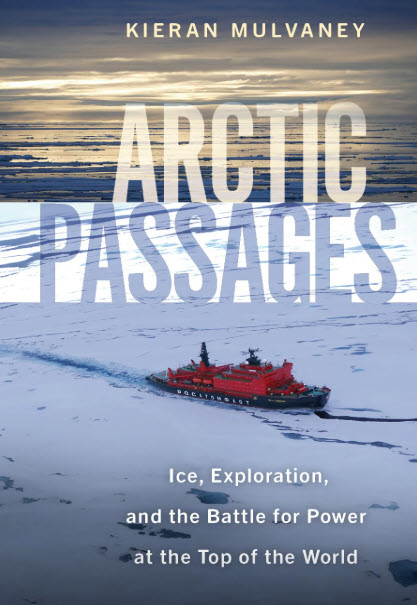
Add the national security implications that more easily navigable routes present for nations adjacent to the circle, and it becomes clear that the “battle for power at the top of the world” will continue well into an uncertain future.
Mulvaney, a prolific journalist who worked for Greenpeace for six years, lived in an Alaskan cabin for seven years, and made numerous Arctic and Antarctic journeys that both inspired and deeply informed his book’s content, writes with the depth of an experienced reporter. That, combined with his first-person accounts, brings everything about the issues and particularly the stories to life.
The result is a cross-disciplinary book worthy of immersing yourself in. The author combines a sometimes neglected area of history, its modern-day resurrection in a new form with new tools, and consequential global issues of climate change, economics, and new military fronts.
For civil engineers, the book provides useful context for understanding how climate change, global transportation networks, trade, and national interests are increasingly intersecting.