
By Leonel Ivan Almanzar, Ph.D., P.E., BCEE, DBIA, F.SEI, F.ASCE, Jacob Hester, P.E., Evelyn Chang, P.E., and Daniel Tsuchiyama, EIT
Faced with groundwater contamination issues, the city of Anaheim, California, launched a major treatment plant construction and improvement effort. The $150 million endeavor ensures that customers have access to clean drinking water.
The city of Anaheim in Southern California’s Orange County provides potable water to about 65,000 metered customers from the municipally owned Anaheim Public Utilities. Approximately 80% of the annual water demand is primarily sourced through groundwater pumped from local wells, with the remainder purchased from Northern California and the Colorado River via the Metropolitan Water District of Southern California.
In recent years, federal and state agencies have passed new laws that more stringently regulate the amounts of various perfluoroalkyl and polyfluoroalkyl substances, collectively known as PFAS chemicals, in drinking water. In February 2020, for example, California passed PFAS regulations that lowered the drinking water response levels of some PFAS chemicals to just 10 parts per trillion. When the water exceeds these response levels, California recommends that water systems take a water source out of service or provide treatment and notify the public.
In April 2024, the U.S. Environmental Protection Agency also released the Final PFAS National Primary Drinking Water Regulation, which established legally enforceable maximum contaminant levels for five PFAS chemicals in drinking water — known by the abbreviations PFOA, PFOS, PFHxS, PFNA, and HFPO-DA — as individual contaminants. The EPA also set contaminant levels for PFAS mixtures containing two or more of PFHxS, PFNA, HFPO-DA, and another type of PFAS known as PFBS.
As a result of noncompliance with these new regulations, Anaheim shut down 12 of its 19 groundwater wells, which meant a loss of more than 70% of its local water supplies. To replace that well water, APU initially elected to purchase additional treated water from the Metropolitan Water District through wholesale interconnection points.
For a more permanent solution, however, the utility initiated the Anaheim Groundwater Treatment Plants Design-Build Project. This project included construction of new PFAS treatment plants and appurtenances that would enable APU to accomplish three critical and time-sensitive goals:
- Remove PFAS contaminants to below the detection limit.
- Reduce the cost of providing drinking water to APU customers.
- Reduce the utility’s reliance on treated water from the Metropolitan Water District.
PFAS plant process
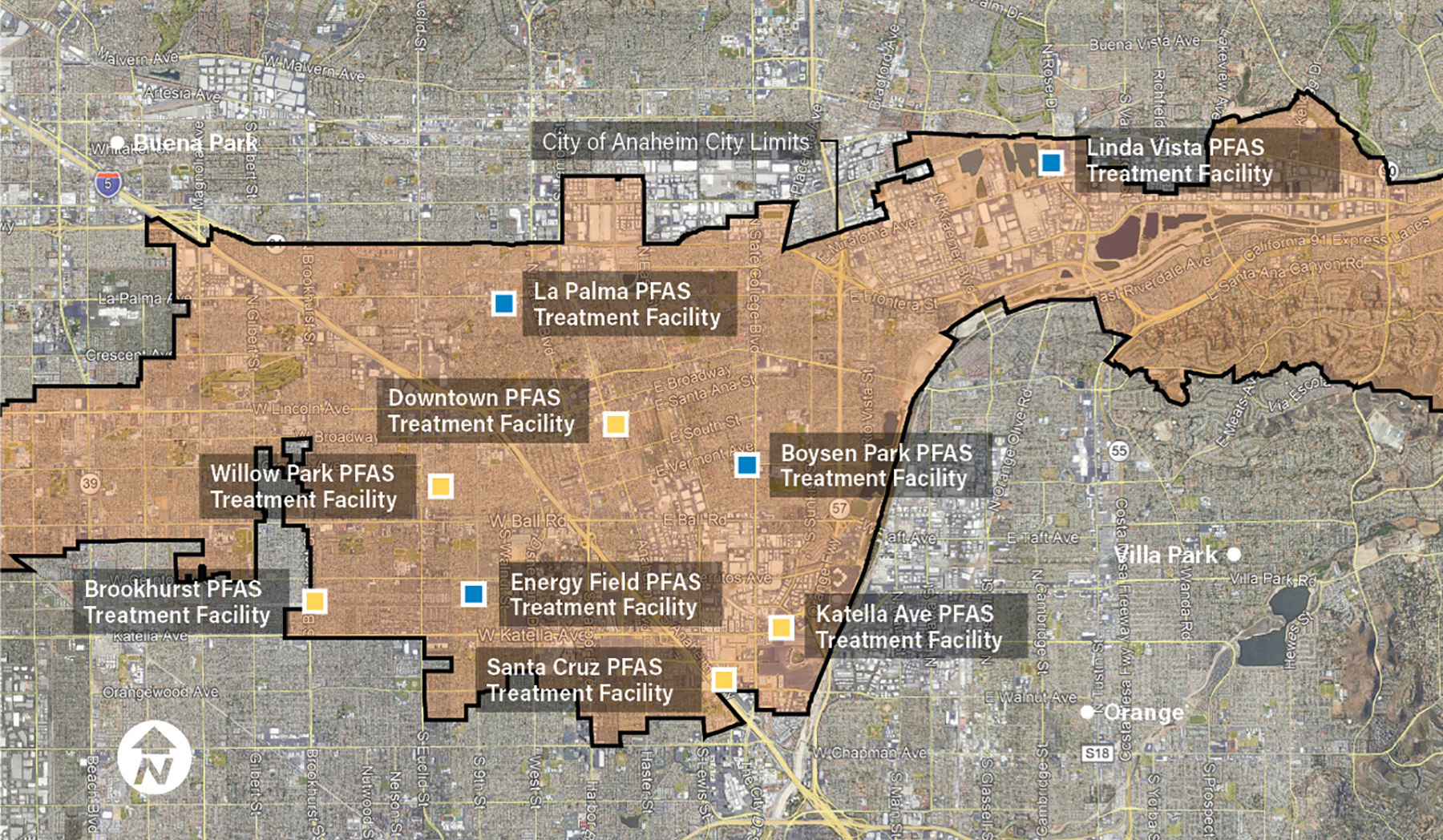
The PFAS treatment systems were delivered in a fast-track design-build contract in two phases — designated A and B — that successfully returned most of APU’s out-of-service groundwater wells back into service. The two phases involved 14 wells — 12 existing, 2 new — across nine sites: Linda Vista, La Palma, Boysen Park, Energy Field, Katella Avenue, Willow Park, Santa Cruz, Downtown, and Brookhurst.
The city contracted with CDM Smith to design and construct new nonregenerable, long-life, ion exchange treatment facilities. The ion exchange process uses positively charged resins to attract and capture negatively charged PFAS molecules. The nonregenerable aspect refers to the resins being single-use and needing to be disposed of once exhausted. CDM Smith was also tasked with rehabilitating certain wells and other related improvements.
Following a thorough analysis of the water quality at all nine sites, the project team developed a robust PFAS treatment solution focused on providing reliable treatment, operational flexibility, redundancy, low life-cycle costs, and operational resilience and adaptability. The solution also considered future treatment and expansion needs at each site.
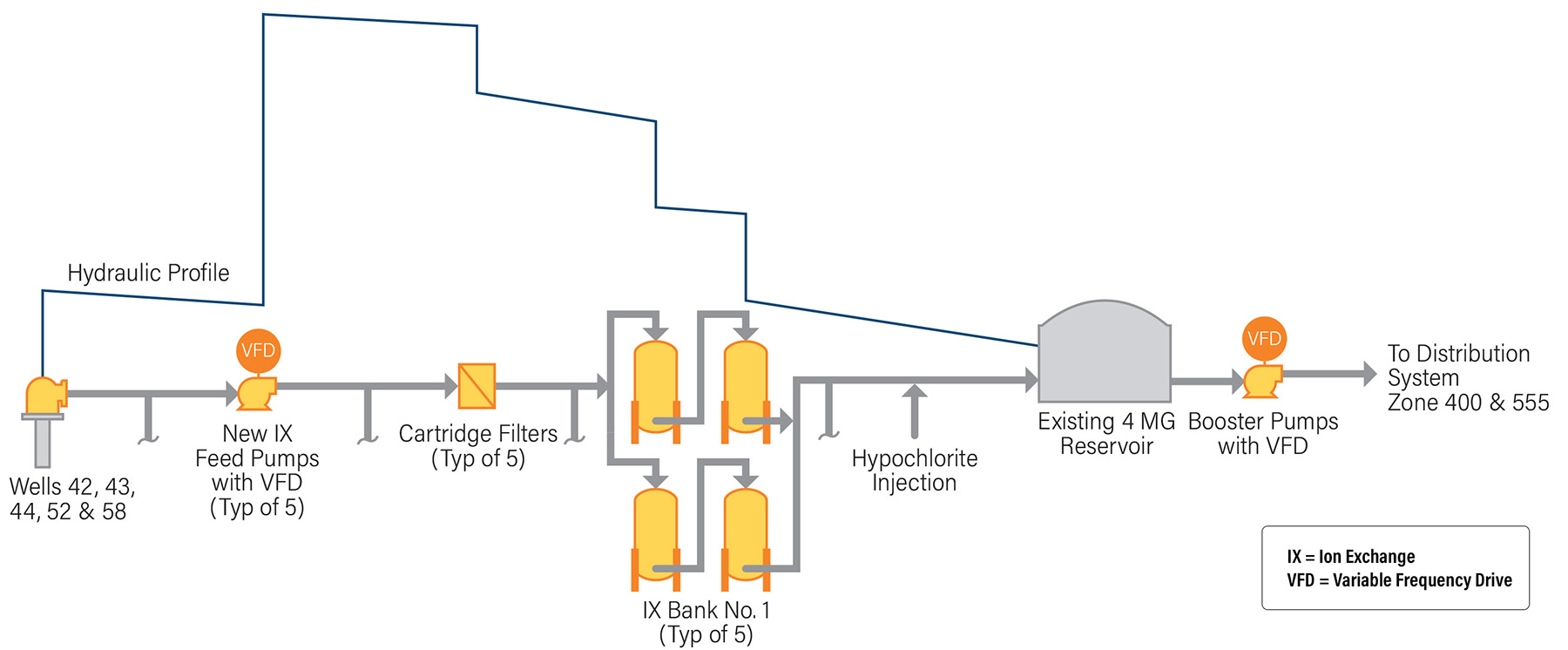
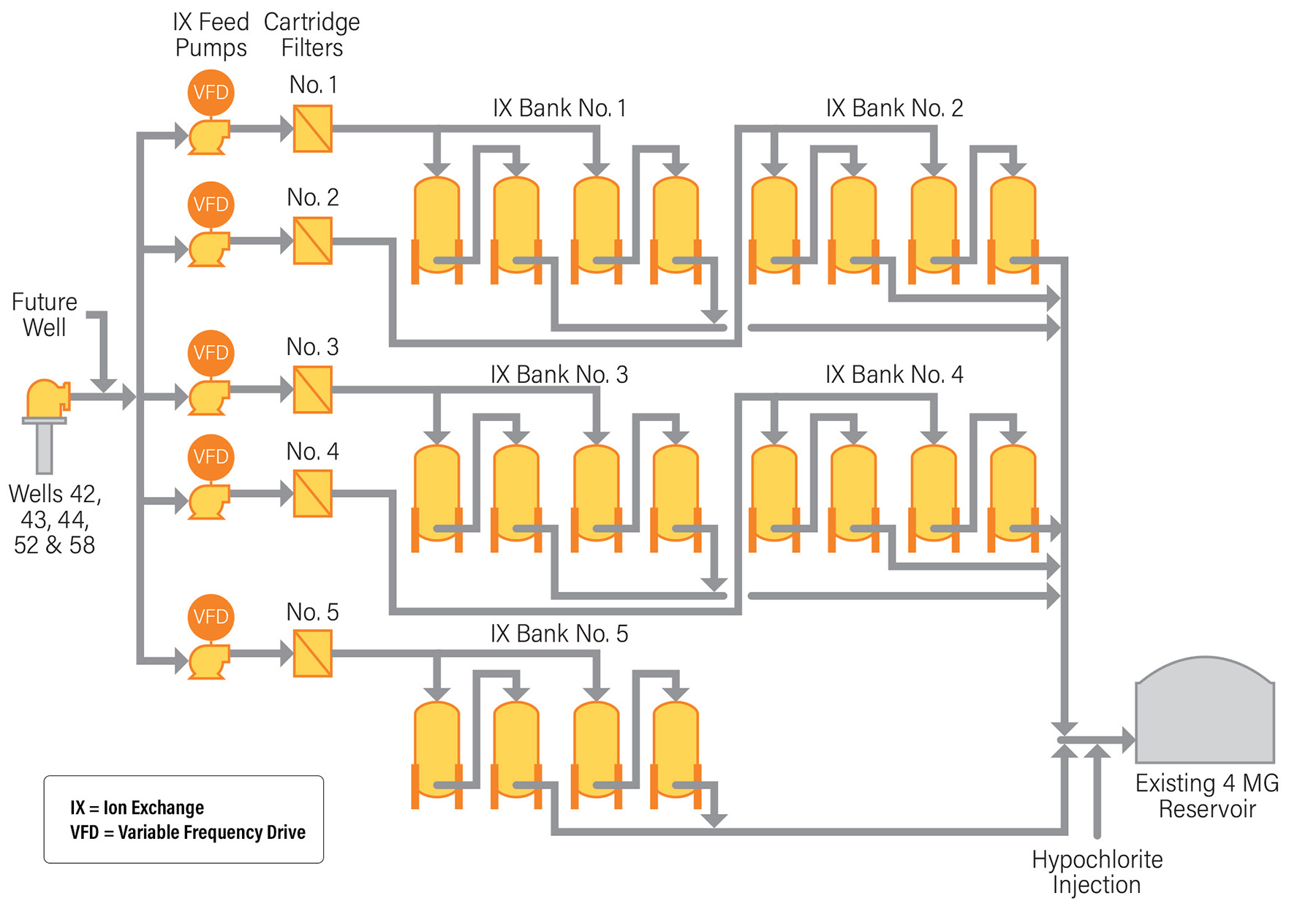
The treatment process includes pressure boosting where needed, pretreatment using cartridge filters, ion exchange vessels in a lead-lag operational configuration using single-use ion exchange media, and sodium hypochlorite disinfection to maintain a chlorine residual in the distribution system. Pilot testing verified the reliability and effectiveness of the treatment approach. This testing also provided California’s Division of Drinking Water (which, according to its website, regulates public drinking water systems) a level of assurance that, following treatment, the PFAS contaminant levels would decrease and comply with state and federal regulations, ensuring safe water delivery to the public.
After evaluating several pretreatment options, APU chose horizontal cartridge filters to reduce the total suspended solids. These filters have been proven effective and reliable for removing total suspended solids greater than 5 microns, as required by resin manufacturers. The filters offer the lowest life-cycle and capital costs, ground-level maintenance capability for improved operator safety, and the ability to test different media to confirm performance and accelerate data collection.
The PFAS treatment facilities are integrated with a supervisory control and data acquisition (SCADA) system, including a predictive tool for when to replace the resins. Ion exchange resins are used to reliably reduce PFAS chemicals to nondetectable amounts and comply with the new regulations.
Considering sites
CDM Smith conducted an in-depth analysis of energy and life-cycle costs at each site during the initial design phase. At the Linda Vista site, an innovative vessel configuration approach to reduce and optimize energy consumption was applied by pairing specific variable-frequency drive booster pumps with two pairs of ion exchange vessels. This way, the system can efficiently respond to varying energy demands as different PFAS breakthroughs occur.
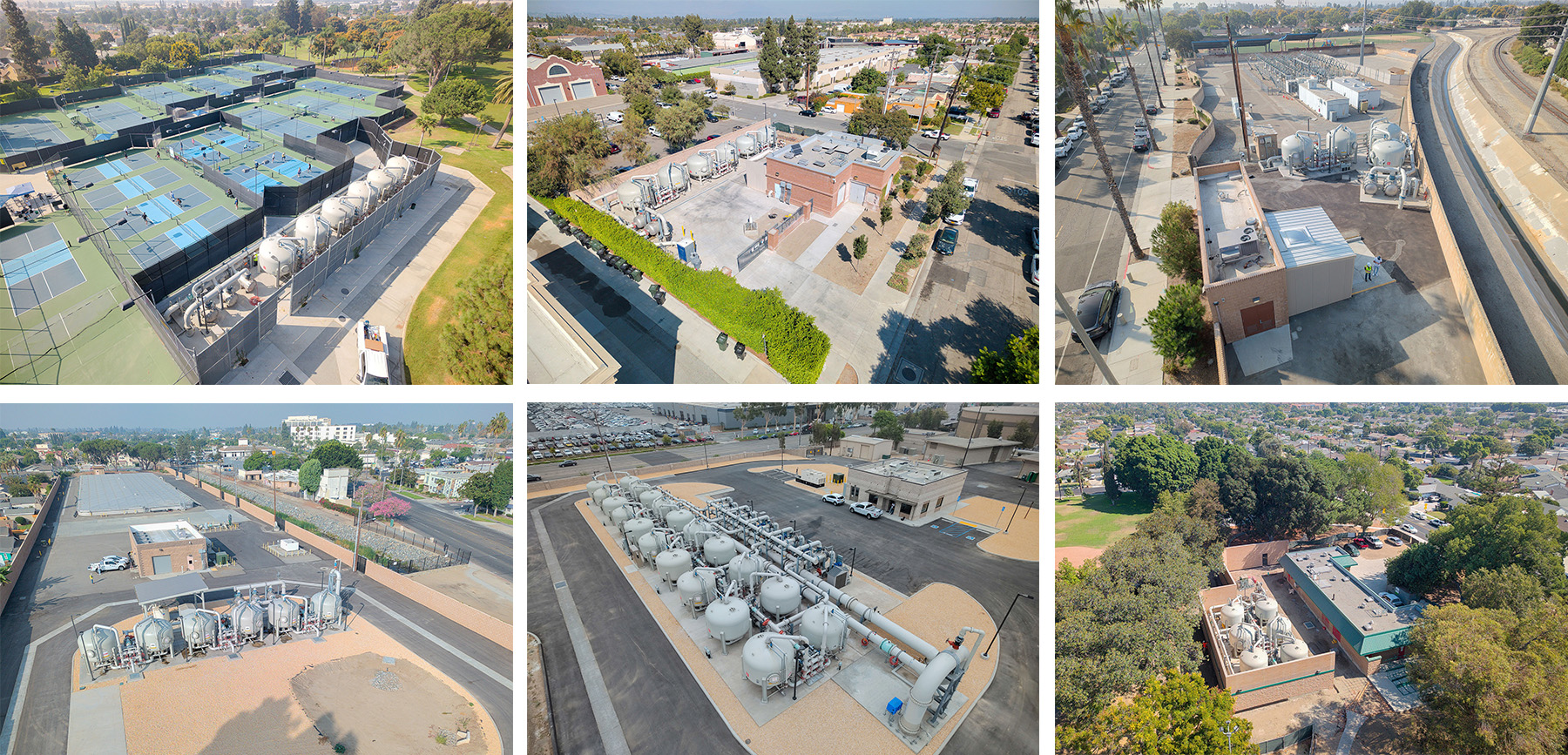
The project team encountered constraints at several sites, including Energy Field, which sits on a small footprint adjacent to an electric substation. Given the site’s limited footprint, several ion exchange vessel options were evaluated to determine the most advantageous layout and the best life-cycle value, providing flexibility as well as cost savings for operating the system and increased access to the existing facilities for pump maintenance.
In another case, the Boysen Park site presented unique problems due to its location within a busy public park. The design needed to minimize impacts on the public space and provide continuous access to the park facilities during times when resin for the ion exchange system would be loaded or offloaded. This required extensive coordination with APU and its stakeholders and resulted in a solution that seamlessly integrates the treatment facility with the park by using a screening wall and landscaping.
Ion exchange performance
As a pretreatment to the ion exchange process, cartridge filters prevent the deposit of solids on the ion exchange system’s resin bed, which is not intended to be backwashed during its service life. Maintaining low-influent total suspended solids will help prevent a significant increase in head loss over the long bed life of the ion exchange process. To prevent cartridge filter fouling and estimate the replacement frequency, raw water from the wells is sampled to collect particle size and mass distribution.
The raw water pH is typically between 7.5 and 8.5 and is not impacted by the ion exchange treatment. Therefore, the finished water pH is not adjusted. Instead, it is disinfected with sodium hypochlorite to achieve nondetectable values for total coliform bacteria and E. coli.
Remote operations and maintenance
During normal operations, all the new treatment facilities are controlled remotely from APU’s Lenain Filtration Facility, which has a water quality lab. The facilities are monitored and controlled manually and automatically through the SCADA system. The new treatment system (i.e., cartridge filters, ion exchange process, booster pumps, and disinfection) starts and stops in conjunction with the wells.
When the system requires more water, it sends a signal to start production at a well, which is tied to the control of the boosting pumping that runs the water through the treatment system. Once the target pressure in the distribution line or the level of the storage tank is reached, the system sends a signal to stop production. That signal initiates the shutdown of the booster pumping, and the treatment system is placed on hold.
Lenain is staffed by APU operators 24 hours a day, every day of the year. Preventive activities are conducted routinely and include tasks such as calibration, inspection, lubrication, cleaning, and testing equipment. Corrective activities are conducted on an as-needed basis and will eventually include repair and replacement of worn-out equipment and cleanup and reapplication of protective coatings. APU tracks and schedules maintenance for all equipment at the groundwater treatment plants.
Emergency procedures are activated if the treatment facilities cannot produce treated water that meets water quality requirements. In that situation, APU will shut down the affected facility until a solution is determined. When the well or treatment system is down, the corresponding pressure zone that receives water from that well or facility will rely on other wells or PFAS treatment facilities in that pressure zone.
The Anaheim distribution system features different pressure zones depending on altitude, location, and demand for water. APU can also move water within the system from higher to lower pressure zones. If water cannot be obtained within the system, APU can purchase additional imported water through interconnections with the Metropolitan Water District.
Testing, startup, and commissioning
The startup and commissioning program put in place at the new groundwater treatment plants consisted of rigorous testing across each of the nine sites to ensure proper integration with APU’s potable water distribution system. Strategic planning and testing were implemented at each site to address differences in system operations, site capacities, sizing of each system, and site layouts.
Prior to starting up each well, a series of initial tests was conducted. These included instrument loop checks to be certain that the programmable logic control system signals were reaching the devices, that the treatment plant programming was performing properly, and that the instruments and equipment matched and performed to their respective settings.
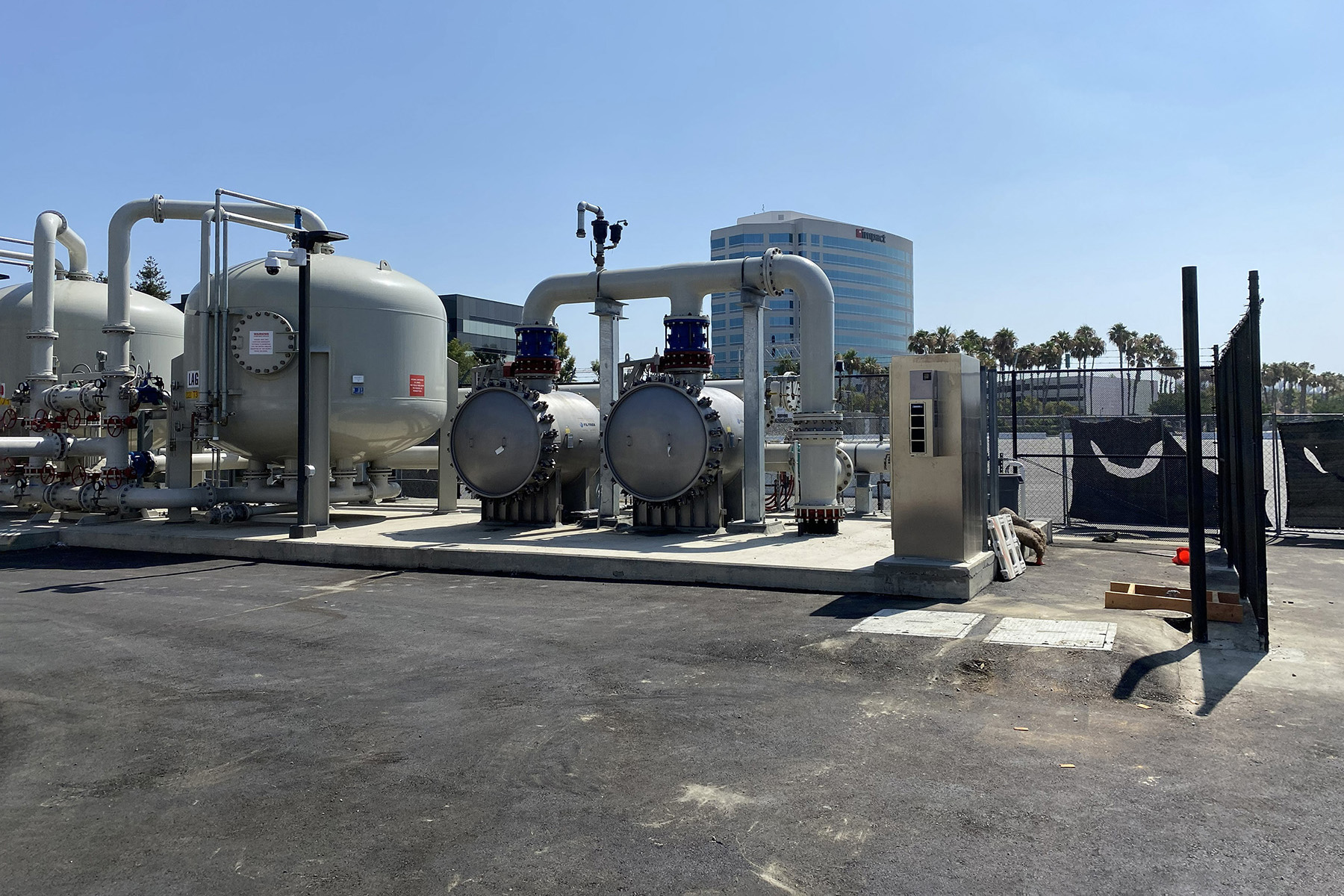
At each site, a temporary discharge system was planned and executed to perform all required testing before implementation into the potable water distribution system. These temporary discharge systems included installations of blind flanges upstream of the distribution system, HDPE piping for temporary discharge to a storm drain, temporary isolation valves to simulate system backpressure conditions, and sodium thiosulfate injection prior to discharging into the storm drain.
CDM Smith conducted the site acceptance tests at each facility, with APU and its representatives witnessing and signing off on the results. These tests ensured proper working of the human-machine interfaces and SCADA controls, system alarms and setpoints, hardwired and software interlocks, fault responses, and all plant operations. Completion of these tests occurred during temporary discharge, to certify successful plant operation when integrating into APU’s potable water distribution system.
As with many startup jobs, testing and implementation of the new sites included various challenges. Roadblocks that occurred during startup included integration of SCADA software, source water quality, failure of equipment or instruments, mechanical piping adjustments, and overall site optimization.
To resolve these challenges, the team used programmable logic control trend data for in-field troubleshooting, adjustments and revisions to work plans to avoid previously encountered challenges, coordination of vendor or manufacturer field visits, and tracking of outstanding items prior to completing the testing. Lessons learned from previous sites across Phases A and B were capitalized upon to improve the efficiency of the acceptance testing and integration of each site into the distribution system.
Successful solution
The $150 million Anaheim Groundwater Treatment Plants Design-Build Project was a fast-track effort implemented to construct PFAS treatment systems, empowering APU to restore groundwater availability as well as improve groundwater quality, system operability, and overall life-cycle value. The treatment system currently produces water in which no PFAS chemicals are being detected.
Should these chemicals be detected in the future — even at levels as low as 2 ppt — the response will be to replace the system’s resin. Additionally, the project substantially reduced APU’s reliance on purchasing imported water, provided drought resilience, and helped APU provide lower-cost, locally sourced, and high-quality water to its customers.
Having multiple water treatment plants that directly discharge into potable water distribution systems required extensive planning and collaboration. Detailed logistics and testing procedures were developed and implemented to deliver contaminant-free potable water to the city’s distribution system.
Phase A construction, involving four of the new sites, was completed by July 2024. Construction, startup, and acceptance testing of the five Phase B sites was completed by November of that same year. With a combined total treatment capacity of 73.2 mgd, the successful project represents the largest multiple-well, municipal PFAS interconnected groundwater treatment system in the United States.
Leonel Ivan Almanzar, Ph.D., P.E., BCEE, DBIA, F.SEI, F.ASCE, is a vice president and the collaborative delivery development director at CDM Smith in Phoenix.
Jacob Hester, P.E., is the water engineering manager at Anaheim Public Utilities in Anaheim, California.
Evelyn Chang, P.E., is an environmental engineer at CDM Smith in Rancho Cucamonga, California.
Daniel Tsuchiyama, EIT, is an environmental engineer at CDM Smith in Carlsbad, California.
This article first appeared in the January/February 2026 issue of Civil Engineering as “Tackling PFAS in Groundwater.”


